12 Winters Blog

Quiddity fall release gala, and Men of Winter proofs

Posted in October 2010 by Ted Morrissey on October 24, 2010

This past Thursday I attended the fall issue release gala for Quiddity international literary journal and public-radio program at historic Brinkerhoff Home on the campus of Benedictine University at Springfield. As usual, it was an enjoyable and stimulating evening (even though the guest of honor, issue 3.2, was a no-show as its cover was still drying at the printer’s — a not uncommon occurrence at release parties). Most of the usual cast of characters were present: Joanna Beth Tweedy (founding editor and host of the radio program), David Logan (prose editor), Judi O’Brien Anderson (poetry editor), Michael Gammon (layout and web design), Pamm Callebrusco (associate editor), and Marianne Stremsterfer (art editor), plus loyal interns John McCarthy and Stacie Lynn Taylor.

Best of all, there were readings by David Bertaina, poet and translator of Semitic languages; and by Tracy Zeman, “nature poet of the sublime.” As if that weren’t enough, Croatian artist Magda Osterhuber was present to discuss her paintings that were being exhibited in Becker Library Gallery, a short walk from (historic and haunted) Brinkerhoff Home.  Throw in some food and wine and acoustic-guitar folk music, and you’ve got a pretty splendid way to spend a Thursday evening.  Work by Bertaina, Zeman and Osterhuber are included in Quiddity 3.2.  Here is 3.2’s table of contents, which also allows you to hear some of the work included in the issue — a feature that most literary journals don’t offer. The Quiddity radio programs are archived here.

On the Men of Winter front, the publisher sent me the page proofs, which I returned yesterday with corrections — so a release date begins to loom larger and larger, though it isn’t set in stone just yet.  I mentioned in a previous post that the first chapter of my novella Weeping with an Ancient God was published in The Final Page. A new edition of The Final Page has since been posted, and it seems the journal doesn’t archive their older issues — in other words, the excerpt, “Melvill in the Marquesas,” was available online for a few weeks, but, alas, is no more. A couple of editors of other journals expressed an interest in it after it had already been taken by The Final Page, so I may see if someone is interested in “reprinting” the excerpt; or I may just archive it here at 12 Winters Blog. I was really hoping it’d be floating around on the web for a few months, in anticipation of the novella’s publication.

In my novel in progress, the Authoress, I surpassed the 300-manuscript-page mark, and I’m very much enjoying the writing process. I had come to a chapter (the nineteenth) whose function I understood, but the narrative particulars of which were fuzzy, to put it mildly. But I’ve worked through some of those issues and now have a definite bead on the chapter, which is a much better feeling than the murky one I had just a few days ago. I liked another idea, but the narrative timeline just wouldn’t support the development I had in mind — which worked to my benefit as the new trajectory is superior in just about every way. For me, writing a novel is a bit like filling up a hallway closet with stuff, and everything I need to complete the project is in there — sometimes it’s just a matter of sorting through its accumulated contents to find the items I need.

I’m still reading — and enjoying! — Adam Braver‘s Crows over the Wheatfield (though I cheat every now and then, and read some Gogol).

tedmorrissey.com

Notes on Poets and Painters; some progress on Men of Winter

Posted in October 2010 by Ted Morrissey on October 10, 2010

This past week I had the pleasure of attending Poets and Painters at the H. D. Smith Gallery in the Hoogland Center for the Arts — a collaboration between two Springfield, Illinois-based groups: Springfield Poets and Writers, and Prairie Art Alliance. The poets and writers were invited to select a work from the gallery for which they would compose an original poem, which was then read at the Poets and Painters event October 7. The president of Springfield Poets and Writers, Anita Stienstra, served as the mistress of ceremonies; the inspirational piece of artwork would be displayed near the podium, then Stienstra would introduce the poet, who read the resulting poem; then the artist would be introduced and have an opportunity to speak about her/his piece. It was a great synergy of artistic expression, taking ekphrasis further than its usual mode, wherein a poem may be published alongside a piece of artwork that inspired it, by having the art and poem displayed together, live, via the artist and poet who created them, and adding an enthusiastic audience into the mix as well — a point that was well-articulated during the program by Ethan Lewis, a literature professor at the University of Illinois at Springfield who read his poem based on Jennifer Davis’s black-and-white photograph Welcome to Highgate. As an added bonus, each poet had his/her poem specially printed and framed, turning it into a piece of visual art as well.

I was impressed by all that I heard and saw, but I have to note in particular Anita Stienstra’s heart-wrenchingly beautiful poem that she wrote in association with Felicia Olin’s painting Blue Blooded. (When I first entered the gallery, I took special note of Olin’s gothic-esque portrait and knew that, if I’d been given the task, I would have chosen that piece as well.) This was the second Poets and Painters event, and examples from the first can be viewed at this blogspot. Do yourself a favor and check out the poems and artwork (Olin has two pieces on display on the site, Girl with Blue Hair and Heroine, both of a similar style to Blue Blooded).

On the creative writing front, graphic artist Julie McAnary sent me a proof for the back cover and spine of Men of Winter. I offered a couple of suggestions, but otherwise I’m very, very pleased. Punkin House Press is still looking at a November release as far as I know. Also, the editor of Pisgah Review, Jubal Tiner, sent me the galleys for “The Composure of Death,” which will appear in an upcoming issue. They look great — I’m impressed with the journal’s professional handling of me and my story.

I continue to read and enjoy Adam Braver‘s novel Crows over the Wheatfield — in fact, I’m going to cut this post a bit short so I can take advantage of this beautiful October day and go read on my front porch.

tedmorrissey.com

Filmmaker Jovanna Tosello and a little Gogol

Posted in October 2010 by Ted Morrissey on October 3, 2010

In my last posting I neglected to mention a recent (exciting!) development regarding my forthcoming novel Men of Winter — perhaps it slipped my mind because it’s just too darn cool to be true. A couple of postings ago I mentioned attending the Route 66 International Film Festival and seeing a short animated film, The Magical Porno Theater, that was a real mind-bender. As I watched the film, I started ruminating about the fact that I really wanted to have some sort of video piece associated with my novel (I’ll use the somewhat crass term “a book trailer”), and wouldn’t it be terrific if the Magical Porno filmmaker, Jovanna Tosello, would develop something incredible based on Men of Winter? So I took a chance, found her on the web and hence her gmail address, sent my heart-felt kudos about her film and gingerly floated the idea of her putting something together based on my book, if she had the time and interest (expecting, quite frankly, for her to say thanks, but no thanks). I suspect you can guess where this blog is headed: she said yes. Wow. As I told her in my email, I would rather there was a video out there that drew attention to my book that was also a piece of art in itself, as opposed to any old trailer whose sole purpose in the cosmos is to sell a couple copies of Men of Winter.

Jovanna apparently originally hails from Reykjavik, Iceland, but now lists her location as Los Angeles. According to her website, she has a BFA in character animation from California Institute of the Arts, and she’s working on her MFA in animation and digital art at USC. You can check out The Magical Porno Theater on Vimeo, along with some of Jovanna’s other animated film work — and I highly recommend it. You can also find out more about Jovanna and view her work at her blogger site. To say that I’m thrilled to have Jovanna’s talent and creativity lending their services to my modest novel doesn’t begin to describe it.

In other news, I’ve been reading Adam Braver’s Crows over the Wheatfield, and his work always reminds me of the Russian masters, and as such I developed a yen for some Nikolai Gogol and have been reading a bit from Dead Souls (1842), a novel I’ve been curious about for some time. I wasn’t expecting it to be so downright funny. One of my favorite lines thus far occurs when the main character, Tchitchikoff, and his driver have lost their way at night in a terrible rainstorm, and they come upon a house, immediately to be greeted by some “ill-tempered” dogs — Gogol writes, “[O]ne, throwing back his head, gave a prolonged howl, with as much care as though he had received wages for it” (p. 41, 1966 Airmont edition, trans. Zoe Girling).

Meanwhile, I’ve been working away on the Authoress, my novel in progress, and am feeling very good about the way the narrative is shaping up. The writing is slow, but it progresses. I’m nearly finished with chapter 18 and am at the 290-plus manuscript page mark. It’s all rather nebulous, but I hope to have a complete draft of the novel by next summer, in about another 100 pages or so.

tedmorrissey.com

“Melvill” finds a home, more on Braver’s Crows

Posted in September 2010 by Ted Morrissey on September 26, 2010

Since the last posting, I found a home for “Melvill in the Marquesas,” the first chapter of my novella Weeping with an Ancient God, and in fact it’s already published: the wonders of electronic journals. It is in the current edition of The Final Draft, edited by Bob Rothberg. The Final Draft has a magazine look that I like. Bob has generously played up the coming release of Men of Winter, which Punkin House Press is planning for November. The front cover is set, and graphic artist Julie McAnary is at work on the spine and back cover; meanwhile, I presume work is also being done with designing and setting the pages, but so far I haven’t seen any galleys. Referring back to “Melvill,” the tentative plan is for PHP to publish Weeping with an Ancient God along with a collection of a dozen previously published stories in 2011.  Right now, of course, the focus is to get Men of Winter out (and promoted).  Weeping, by the way, is a highly fictionalized “biography” of Herman Melville’s encounter with cannibals in the Marquesas Islands in 1842. To write it, I researched Melville, especially his childhood and his time spent on the whaling ship the Acushnet, but also I carefully read his debut novel Typee, which is his own highly autobiographical account of the event in the Marquesas Islands. I elected to spell Melville’s name minus the last “e” as that was the family’s original spelling — before the “e” was added to make it look more American in hopes of improving their business prospects (I believe it was Melville’s older brother who made that decision, but I’d have to refer back to my research on that one).

In any event, it feels good to have a bit of Weeping out there in the world, and I appreciate the professional job that Bob Rothberg has done in presenting it in The Final Draft. I don’t seem to find an archive button at the journal’s site, so I’m not sure if it will be possible to access “Melvill” after the next installment of the The Final Draft is uploaded, but I hope there will remain a permanent link.

While I’m posting, I want to give a quick shout out to M. R. Branwen for having her poem “Flora, Fauna” nominated by Metazen for the 2010 Best of the Net Anthology. It is a well-deserved honor; check out her poetry.

In addition to continuing my work on the Authoress, my novel in progress, I’ve been reading Adam Braver’s Crows over the Wheatfield and enjoying it very much. I’m especially enjoying its intertextual nature as Braver mixes the novel’s main plot, about a professor/scholar of art history, with excerpts from the professor’s manuscript (one presumes) on Vincent van Gogh — the juxtapositioning is provocative and engaging. Then of course there is the novel’s overarching intertextual relationship with van Gogh’s famous painting, Wheat Field with Crows. Braver’s clean and concise prose style belies the book’s thematic complexities, thus amplifying those complexities even further. I’m sure there will be more to follow on Braver’s superb novel.

tedmorrissey.com

Cover for Men of Winter; Notes from the Route 66 Film Festival

Posted in September 2010 by Ted Morrissey on September 19, 2010

Working with graphic artist Julie McAnary, we’ve finalized a cover design for Men of Winter, and to say I’m quite pleased with it would be a gross understatement. In one of our many email exchanges, I told Julie I’d like the cover to be both austere and alluring; and, by George, I think we’ve done it. The original cover idea I pitched to her, months ago, wound up being a no go because we couldn’t secure the rights to the photograph (a photo of a German soldier from the Second World War I found online — I couldn’t track down anyone who claimed ownership of the rights, hence there was no one to grant permission to use it). But that ended up being a stroke of great luck because it sent us back to the proverbial drawing board. I spent several hours culling the net for a photo or painting from a contemporary artist who could grant us permission to use her/his work (or not). After about three hours and lord knows how many pictures, I came across the portfolio of Paul Casagrande and specifically a set of portraiture titled “Sara & Stefano” — I was thunderstruck and I instantly envisioned how one of the photos in particular could be the focal point for a powerful cover. I immediately went about tracking down contact information for Mr. Casagrande, who is Italian. I sent him a message via Facebook, and was shortly contacted by his associate Gianluca Precone (who, by the way, has an amazing portfolio on photo.net as well). Gianluca indicated that his colleague was willing to let us use his work as a courtesy, one artist to another (amazing generosity!). We had a series of exchanges, with the help of Google translator (and, as luck would have it, one of my students this semester is from Italy and is fluently bilingual — so with Nate’s expert assistance we nailed down some of the particulars). Thus this beautiful photograph, “Beyond thought,”
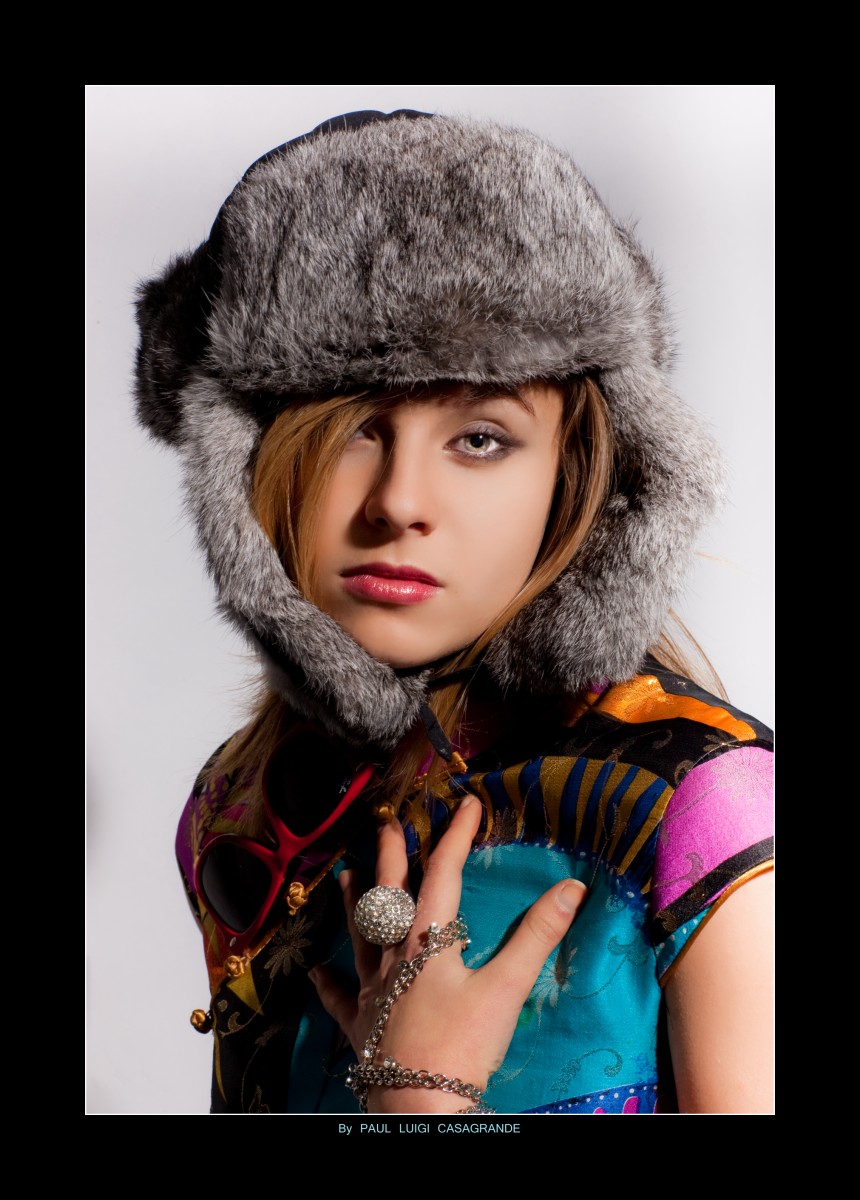
from Paul Casagrande's "Sara & Stefano"

became the focus of this (thanks to Julie McAnary) beautiful cover

Cover for Men of Winter

I floated it on Facebook, and it received rave reviews — so thank you, Paul, Gianluca, Julie (and, absolutely, Nate) — I just hope the stuff between the front and back covers lives up to this amazing piece of art. While I’m at it, another thank-you to M. R. Branwen, the editor of Slush Pile Magazine, who graciously blurbed my book earlier this summer, and who graciously published an excerpt from Men of Winter in the debut issue of Slush Pile when it was still just a manuscript looking for a home. Speaking of Men of Winter, Punkin House Press has pushed back the release date a bit, now proposed for November, which is all right — I’d rather see it done well, if a bit behind original plans, than to have it rushed to press.

With the front cover under our belt, I revised tedmorrissey.com and added a page devoted specifically to Men of Winter. Feel free to visit, as often as you like.

Switching gears, this weekend is the Route 66 International Film Festival here in Springfield, Illinois, and my son and I attended last night’s double session, and were thus treated to some terrific independent films. I don’t have space to do them justice here, but I want to give kudos to a few films in particular. One of our favorite dramas was Ben-Hur Sepehr’s The Desperate, which won Best History Short — about a Nazi general who pleads with a Jewish doctor to save the general’s only son: in a word, tremendous. We also greatly enjoyed the film that won Best Drama Feature, Alex Gaynor’s Wid Winner & the Slipstream: quirky, touching, somehow both sad and uplifting: terrific filmmaking, terrific storytelling. In the thriller/horror contest session, we got a great kick out of David Britton’s Parking Space — very Twilight Zone-esque, and I say that as an extreme compliment. We also enjoyed Sunday Punch by Dennis Hauck (whose lead actor, Dichen Lachman, is a treat as cool, tough and razor-sharply sarcastic boxing ring-girl Jill). However, both my son and I had to give our audience votes to Delaney by Carles Torrens: horrific, weird, laugh-outloud funny, with a host of offbeat characters whom one comes to love against all common sense (of decency).

I also have to mention an animated short that blew me away: The Magical Porno Theater by Jovanna Tosello: strange, yes, but Tosello’s use of cool colors and odd imagery, juxtaposed in intriguing ways, gives an undercurrent (could be an inside pun, but isn’t) of narrative to what otherwise seems a chaos of barely related yet fluid (another non-inside pun) scenes. When one sees what can be done with a modest budget but a lot of talent and creativity, it really underscores how amazingly bad most Hollywood offerings are.

A last note today: I’m reading Adam Braver‘s Crows over the Wheatfield, and I just wanted to share a brief passage that is so engaging I lingered over it for several minutes this morning:

Claire skirted across the lawn on a treaded path, where the trees were bare, like sadly misshapen arms shamed without strength. And in them, their simplicity was their beauty, their resolve to stand defenseless against the elements. Still they stood proud, their mangled branches witnessing the events that had passed under them. (p. 64, Harper Perennial paperback edition)

Quite lovely.

“The Double” in retrospect and Men of Winter status update

Posted in September 2010 by Ted Morrissey on September 12, 2010

I had some quality Amtrak time this weekend and was able to finish Dostoevsky’s long story, or novella, “The Double” (1846; trans. George Bird). I enjoyed it very much. Ronald Hengley, the editor of Great Short Works of Fyodor Dostoevsky (Perennial Classic, 1968), writes in his introduction that the story’s main character, Yakov Petrovich Golyadkin, is a reflection of Dostoevsky’s self-image:

These [i.e., Golyadkin and the protagonist of “White Nights” (1848)] despised, feeble, usually poverty-stricken personages are all introspective in inspiration and may be considered as self-portraits of the author as seen in the distorting mirror of his imagination — portraits, that is, of the Dostoevsky who was the butt of his fellow cadets in the army engineering school where he received his main education, and who later provoked the sneers of Turgenev and other members of his literary set in St. Petersburg shortly after receiving notoriety with the publication of his first fiction. (viii)

Hingley goes on to say that Dostoevsky “resented . . . almost everyone he knew,” but that “he also appears to have courted [. . . humiliating] experiences with a certain masochistic gusto.” In my reading of “The Double,” I see the tenacity of one’s individual personality. Mr. Golyadkin (whose name means something like “poor fellow” in Russian, according to the translator) resolves time and again to cut all ties with his double, “Golyadkin junior,” a duplicitous, mean-spirited fellow who seems bent on Golyadkin’s professional and personal destruction, but the original Golyadkin continues to seek out his double or to place himself in situations where his encountering his double is all but inevitable. I see this as one’s inability to totally rid oneself of the darker (or at least less attractive) sides of one’s personality. We may be able to stray from our true selves for a time, but we must always return, even if it’s against our own will.

I’m looking forward to other stories in the collection, but for now I’ve turned my attention to a contemporary novel, Adam Braver‘s Crows over the Wheatfield (2006). I’m about forty pages into it, and I no doubt will be blogging further about it in the future. I’m a great fan of Braver’s first novel, Mr. Lincoln’s Wars (2003), a book I have taught in a couple of different college courses; and readers around the world have been becoming fans of Braver’s newest novel, November 22, 1963, as it’s been translated into several languages, including French and Japanese. As I said, more on Crows to follow.

While I’m at it, a quick nod to Vaudezilla’s production of Rollin’ Outta Here Naked: A Big Lebowski Burlesque. I was in Chicago over the weekend and took in the show at the Greenhouse Theater Center. It was . . . bizarre — but great fun, especially for Big Lebowski fans (who aren’t plagued by cultural timidity). Frankly, it’s the sort of thing one doesn’t have an opportunity to see much (or at all) around Springfield.

On the Men of Winter front, I’ve been exchanging emails the last few days with the graphic artist, Julie McAnary, who’s designing the cover for my novel, and we’re just about there, so hopefully it will be ready for an unveiling very soon. I anticipate some page proofs soon as well, as the publisher, Punkin House Press, is planning a release this fall.

I continue to look for a journal to publish “Melvill in the Marquesas,” the first chapter of my novella Weeping with an Ancient God, and I continue work on my novel-in-progress, informally titled the Authoress, though I’m 99.9% certain of the formal title now. I’m nearing the 300-ms.-page mark and feeling very good about the story.

tedmorrissey.com

Dostoevsky’s “The Double” and Earl’s “Forbidden Beowulf”

Posted in September 2010 by Ted Morrissey on September 4, 2010

It’s been awhile since I entered the blogosphere, so I thought I’d do a post.  As I’d written about a couple of times, at the end of the summer I was reading a collection of Turgenev’s stories that I enjoyed very much, which encouraged me to pick up a collection of Dostoevsky’s shorter works that I’ve had lying about for, well, years, and have been wanting to crack open.  So I have.  I’ve been reading the collection’s opening tale, “The Double” (1846, trans. George Bird), and have found it a classic indeed.  Thus far it’s been both haunting and funny by turns.  The descriptive paragraphs are most remarkable.  Here’s the opening to one that I read over again and again because it’s just so good:

It was a dreadful night, a real November night, dark, misty, rainy and snowy, a night pregnant with colds, agues, quinsies, gumboils, and fevers of every conceivable shape and size — put in a nutshell, bestowing all the bounties of a St. Petersburg November. (p. 38, Great Short Works of Fyodor Dostoevsky, ed. Ronald Hingley, Perennial Classic, 1968)

There is much to love here, but I especially admire the image of the pregnant night and the sarcasm of referring to the bounties of such a night. My first encounter with Dostoevsky, I believe, was reading Crime and Punishment in a world lit seminar while working on my doctorate. I’m partly on my Russian writers kick because I’ve always been interested in their works but have managed to miss most of them in my life as a student — but also the great William Gaddis scholar Steven Moore said somewhere (maybe it was on the Gaddis list serve) that there hasn’t been much work done on the Russians’ influence of Gaddis’s fiction, and there ought to be. Moore’s comment, wherever I read it, has stuck with me, and I fancy that eventually I’ll try to connect some of the dots between Gaddis and the Russians.

In addition to Dostoevsky, I’ve spent the last couple of days reading through James W. Earl’s article “The Forbidden Beowulf: Haunted by Incest” in the March 2010 PMLA. I’m a great admirer of Earl’s Beowulf scholarship, and it was very useful to me when working on the Beowulf chapters of my dissertation, though I came to it rather late in the process. A fellow after my own academic heart, Earl brings much to bear on the poem from other (perhaps unexpected) disciplines — psychology, yes (which, of course, is expected), but, as in this article, a little astronomy and quantum physics as well.  He writes,

How can we tell whether an author knows or does not know such backstories [e.g., Homer’s knowing the judgment of Paris] if he or she does not tell them? The situation is a little like detecting dark matter in the universe: the best we can do is try to detect subtle distortions in the matter that we can see. (p. 289)

Something that I really appreciate about Earl’s technique in the article is that, while he does put forward a thesis, his organizational strategy is essentially thinking through the related issues and the various scholars who have weighed in on them, and considering how their views may affect his own leanings. He concludes his third paragraph by saying, “I pose many questions and try to untangle such a mess of evidence that it is bound to get confusing at times” (p. 289). His erudition is impressive, to put it mildly, yet his tone is . . . inviting, one might even say conversational, at times anyway — of course, it’s a conversation with a very learned scholar who wants you to be learned too, someday, if not today exactly. Earl suggests that the mood of foreboding that Beowulf tends to cast upon readers, experienced and inexperienced ones alike, has more to do with what’s not said in the poem than what is on the page:

Beowulf is haunted by these [Scylding] analogues, and much of what is disturbing about the poem is due to this haunting. The poem is disturbing in many ways, among them the feeling one gets after long familiarity with it that something is missing, that something important is not said — or, as Freud might say, that something is repressed. (p. 292)

Given my interests in the psychic origins of creativity — of creating fictive narrative especially — Earl’s observations are most provocative.

On the creative writing front, the editor of Pisgah Review, Jubal Tiner, suggested that my story “The Composure of Death” should keep its title, but that we use the quote from Hawthorne’s “The Minister’s Black Veil” — where I derive the phrase — as an epigraph to the story: a good suggestion indeed. I sent an electronic copy of the story, epigraph included, to Jubal last week. I’m not sure which issue the story will appear in.

With the arrival of September, the floodgates have opened and lit journals across the land are accepting submissions again. As such, I’ve been busily getting “Melvill in the Marquesas” (the opening chapter of my unpublished novella Weeping with an Ancient God) in the mail (e- or otherwise). In the process of looking for journals to send it to, I came across a unique one: Textofiction, which is “an online literary publication dedicated to bringing the best writing in under 140 characters” — clearly inspired by Twitter. When I was working on my masters, Kent Haruf (who ended up being my thesis chair) liked to begin writing workshops by having us write complete stories in under 250 words, and that was a challenge. I’m not sure how one writes a complete story in 140 characters or less. I’ll have to keep an eye on the journal to see what writers come up with.

As far as  I know, my publisher, Punkin House Press, is still planning on releasing Men of Winter in October, but I haven’t seen a page proof or a cover design yet; perhaps soon.

tedmorrissey.com

More Turgenev and a proposed release date for Men of Winter

Posted in August 2010 by Ted Morrissey on August 15, 2010

I’ve been reading from the collection of Ivan Turgenev’s stories (though some have been described as short novels). After reading the collection’s titular story, “First Love,” I read an earlier-written tale, “Bezhin Meadow” (1851), then skipped to the final tale in the collection “Clara Milich” (1882), and now I’m reading “Assya” (1857). There’s been little rhyme or reason as to which stories I’ve read and in what order. I suppose I’ve been guided somewhat by David Magarshack’s (that is, the translator’s) introduction, and his assessment of the evolution of Turgenev’s style as reflected in these stories that span more than thirty years. According to Magarshack, in his earliest stories Turgenev was especially interested in describing scenery:

The interesting stylistic feature of A Sportsman’s Sketches, as well as of Turgenev’s other stories belonging to the same period [early 1850s], is the presence of the long descriptive passages which have very little relation to the subject matter of the story. Indeed, Turgenev was for a time so obsessed with his ability to paint landscapes in words that even his letters of the period abound in descriptive passages of the same kind. (pp. x-xi, First Love and Other Tales, Norton 1968)

On the one hand, I see in the stories I’ve read so far what Magarshack is getting at. His assessment, though, that the “passages … have very little relation to the subject matter of the story” is not one that I would whole-heartedly embrace. There may be little direct relation to the plot of the story, but it seems to me that Turgenev is operating in a way that would soon become known as impressionism in painting, and a bit later as impressionism in literature. That is, the descriptive passages are often meant to reflect some meaningful aspect of the characters who are operating within or observing the scenery — that aspect may be the characters’ psychologies, or it may be foreshadowing their narrative advancement. In the story “Assya,” for example, the connection between scenery and characterization is overtly made by Turgenev when the narrator says of Gagin, a young Russian fellow he’s met in Germany and who’s awakened him early on a beautiful morning, “With his wavy, shiny hair, open neck, and rosy cheeks, he was as fresh as the morning himself” (94).

Needless to say, I’ve been enjoying the Turgenev stories. I read a bit of Turgenev as an undergraduate, but he’s one of the many authors who’ve been just on the edges of my academic radar all these years.

A couple of developments on the creative writing front: My story “The Composure of Death,” which I just began sending round last month, has been taken by Pisgah Review, a beautiful little journal associated with Brevard College, in Brevard, North Carolina. The journal is edited by Jubal Tiner, whom I met several years ago at the Louisville Conference on Literature and Culture Since 1900 (though I’m not sure Jubal is making the connection just yet). According to Jubal’s email, the editorial staff is not in love with the title of the story so they’ve asked me to consider a different title, which I’m willing to do — I have no emotional investment in that specific title. I did reply with a brief explanation of the title’s origin, which is Hawthorne’s “The Minister’s Black Veil,” a story I allude to in my story, and why I’d chosen that phrase. I don’t know if that will change their feelings about the title, but, if not, I’ll put my thinking cap on and come up with another. With the acceptance of the story, each of the stories in my collection Weeping with an Ancient God, a novella with collected stories, has been published. I’ve also been shopping around the first chapter (under the title “Melvill in the Marquesas”) of the unpublished novella, but so far no one has offered to take it to the dance. It’s still very early in the process, and I’ve only gotten a couple of rejections so far.

The other development: According to Amy Ferrell, CEO of Punkin House Press, Men of Winter should be out in October. Still quite a ways to go in terms of laying out the pages and designing the cover, but that will apparently get intense in a hurry. PHP also wants to do some sort of online workshop/contest that I’ll lead and judge for publication, in part to promote my novel but also to help other writers find publication. Right now it’s just a concept, so that too will have to be fleshed out in the coming weeks.

Meanwhile, I continue to work on the Authoress, my novel-in-progress. I’m about 265-manuscript pages in, and a couple of days ago I roughly mapped out the final sections of the story. I have a long way to go, but I must resist the urge to rush toward the finish line. In a sense I’ve been working on the novel for four-plus years, but that’s misleading because for three years I (almost literally) didn’t touch the manuscript as I finished my Ph.D., specifically preparing for and passing comprehensive exams, then getting the dissertation topic approved, and researching, writing, and defending it. So, really, this is only my second summer of working on the novel. I must keep in mind facts like it took Joyce seventeen years to write Finnegans Wake, and William H. Gass worked on The Tunnel for nearly thirty years — not to imply that my book will be another Finnegans Wake or The Tunnel, but rather to remind myself that a novel worth its salt takes time to write, and rushing the process is counterproductive.

tedmorrissey.com

Solares, Joyce and the difficulties of finding a small press publisher

Posted in June 2010 by Ted Morrissey on June 23, 2010

I finished Ignacio Solares’s novel Yankee Invasion this morning (about 2 a.m. — long story) and was very impressed by it — plus I enjoyed the heck out of it. I especially admire the way Solares effortlessly moves from various time periods, perspectives, and narrative voices. It’s not an especially long novel, only a little over 200 pages, with many concise chapters. In short, I recommend it. I’ve gone back to reading my way through Ulysses, specifically the Cyclops section. Going from Solares to Joyce was kind of like plunging into icy waters. While complex, Solares’s prose style is very straight forward; even with the multiplicity of time frames and narrative voices, etc., it is easy to keep hold of the various threads. Not so much with Ulysses, which requires careful reading (and re-reading and re-reading) to stay more or less on top of the text — but I enjoy that challenge, and, as a writer, I feel that I’m absorbing some meaningful things from Joyce. For Father’s Day I asked for and received a copy of Finnegans Wake. I’ve been perusing the introduction by John Bishop, which begins with what could be a rather discouraging observation for many: “There is no agreement as to what Finnegans Wake is about, whether or not it is ‘about’ anything, or even whether it is, in any ordinary sense of the word, ‘readable'” (p. vii, 1999 Penguin edition). I’m anxious to begin in earnest — but first to finish Ulysses (and probably another couple of contemporary authors). I did mention Finnegans Wake in my dissertation but only in that the various reading groups dedicated to the book — groups that read the text aloud line by line and research/discuss every allusion — are akin to the textual communities that developed in medieval England, whereby a literate person (usually a member of the church) would read aloud (usually the Bible) and his audience would contribute to interpreting the text. I would like to be a part of just such a Finnegans Wake group. I know: it wouldn’t be most folks’ cup of tea.

I’m still not back to composing for the Authoress, but I’ve read through the entire manuscript, about 230 pages, and did some revising and close editing (and note taking). I also have been reading some historical texts on everyday life in Georgian/Victorian London to incorporate further textual details into my novel. In reality, though, I haven’t uncovered much new material that I want to try to weave into the story, but I’ve verified that much of what I’ve already included is historically plausible. Here’s a little tidbit that I learned: copper cooking utensils, frying pans, etc., were very popular in Victorian London kitchens, but they were lined with tin because copper is toxic, so cooks had to be diligent in having their pots and pans retinned every so often to avoid poisoning their families, as the tin lining would wear off over time. Cast iron cookware was not as fashionable, but overall it was safer and less trouble to maintain. One of  things I like best about being a writer is that to be a good writer one must also be a good learner.

On the Men of Winter front, I believe the final edits have been made and the novel is ready for pagination/typesetting. I’ve also had some email contact with the graphic designer who’s doing the cover regarding blurbs. The other day I received a rejection for the novel from a university press, even though I’d withdrawn the manuscript query via email months ago and received a congratulatory email in acknowledgement of my withdrawal (these are the best sorts of rejections to receive). I bring it up, though, because in the letter of rejection, the editor said that her press was cutting back on the number of fiction titles they were going to bring out in the  coming year due to economic reasons. Cutting back! They’d only been publishing four titles a year as it was. It’s just further evidence that things are pretty bleak in the publishing world — especially the small, independent press world. Meanwhile, many small and/or university presses have stopped accepting new manuscript queries because they are already inundated. At a glance it would seem that there are a lot of these types of presses out there, but for a fiction writer (especially a white male fiction writer) the number is fairly small. I haven’t done any hard-number calculations, but it seems that the literal majority of small presses only publish poetry (poetry quite frankly is easier to publish; the manuscripts are much shorter than prose mss., layout is easier, the books tend to be much thinner in terms of the number of pages). Then you have presses who are only interested in creative nonfiction, or in translation; or they only publish women, or authors from a particular cultural arena, or authors who are gay/lesbian, or authors who are disabled, or who come from a specific geographical region (Canada or the Southwest or New England), or authors under the age of 25, or authors who are enrolled in an MFA program. . . .  When it comes to university or small presses that are willing to look at fiction from white males, it’s a relatively small number. Then you toss in factors like a press may be, understandably, only reading during certain times of the year, or it has stopped accepting new queries because it’s already severely backlogged — and looking for a prospective publisher becomes even more daunting. Intellectually I realize we white males have been dominating, well, everything in Western culture for thousands of years, including publishing, and I agree that it’s about time that other voices are heard in the publishing world (not to mention every other world); but it’s still a bit frustrating when one is looking for an outlet for one’s work.

Hence long live Punkin House Press.

I continue to circulate “Melvill in the Marquesas,” the first chapter of my unpublished novella, as a stand-alone piece — but I’ve only begun the process, so it’ll be a little while before the rejections begin rolling in in earnest. I’ve also begun typing up some of my older published stories, as  I hope to have together a novella with collected stories manuscript in the near future.

tedmorrissey.com

Yankee Invasion and Writers Ask

Posted in June 2010 by Ted Morrissey on June 6, 2010

I’m taking a bit of time away from Joyce (absence will no doubt make the heart grow even fonder) to read Ignacio Solares’s Yankee Invasion: A Novel of Mexico City (translated by Timothy G. Compton).  A few nights ago I had some time on my hands so I wandered into Barnes & Noble for some coffee and browsing.  Visiting bookstores for me has always been a bit like going to the zoo.  I love to walk around and admire the various species, take a moment every now and again to learn a little something about them — but, unlike a zoo, I can take a particularly intriguing specimen home. Several caught my eye, but it came down to Solares’s book and Patrick Süskind’s Perfume:  The Story of a Murder — which I’ve just learned has been adapted into a movie.  I’m about forty pages into Yankee Invasion.  So far it’s been about half the narrator’s personal musings and half the history of Mexico, especially in the nineteenth century, which is fine as it appeals to my attention surplus disorder. I’m going to have to switch reading gears again for a couple of days and read Toni Morrison’s The Bluest Eye, which I’m teaching in African-American authors class.  We just have three weeks to go, and I’ll spend two of those weeks on The Bluest Eye.  I’ve read several Morrison novels and have taught Beloved the previous times I’ve done this course.  I wanted to mix it up a bit, but I feel that Morrison, the last American writer to be awarded the Nobel Prize in Literature (1993), ought to be covered in the class.

I’ve been typing up (and revising as I go) the manuscript for “Weeping with an Ancient God,” which is a highly fictionalized biography of Herman Melville’s time among the cannibals of the Marquesas Islands in 1842.  It’s novella length and I hope to publish the whole thing eventually, but I’ll probably shop around the first chapter as a stand-alone piece (it’ll be a good side project for the summer while I continue to write “The Authoress”).  Not much progress on Men of Winter‘s publication.  I’ve had a couple of contacts with the graphic artist who’s working on the cover, and I’ve been told which editor’s been assigned to my book — but that’s about it so far.

I sent Glimmer Train Stories “Walkin’ the Dog” but had to withdraw the manuscript when it was accepted by Spilling Ink Review.  GTS‘s co-editor Linda Swanson-Davies (along with her sister Susan Burmeister-Brown) responded to my withdraw by inviting me to submit a piece for their Writers Ask or Bulletin publications, both of which examine the craft of writing and related issues.  The timing was perfect, and I happily spent a day writing a short article titled “Researching the Rhythms of Voice” and sent it off.  After a bit of back and forth regarding its length (I had to cut it down a couple of times, but that’s a good exercise in word husbandry), Linda accepted it for an upcoming issue of Writers Ask.  I was thrilled as I’m a huge fan of Glimmer Train Press — not to mention Linda and Susan, who have devoted their professional lives to promoting quality writing and nurturing writers, including me.

tedmorrissey.com