A Concise Summary and Analysis of The Mueller Report
In March 2024 Amazon removed my book A Concise Summary and Analysis of The Mueller Report, which had been published via KDP in 2019, because it was deemed “a companion guide.” Of late, I’ve been contacted by people who would like to read my book, which is perhaps of interest again because of Donald Trump himself, who has been attempting to rewrite history by saying that the investigation into his 2016 campaign was a “hoax” perpetrated by Democrats and specifically President Obama. In fact, the investigation into whether or not the Trump campaign colluded with Russia, and also whether or not Trump obstructed justice during the investigation, was initiated and carried out by Trump’s own Justice Department. Moreover, Trump continues to keep the names of his political enemies in the news by calling for their investigation and prosecution.
Given the renewed interest in the Trump-Russia investigation, I decided to publish the entirety of my Summary and Analysis via my blog. I do have some print copies available, and I would be delighted to mail copies to anyone who’s interested. What follows is the text used to create the Kindle edition of the book.
Originally published by Twelve Winters Press / twelvewinters.com in 2019
Dedicated to journalists everywhere—but especially American journalists
Contents:
Introduction
Chapter 1 – Trump Team’s Contacts with Russia
Chapter 2 – Cyber Warfare
Chapter 3 – Obstruction of Justice
Chapter 4 – Legal Analysis
—
Introduction
–
Let me begin where Robert S. Mueller III ends: No person—not even the President of the United States—is above the law. This is the point on which Mueller chose to end his Office’s “Report on the Investigation into Russian Interference in the 2016 Presidential Election,” more familiarly known as The Mueller Report, submitted to William P. Barr, the recently confirmed Attorney General, on March 22, 2019. After nearly two years of extraordinarily tightlipped investigation (by a Special Counsel’s Office which consisted at its peak of forty personnel working alongside and in coordination with forty FBI agents and other Bureau staff), Mueller filed a two-volume report of nearly 450 pages—one volume discussing Russia’s contacts with members of the Trump team and the Russians’ efforts to sway the election in Trump’s favor; and the other volume discussing the President’s efforts to obstruct the investigations and the legal issues related to matters uncovered by the Special Counsel.
From the moment it was submitted, Attorney General Barr, Deputy Attorney General Rod Rosenstein, Republicans in Congress, and conservative media (especially Fox News) began the process of misrepresenting the contents of The Mueller Report. Rather than immediately releasing The Report, to Congress and the American people, Bill Barr, on March 24, gave to Congress a four-page summary of what he represented as Mueller’s conclusions: Mueller was not able to find evidence that Trump or members of his campaign conspired with Russia; and on the issue of obstruction of justice, while Mueller did not exonerate the President, Barr and Rosenstein decided there was not sufficient evidence to accuse Trump of committing a crime. When submitting his summary to Congress, Barr also made a public statement in which he communicated these same ideas.

Barr’s letter and his public statement gave Trump and his allies license (as if they needed any) to claim The Mueller Report was a total exoneration of the President and that the investigation had been—as he said repeatedly—a “witch hunt” and a “hoax.” The President also called for an investigation into the investigators, whom he had long characterized as members of a “deep state” liberal conspiracy intent on removing him from office, insinuating, too, that Hillary Clinton and the Democrats were at the root of the plot, still angry over Clinton’s embarrassing loss in the 2016 election. The President accused the FBI of “spying” on his campaign. (As of this writing [in 2019], Attorney General Barr has, in fact, initiated an investigation into the origins of the Russia probe and has, at times, supported Trump’s characterization of the FBI investigation as “spying.”)
Barr delayed submitting The Mueller Report to Congress because he was doing necessary redactions (blacking out information which could not be made public). The redacted report was released to Congress and the public April 18, nearly a full month after Barr submitted his misleading summary—which gave Trump and his allies a significant amount of time to reinforce the idea that The Report cleared the President of wrongdoing, and also to reinforce the narrative that Trump was the victim of an illegal, unwarranted and unfair investigation conducted by conflicted and just plain bad people in the FBI and Justice Department. The President and his allies used Twitter and (mainly) Fox News to blast these messages to tens of millions of people every day, perhaps hundreds of millions, perhaps nearly every hour of every day.

We learned later that just three days after Barr submitted his summary letter to Congress and made his public remarks about The Report, Robert Mueller sent a letter to Barr and spoke to him by telephone to express his dissatisfaction with Barr’s characterizations. For one thing, Mueller and his team had written Executive Summaries of both Volume I and II of their report with the intention, in part, that they could be released immediately to the public (they made certain there was nothing in the Executive Summaries that would need to be redacted). But instead of releasing Mueller’s summaries, Barr had written his own four-page summary that, according to the Special Counsel, had misrepresented his Office’s findings.
When The Mueller Report was finally released, it was eye-opening as well as jaw-dropping on several levels: the numbers of contacts between Trump’s campaign and Russians and Ukrainians, Russia’s wide-ranging and sophisticated efforts to help Trump win the election, and Trump’s efforts to derail or at least curtail the investigation—to most readers of The Report it was all rather shocking. But therein lay a problem: It was shocking to readers of The Report, and very few people were reading it, or even likely to read it.
As a teacher, writer, librarian and publisher I am more aware than most (in fact I am reminded of it almost daily) that the United States has become a country predominantly of non-readers. It is a challenge to get Americans to read a news article of more than a few paragraphs, leave be a document like The Mueller Report, which presents challenges to even avid readers. It is long, nearly 450 single-spaced pages. It has frequent redactions, interrupting sentences and even disappearing entire paragraphs and whole pages. It is heavily footnoted (2,375 footnotes to be exact). The majority of the footnotes are purely documentary, supplying a citation for a given source, but many of the footnotes are several sentences in length and provide important, eyebrow-raising information themselves. While much of The Report is narrative and tells an intriguing story (oftentimes reading like a Robert Ludlum spy novel), overall it is not organized chronologically. Finally, there is a vast cast of characters to keep in mind as one reads, and many of those characters are Russians or Ukrainians with names that American readers do not easily process and retain.
The Mueller Report was first available to the public via an online PDF version. I read bits and pieces of the document, and realized that an easier-to-read summary would be quite useful. My sense was that there were people interested in knowing what The Report said, but the idea of wading through it in its entirety would be daunting and, ultimately, discouraging. The vast majority of the country was learning of The Report’s contents via commentators on cable news and social media—and many, many of those commentators and social-media users are determined to misrepresent Mueller’s findings, to propagate propaganda in fact.
To date, very few Americans have read The Mueller Report. Even members of Congress, especially Republicans, have not read Mueller’s findings. That is the opinion, for example, of Justin Amash, a Republican Representative from Michigan, who has been the only Republican calling for Trump’s impeachment and openly criticizing Attorney General Barr for his misrepresentations of The Report and for assisting Trump in blocking congressional investigations (even refusing to respond to congressional subpoenas). Amash said that he supported Trump’s impeachment because he actually read The Mueller Report, unlike the majority of his colleagues. Amash conducted a town hall in his hometown of Grand Rapids, Michigan, on May 28, 2019, and was met with standing ovations for his stance on protecting the Constitution over protecting the President. In a video clip that was widely aired a woman who identified as a Trump supporter was interviewed after Amash’s town hall, and she acknowledged that Amash’s descriptions of Trump’s behavior were truly surprising; she said she did not know there was anything negative about Trump in Mueller’s report.
It is anecdotal of course, but the woman may well represent the majority of Americans who get their news from right-wing outlets like Fox.
My hope in writing A Concise Summary and Analysis of The Mueller Report is that more people will become informed about the true contents of Robert Mueller’s report and the findings of the Special Counsel’s two-year investigation. In his only public statement so far, Bob Mueller emphasized that if his Office had found that President Trump had not committed any crimes, they would say so—and they are not saying so. Also, Russia attacked the United States and continues to attack the United States, and that should be alarming to every American. Finally, Mueller stressed the integrity and the professionalism of the men and women of the FBI and the Justice Department, a direct refutation of Trump’s attacks on his and the other investigators’ integrity in performing their duty to conduct the investigation into Russia’s interference in the 2016 election and related matters.
Here are some prefatory remarks regarding The Mueller Report and my summary and analysis of it. From the outset, Mueller was not attempting to build a case to prosecute Donald Trump. Mueller was operating under the Department of Justice policy that a sitting President cannot be indicted. I discuss this DOJ policy in my summary. Also, it seems to me Mueller is implying at the end of The Report that the policy is wrongheaded. In any event, Mueller never intended to recommend Trump should be indicted, for obstruction or anything else, because the policy forbade it. Rather, he was trying to determine exactly what went on in regard to the 2016 election and to collect evidence when it was available and witnesses’ recollections were still relatively fresh. He points out that while a sitting President cannot be indicted, according to the DOJ guidelines, there is nothing that prohibits a former President from being indicted and prosecuted.
“[I]f we had confidence … that the President clearly did not commit obstruction of justice, we would so state. Based on the facts and applicable legal standards, however, we are unable to reach that judgment.”
Because Mueller could not recommend indicting Trump, he also believed it was unfair to accuse him of crimes in The Report, since Trump would not have the opportunity to defend himself in court. Mueller’s “concerns about the fairness of such a determination” are discussed at the beginning of Volume II of The Report. Conversely, though, Mueller makes clear that if his investigation uncovered that Trump did not commit a crime, like obstruction, The Report would say so. It does not say so: “[I]f we had confidence after a thorough investigation of the facts that the President clearly did not commit obstruction of justice, we would so state. Based on the facts and applicable legal standards, however, we are unable to reach that judgment” (II-1-2).
Moreover, Trump and his allies, like Attorney General Barr, have been emphasizing that there was “no collusion” between his campaign and the Russians who were trying to help Trump win the election. That is not what The Mueller Report says. Mueller says that they were not able to prove it happened, which, of course, is not the same as saying it did not happen: “The investigation did not always yield admissible information or testimony, or a complete picture of the activities undertaken by subjects of the investigation” (I-10). Mueller cites several reasons for the lack of a complete picture. Some witnesses invoked their Fifth Amendment right against self-incrimination. Others, like Paul Manafort, lied to or misdirected investigators. Many documents were destroyed, or encrypted communication devices were used that did not allow data to be extracted by investigators. Perhaps most significantly when it came to connecting the dots between the Trump campaign and Russia, half the dots, so to speak, are in Russia, and Mueller’s investigators had no access to them.
The Report states, “Accordingly, while this report embodies factual and legal determinations that the Office believes to be accurate and complete to the greatest extent possible, given these identified gaps, the Office cannot rule out the possibility that the unavailable information would shed additional light on (or cast in a new light) the events described in the report” (I-10). This possibility, of course, is why Democrats in Congress have begun investigations, and a growing number have called for actual so-named impeachment inquiries—including the lone Republican to date, Representative Amash.
Volume II of Mueller’s report has received more attention than Volume I. Volume II speaks to the issue of possible obstruction by President Trump, and identifies as many as ten obstructive acts by the President, including attempting to fire Robert Mueller, attempting to enter a fraudulent document into the official record, and attempting to influence witnesses. Legal experts disagree somewhat on the number of acts, but it should be noted that an open letter published at medium.com states that the undersigned former federal prosecutors, both Republican and Democrat, believe that the President would be charged with obstruction if he were not the President (that is, if he were not shielded by the Department of Justice policy prohibiting indictment); and as of this date 1,006 former prosecutors have added their name to the letter.
Regarding my summary and analysis, I have tried to limit myself to the contents of Robert Mueller’s report, and not add a lot of contextual material and updated information that has arisen in the weeks since The Report’s publication. My primary goal was to produce an accurate but attractively readable text, so it would have been counterproductive to write a 300-page summary of Mueller’s 450-page report. In other words, I tried to keep it short while also including the most pertinent information. Nevertheless, from time to time I did find it helpful to include some background information, or to add clarity based on more recent events. I think in each case it is clear that I am adding to The Report, and not drawing from it, in these rare instances.
Throughout I have cited the page numbers from The Mueller Report where I am getting the quoted material or specific paraphrase. It should be an easy task to verify my summary and to read further from The Report itself. In Volume II the page numbering starts over; that is, each volume is paginated separately. Therefore (as you may have noticed in this Introduction), I cite both the volume number and the page number in parentheses, like (I-10), or (II-115-116). My citing of The Mueller Report is done with care; however, when it comes to the material I am referencing outside the contents of The Report, I have opted for a less formal approach and am treating, for example, information from news reports, as “common knowledge”—not “common” in that most people are already familiar with the information, but “common” in that readers can easily locate the information by typing a few key words into an Internet search engine, like Google or Yahoo! Just as I did not want to make my summary too long (and therefore too like The Report itself), I did not want to impede readers with copious citations and endnotes, thus mirroring one of the difficulties of the original.
Also, I have organized the summary a bit differently than Mueller organized his report because it seems to me that each volume has two distinct subject matters. Volume I deals with both contacts between members of the Trump campaign and Russians or Ukrainians, and Russia’s efforts to influence the 2016 election, so I have separated these into Chapters 1 and 2 of my summary. Similarly, Volume II discusses Trump’s possible obstruction of justice, and the legal issues surrounding the President’s actions, so Chapters 3 and 4 cover these topics, respectively. The Mueller Report includes four appendixes—the letter appointing Robert Mueller Special Counsel, a glossary of referenced persons, the written questions and responses between Mueller’s team and President Trump, and the Special Counsel’s transferred, referred and completed cases—which I do not summarize here.
Finally, my original notion was to write a distinct summary followed by a brief analysis (my own take on the events and the issues at hand), but I decided a more effective approach was to provide small doses of analysis along the way. Again, as with the contextual additions, I believe my analytical insertions stand apart from the text of the summary itself. For one thing, if an analysis is Mueller’s, and not my own, it is clearly cited.
—
Chapter 1
—
Trump Team’s Contacts with Russia
–
Volume I of The Mueller Report concerns the Special Counsel’s mandate to investigate Russian interference in the 2016 election and possible coordination between the Trump campaign and Russia (generally but inaccurately, in a legal sense, called “collusion” in the media). According to Mueller, the interference was “sweeping and systematic” (I-1). This chapter will look at the innumerable contacts between members of the Trump campaign and Russians and Ukrainians, while the next chapter will focus on Russia’s cyber-attacks, its vast social media campaign, and on-the-ground efforts to support Donald Trump in his bid for the White House. It is worth noting that Russia’s efforts to influence elections and destabilize countries has not been limited to the United States. Vladimir Putin and the Russian government have worked to disrupt the political processes of several countries, especially in Europe. Russia’s efforts to influence the United States’ election process began long before 2016, and connections between Trump, members of his campaign, and Russia go back to at least the early 2000s. For example, Paul Manafort, chair of the campaign in the summer of 2016, began working as a political consultant with a Russian oligarch, Oleg Deripaska, as early as 2005 (I-131).
Trump Tower Moscow project
As will be discussed further in Chapter 2, Russia’s efforts actually began at least two years prior to the 2016 election. In 2015, however, communications ensued between members of the Trump team and Russia in the form of discussions regarding the real-estate project which became known as “Trump Tower Moscow,” and Trump signed a letter-of-intent regarding the project in November of that year, approximately five months after having declared himself a candidate for the presidency (I-5). The Trump Tower Moscow project would become a major focal point of the Special Counsel’s investigation, in large part because Trump, his family, and his associates (particularly Trump’s longtime lawyer Michael Cohen) told numerous lies about the project, especially regarding how long discussions with Russia lasted. The lies were told to investigators, to Congress, and to the American people.
The “party line” or “message” or “script,” as Cohen and others called it, was to insist that negotiations concerning Trump Tower Moscow ended in January 2016 (before Trump became the Republican nominee), but in fact talks between Cohen, Russian real-estate developers and Kremlin representatives lasted until May or June, and a decision to “close out” the deal officially was made only after Trump won the election in November. It was on a “to do” list as the Inauguration neared in January 2017 (II-138). After agreeing to cooperate with the investigation, Cohen told the Special Counsel’s Office that he “thought it was important to say the deal was done in January 2016, rather than acknowledge that talks continued in May and June 2016, because it limited the period when candidate Trump could be alleged to have a relationship with Russia to an early point in the campaign, before Trump had become the party’s presumptive nominee” (II-139).
“[A]t no time … did Trump tell [Cohen] not to pursue the project or that the project should be abandoned.”
Meanwhile, on the campaign trail, Trump insisted again and again that he had no Russian connections whatsoever: “Trump denied having any personal, financial, or business connection to Russia . . .” (II-138). In reality, Cohen kept Trump, Donald Trump Jr. and others in the Trump Organization apprised of the status of the Trump Tower Moscow project throughout the many months of the campaign, and “at no time … did Trump tell [Cohen] not to pursue the project or that the project should be abandoned” (II-138). Trump was even willing to travel to Russia to secure the deal, or to have Cohen go to Moscow—but details were slow to come together, and by June 2016 Cohen suspected the project would not happen at all. However, he did not share his opinion with Trump because he did not “want Trump to complain that the deal was on-again-off-again if it were revived” (II-137).
The contacts between Cohen and Russia regarding the Moscow project were varied and numerous. They usually took the form of emails and text messages, but also telephone conversations. For much of the time, the contacts were coordinated by Russian-born New York real estate developer Felix Sater, who had worked with Trump previously on licensing deals abroad. In particular, Sater put Cohen in contact with the office of Dmitry Peskov, Vladimir Putin’s deputy chief of staff and press secretary. As a result, Cohen had a telephone conversation with Peskov’s assistant Elena Poliakova (in January 2016). Cohen thought the talk had gone well and at that point was optimistic the project would go forward. Throughout this period Cohen says that he spoke about the Moscow Tower project regularly with Sater, Trump and Don Jr. (II-136-137).
Cohen’s optimism was bolstered by the fact that Peskov seemed to be interested in either Trump or Cohen coming to speak at the St. Petersburg Economic Forum, a gathering of powerful Russian businessmen (or oligarchs) in mid-June. Sater was working on an official invitation from Peskov and hoped that if Trump or Cohen made the trip a meeting with either Putin or Russian Prime Minister Dmitry Medvedev could be arranged. However, an official invitation never materialized and Cohen decided an appearance at the Forum was unwarranted (II-137).
Reasons for pursuing Moscow project
Trump and his team’s interests in the Trump Tower Moscow project were at least twofold. First and probably foremost, the Trump Organization stood to make hundreds of millions of dollars should the billion-dollar deal come to fruition. Even before breaking ground, the Trump Organization wanted to receive $4 million as an “up-front fee.” With the other terms and conditions Cohen was negotiating on behalf of the Organization it “stood to earn substantial sums over the lifetime of the project, without assuming significant liabilities or financing commitments” (I-71). From the start of his campaign it seems that Trump was mainly interested in a bid for the presidency as an elaborate advertising campaign to increase the value of his name: “Cohen recalled conversations with Trump in which the candidate suggested that his campaign would be a significant ‘infomercial’ for Trump-branded properties” (I-72).
Others, however, viewed the Moscow deal as a potential vehicle for Trump’s winning the election. In November 2015, the day following Trump’s signing the letter-of-intent for the project, Felix Sater emailed Cohen “suggesting that the Trump Moscow project could be used to increase candidate Trump’s chances at being elected.” Sater wrote, “Buddy our boy can become President of the USA and we can engineer it. I will get all of Putins [sic] team to buy in on this, I will manage this process” (I-71). At this early stage of the campaign, when Trump was thinking of his run as a public-relations stunt, Cohen claims that neither he nor the candidate viewed the Moscow project as politically advantageous (I-72), but later, when it became clear Trump would be the Republican nominee, the Organization’s business dealings with Russia were understood to be detrimental to the campaign.
Again, while campaigning, “candidate Trump publicly claimed that he had nothing to do with Russia and then shortly afterwards privately checked with Cohen about the status of the Trump Tower Moscow project” (II-137). In January 2017, journalists began inquiring about Trump Tower Moscow and in particular questioning the timing of the project as it related to statements made by Trump about not having any business interests in Russia. In early May 2017, congressional committees began contacting Cohen about testifying in connection with Russia’s interference in the election. Shortly, Cohen entered into a joint defense agreement with now-President Trump and others associated with the Special Counsel’s investigations. By August Cohen was drafting a fraudulent statement to submit to Congress, and “[t]he final version of the statement contained several false statements about the project” (II-140). Besides lying about the duration of contacts regarding the project (indicating that they ended in January 2016, rather than May or June), the statement also misrepresented the Trump Organization’s seriousness about the deal (Cohen said he never discussed Trump’s going to Russia with him). Moreover, the statement claimed that discussions with Trump about the project were few and superficial, and that there was no direct communication with anyone linked to the Kremlin (in spite of his phone call to Dmitry Peskov’s assistant which lasted several minutes and seemed to be most valuable) (II-140-141).
Cohen had shared a draft of the statement with President Trump’s counsel (as well as others who were part of the joint defense agreement), and was surprised to find that it was edited to omit a sentence regarding Cohen’s “contacts with Russian government officials.” Cohen told the President’s counsel that he would accept the revision (II-141). Furthermore, President Trump’s personal counsel (probably Jay Sekulow) recommended that Cohen not share with Congress discussions he and Trump had about possible visits to Russia, which included the potential for meeting with Putin: “[H]e and the President’s personal counsel talked about keeping Trump out of the narrative, and the President’s personal counsel told Cohen the story was not relevant and should not be included in his statement to Congress.” In the ten-day period between Cohen’s first draft of his statement and its being submitted to Congress on August 28, 2017, Cohen spoke with the President’s counsel nearly every day, according to phone records (II-142).
Extensive Russian contacts
While the Trump Tower Moscow project—and its various ramifications, including Michael Cohen’s going to prison, in part, for his false statements to Congress—was a significant focus of the Special Counsel’s investigation, it represented only a tiny fraction of the contacts between members of the Trump campaign and Russians (or those representing Russian interests). In fact, as extensively detailed as those contacts are in The Mueller Report, they still only represent a portion of the links between the campaign and Russia, which the Special Counsel makes clear from the outset. When Robert Mueller III was appointed Special Counsel on May 17, 2017, the FBI had already been looking into Russia’s interference into the 2016 election for almost ten months, and they had identified more contacts between Trump team members and Russians than could be reasonably investigated by Mueller and his office, which “exercised its judgment regarding what to investigate and did not, for instance, investigate every public report of a contact between the Trump Campaign and Russian-affiliated individuals and entities” (I-12).

Similarly, the Special Counsel emphasizes that The Report contains only part of the information his office uncovered during their approximate two years of investigations. For example, the Special Counsel’s Office shared information with the FBI regarding “foreign intelligence and counterintelligence … relevant to the FBI’s broader national security mission … not all of which is contained in this Volume.” As such, The Mueller Report, even at nearly 450 single-spaced pages, is itself a “summary” (I-13). (It should be noted that the conflict between Congress and the Attorney General’s Office which followed the release of the redacted version of The Report was only partly about Congress’s wanting an un-redacted version, but also about wanting all the underlying evidence that Robert Mueller’s team collected, which, presumably, would tell a fuller tale than the summary constituted by The Report. By way of comparison, when Independent Counsel Ken Starr completed his 445-page report of his four-year investigation of President Bill Clinton, it was submitted in full to Congress on September 9, 1998, including all of the underlying evidence, and the full report, dubbed The Starr Report, was released to the public two days later. Ten days after that, 3,200 pages of grand jury testimony was made public.)
Returning to the focus of Volume I of The Report and specifically to contacts between members of the Trump campaign and Russian entities, the details surrounding Michael Cohen, Donald Trump and the Trump Tower Moscow project were the proverbial tip of the iceberg. The Report states, “The Russian contacts consisted of business connections [in the manner of Cohen], offers of assistance to the Campaign, invitations for candidate Trump and Putin to meet in person, invitations for Campaign officials and representatives of the Russian government to meet, and policy positions seeking improved U.S.-Russian relations” (I-5). Meanwhile, Russia launched a two-pronged cyber-attack on the U.S., via a social media campaign and targeted computer hacking of people associated with the Clinton Campaign (I-1). The attack will be discussed further in the next chapter.
George Papadopoulos
Beginning in the spring of 2016, George Papadopoulos, a foreign policy adviser for the Campaign, was informed that Russians possessed incriminating information about Trump’s presumed political opponent Hillary Clinton “in the form of thousands of emails” (I-5). This offer of Russian assistance to the campaign came from Joseph Mifsud, a Moscow-connected professor who lived in London. Papadopoulos originally worked for one of Trump’s primary opponents, Ben Carson, but when his aspirations fizzled in the spring of 2016, Papadopoulos accepted a position at the London Centre of International Law Practice (I-81-82). Papadopoulos, at about the same time, reached out to the Trump campaign, which, as it happened, needed to flesh out its list of foreign policy experts due to increasing criticism in the media (I-82).

When the campaign contacted him, in early March 2016, “Papadopoulos recalled that Russia was mentioned as a topic, and he understood from the conversation that Russia would be an important aspect of the Campaign’s foreign policy” (I-82). Papadopoulos’s previous connection with the conservative think tank Hudson Institute caught the attention of Sam Clovis, national co-chairman for the campaign. A few days after joining the campaign, Papadopoulos traveled to Italy on behalf of the London Centre, and it was then that he met Joseph Mifsud, whom Papadopoulos saw as a possible conduit to the Russian government.
Papadopoulos told Mueller’s team “that Mifsud’s claim of substantial connections with Russian government officials … could increase his importance as a policy advisor to the Trump Campaign” (I-83). Back in London a few days later, Mifsud introduced Papadopoulos to Olga Polonskaya, a woman “who had connections to Vladimir Putin.” Papadopoulos believed a meeting with the Russian ambassador in London was being arranged—a meeting which never took place (I-84). Perhaps trying to impress his new colleagues on the Trump Campaign, Papadopoulos emailed the foreign policy team that “the [Russian] leadership, including Putin, is ready to meet with us and Mr. Trump should there be interest” (I-84).
Papadopoulos’s email arrived at a time when the Campaign may have been altering its posture toward Russia “from one of engaging with Russia through the NATO framework,” but Clovis’s reaction to Papadopoulos’s news did not seem in keeping with a change in posture as he advised caution, writing, “We need to reassure our allies [in NATO] that we are not going to advance anything with Russia until we have everyone on the same page” (I-85). Nevertheless, Clovis praised the young policy adviser for his “[g]reat work.”
“Papadopoulos told the group that he had learned through his contacts in London that Putin wanted to meet with candidate Trump and that these connections could help arrange that meeting.”
On March 31, 2016, there was a meeting of the Campaign’s foreign policy team in Washington, D.C., which included Senator Jeff Sessions (eventually a member of the President’s transition team and his first attorney general, which ended in his being fired), and the candidate himself. Papadopoulos flew to Washington for the meeting, which was held at the Trump International Hotel. There is a widely circulated photograph of the team’s meeting which Trump posted to his Instagram account. During the meeting, “Papadopoulos told the group that he had learned through his contacts in London that Putin wanted to meet with candidate Trump and that these connections could help arrange that meeting” (I-86).
According to Papadopoulos, and corroborated by the campaign’s J. D. Gordon, “Trump was interested in and receptive to the idea of a meeting with Putin.” Sessions, however, cautioned against such a meeting—although there was disagreement among witnesses regarding just how vigorously Sessions objected. In any event, Papadopoulos left the meeting believing that the campaign wanted him to pursue a Trump-Putin meeting (I-86-87). A number of communications ensued wherein Papadopoulos urged both Mifsud and Polonskaya to move forward with their efforts to set up a meeting. Mifsud traveled to Moscow in mid-April. Via email, Mifsud introduced Papadopoulos to Ivan Timofeev, a member of the Russian International Affairs Council; and for the next several weeks Papadopoulos and Timofeev had numerous conversations, some via Skype, associated with a “potential meeting between the Campaign and Russian government officials” (I-88).
“Dirt” on Hillary Clinton
Mifsud returned to London on April 25 and promptly met with Papadopoulos the next day. It was then that he broached the subject of Russian “dirt” on Hillary Clinton, reporting that the Russians had “thousands of [Clinton’s] emails.” About ten days later, “Papadopoulos suggested to a representative of a foreign government [Britain’s Alexander Downer] that the Trump Campaign had received indications from the Russian government that it could assist the Campaign through the anonymous release of information that would be damaging to Hillary Clinton” (I-88-89).
Throughout May, Papadopoulos had frequent contacts “about Putin wanting to host [Trump] and the team when the time is right” (I-89). On May 21, 2016, Paul Manafort, poised to become chairman of the Campaign, weighed in regarding a meeting with the advice that it “should be someone low level in the Campaign so as not to send any signal” (I-90). Papadopoulos was eager to be that low-level representative who would travel to Moscow on behalf of the Campaign. However, Papadopoulos never made the trip, and was fired from the Campaign in October 2016 due to the negative publicity he generated in an interview with Interfax, the Russian news agency.
The Special Counsel’s Office was not able to ascertain whether Papadopoulos discussed the possibility of obtaining Clinton’s emails via Russia with any members of the Trump Campaign. Papadopoulos thought he may have told Clovis, but he was not certain. The Report states, “The Campaign officials who interacted or corresponded with Papadopoulos have similarly stated, with varying degrees of certainty, that he did not tell them.” Clovis, for example, said “he did not recall anyone … having given him non-public information that a foreign government might be in possession of material damaging to Hillary Clinton” (I-93).
Michael Flynn
Another subject of the Special Counsel’s investigation was Michael Flynn, a member of the campaign and transition team, and President Trump’s first National Security Advisor. Flynn’s actions, especially as they related to Russian ambassador Sergey Kislyak, raised red flags for the FBI and other intelligence agencies. Specifically, Flynn “had two phone calls with the Russian Ambassador to the United States about the Russian response to U.S. sanctions imposed because of Russia’s election interference” (II-24). Trump named Flynn his National Security Advisor just after winning the election, so for approximately two months Flynn had a major role in the transition “coordinating policy positions and communicating with foreign government officials,” including Kislyak (II-24).

A key event occurred on December 29, 2016, when the outgoing Obama Administration made public its plans to impose sanctions and other punitive acts on various Russians and Russian-controlled entities in response to their cyber-attacks on the United States in order to influence the election. Members of Trump’s transition team sent numerous messages back and forth regarding the situation, and Flynn indicated to K. T. McFarland (who had been named Flynn’s deputy at National Security) that he was going to speak with Ambassador Kislyak about Russia retaliating only in kind to Obama’s actions, and not intensifying the situation. Interviews with transition team members, like Reince Priebus, Trump’s first chief of staff, indicated that “the President-Elect viewed the sanctions as an attempt by the Obama Administration to embarrass him by delegitimizing his election” (II-25).
That evening, Flynn called Kislyak, and afterward he indicated to McFarland “that the Russian response to the sanctions was not going to be escalatory because Russia wanted a good relationship with the Trump Administration.” Sure enough, the next day Putin “announced that Russia would not take retaliatory measures,” but would rather take “steps to restore Russian-US relations based on the policies of the Trump Administration” (II-25-26). On December 31, Kislyak contacted Flynn to say that the mild Russian response was due specifically to Flynn’s request, “which had been received at the highest levels” (II-26). In addition to McFarland, others involved in the transition were aware of Flynn’s contact with the Russian ambassador. For example, Steven Bannon “appeared to know about Flynn’s conversation with Kislyak, and he and Bannon agreed that they had ‘stopped the train on Russia’s response.’” On January 3, 2017, Flynn spoke with President-Elect Trump in person and believed they discussed the Russian response, but Flynn “did not have a specific recollection of telling [Trump] about the substance of his calls with Kislyak” (II-26).
Meanwhile, Putin’s temperate response raised eyebrows in the intelligence community because “the FBI had opened an investigation of Flynn based on his relationship with the Russian government,” and “Flynn’s contacts with Kislyak became a key component of that investigation” (II-26). Prior to his Inauguration, Trump and incoming administration officials received an intelligence briefing on Russia’s interference in the 2016 election. Afterward, FBI Director James Comey had a private meeting with Trump to discuss the “unverified, personally sensitive allegations” compiled in the so-called “Steele Dossier.” According to Comey, Trump spoke warmly to him and encouraged him to continue as FBI Director, but he also “seemed defensive” regarding the specific allegations in the dossier. Because of the President-Elect’s defensiveness, “Comey decided to assure him that the FBI was not investigating him personally” (II-27-28). (The “Steele Dossier,” sometimes called the “Trump-Russia Dossier,” refers to a collection of seventeen memos assembled by Christopher Steele and Fusion GPS, a private information-gathering firm. The dossier, which, controversially, was made public by BuzzFeed in January 2017 and is widely available online, contains information that could be embarrassing to Donald Trump if verified to be true—to date, the most scandalous allegations have not been verified, while others have proven legitimate—Trump and his Republican supporters have claimed that the “fake” dossier initiated the FBI’s investigation into his campaign, but FBI officials deny that claim.)
Congressional investigations
Over the next few weeks, three congressional committees launched inquiries into Russia’s interference in the election and possible ties between the Trump campaign and Russia. On January 12, 2017, The Washington Post reported that Flynn and Kislyak spoke on the day the Russian sanctions were announced by the Obama Administration. Trump was “angry about the reporting of Flynn’s conversations with Kislyak,” and he wanted Flynn to “kill the story.” Flynn directed McFarland to contact the Post and officially deny the story, which she did even though “she knew she was providing false information” (II-29). As January wore on, Trump officials—including Mike Pence, Reince Priebus and Sean Spicer—did numerous media interviews in which they denied Flynn had talked to Kislyak about Russia’s response to the sanctions (II-29-30). It seemed they were basing their denials on Flynn’s assurances regarding the nature of his conversations with the Russian ambassador.
The public denials were worrying to Department of Justice officials because they knew the statements were false. The Report states, “Those officials were concerned that Flynn had lied to his colleagues—who in turn had unwittingly misled the American public—creating a compromise situation for Flynn because the [DOJ] assessed that the Russian government could prove Flynn lied.” Moreover, FBI investigators were concerned that Flynn’s contacts with Russia were in violation of the Logan Act, which makes it illegal for unauthorized citizens to engage in negotiations with foreign governments regarding U.S. policy. On January 23, Press Secretary Spicer gave his first public briefing and insisted that Flynn’s call to Kislyak had nothing to do with Russian sanctions, which gave the DOJ further pause that “Russia had leverage over Flynn based on his lies and could use that derogatory information to compromise him” (II-30).
On January 24, Flynn volunteered to be interviewed by FBI agents, and he made two false statements—that he had not encouraged the Russian government to moderate their response to sanctions, and he did not recall a conversation in which Kislyak indicated Flynn’s request had been honored by Putin (II-30). Among those publicly repeating Flynn’s lie about his contacts with Kislyak was Vice President Mike Pence. Two days after Flynn’s interview with the FBI, Acting Attorney General Sally Yates reached out to White House Counsel Donald McGahn about the Flynn situation, including Flynn’s lying to the Vice President, and that afternoon McGahn spoke to President Trump regarding laws Flynn may have broken (II-31). The President was “angry with Flynn,” according to then-Chief of Staff Priebus (II-32).
“[T]he President hugged Flynn, shook his hand, and said, ‘We’ll give you a good recommendation. You’re a good guy. We’ll take care of you’.”
On the evening of January 27, 2017, Trump had a private dinner with FBI Director Comey during which he expressed his need for Comey’s “loyalty” and the fact that Flynn had “serious judgment issues” (II-34; quotes based on Comey’s recollections). (Note that there is much more to follow regarding the meetings and conversations between President Trump and James Comey, when Volume II of The Report is summarized in Chapter 3.) On February 12, Trump spoke with Flynn about whether he had lied to Vice President Pence regarding his conversations with Kislyak, and Flynn indicated “he may have forgotten details of his calls, but he did not think he lied,” to which Trump said, “Okay. That’s fine. I got it” (II-37). However, the next day the President directed Chief of Staff Priebus to request Flynn’s resignation—not due to Flynn’s possible violations of the law, but rather because of “a trust issue.” Flynn proffered his resignation in the Oval Office, and “Priebus recalled that the President hugged Flynn, shook his hand, and said, ‘We’ll give you a good recommendation. You’re a good guy. We’ll take care of you’” (II-37).
Paul Manafort
Another key figure in the Special Counsel’s investigation into ties between the Trump campaign and Russia was Paul Manafort, who joined the campaign in March 2016, and served as chairman and chief strategist from May to August. Manafort, whose position with the campaign was unpaid, had multiple connections to Russia and Ukraine. As described in The Report, “Manafort had connections to Russia through his prior work for Russian oligarch Oleg Deripaska and later through his work for a pro-Russian regime in Ukraine.” While working for the campaign, Manafort maintained these connections via Konstantin Kilimnik, who had worked for Manafort for a number of years by running Manafort’s Kiev office (I-129). Manafort insisted to the Special Counsel that Kilimnik was not a “spy” working for the Russian government, but the FBI “assesses that Kilimnik has ties to Russian intelligence” (I-133).

The Mueller Report says that as soon as Manafort signed onto the campaign, he directed his long-time deputy Rick Gates to write memoranda for a host of Russians and Ukrainians, including Deripaska, Rinat Akhmetov, Serhiy Lyovochkin and Boris Kolesnikov. The memoranda, which Kilimnik arranged to translate, “described Manafort’s appointment to the Trump Campaign and indicated his willingness to consult on Ukrainian politics in the future” (I-135). It seems Manafort was willing to work for the campaign for free because he hoped to use his high-profile position as a business opportunity. For one thing, Manafort was owed approximately $2 million from political consulting he did in Ukraine, but it was tied up due to a lawsuit brought against him by Deripaska which was still in litigation. Manafort hoped that by doing favors for Deripaska, the Russian would drop the lawsuit and Manafort could collect the $2 million (I-135-136).
In his interviews with the Special Counsel’s Office, Gates said that “Deripaska wanted a visa to the United States, that Deripaska could believe that having Manafort in a position inside the campaign or administration might be helpful to Deripaska, and that Manafort’s relationship with Trump could help Deripaska in other ways as well.” But Gates was not clear on specifics regarding what Manafort may have offered Deripaska (I-136). One curious thing that Manafort did involved the campaign’s internal polling data. He hired pollster Tony Fabrizio, with whom Manafort had a long history, to work on behalf of the campaign. Then Manafort arranged for the polling data to be shared with Kilimnik (I-136). Gates said “he did not know why Manafort wanted him to send polling information, but Gates thought it was a way to showcase Manafort’s work, and Manafort wanted to open doors to jobs after the Trump Campaign ended.”
Polling data and the “peace plan”
The sharing of the data was done with considerable caution. Manafort directed Gates to send data to Kilimnik via WhatsApp, then “delete[ ] the communications on a daily basis.” Even after Manafort left the campaign in mid-August, due to reports about his connections to Russia and Ukraine, Gates continued to send polling data to Kilimnik. Polling data, of course, is used by campaigns to assess how a candidate may be doing in a particular part of the country, what issues are of interest to potential voters, and how messaging may be revised to appeal to voters—among many other uses. In addition to sharing the polling data electronically, Manafort met with Kilimnik in the United States twice during the campaign. The first meeting was on May 7, 2016, in New York. They talked about Ukrainian politics, and “Manafort briefed Kilimnik on the Trump Campaign, expecting Kilimnik to pass the information back to individuals in Ukraine” (I-138).
The second meeting occurred on August 2, at the Grand Havana Club in New York. Manafort and Kilmnik exchanged emails with coded language to arrange the meeting, according to The Report. Kilimnik had recently been in Moscow and Kiev, and he wanted about a two-hour meeting with Manafort to discuss three principal topics. First, they discussed options for resolving stubborn political issues in Ukraine. The best solution would be to support Viktor Yanukovych for Ukrainian President, which “constituted a ‘backdoor’ means for Russia to control eastern Ukraine” (I-139-140; internal quote is Manafort). For the plan to work, it would require the backing of both Russia and the United States. Manafort’s role in the effort would be “to convince Trump to come out in favor of the peace plan,” and “to use his connections in Europe and Ukraine” (II-140). Manafort claimed to the Special Counsel that he dismissed Kilmnik’s plan as “crazy” and ended the discussion.
The second topic raised in the August 2 meeting had to do with Trump’s possibilities for winning the election. Manafort, Gates and Kilimnik discussed “messaging and internal polling data.” Manafort, according to Gates, identified the key “battleground” states as Michigan, Wisconsin, Pennsylvania and Minnesota if Trump were going to win the Electoral College. (Trump’s victory came about in part because of razor-thin victories in Michigan, Pennsylvania and Wisconsin.) The Special Counsel’s Office was unable to ascertain what the polling data was used for, if anything, after it was given to Kilimnik. The Report states, “The Office did not identify evidence of a connection between Manafort’s sharing of polling data and Russia’s interference in the election, which had already been reported by U.S. media outlets at the time of the August 2 meeting. The investigation did not establish that Manafort otherwise coordinated with the Russian government on its election-interference efforts” (I-131).
Manafort and Deripaska
Even so, The Report includes in its background on Manafort that he worked with Deripaska, an oligarch closely linked to Putin, from about 2005 until 2009, during which time he “earned tens of millions of dollars” and was also “loaned millions of dollars by Deripaska” (I-131). According to Gates, “Deripaska used Manafort to install friendly political officials in countries where Deripaska had business interests.” The relationship between Manafort and Deripaska ended after the Russian suffered heavy financial losses when a Manafort-managed fund collapsed, and Deripaska sued Manafort over the loss. In the intervening years, Manafort and Gates tried to resolve the dispute and resurrect their business dealings with Deripaska. Manafort saw the 2016 campaign as an opportunity to mend his formerly lucrative relationship with Deripaska, according to Gates (I-132).
The third purpose of the August 2 meeting, in fact, was regarding “two sets of business disputes related to Manafort’s previous work in the region,” namely Deripaska’s lawsuit and money owed to Manafort by the Opposition Bloc for political consulting work (I-141). The media was dogging Manafort, as well as others associated with the campaign, so Manafort, Gates and Kilimnik left the Grand Havana Club via different exits to avoid reports that the meeting had taken place. Such efforts proved futile, however, and the media continued reporting about Manafort’s ties to Russia and Ukraine, so much so that the pressure forced Manafort to resign from the campaign in mid-August.
“Manafort continued to offer advice to various Campaign officials through the November election [including to Jared Kushner, Steve Bannon and candidate Trump].”
The resignation was largely symbolic, though, or more of a ruse perhaps, because “Manafort continued to offer advice to various Campaign officials through the November election,” including Jared Kushner, Steve Bannon and candidate Trump (I-141). One of the topics discussed in the days leading up to the November 8, 2016, election was the concern that the Clinton campaign would try to delegitimize a Trump victory with charges of “voter fraud and cyber-fraud, including the claim that the Russians have hacked into the voting machines and tampered with the results” (I-141; quoting a Manafort email to Kushner).
After Trump’s victory, Manafort said he was not interested in joining the Administration, but rather wanted to capitalize on his connections with the winning campaign “to generate business,” and in fact promptly visited the Middle East, Cuba, South Korea, Japan and China as a political consultant, “explain[ing] what a Trump presidency would entail” (I-141). More relevant to the Special Counsel investigation, Manafort also arranged meetings to discuss Ukraine and Russia, the first of which was held in Madrid, Spain, in early January 2017. He also met with Kilimnik and Ukrainian oligarch Serhiy Lyovochkin in Alexandria, Virginia, in mid-January (I-141-142).
Manafort’s lies and misdirection
Special Counsel investigators, as was the case throughout their dealings with Manafort, had difficulty nailing down precisely what the nature of these meetings were. Manafort lied during interviews, and then would only own up to certain facts when presented with concrete evidence contradicting earlier testimony—but even then would compound the confusion with further lies. For example, after having to acknowledge that these meetings took place, he initially said they only pertained to the Deripaska lawsuit and directly related matters, but the evidence said otherwise. In point of fact, the plan to assist Russia in controlling Ukraine (or bring peace to the region, as the euphemism went) was revisited by Kilimnik during the Alexandria meeting. In an email dated December 8, 2016, Kilimnik told Manafort, “All that is required to start the process is a very minor ‘wink’ (or slight push) from DT [Donald Trump] and a decision to authorize you to be a ‘special representative’ and manage this process,” adding that “DT could have peace in Ukraine basically within a few months after inauguration” (I-142-143).
Manafort stayed in regular communication with Kilimnik throughout 2017 and the first several months of 2018. In some instances, the exchanges were about the Special Counsel’s ongoing investigations into Manafort’s dealings with Russians and Ukrainians. In spite of this scrutiny, Manafort and Kilimnik moved forward with their peace plan for Ukraine, which included Manafort’s drafting a poll to be conducted in Ukraine regarding forthcoming regional and national elections. While these actions took place, essentially, behind the scenes, Kilimnik openly lobbied the new Administration to support the plan. How aware Trump was regarding these efforts, or for that matter, those around Trump, was unclear: “The Office has not uncovered evidence that Manafort brought the Ukraine peace plan to the attention of the Trump Campaign or the Trump Administration” (I-144). (It is always important to keep in mind that investigators’ inability to uncover evidence is not, itself, evidence that something did not take place, which The Report makes clear. As discussed in the Introduction, the investigation was impaired by witnesses’ invoking their Fifth Amendment rights or lying, erasing or destroying communications, and the lack of access to Russians and documents in Russia.)
June 9 Trump Tower meeting
To this point, the chapter has focused on Michael Cohen, George Papadopoulos, Michael Flynn and Paul Manafort. The review of Russian connections as discussed in The Mueller Report could continue for pages by looking separately and in detail at Donald Trump Jr., Jared Kushner, Jeff Sessions, Carter Page and others, but in the spirit of summarization let us turn our attention to the widely reported Trump Tower meeting of June 9, 2016, which was organized by Don Jr. As it is described in The Report, “senior representatives of the Trump Campaign met in Trump Tower with a Russian attorney [Natalia Veselnitskaya] expecting to receive derogatory information about Hillary Clinton from the Russian government.” This derogatory information, or “dirt,” on Clinton was to be provided by the “Crown prosecutor of Russia” in the form of “official documents and information” regarding Hillary’s “dealings with Russia” (I-110).
The specific connections between Trump, his people and the Russians pertaining to the June 9 meeting grew out of Trump’s involvement in the 2013 Miss Universe pageant in Moscow. Robert Goldstone, a talent agent of sorts, emailed Don Jr. at the urgings of Goldstone’s client Emin Agalarov (a singer who performed at the Moscow Miss Universe pageant, but also the son of Putin-linked oligarch and real-estate mogul Aras Agalarov). Goldstone’s offer of “incriminat[ing]” information on Hillary Clinton prompted Don Jr. to reply, “[I]f it’s what you say I love it” (I-110; quoting Goldstone and Don Jr., respectively). After a series of emails and phone calls, the meeting was set for June 9, 2016, at Trump Tower.
Don Jr. was open about the purpose of the meeting being to obtain “negative information about the Clinton Foundation” when discussing it with the top level of the campaign, according to Rick Gates, including Eric Trump, Manafort, Hope Hicks, Ivanka Trump, and Kushner. Michael Cohen told the Special Counsel’s Office that Don Jr. informed his father about the meeting “to obtain adverse information about Clinton,” but he had no recollection of Don Jr. saying to his father “that the meeting was connected to Russia” (I-115).
On June 9, the meeting consisted of Don Jr., Manafort and Kushner (representing the campaign) and Ike Kaveladze, Anatoli Samochornov, Rinat Akhmetshin, Goldstone and the attorney Veselnitskaya. The much-anticipated meeting lasted only about twenty minutes. The dirt that Veselnitskaya was offering was an unsubstantiated claim “that funds derived from illegal activities in Russia were provided to Hillary Clinton and other Democrats” (I-110). Absent any corroborating evidence, the Russian attorney changed the focus of the meeting to the Magnitsky Act, a 2012 statue which banned the adoption of Russian children by Americans. Don Jr., no doubt disappointed that the promise of useful information on candidate Clinton had not been fulfilled, cut off the discussion by saying the adoption issue could be revisited once his father won the election (I-110).
Manafort and Kushner were equally disappointed in the meeting. Afterward, Goldstone apologized to Don Jr. about how the interchange had turned out (I-120). About a year later, the Trump Tower meeting became the focus of Trump Organization attorneys who appeared to be doing damage control on Don Jr.’s behalf. In July the Trump Tower meeting became public knowledge thanks to news reporting, and by then the FBI was investigating it. Participants, like Goldstone and Emin Agalarov, were regretting their involvement and trying to draft cover stories (I-121-122). Ultimately, the Special Counsel’s Office was able to interview all the Trump Tower meeting participants except Veselnitskaya and Don Jr., who “declined to be voluntarily interviewed” (I-117). (It should be noted that Special Counsel Robert Mueller has drawn some criticism, especially from liberals, for not subpoenaing Donald Trump Jr., as well as other members of the Trump family and the President himself—whose legal team responded to a limited set of questions on his behalf, and frequently with the answer some form of “I don’t remember”—but reporting has asserted that the Special Counsel’s Office felt it was always on the brink of being dissolved by the President and his supporters, which included Rosenstein, so perhaps Mueller felt that if he pushed too hard the whole investigation would be scuttled and Russia’s attack on the United States was too important to abandon. Again, these assertions are largely uncorroborated, but it does answer what has been a nagging question among liberals.)
President Trump’s reaction to public knowledge of the Trump Tower meeting will be discussed in more detail in Chapter 3, on the investigation into Trump’s efforts to obstruct justice, but the most-publicized reaction was his personally revising a press statement regarding the meeting so that it “did not mention the offer of derogatory information about Clinton” (II-103). The statement was specifically for The New York Times, whose reporters, they had learned, were working on a story about the Trump Tower meeting. The back-and-forth regarding various drafts of the statement took place on Air Force One on July 8, 2017, while the President and his team were returning from the G20 summit in Hamburg, Germany. Members of Trump’s staff were dubious about putting out a false or at least misleading statement. Hope Hicks, who at the time served as Director of Strategic Communications, “urge[d Trump] that they should be fully transparent about the June 9 meeting, but he again said no, telling Hicks, ‘You’ve given a statement. We’re done’” (II-103).
Sessions, Kushner and the Center for National Interest
Another significant point of contact which takes up considerable space in The Mueller Report involves Dimitri Simes and the Center for the National Interest, a Washington-based think tank with expert knowledge of Russia and ties to the Russian government, and publisher of National Interest foreign policy magazine. Several members of Trump’s team had regular contact with Simes and other Russians within the context of events or projects undertaken by CNI. For example, Jeff Sessions, while still a senator, had some interaction with Russian Ambassador Kislyak at a CNI event (I-103). Jared Kushner had ongoing contact with Simes, both via electronic communications and in-person meetings (I-104).
“Simes raised the issue of Russian contacts with Kushner, advised that it was bad optics for the Campaign to develop hidden Russian contacts, and told Kushner both that the Campaign should not highlight Russia as an issue and should handle any contacts with Russians with care.”
Simes also interacted with Trump team members J. D. Gordon and Stephen Miller, specifically in attempting to establish a “new beginning with Russia” (I-104-105; quoting a Simes email to Gordon). As the media became more and more interested in contact between Team Trump and Russians and Ukrainians, Simes, among others, advised a less conspicuous relationship while the campaign was still in progress. In April 2016, “Simes raised the issue of Russian contacts with Kushner, advised that it was bad optics for the Campaign to develop hidden Russian contacts, and told Kushner both that the Campaign should not highlight Russia as an issue and should handle any contacts with Russians with care” (I-108). Ultimately, says The Report, “The investigation did not identify evidence that the Campaign passed or received any messages to or from the Russian government through CNI or Simes” (I-103).
Kushner, in general, seemed blind to how it looked for the Trump team and Russians to be working so closely together. In November 2016, after Trump won the election, Kushner and Flynn were in conversations with Russian Ambassador Kislyak about the in-coming Administration’s policy toward Syria, and “Kislyak floated the idea of having Russian generals brief the Transition Team on the topic using a secure communications line.” Flynn’s response was that they did not have access to a secure line. Kushner then suggested the possibility of “using secure facilities at the Russian Embassy. [But] Kislyak quickly rejected that idea” (I-160-161).
Kislyak’s rejection came in spite of the fact Vladimir Putin was quite interested in establishing a communication channel with Donald Trump and his in-coming administration. Putin directed one of Russia’s leading businessmen, Petr Aven, to spearhead what became known as Project A, “Aven’s effort to help establish a communication channel between Russia and the Trump team” (I-165). Putin regularly checked with Aven on his progress “to build relations with the Trump Administration.” Project A stalled, however, due to media as well as congressional scrutiny, and eventually the FBI subpoenaed Aven in connection with his efforts to establish a “back channel” between the Kremlin and the Trump White House (I-165).
It is worth remembering that as detailed as the contacts between Trump’s people and Russians are in The Report, it is still only a summary, and Mueller’s team had to disregard some contacts identified by the FBI as a matter of practicality. They simply did not have the resources to pursue every connection.
—
Chapter 2
—
Cyber Warfare
–
Much of Volume I of The Mueller Report deals with Russia’s cyber-attacks and other interference to influence the 2016 election. At the outset, The Report states unequivocally, “The Russian government interfered in the 2016 presidential election in sweeping and systematic fashion” (I-1). Mueller further says the interference occurred mainly in two ways: “First, a Russian entity carried out a social media campaign that favored presidential candidate Donald J. Trump and disparaged … Hillary Clinton. Second, a Russian intelligence service conducted computer-intrusion operations [i.e. hacking] against entities, employees, and volunteers working on the Clinton Campaign and then released stolen documents” (I-1). While irrefutable evidence that the Trump campaign coordinated with Russia in their efforts to influence the election was not uncovered, The Report is quite clear that “the Russian government perceived it would benefit from a Trump presidency … and that the Campaign expected it would benefit electorally from information stolen and released through Russian efforts” (I-1-2).
Russia’s efforts to influence the United States’ election process began in 2014 when employees of the Internet Research Agency, LLC (IRA) visited the U.S. to gather information and to take photos for future use in Russia’s elaborate social media campaign. At first, Russians knew only that they wanted to interfere with the election to their own benefit, but they had not chosen a candidate to support. Soon after Donald Trump declared his run for the presidency on June 16, 2015, Russia decided to throw its surreptitious weight behind the Trump campaign. The IRA was funded by Russian Yevgeniy Viktorovich Prigozhin. One of the IRA’s “active measures” was to establish social media accounts and group pages under the names of fictitious American personas. The accounts and pages were made to look genuine, in part, through the use of the photographs taken by IRA employees in 2014 (I-14).
Social media campaign
The Report says, “By the end of the 2016 U.S. election, the IRA had the ability to reach millions of U.S. persons through their social media accounts” (I-14). All together, various IRA-generated Facebook and Instagram accounts had attracted hundreds of thousands of U.S. users. IRA Twitter accounts had tens of thousands of followers, which included “multiple U.S. political figures who retweeted IRA-created content” (I-14-15). Reported estimates were that the IRA reached about 126 million Facebook users (not counting those reached via Instagram) and 1.4 million Twitter users “may have been in contact with an IRA-controlled account” (I-15). In addition to Facebook, Instagram and Twitter, Russian “specialists” also managed YouTube and Tumblr accounts (I-22).
“[T]he IRA [Internet Research Agency] began to create larger social media group or public social media pages that claimed (falsely) to be affiliated with U.S. political and grassroots organizations.”
At first, IRA specialists only created accounts that appeared to be individuals, but in 2015 “the IRA began to create larger social media group or public social media pages that claimed (falsely) to be affiliated with U.S. political and grassroots organizations.” One Twitter account, for example, purported to be associated with the Tennessee Republican Party. Meanwhile, fraudulent grassroots organizations stoked anger over immigration and minority rights (I-22). By 2016, the IRA’s documented strategy was to “criticize Hillary [Clinton] and the rest (except Sanders and Trump—we support them)” (I-23; quoting an internal IRA document). In order to sow as much discord as possible the IRA, through Facebook accounts, “covered a wide range of political issues and included purported conservative groups (with names such as ‘Being Patriotic,’ ‘Stop All Immigrants,’ ‘Secured Borders,’ and ‘Tea Party News’), purported Black social justice groups (‘Black Matters,’ and ‘Don’t Shoot Us’), LGBTQ groups (‘LGBT United’), and religious groups (‘United Muslims of America’)” (I-24-25).
The IRA also purchased advertising on Facebook—over 3,500 ads, according to Facebook, spending about $100,000. Anytime Hillary Clinton was mentioned in an advertisement it was to disparage her and her campaign “with very few exceptions” (I-25).
Besides the regular social media sharing and retweeting, some of which was done by political figures, the news media also helped spread Russia’s propaganda by “quot[ing] tweets from IRA-controlled accounts and attribut[ing] them to the reactions of real U.S. persons” (I-27). However, the spreading of Russian propaganda was especially active via the influence of high-profile conservatives like Roger Stone, Sean Hannity and Michael Flynn Jr., and “[m]ultiple individuals affiliated with the Trump Campaign” (I-27-28).
Political rallies
In addition to its social media campaign, the IRA held political rallies in the U.S., reaching out to actual U.S. persons to coordinate and host the event. Then afterward, the IRA used its social media presence to spread videos and photographs of the rallies. The Special Counsel’s Office “identified dozens of U.S. rallies organized by the IRA,” some of which drew hundreds of attendees (I-29). The Report states, “From June 2016 until the end of the presidential campaign, almost all of the U.S. rallies organized by the IRA focused on the U.S. election, often promoting the Trump Campaign and opposing the Clinton Campaign. Pro-Trump rallies included three in New York; a series of pro-Trump rallies in Florida in August 2016; and a series of pro-Trump rallies in October 2016 in Pennsylvania” (I-31). The Trump campaign promoted the Miami rally via its Facebook page.
As far as connections between members of Trump’s team and the IRA, the Special Counsel found two different types of connections. First, oftentimes team members and surrogates promoted via their own social media accounts pro-Trump or anti-Clinton content generated by the IRA and its accounts. Second, on occasion IRA employees contacted people on the Trump campaign directly “in an effort to seek assistance and coordination” (I-33). In some instances, individuals did lend the requested support, but “the investigation has not identified evidence that any Trump Campaign official understood the requests were coming from foreign nationals” (I-35).
Computer hacking
In addition to the IRA’s extensive social media campaign to disrupt and influence the 2016 election, “[t]wo military units of the GRU carried out the computer intrusions into the Clinton Campaign, DNC, and DCCC [Democratic Congressional Campaign Committee]” (I-36). Starting in mid-March 2016, the GRU, in essence the Russian military, launched a spearphishing operation which “enabled it to gain access to numerous email accounts of Clinton Campaign employees and volunteers, including campaign chairman John Podesta, junior volunteers assigned to the Clinton Campaign’s advance team, informal Clinton Campaign advisors, and a DNC employee.” The spearphishing operation was successful in stealing tens of thousands of emails (I-37). The GRU used credentials stolen from the emails to gain access to computer networks used by the Democratic Party: “By stealing network access credentials along the way (including those of IT administrators with unrestricted access to the system), the GRU compromised approximately 29 different computers on the DCCC network” (I-38).
“[The s]tolen documents included internal strategy documents, fundraising data, opposition research, and emails from the work inboxes of DNC employees.”
The GRU cyber-warfare units also infected DCCC and DNC networks with malware that allowed them “to exfiltrate stolen data from the victim computers” (I-38). The “[s]tolen documents included internal strategy documents, fundraising data, opposition research, and emails from the work inboxes of DNC employees” (I-40). Beyond just stealing the information, the GRU strategically released the material that they determined would be damaging to Hillary Clinton and her campaign. The Report states, “The GRU carried out the anonymous release through two fictitious online personas that it created—DCLeaks and Guccifer 2.0—and later through the organization WikiLeaks” (I-41). The GRU began planning to release stolen documents in April 2016 and followed through with its first release via dcleaks.com in June 2016 (I-41).
WikiLeaks and release of stolen material
Considerable thought went into what material to release, when, and where: “Released documents included opposition research performed by the DNC … , analyses of specific congressional races, and fundraising documents. Releases were organized around thematic issues, such as specific states (e.g., Florida and Pennsylvania) that were perceived as competitive in the 2016 U.S. presidential election” (I-43).
Wikileaks was seen by Russia as another viable outlet for stolen material because its founder, Julian Assange, was outspokenly opposed to Hillary Clinton and her campaign. In a November 2015 communication to associates, Assange expressed support for the Republican candidate in 2016 and described Clinton as “a bright, well connected, sadistic sociopath” (I-44). A key strategy adopted by Assange and WikiLeaks was to fuel unrest between Hillary Clinton supporters and Bernie Sanders supporters. On July 6, 2016, WikiLeaks communicated to Guccifer 2.0, “we think trump has only a 25% chance of winning against Hillary … so conflict between bernie and hillary is interesting” (I-45; ellipsis in original).
The Special Counsel’s Office was especially interested in how Assange and WikiLeaks came to possess the stolen computer material, but the process remained unclear. Public statements by Assange were “apparently designed to obscure the source of the material.” The Special Counsel was able to rule out several of Assange’s assertions, but were not able to positively identify the method of file transfer (I-48).
A similarly perplexing puzzle occurred on July 27, 2016, when candidate Trump made his now-famous press conference request for Russia’s and WikiLeak’s continued assistance: “Russia, if you’re listening, I hope you’re able to find the 30,000 [Hillary Clinton] emails that are missing. I think you will probably be rewarded mightily by our press,” Trump said. The “30,000 emails” reference had to do with emails that were allegedly missing from a personal computer used by Clinton when she was Secretary of State. Only hours after Trump’s public request, GRU officers tried to hack Hillary Clinton’s personal office for the first time, “but it is unclear how the GRU was able to identify these email accounts, which were not public” (I-49).
Hillary Clinton’s missing emails
The quest to acquire candidate Clinton’s elusive emails became a focal point for the Trump campaign after Trump’s public request directed at Russia. Michael Flynn “recalled that Trump made this request repeatedly, and Flynn subsequently contacted multiple people in an effort to obtain the emails” (I-62). Among Republicans who were eager to assist in obtaining the emails were Barbara Ledeen (Senate staffer) and Peter Smith (an investment adviser affiliated with Republican politics). Ledeen had been working on finding the emails since at least December 2015. After Flynn expressed Trump’s level of interest in the project, Ledeen and Smith developed a 25-page proposal based on the assumption that the “Clinton email server was, in all likelihood, breached long ago” (I-62; quoting a Ledeen email).
The proposal included working, perhaps via liaisons, with the Chinese, Russian, and/or Iranian intelligence agencies to acquire some or all of the presumed 30,000 emails. They believed if they could ascertain that even just one State Department email had been intercepted by a foreign service “it would be catastrophic to the Clinton campaign” (I-62; quoting a Ledeen email). Smith, meanwhile, spearheaded a different approach for locating the emails: “He created a company, raised tens of thousands of dollars, and recruited security experts and business associates.… [He claimed] he was in contact with hackers with ‘ties and affiliations to Russia’ who had access to the emails, and that his efforts were coordinated with the Trump Campaign” (I-63).
“It is clear that the Clinton’s [sic] home-based, unprotected server was hacked with ease by both State-related players, and private mercenaries. Parties with varying interests, are circling to release ahead of the election.”
On August 28, 2016, Smith sent an encrypted email regarding the project to several individuals, including Sam Clovis, co-chairman of the Trump campaign. In the email Smith said that for two days he had been involved in “sensitive meetings” in Washington “to poke and probe” in connection to candidate Clinton’s missing emails. Smith wrote, “It is clear that the Clinton’s [sic] home-based, unprotected server was hacked with ease by both State-related players, and private mercenaries. Parties with varying interests, are circling to release ahead of the election” (I-63).
WikiLeaks’ release of GRU-stolen emails from Democratic Party and Clinton Campaign computers, and whether or not there was any coordination with the Trump campaign are among the most mysterious aspects of the 2016 election—both because Mueller’s team did not fully establish the connections between Russia and WikiLeaks, and because some of the most heavily redacted portions of The Mueller Report are the pages dealing with these issues. (The redactions are most often there because of “Harm to Ongoing Matter,” that is, another case being investigated or prosecuted, which, in this section of The Report, likely references Roger Stone, a longtime Trump associate who may have been the go-between for the campaign and Julian Assange. Stone’s trial was scheduled for the fall of 2019, so information pertaining to that investigation would have been redacted. This is all surmise based on media reporting.)
‘Access Hollywood’ video
About a month prior to the election, The Washington Post published the now-famous Access Hollywood video from 2005 that featured Donald Trump bragging about the liberties he takes with women due to his fame, and he uses crude terminology. It was the sort of thing that would have been campaign-ending in previous elections. Within an hour of the video’s release, WikiLeaks did its first publication of GRU-stolen emails from Clinton campaign chairman John Podesta, which served the purpose of largely distracting the media from Trump’s comments in the video. The timing of the Wikileaks dump suggested that it was coordinated with someone in the campaign. The timing may have been due to Jerome Corsi, an author and sometime journalist who supports conservative causes and writes from a conservative perspective. Corsi was also an associate of Roger Stone.
Corsi told the Special Counsel’s Office that he had heard about the Access Hollywood tape and knew the media would release it before the election. He thought that one way to undercut the tape’s impact would be to have Assange publish material from his cache of stolen Clinton emails. He believed his remark, made during a conference call with his publisher WND Books, somehow reached Assange. The Report says, “Corsi stated that he was convinced that his efforts had caused WikiLeaks to release the emails when they did” (I-59). Mueller’s investigators, however, were unable to corroborate Corsi’s claim.
Don Jr. and WikiLeaks
While Corsi’s and Stone’s links to WikiLeaks remain unclear (at least as described in The Report), Donald Trump Jr.’s communications with WikiLeaks are well established during the months leading up to the election. In September 2016 WikiLeaks contacted Don Jr. via a direct message on Twitter to alert the campaign about an anti-Trump political action committee which was about to release damaging allegations regarding Trump’s ties to Putin. About three weeks later, on October 3, WikiLeaks direct-messaged Don Jr. “to help disseminate a link alleging candidate Clinton had advocated using a drone to target Julian Assange” (I-60). Just nine days later WikiLeaks wrote to express their appreciation for Don Jr. and his father “talking about our publications.” In that message they also sent a link that would assist the Campaign in sorting through the leaked emails. Two days later Don Jr. tweeted the link sent to him by WikiLeaks (I-60).
Mueller summed up the hacking operation by writing, “[T]he investigation established that the GRU [Russian military] hacked into email accounts of persons affiliated with the Clinton Campaign, as well as the computers of the DNC and DCCC. The GRU then exfiltrated data related to the 2016 election from these accounts and computers, and disseminated that data through fictitious online personas … and later through WikiLeaks. The investigation also established that the Trump Campaign displayed interest in the WikiLeaks releases . . .” (I-65).
—
Chapter 3
—
Obstruction of Justice
–
Volume II of The Mueller Report deals with the issue of whether or not President Trump attempted to obstruct justice, the issue which has attracted the most attention and generated the most commentary since the document’s release. Volume II also discusses the Special Counsel’s decisions regarding prosecutorial issues, and Mueller summarizes case law, Supreme Court decisions, and Congressional interpretations that relate to issues in his investigation. These legal issues will be discussed in Chapter 4 of A Concise Summary and Analysis of The Mueller Report.
In Mueller’s Executive Summary of Volume II he lays out the “key issues and events” regarding possible obstruction of justice and they include the following: how the campaign responded to assertions that Russia helped Trump to win the election, Trump’s behavior in regards to FBI Director James Comey and Michael Flynn (including Comey’s termination), Trump’s behavior as it pertained to the ongoing Russia probe, Mueller’s appointment as Special Counsel and Trump’s efforts to have him fired or to at least limit the scope of Mueller’s investigation, efforts to hide evidence, and efforts to influence witnesses (especially Cohen and Manafort) (II-3-6).
Unusual elements
The Report discusses some of the unusual aspects of the situation, not the least of which was the fact the President of the United States was the principal subject. Therefore, the investigation “involved facially lawful acts within [the President’s] Article II authority”—for instance, the hiring and firing of agency directors, like the Director of the FBI. Also, obstruction cases normally involve the cover-up of a crime, and “the evidence [Mueller’s Office] obtained did not establish that the President was involved in an underlying crime related to Russian election interference” (II-7). Mueller makes clear that the absence of an underlying crime did not eliminate the possibility that obstruction took place, but it did add other elements to the investigation. In other words, there may have been “other possible motives for [Trump’s] conduct” (II-7).
“[N]o principle of law excludes public acts from the reach of the obstruction laws. If the likely effect of public acts is to influence witnesses or alter their testimony, the harm to the justice system’s integrity is the same.”
Another unusual element was the fact that much of Trump’s potentially obstructive behavior occurred in plain sight, either via public statements, on-the-record interviews, or tweets. Mueller states, “That circumstance is unusual, but no principle of law excludes public acts from the reach of the obstruction laws. If the likely effect of public acts is to influence witnesses or alter their testimony, the harm to the justice system’s integrity is the same” (II-7). During their investigation, Mueller’s Office came to see Trump’s acts in “two phases,” with the first being from the President’s initial conversations with FBI Director Comey until Comey’s firing. After that point Trump came to understand that he was under scrutiny for possible obstruction of justice, and he began attacking the investigation through public statements, taking actions to halt or limit the investigation, and initiating the manipulation of potential witnesses (II-7).
Trump’s denials of Russian connections
As discussed earlier, one of the first ways that Trump responded to reports that he and/or members of his campaign may have cooperated with Russians in their efforts to sway the election was to deny any business interests in Russia and any direct contacts with Russians. The Report states, “In addition to denying any connections with Russia, the Trump Campaign reacted to reports of Russian election interference in aid of the Campaign by seeking to distance itself from Russian contacts” (II-20). Two days after Trump won the election on November 8, 2016, officials of the Russian government informed the press that they had “maintained contacts” with Trump and his closest associates throughout the campaign. However, Hope Hicks, speaking for the campaign, said, “We are not aware of any campaign representatives that were in touch with any foreign entities before yesterday, when Mr. Trump spoke with many world leaders.” More bluntly, Hicks said, “It never happened. There was no communication between the campaign and any foreign entity during the campaign” (II-21).
In the coming weeks intelligence officials released more and more information pertaining to Russia’s cyber-attacks on the U.S. to influence the election, but Trump refused to accept their conclusions. Mueller’s team says, “Several advisors recalled that the President-Elect viewed stories about his Russian connections, the Russia investigations, and the intelligence community assessment of Russian interference as a threat to the legitimacy of his electoral victory” (II-23).
The Michael Flynn situation
As discussed in Chapter 1, one of the first issues raised by the Justice Department was concern regarding National Security Advisor Michael Flynn and his contacts with Russians and Ukrainians, and specifically about Flynn’s discussions with Russian Ambassador Kislyak regarding sanctions. On January 27, 2017, Trump invited FBI Director James Comey to a private dinner “in which he asked for Comey’s loyalty”; and the next day Trump initiated a one-on-one discussion with Comey to encourage him “to let[ ] Flynn go” (II-24). It was clear, however, that Comey did not plan to overlook Flynn’s behavior, and potentially other matters related to Russia and the 2016 election. Comey was so concerned about future inappropriate conversations with the President he “requested that [Attorney General Jeff] Sessions not leave [him] alone with the President again” (II-41).
After Flynn had been forced to resign, Trump directed his Chief of Staff, Reince Priebus, to have K.T. McFarland, Deputy National Security Advisor, write an email stating explicitly that President Trump did not tell Flynn to have a dialogue with the Russian ambassador regarding sanctions. Trump also wanted McFarland to resign her post as Deputy National Security Advisor, but suggested that she may be made ambassador to Singapore. However, “McFarland told Priebus she did not know whether the President had directed Flynn to talk to Kislyak about sanctions, and she declined to say yes or no to the request” (II-42-43).
McFarland sought the advice of John Eisenberg, an attorney in the White House Counsel’s Office. He advised her not to write the email. Also, the offer of an ambassadorship upon her being fired from National Security made the email statement look like a quid-pro-quo arrangement. Later the same day, Priebus instructed McFarland not to write the statement and “to forget he even mentioned it” (II-43).
When it was announced that Flynn was going to testify before investigators in exchange for immunity, Trump began tweeting his support and affection for Flynn, encouraging him to “stay strong” (II-44). However, in private Trump expressed his displeasure with Flynn: “[M]ultiple senior advisors, including Bannon, Priebus, and Hicks, said that the President had become unhappy with Flynn well before Flynn was forced to resign and that the President was frequently irritated with Flynn.” Priebus in particular believed that Trump’s “post-firing expressions of support for Flynn were motivated by the President’s desire to keep Flynn from saying negative things about him” (II-47).
Flynn, Comey, and Sessions’s recusal
In analyzing the Flynn-Comey episode, Mueller’s Office looked carefully at Trump’s behavior because “[t]he way” he conducted himself “is relevant to understanding [his] intent” (II-47). For example, when Trump found out about the investigation into Flynn, “he told McGahn, Bannon, and Priebus not to discuss the matter with anyone else in the White House,” and it was the following day that he had his private dinner with Comey in which he asked for Comey’s loyalty. Then later Trump lied about having the room cleared before asking Comey to overlook Flynn’s missteps. Mueller’s Report says, “[A] denial … would have been unnecessary if [Trump] believed his request was a proper exercise of prosecutorial discretion” (II-47).
Another issue that the Special Counsel looked into had to do with Attorney General Session’s recusal from the Russia investigation. In February 2017, the Justice Department began looking at the issue of whether Sessions ought to recuse himself from the investigation should his nomination to be Attorney General become confirmed by the Senate. When President Trump discovered Sessions was looking into recusal, he directed White House Counsel Don McGahn to discourage Sessions from recusing. McGahn made several efforts to avert Sessions’s recusal, but on March 2, 2017, Sessions announced that he had decided to recuse from “existing or future investigations of any matters related in any way to the campaign for President of the United States” (II- 48-49).
“[T]he President feared that the investigation could spin out of control and disrupt his ability to govern, which Sessions could have helped avert if he were still overseeing it.”
The day following Sessions’s recusal, Trump called McGahn to the Oval Office to express his displeasure with him, saying he did not “have a lawyer” and wishing McGahn was more like Roy Cohn, Trump’s personal attorney for years who won hopeless cases on his behalf and did “incredible things,” according to Priebus’s characterization of the President’s frequent descriptions (II-50). Within a few days Trump was trying to get Sessions to “unrecuse” and take over the Russia investigation. According to Sessions, “the President feared that the investigation could spin out of control and disrupt his ability to govern, which Sessions could have helped avert if he were still overseeing it” (II-51).
Comey before Congress
On March 9, 2017, FBI Director Comey informed Congress’s leadership about the Bureau’s investigation into Russia’s part in the election and he identified key subjects of the investigation. The Report says it was not clear if Trump had found out about the briefing, but according to Annie Donaldson, the White House Counsel’s chief of staff, Trump was “in panic/chaos” (II-52). On March 20, Comey testified before the House Permanent Select Intelligence Committee, specifically on the topic of Russia’s interference in the 2016 election, and Comey would not answer the direct question of whether or not the President was personally under investigation. He also would not say if the FBI was investigating the allegations in the “Steele Dossier” (II-52-53).
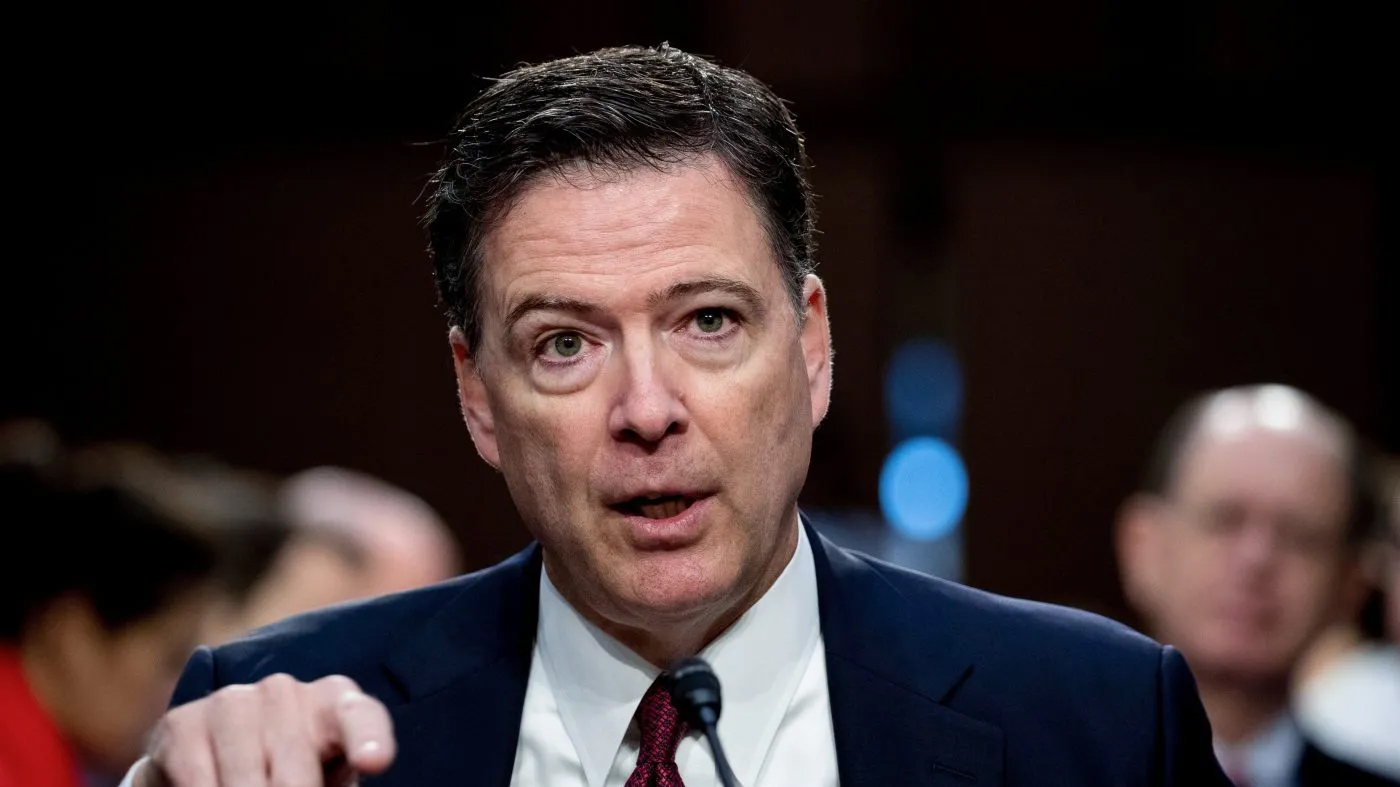
Comey’s responses “made matters worse” regarding Trump’s “frustration with Comey” (II-53). In the weeks following Comey’s statements, Trump pestered members of the intelligence community to make public statements saying that he had nothing to do with Russia’s efforts to sway the election. Trump was also hoping high-ranking intelligence officials, like Dan Coats, Director of National Intelligence, could use their influence to halt the FBI’s investigation. Coats’s recollections were not crystal clear on the matter, but others in the National Intelligence Office recalled Coats making several statements at the time regarding the President’s wanting him to help curtail the investigation, but “Coats told the President that the investigations were going to go on and the best thing to do was to let them run their course” (II-55-56).
Trump also broached the subject of stopping or limiting the investigation with Michael Pompeo (then-CIA Director) and Admiral Michael Rogers (NSA Director) (II-55). Admiral Rogers and his Deputy Director Richard Ledgett were so unsettled by the President’s suggestion that they immediately documented the conversation in a memorandum and placed it “in a safe” (II-56). Ledgett told investigators “it was the most unusual thing he had experienced in 40 years of government service.” In spite of the conversation’s strangeness, Rogers did not feel the President’s suggestion (and it was merely a suggestion, not a directive) was “illegal, immoral, unethical or inappropriate” (II-57).
In the meantime, Trump continued to pressure James Comey to make a public statement saying the President was not under investigation. Comey avoided the issue by indicating it was not in his purview, but rather the Department of Justice’s. On April 22, 2017, President Trump taped an interview in which he said he was considering asking Comey to resign, but “[w]e’ll see what happens,” seeming to imply that Comey’s job status hinged on there being a public statement clearing Trump of any wrongdoing in the Russia-interference matter (II-58-59). White House Counsel McGahn and senior DOJ officials did not want a statement issued because they knew they were getting close to triggering a Special Counsel investigation if it appeared Comey was forced to make a public statement (II-59-60).
The matter came to a head in early May when Comey testified before the Senate Judiciary Committee. According to McGhan, “the President said it would be the last straw if Comey did not take the opportunity to set the record straight by publicly announcing that the President was not under investigation.” During the oversight hearing, Comey was asked explicitly to comment on who may have been ruled out during the FBI’s investigations thus far, and if the President specifically had been cleared—but Comey would not answer any such questions until the investigation had run its course (II-62-63).
Terminating Comey
The President was furious, especially with Attorney General Jeff Sessions for his decision to recuse from overseeing the Russia investigation, saying, “I appointed you and you recused yourself. You left me on an island. I can’t do anything,” to which Sessions responded that he had no choice in the matter (II-63; according to testimony from Sessions’s chief of staff Jody Hunt). Trump became obsessed with the idea of firing Comey and discussed it with several advisers. Steve Bannon recalled telling the President firing Comey was pointless because “he could fire the FBI director but … not the FBI” (II-64).
On May 8, 2017, Trump informed his aids of his decision to fire Comey as Director. White House and Department of Justice officials were reluctant, and they wanted to slow the process and perhaps allow Comey to resign. Trump had made up his mind, however. Deputy Attorney General Rod Rosenstein expressed concerns about the way Comey had handled the Hillary Clinton email investigation. The President, with the help of Stephen Miller, had already drafted a termination letter, but Trump was persuaded to allow Rosenstein and Sessions to compose the letter firing Comey. Trump insisted the new letter include the fact “Comey had refused to confirm that the President was not personally under investigation.” Trump said, “Put the Russia stuff in the memo” (II-67).
Rosenstein did not want to reference the Russia investigation in the new draft because it was not behind his support for removing Comey. Ultimately Comey’s termination letter did not mention Russia, and McGahn was of the opinion that Trump’s original letter should never be read by anyone (II-68). There was immediate backlash in the media over Comey’s firing, and Trump wanted Rosenstein to say in public that the idea of the Director’s removal came from him, but “he would not participate in putting out a ‘false story’” (II-70). Nevertheless, Trump insisted that the narrative be that the decision to fire Comey did not originate with him. He directed Press Secretary Sean Spicer to tell reporters on May 9, 2017, “It was all [Rosenstein]. No one from the White House. It was a DOJ decision” (II-70).
“I just fired the head of the F.B.I. he was crazy, a real nut job. I faced great pressure because of Russia. That’s taken off. … I’m not under investigation.”
The following day, President Trump held an Oval Office meeting with Russian Foreign Minister Sergey Lavrov and Russian Ambassador Sergey Kislyak in which he told them about Comey’s removal. As reported by the media, Trump told the Russians, “I just fired the head of the F.B.I. he was crazy, a real nut job. I faced great pressure because of Russia. That’s taken off. … I’m not under investigation” (II-71; ellipsis in original). The President and the White House did not dispute the reporting of the remarks to the Russians, and the President confirmed them to McGahn when he inquired about them.
False narrative regarding Comey
In addition to trying to attribute Comey’s firing to Rosenstein, Trump also pushed the idea that Comey was an ineffective leader of the FBI and agents had lost confidence in him, and this had prompted him to accept Rosenstein’s recommendation for termination. Deputy Press Secretary Sarah Sanders gave a briefing to reporters in which she said, “Look, we’ve heard from countless members of the FBI that say things very different [than that they support Comey].” Sanders told the Special Counsel, however, that the claim and ones similar to it regarding agents’ lack of confidence in Comey were “not founded on anything” (II-72).
One of the most significant events involving Comey’s firing came on May 11, 2017, during an interview with NBC News’ Lester Holt. First, Trump contradicted his own version of events by acknowledging he had decided to fire Comey prior to meeting with Sessions and Rosenstein. Trump said, “I was going to fire regardless of recommendation.… [Rosenstein] made a recommendation. But regardless of the recommendation I was going to fire Comey knowing there was no good time to do it.” Then came the more eyebrow-raising statement: “And in fact, when I decided to just do it, I said to myself—I said, you know, this Russia thing with Trump and Russia is a made-up story. It’s an excuse by the Democrats for having lost an election that they should’ve won” (II-73).
So, in the moment, Trump abandoned or forgot the official story, that Comey had been fired chiefly for his mishandling of the Clinton email investigation (and particularly for his public statement about developments in it just prior to the election), compounded by FBI agents’ loss of faith in Comey. Later in the interview, Trump said he knew firing Comey would be “confus[ing]” and that it may “even lengthen out” the time frame of the Russia investigation (II-73).
The Special Counsel’s Office concluded that the evidence “indicate[s] that a thorough FBI investigation would uncover facts about the campaign and the President personally that the President could have understood to be crimes or that would give rise to personal and political concerns” (II-76). What is more, “The initial reliance on a pretextual justification [for terminating Comey] could support an inference that the President had concerns about providing the real reason for the firing [that is, the Russia investigation], although the evidence does not resolve whether those concerns were personal, political, or both” (II-77). In other words, Trump did not seem to want anyone to know the real reason for Comey’s termination (his refusal to say publicly that Trump was not under investigation), but Mueller was not able to determine if Trump was worried about personal liability (in other words, being charged with a crime) or political fallout, or both. If only political fallout, it would not support a charge of obstruction of justice.
Appointment of a Special Counsel
Less than a week after the Lester Holt interview, Acting Attorney General Rod Rosenstein authorized a Special Counsel investigation into Russian interference and related matters, and he appointed Robert Mueller to fill that post. A delegation of White House officials went to the Oval Office to inform Trump of the Special Counsel’s appointment, and, according to Jody Hunt, “the President slumped back in his chair and said, ‘Oh my God. This is terrible. This is the end of my Presidency. I’m fucked’” (II-78). Sessions had delivered the news. The President was furious with Sessions and blamed him for the situation since he had recused himself. “You were supposed to protect me,” said Trump, or something to the effect, as reported by Sessions (II-78).
At the end of the meeting Trump told Sessions that he should resign, and Sessions said he would submit his resignation as Attorney General. The next day the FBI notified Don McGhan that there was an investigation underway related to Comey’s firing and all related documents must be preserved. That was May 18, 2017, the same day that Sessions hand delivered his letter of resignation. Trump took the letter but asked Sessions several times if he wanted to continue serving as Attorney General. Sessions said that he did, and Trump acknowledged that he did not want Sessions to resign—but he kept his letter (II-79).
Priebus advised Sessions to retrieve his letter of resignation “because it would function as a kind of ‘shock collar’ that the President could use any time he wanted.” He also described the President as having the Department of Justice “by the throat” (II-79-80). Both Priebus and Bannon attempted to get Sessions’s letter back from Trump, but he was reluctant to return it. He would at times show it off to people, but then lie about not having it on hand when Priebus asked for it. Finally on May 30 the President returned the letter to Sessions with a notation that his resignation was not accepted.
Attempted removal of Mueller
Meanwhile, Trump was attempting to have Mueller removed as Special Counsel by claiming that he had conflicts of interest. In particular, Trump claimed that Mueller held a grudge over a membership fee dispute he and his wife had with a Trump-owned golf course in Virginia. Trump’s staff assured him such claims of conflict were groundless, and that the Department of Justice cleared Mueller of any potential conflicts before appointing him Special Counsel (II-80-81). McGahn also advised Trump that efforts to have Mueller removed “would be ‘[a]nother fact used to claim obst[ruction] of Just[ice]’” (II-81-82). Nevertheless, Trump continued considering the possibility of firing the Special Counsel, even though his closest advisers warned against it (II-82-83).
The first public reports of the Special Counsel’s investigating possible obstruction of justice surfaced June 14, 2017, in The Washington Post. The next day the President began tweeting hostile criticism regarding the investigation and the Special Counsel’s Office. On Saturday, June 17, Trump contacted McGahn at home and ordered him to fire Mueller. McGahn had no intention of carrying out Trump’s directive, telling him “the White House Counsel’s Office should not be involved in any effort to press the issue of conflicts” (II-85).
“McGahn recalled feeling trapped because he did not plan to follow the President’s directive but did not know what he would say the next time the President called. McGahn decided he had to resign.”
The President persisted, and called McGahn a second time to insist that he contact Rosenstein: “Call Rod, tell Rod that Mueller has conflicts and can’t be the Special Counsel,” Trump said (II-85-86). McGahn just wanted to end the phone call, so he told the President he would contact Rosenstein even though he had no intention of doing so. The Report says, “McGahn recalled feeling trapped because he did not plan to follow the President’s directive but did not know what he would say the next time the President called. McGahn decided he had to resign” (II-86). McGahn called his personal attorney and his chief of staff, Donaldson, regarding his decision; then he drove to his office to pack his things and submit his letter of resignation. Donaldson intended to resign also (II-86-87). Ultimately McGahn did not resign, however.
The Special Counsel summarizes Trump’s attempts to have him removed with the following statement: “Substantial evidence indicates that the President’s attempts to remove the Special Counsel were linked to the Special Counsel’s oversight of investigations that involved the President’s conduct—and, most immediately, to reports that the President was being investigated for potential obstruction of justice” (II-89).
Attempted limiting of Mueller’s scope
In addition to efforts to have Mueller removed as Special Counsel, Trump also attempted to limit the scope of the investigation. On June 19, 2017 (two days after asking McGahn to have Mueller removed), the President met with Corey Lewandowski, Trump’s former campaign manager, and asked him to take a message to Attorney General Sessions directing him to make a public statement about the Special Counsel’s investigation. For one, the statement was supposed to clear Trump of any wrongdoing when it came to Russia’s involvement in the 2016 election. Also, Sessions was to announce that he was limiting the Special Counsel’s investigation to foreign meddling in “future elections” (II-90-91).
Lewandowski was not sure of the best way to get the note to Sessions. Efforts to arrange a personal meeting away from the Justice Department, which seemed best to Lewandowski, proved difficult. Eventually Lewandowski passed the task to Rick Dearborn, a senior White House official, who agreed without knowing the contents of the message (II-92). When Dearborn finally read the note, it “definitely raised an eyebrow,” according to Dearborn’s testimony. Later, he lied to Lewandowski and said that he had delivered the message, when in fact he had not and had destroyed his only copy (II-93).
Harassment of Sessions for recusing
Meanwhile, Trump was lambasting Sessions in the media for recusing. He told The New York Times, “[H]e should have told me before he took the job, and I would have picked somebody else,” and he called Sessions’s recusal “very unfair to the president” (II-93). On July 22, Trump directed Priebus, his chief of staff, to demand Sessions’s resignation, but Preibus was certain the political fallout would be devastating, that “the Department of Justice and Congress would turn their backs on the President”—but the President was undeterred in wanting to replace Sessions, presumably with an Attorney General who would protect him (II-95). Priebus believed that his own job status depended on his securing Sessions’s resignation.
The President continued his public attacks on Sessions via Twitter. By the end of July, Sessions prepared another letter of resignation “and for the rest of the year carried it with him in his pocket every time he went to the White House” (II-96; quoting Jody Hunt, Sessions’s chief of staff). As The Report summarizes, “Substantial evidence indicates that the President’s effort to have Sessions limit the scope of the Special Counsel’s investigation to future election interference was intended to prevent further investigative scrutiny of the President’s and his campaign’s conduct” (II-97).
Suppressing emails
During this same time period, Trump became aware of emails pertaining to the June 9, 2016, Trump Tower meeting. In addition to the President’s involvement in drafting a misleading press report about the purpose of the meeting (discussed earlier), he wanted to suppress communications about the meeting as well. When stories were breaking in the media about the meeting, Hope Hicks and others advised the President that the best approach would be to release the incriminating emails to the media, rather than have them leaked. The Report says, “Hicks warned the President that the emails were ‘really bad’ and the story would be ‘massive’ when it broke, but the President was insistent that he did not want to talk about it and said he did not want details.” Moreover, Trump “directed the group not to be proactive in disclosing the emails because [he] believed they would not leak” (II-101).
According to the Special Counsel’s analysis, “The evidence establishes the President’s substantial involvement in the communications strategy related to information about his campaign’s connections to Russia and his desire to minimize public disclosures about those connections” (II-106). Regarding the suppression of emails related to the Trump Tower meeting, the Office concluded that Trump was trying to keep the information from the public; however, “the evidence does not establish that the President intended to prevent the Special Counsel’s Office or Congress from obtaining the emails” (II-107).
Continued pressure on Sessions
Trump’s pressure on Sessions to reverse his recusal continued for the remainder of 2017 and into 2018. Specifically, Trump wanted Sessions to “take control of the Special Counsel’s investigation, and order an investigation of Hillary Clinton” (II-107). In an Oval Office meeting, Trump told Sessions, “You’d be a hero. Not telling you to do anything”—but Sessions would find himself very much in Trump’s favor if he were to recuse and redirect the investigation toward Hillary Clinton.
The Special Counsel’s analysis states: “The duration of the President’s efforts—which spanned from March 2017 to August 2018—and the fact that the President repeatedly criticized Sessions in public and in private for failing to tell the President that he would have to recuse is relevant to assessing whether the President’s efforts to have Sessions unrecuse could qualify as an obstructive act.… A reasonable inference from [the President’s statements and actions] is that the President believed that an unrecused Attorney General would play a protective role and could shield the President from the ongoing Russia investigation” (II-112-113).
Influencing witnesses
Another critical element in the investigation into possible obstruction involves a letter that the President wanted his White House Counsel to draft. The New York Times published a story on January 25, 2018, about McGahn being directed to fire the Special Counsel. On January 26, the President’s personal counsel told Don McGahn that the President “wanted McGahn to put out a statement denying that he had been asked to fire the Special Counsel and that he had threatened to quit in protest” (II-114). McGahn refused to make such a statement because it was untrue. There was mounting media scrutiny based on the report over the next several days, and on February 5 Trump directed McGahn “to write a letter to the file ‘for our records’ … something beyond a press statement to demonstrate that the reporting was inaccurate” (II-115). The President believed McGahn was behind the leaks to the press, and he called him a “lying bastard” behind his back.
Trump threatened to fire McGhan, behind his back, if he refused to write the letter. The next day, Trump told McGhan directly to write a letter for the record, telling him, “This story doesn’t look good. You need to correct this. You’re the White House counsel” (II-116). McGhan would not comply, however, because the news story was essentially true. Ultimately, the Special Counsel concluded, “Substantial evidence indicates that in repeatedly urging McGahn to dispute that he was ordered to have the Special Counsel terminated, the President acted for the purpose of influencing McGahn’s account in order to deflect or prevent further scrutiny of the President’s conduct toward the investigation” (II-120).
Another substantial portion of Volume II looks at whether or not Trump attempted to influence the testimony and overall cooperation of persons being investigated by the Special Counsel in connection to either Russian interference or obstruction of justice—persons such as Michael Flynn, Paul Manafort and Michael Cohen. The attempts were made via personal contact with individuals, messages sent through Trump’s personal attorneys, and statements on Twitter.
Regarding Flynn, The Report states, “After Flynn withdrew from a joint defense agreement … and began cooperating with the government, the President’s personal counsel [John Dowd] left a message for Flynn’s attorneys reminding them of the President’s warm feelings towards Flynn.” Also, the message asked for a “heads up” if Flynn learned about anything regarding the investigation into the President. When Flynn’s counsel responded by reminding the President’s counsel that they could no longer share information, Trump’s attorney said “he would make sure that the President knew that Flynn’s actions reflected ‘hostility’ towards the President” (II-6). (The Report provides a fuller version of Dowd’s statement, and since then a full transcript has been released to the public as well as the recorded voicemail itself.)
“After Manafort was convicted, the President called Manafort ‘a brave man’ for refusing to ‘break’ and said that ‘flipping’ ‘almost ought to be outlawed’.”
Trump’s behavior toward Manafort was similar: “[T]he President praised Manafort in public, said that Manafort was being treated unfairly, and declined to rule out a pardon. After Manafort was convicted, the President called Manafort ‘a brave man’ for refusing to ‘break’ and said that ‘flipping’ ‘almost ought to be outlawed’” (II-6). “Flipping,” of course, refers to the subject of an investigation agreeing to cooperate with investigators in return for lesser charges or the prosecutor’s recommendation to the court for reduced or no incarceration. For a time, Manafort entered into an agreement with prosecutors, but in reality he was not forthcoming and violated other mandates of the agreement.
Attacks on Cohen
Michael Cohen, on the other hand, committed to cooperating with authorities. As The Report states, “On August 21, 2018, Cohen pleaded guilty … to eight felony charges, including two counts of campaign-finance violations based on the payments he made during the final weeks of the campaign to women who said they had affairs with the President.” What is more, “[d]uring the plea hearing, Cohen stated he had worked ‘at the direction of the candidate in making those payments,’” asserting that Trump was a co-conspirator in the campaign-finance violations. (Cohen ultimately corroborated the assertion by turning over a voice recording of him and Trump, and a canceled check signed by Trump to reimburse Cohen for the “hush money” payment to adult film star Stormy Daniels.)
The day following Cohen’s appearance in court, Trump made a point of comparing Cohen’s behavior with Manafort’s, tweeting, “I feel very badly for Paul Manafort and his wonderful family. ‘Justice’ took a 12 year old tax case, among other things, applied tremendous pressure on him and, unlike Michael Cohen, he refused to ‘break’—make up stories in order to get a ‘deal.’ Such respect for a brave man!” (II-149). In the following weeks, Trump kept up the public abuse of Cohen, “repeatedly impl[ying] that Cohen’s family members were guilty of crimes” (II-151). On December 3, 2018, for example, the President tried to influence Cohen’s sentencing via Twitter: “He lied for this outcome and should, in my opinion, serve a full and complete sentence.” In an especially widely reported tweet from December 12, Trump called Cohen a “rat”—and in the same tweet he said the investigation was an “illegal[ ] … Witch Hunt,” and suggested that instead the FBI should be investigating Hillary Clinton (II-151).
The President also used his close association with Fox News to keep applying pressure to Cohen, who was scheduled to testify before Congress. In a January 12, 2019, interview, Trump accused Cohen’s father-in-law of committing crimes (without any evidence) and said that authorities should be looking into his business dealings. On January 23, “Cohen postponed his congressional testimony, citing threats against his family” (II-152).
“The President’s efforts to influence the investigation were mostly unsuccessful, but that is largely because the persons who surrounded the President declined to carry out orders or accede to his requests.”
In summing up Trump’s behavior, The Report states, “Our investigation found multiple acts by the President that were capable of exerting undue influence over law enforcement investigations, including the Russian-interference and obstruction investigations.… The President’s efforts to influence the investigation were mostly unsuccessful, but that is largely because the persons who surrounded the President declined to carry out orders or accede to his requests” (II-157-158).
—
Chapter 4
—
Legal Analysis
–
The latter part of Volume II discusses case law, Supreme Court decisions, and congressional interpretations which have some bearing on the issues at hand, especially obstruction of justice. Unlike other parts of The Mueller Report which are primarily narrative (they tell the story of what happened), this final section is almost entirely analytical. One of the first issues Mueller discusses has to do with the uniqueness of the situation, that is, the investigation of a sitting President who was assisted in his electoral victory by a hostile foreign power and whose possible criminal acts took place mainly in public view (via Twitter, press conferences, public rallies, and media interviews). Accordingly, Mueller references congressional statutes which speak to “corrupt methods … limited only by the imagination of the criminally inclined” (ellipsis in original). The Report quotes the Senate in particular: “[T]he purpose of preventing an obstruction of or miscarriage of justice cannot be fully carried out by a simple enumeration of the commonly prosecuted obstruction offenses. There must also be protection against the rare type of conduct that is the product of the inventive criminal mind and which also thwarts justice” (II-165).
In other words, the fact that there may not be statutes specifically making illegal certain behaviors, it does not mean those behaviors are, therefore by default, legal. There must be some flexibility in the way laws are interpreted in order to adequately address criminal conduct. Then Mueller goes about discussing several statutes whose elements apply nearly, if not precisely, to Trump’s behavior.
Congress’s role
Absent the option to bring criminal charges against President Trump (due to Department of Justice policy), Mueller goes into depth regarding Congress’s checks-and-balances role in regard to the Executive branch of government (that is, the President). One of the issues that the Special Counsel seems to have anticipated is Trump’s stubbornness when it came to releasing documents and in general cooperating with congressional investigations (perhaps based on the President’s lack of cooperation in the Special Counsel investigation, like his refusal to sit for a face-to-face interview and his not allowing his tax returns to be examined). And, in fact, as of this date, the President has claimed a blanket “executive privilege” to shield documents and witnesses from congressional oversight. The Report discusses executive privilege, saying, “The Court has … upheld a law that provided for archival access to presidential records despite a claim of absolute presidential privilege over the records.… The analysis in those cases supports applying a balancing test to assess the constitutionality of applying obstruction-of-justice statutes to presidential exercises of executive power” (II-172). Simply stated, there is no such thing as blanket executive privilege; it can only be exerted in very specific instances.
Mueller also examined issues related to removal of personnel (like the Director of the FBI or the Special Counsel). Normally, presidents’ Article II powers give them tremendous latitude when it comes to hiring and firing positions within the Executive branch, while Congress’s Article I powers do not allow them discretion in such Executive branch personnel decisions. However, the Special Counsel points out that firings cannot take place in order to obstruct justice. The Report states, “[E]ven if a particular … position might be of such importance to the execution of the laws that the President must have at-will removal authority, the obstruction-of-justice statutes could still be constitutionally applied to forbid removal for a corrupt reason” (II-175).
DOJ policy
It seems significant that Mueller underscores the idea that a “corrupt-purpose prohibition … would not undermine the President’s ability to perform his Article II functions.… [Moreover] a restriction on removing an inferior officer [like FBI Director] for a corrupt reason—a reason grounded in achieving personal rather than official ends—does not seriously hinder the President’s performance of his duties” (II-175-176). The verbs undermine and hinder are of particular interest because of the Department of Justice policy prohibiting the indictment of a sitting President, which is known by the awkward title “Amenability of the President, Vice President, and other Civil Officers to Federal Criminal Prosecution while in Office.” In 1973, about a year before President Richard Nixon resigned in large part for obstructing the Watergate investigation, the Department of Justice’s Office of Legal Counsel concluded charging a President while in office “would interfere with the … unique official duties, most of which cannot be performed by anyone else.”
Specifically, the Special Counsel is speaking to the obstructive act of removing someone like FBI Director or Special Counsel and whether or not “Congress has a recognized authority to place certain limits on removal” (II-174); however, Mueller’s insistence that Congress’s interceding to prevent or correct a firing for obstructive purposes, which would naturally involve an investigation into the underlying circumstances, seems to be saying that such an investigation would not interfere, undermine, or hinder the President’s ability to perform his duties—which would, in turn, remove the rationale for the DOJ’s theory-based policy prohibiting the indictment of a sitting President. Later, The Report states in starker terms, “A general ban on corrupt action does not unduly intrude on the President’s responsibility to ‘take Care that the Laws be faithfully executed’ [Constitution, Article II].… To the contrary, the concept of ‘faithful execution’ connotes the use of power in the interest of the public, not in the office holder’s personal interests.… And immunizing the President from the generally applicable criminal prohibition against corrupt obstruction of official proceedings [like oversight and investigations] would seriously impair Congress’s power to enact laws” (II-177).
Furthermore, in Mueller’s final analysis, he writes, “[H]istory provides no reason to believe that any asserted chilling effect justifies exempting the President from the obstruction laws.” By chilling effect, Mueller means impeding the President from performing his constitutional duties. The Special Counsel emphasizes, “[T]he President’s conduct of office should not be chilled based on hypothetical concerns about the possible application of a corrupt-motive standard in this context” (II-180). It is worth noting based on hypothetical concerns—suggesting perhaps the theory that indicting a sitting President would interfere with (that is, chill, in a legal sense) his ability to perform his Article II responsibilities.
“And the protection of the criminal justice system from corrupt acts by any person—including the President—accords with the fundamental principle of our government that ‘[n]o [person] in this country is so high that he is above the law’.”
In the final paragraph of The Report, Mueller says again, “In our view, the application of the obstruction statutes would not impermissibly burden the President’s performance of his Article II function[s].… And the protection of the criminal justice system from corrupt acts by any person—including the President—accords with the fundamental principle of our government that ‘[n]o [person] in this country is so high that he is above the law’” (II-180-181). It is with this idea—that no one, even the President, is above the law—that Mueller concludes his nearly 450-page report, letting it literally be the last word.
Even if Mueller is not advocating for the overturning of accepted DOJ policy (“Amenability of the President . . .”), he makes clear that investigation of President Trump, especially on the allegations of obstruction of justice, are in order by Congress, even if not the Department of Justice.
The thread of bribery
There is a curious thread that runs through the final pages of The Mueller Report which, to my knowledge, has not received a lot of attention in the media to date, and that is the Special Counsel’s inclusion of cases involving bribery. He states, for instance, “[T]he Constitution confers no power in the President to receive bribes” (II-170). Then, at the end of his Report, Mueller writes, “[P]robing the President’s intent in a criminal matter is unquestionably constitutional in at least one context: the offense of bribery turns on the corrupt intent to receive a thing of value in return for being influenced in official action.… There can be no serious argument against the President’s potential criminal liability for bribery offenses” (II-180). Nowhere else in The Report does the Special Counsel discuss bribery except in these final pages.
Some legal experts have written about this twist at the end of The Report and have concluded that Mueller’s team was correlating obstruction with bribery because bribery statutes are more clear-cut than ones involving obstruction of justice, when it comes to applying them to sitting Presidents with Article II powers. Legal experts have claimed this correlation is weak and even erroneous. I think it is possible that Mueller was not correlating obstruction with bribery, but was, in fact, talking about bribery itself. It is not discussed by name elsewhere in The Report, but Mueller was not tasked with investigating allegations of bribery—coordination with Russia’s interference in the election, and obstruction of justice—so that is what he reported on. We know, though, that he uncovered other crimes by other subjects (Michael Cohen and Paul Manafort, as examples), and that he handed off cases to other DOJ offices, like the Southern District of New York.
When the Mueller probe came to a close in 2019, there were more than a dozen known investigations into Donald Trump and the Trump Organization, in addition to ongoing matters directly related to the Special Counsel’s Office. As of this date, Attorney General Barr will not release the unredacted Mueller Report to Congress, let alone the American people, and many of those redactions have to do with continuing investigations or grand jury testimony. Nor, of course, will Barr release the underlying evidence collected by Mueller’s team. With Barr’s assistance and nearly all of the Republicans in Congress, Trump has managed to stonewall the various House committees who are working to gather documents and hear from witnesses.
It is conceivable that Mueller uncovered evidence of actual bribery—after all, violations of the Constitution’s emoluments clause are among the allegations that have been leveled at Trump. The emoluments clause prohibits office holders from receiving gifts from foreign nationals and entities. It has been widely reported in the media that Trump’s properties, especially those in Washington, benefit from the business generated by foreign nationals, many of whom have come to Washington to lobby the Trump Administration regarding specific policies. What is more, bribery was the principal allegation against Vice President Spiro Agnew when he was forced to resign in 1973. The DOJ policy memo, “Amenability of the President, Vice President, and other Civil Officers to Federal Criminal Prosecution while in Office,” which has been used to claim a President cannot be indicted while in office, most definitely concluded that a Vice President can be.
Granted, there is much speculation in these last few paragraphs, but it would explain why Trump and his supporters, including Attorney General Barr, are willing to defy subpoenas and risk being held in contempt of Congress to keep the President’s financial documents out of the hands of investigators.
—
For more information about Twelve Winters Press, a literary publisher, and its imprints, visit twelvewinters.com.

 12 Winters Blog
leave a comment