12 Winters Blog

Cover for Men of Winter; Notes from the Route 66 Film Festival

Posted in September 2010 by Ted Morrissey on September 19, 2010

Working with graphic artist Julie McAnary, we’ve finalized a cover design for Men of Winter, and to say I’m quite pleased with it would be a gross understatement. In one of our many email exchanges, I told Julie I’d like the cover to be both austere and alluring; and, by George, I think we’ve done it. The original cover idea I pitched to her, months ago, wound up being a no go because we couldn’t secure the rights to the photograph (a photo of a German soldier from the Second World War I found online — I couldn’t track down anyone who claimed ownership of the rights, hence there was no one to grant permission to use it). But that ended up being a stroke of great luck because it sent us back to the proverbial drawing board. I spent several hours culling the net for a photo or painting from a contemporary artist who could grant us permission to use her/his work (or not). After about three hours and lord knows how many pictures, I came across the portfolio of Paul Casagrande and specifically a set of portraiture titled “Sara & Stefano” — I was thunderstruck and I instantly envisioned how one of the photos in particular could be the focal point for a powerful cover. I immediately went about tracking down contact information for Mr. Casagrande, who is Italian. I sent him a message via Facebook, and was shortly contacted by his associate Gianluca Precone (who, by the way, has an amazing portfolio on photo.net as well). Gianluca indicated that his colleague was willing to let us use his work as a courtesy, one artist to another (amazing generosity!). We had a series of exchanges, with the help of Google translator (and, as luck would have it, one of my students this semester is from Italy and is fluently bilingual — so with Nate’s expert assistance we nailed down some of the particulars). Thus this beautiful photograph, “Beyond thought,”
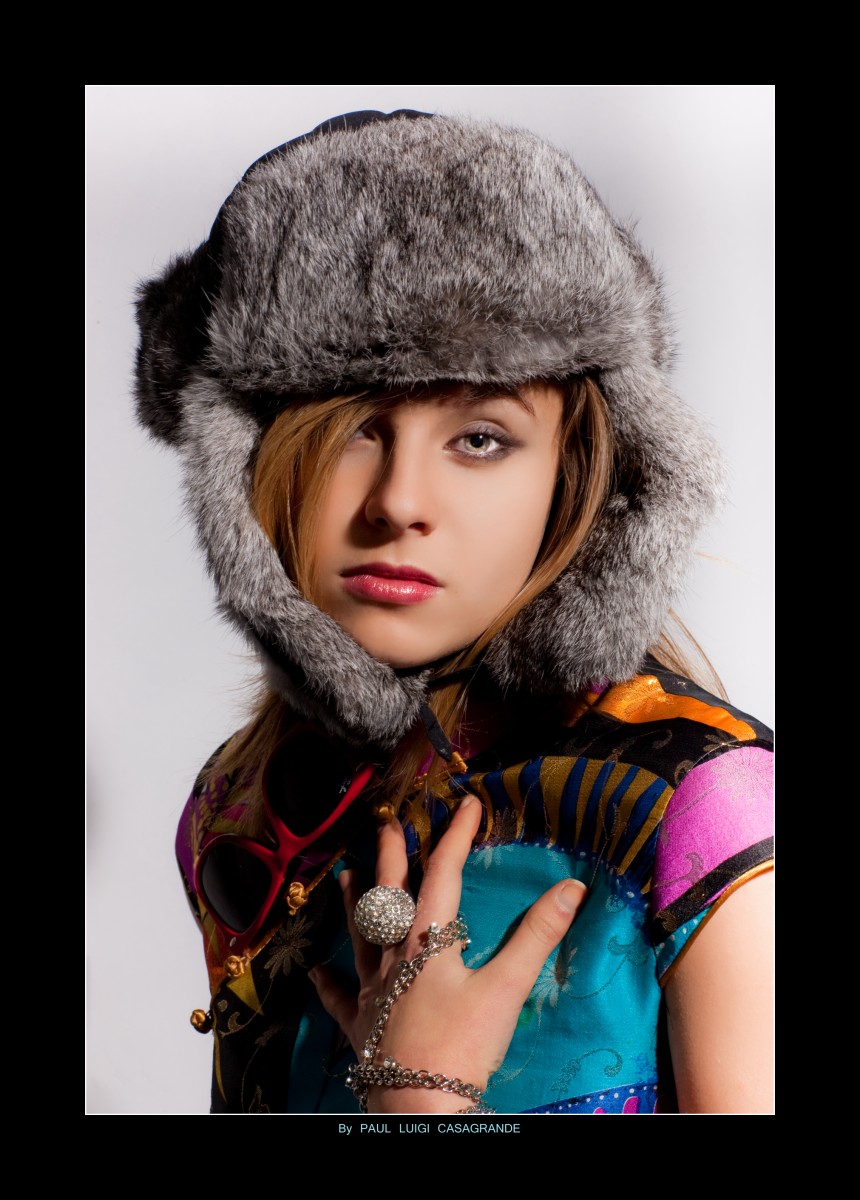
from Paul Casagrande's "Sara & Stefano"

became the focus of this (thanks to Julie McAnary) beautiful cover

Cover for Men of Winter

I floated it on Facebook, and it received rave reviews — so thank you, Paul, Gianluca, Julie (and, absolutely, Nate) — I just hope the stuff between the front and back covers lives up to this amazing piece of art. While I’m at it, another thank-you to M. R. Branwen, the editor of Slush Pile Magazine, who graciously blurbed my book earlier this summer, and who graciously published an excerpt from Men of Winter in the debut issue of Slush Pile when it was still just a manuscript looking for a home. Speaking of Men of Winter, Punkin House Press has pushed back the release date a bit, now proposed for November, which is all right — I’d rather see it done well, if a bit behind original plans, than to have it rushed to press.

With the front cover under our belt, I revised tedmorrissey.com and added a page devoted specifically to Men of Winter. Feel free to visit, as often as you like.

Switching gears, this weekend is the Route 66 International Film Festival here in Springfield, Illinois, and my son and I attended last night’s double session, and were thus treated to some terrific independent films. I don’t have space to do them justice here, but I want to give kudos to a few films in particular. One of our favorite dramas was Ben-Hur Sepehr’s The Desperate, which won Best History Short — about a Nazi general who pleads with a Jewish doctor to save the general’s only son: in a word, tremendous. We also greatly enjoyed the film that won Best Drama Feature, Alex Gaynor’s Wid Winner & the Slipstream: quirky, touching, somehow both sad and uplifting: terrific filmmaking, terrific storytelling. In the thriller/horror contest session, we got a great kick out of David Britton’s Parking Space — very Twilight Zone-esque, and I say that as an extreme compliment. We also enjoyed Sunday Punch by Dennis Hauck (whose lead actor, Dichen Lachman, is a treat as cool, tough and razor-sharply sarcastic boxing ring-girl Jill). However, both my son and I had to give our audience votes to Delaney by Carles Torrens: horrific, weird, laugh-outloud funny, with a host of offbeat characters whom one comes to love against all common sense (of decency).

I also have to mention an animated short that blew me away: The Magical Porno Theater by Jovanna Tosello: strange, yes, but Tosello’s use of cool colors and odd imagery, juxtaposed in intriguing ways, gives an undercurrent (could be an inside pun, but isn’t) of narrative to what otherwise seems a chaos of barely related yet fluid (another non-inside pun) scenes. When one sees what can be done with a modest budget but a lot of talent and creativity, it really underscores how amazingly bad most Hollywood offerings are.

A last note today: I’m reading Adam Braver‘s Crows over the Wheatfield, and I just wanted to share a brief passage that is so engaging I lingered over it for several minutes this morning:

Claire skirted across the lawn on a treaded path, where the trees were bare, like sadly misshapen arms shamed without strength. And in them, their simplicity was their beauty, their resolve to stand defenseless against the elements. Still they stood proud, their mangled branches witnessing the events that had passed under them. (p. 64, Harper Perennial paperback edition)

Quite lovely.

“The Double” in retrospect and Men of Winter status update

Posted in September 2010 by Ted Morrissey on September 12, 2010

I had some quality Amtrak time this weekend and was able to finish Dostoevsky’s long story, or novella, “The Double” (1846; trans. George Bird). I enjoyed it very much. Ronald Hengley, the editor of Great Short Works of Fyodor Dostoevsky (Perennial Classic, 1968), writes in his introduction that the story’s main character, Yakov Petrovich Golyadkin, is a reflection of Dostoevsky’s self-image:

These [i.e., Golyadkin and the protagonist of “White Nights” (1848)] despised, feeble, usually poverty-stricken personages are all introspective in inspiration and may be considered as self-portraits of the author as seen in the distorting mirror of his imagination — portraits, that is, of the Dostoevsky who was the butt of his fellow cadets in the army engineering school where he received his main education, and who later provoked the sneers of Turgenev and other members of his literary set in St. Petersburg shortly after receiving notoriety with the publication of his first fiction. (viii)

Hingley goes on to say that Dostoevsky “resented . . . almost everyone he knew,” but that “he also appears to have courted [. . . humiliating] experiences with a certain masochistic gusto.” In my reading of “The Double,” I see the tenacity of one’s individual personality. Mr. Golyadkin (whose name means something like “poor fellow” in Russian, according to the translator) resolves time and again to cut all ties with his double, “Golyadkin junior,” a duplicitous, mean-spirited fellow who seems bent on Golyadkin’s professional and personal destruction, but the original Golyadkin continues to seek out his double or to place himself in situations where his encountering his double is all but inevitable. I see this as one’s inability to totally rid oneself of the darker (or at least less attractive) sides of one’s personality. We may be able to stray from our true selves for a time, but we must always return, even if it’s against our own will.

I’m looking forward to other stories in the collection, but for now I’ve turned my attention to a contemporary novel, Adam Braver‘s Crows over the Wheatfield (2006). I’m about forty pages into it, and I no doubt will be blogging further about it in the future. I’m a great fan of Braver’s first novel, Mr. Lincoln’s Wars (2003), a book I have taught in a couple of different college courses; and readers around the world have been becoming fans of Braver’s newest novel, November 22, 1963, as it’s been translated into several languages, including French and Japanese. As I said, more on Crows to follow.

While I’m at it, a quick nod to Vaudezilla’s production of Rollin’ Outta Here Naked: A Big Lebowski Burlesque. I was in Chicago over the weekend and took in the show at the Greenhouse Theater Center. It was . . . bizarre — but great fun, especially for Big Lebowski fans (who aren’t plagued by cultural timidity). Frankly, it’s the sort of thing one doesn’t have an opportunity to see much (or at all) around Springfield.

On the Men of Winter front, I’ve been exchanging emails the last few days with the graphic artist, Julie McAnary, who’s designing the cover for my novel, and we’re just about there, so hopefully it will be ready for an unveiling very soon. I anticipate some page proofs soon as well, as the publisher, Punkin House Press, is planning a release this fall.

I continue to look for a journal to publish “Melvill in the Marquesas,” the first chapter of my novella Weeping with an Ancient God, and I continue work on my novel-in-progress, informally titled the Authoress, though I’m 99.9% certain of the formal title now. I’m nearing the 300-ms.-page mark and feeling very good about the story.

tedmorrissey.com

Dostoevsky’s “The Double” and Earl’s “Forbidden Beowulf”

Posted in September 2010 by Ted Morrissey on September 4, 2010

It’s been awhile since I entered the blogosphere, so I thought I’d do a post.  As I’d written about a couple of times, at the end of the summer I was reading a collection of Turgenev’s stories that I enjoyed very much, which encouraged me to pick up a collection of Dostoevsky’s shorter works that I’ve had lying about for, well, years, and have been wanting to crack open.  So I have.  I’ve been reading the collection’s opening tale, “The Double” (1846, trans. George Bird), and have found it a classic indeed.  Thus far it’s been both haunting and funny by turns.  The descriptive paragraphs are most remarkable.  Here’s the opening to one that I read over again and again because it’s just so good:

It was a dreadful night, a real November night, dark, misty, rainy and snowy, a night pregnant with colds, agues, quinsies, gumboils, and fevers of every conceivable shape and size — put in a nutshell, bestowing all the bounties of a St. Petersburg November. (p. 38, Great Short Works of Fyodor Dostoevsky, ed. Ronald Hingley, Perennial Classic, 1968)

There is much to love here, but I especially admire the image of the pregnant night and the sarcasm of referring to the bounties of such a night. My first encounter with Dostoevsky, I believe, was reading Crime and Punishment in a world lit seminar while working on my doctorate. I’m partly on my Russian writers kick because I’ve always been interested in their works but have managed to miss most of them in my life as a student — but also the great William Gaddis scholar Steven Moore said somewhere (maybe it was on the Gaddis list serve) that there hasn’t been much work done on the Russians’ influence of Gaddis’s fiction, and there ought to be. Moore’s comment, wherever I read it, has stuck with me, and I fancy that eventually I’ll try to connect some of the dots between Gaddis and the Russians.

In addition to Dostoevsky, I’ve spent the last couple of days reading through James W. Earl’s article “The Forbidden Beowulf: Haunted by Incest” in the March 2010 PMLA. I’m a great admirer of Earl’s Beowulf scholarship, and it was very useful to me when working on the Beowulf chapters of my dissertation, though I came to it rather late in the process. A fellow after my own academic heart, Earl brings much to bear on the poem from other (perhaps unexpected) disciplines — psychology, yes (which, of course, is expected), but, as in this article, a little astronomy and quantum physics as well.  He writes,

How can we tell whether an author knows or does not know such backstories [e.g., Homer’s knowing the judgment of Paris] if he or she does not tell them? The situation is a little like detecting dark matter in the universe: the best we can do is try to detect subtle distortions in the matter that we can see. (p. 289)

Something that I really appreciate about Earl’s technique in the article is that, while he does put forward a thesis, his organizational strategy is essentially thinking through the related issues and the various scholars who have weighed in on them, and considering how their views may affect his own leanings. He concludes his third paragraph by saying, “I pose many questions and try to untangle such a mess of evidence that it is bound to get confusing at times” (p. 289). His erudition is impressive, to put it mildly, yet his tone is . . . inviting, one might even say conversational, at times anyway — of course, it’s a conversation with a very learned scholar who wants you to be learned too, someday, if not today exactly. Earl suggests that the mood of foreboding that Beowulf tends to cast upon readers, experienced and inexperienced ones alike, has more to do with what’s not said in the poem than what is on the page:

Beowulf is haunted by these [Scylding] analogues, and much of what is disturbing about the poem is due to this haunting. The poem is disturbing in many ways, among them the feeling one gets after long familiarity with it that something is missing, that something important is not said — or, as Freud might say, that something is repressed. (p. 292)

Given my interests in the psychic origins of creativity — of creating fictive narrative especially — Earl’s observations are most provocative.

On the creative writing front, the editor of Pisgah Review, Jubal Tiner, suggested that my story “The Composure of Death” should keep its title, but that we use the quote from Hawthorne’s “The Minister’s Black Veil” — where I derive the phrase — as an epigraph to the story: a good suggestion indeed. I sent an electronic copy of the story, epigraph included, to Jubal last week. I’m not sure which issue the story will appear in.

With the arrival of September, the floodgates have opened and lit journals across the land are accepting submissions again. As such, I’ve been busily getting “Melvill in the Marquesas” (the opening chapter of my unpublished novella Weeping with an Ancient God) in the mail (e- or otherwise). In the process of looking for journals to send it to, I came across a unique one: Textofiction, which is “an online literary publication dedicated to bringing the best writing in under 140 characters” — clearly inspired by Twitter. When I was working on my masters, Kent Haruf (who ended up being my thesis chair) liked to begin writing workshops by having us write complete stories in under 250 words, and that was a challenge. I’m not sure how one writes a complete story in 140 characters or less. I’ll have to keep an eye on the journal to see what writers come up with.

As far as  I know, my publisher, Punkin House Press, is still planning on releasing Men of Winter in October, but I haven’t seen a page proof or a cover design yet; perhaps soon.

tedmorrissey.com

More Turgenev and a proposed release date for Men of Winter

Posted in August 2010 by Ted Morrissey on August 15, 2010

I’ve been reading from the collection of Ivan Turgenev’s stories (though some have been described as short novels). After reading the collection’s titular story, “First Love,” I read an earlier-written tale, “Bezhin Meadow” (1851), then skipped to the final tale in the collection “Clara Milich” (1882), and now I’m reading “Assya” (1857). There’s been little rhyme or reason as to which stories I’ve read and in what order. I suppose I’ve been guided somewhat by David Magarshack’s (that is, the translator’s) introduction, and his assessment of the evolution of Turgenev’s style as reflected in these stories that span more than thirty years. According to Magarshack, in his earliest stories Turgenev was especially interested in describing scenery:

The interesting stylistic feature of A Sportsman’s Sketches, as well as of Turgenev’s other stories belonging to the same period [early 1850s], is the presence of the long descriptive passages which have very little relation to the subject matter of the story. Indeed, Turgenev was for a time so obsessed with his ability to paint landscapes in words that even his letters of the period abound in descriptive passages of the same kind. (pp. x-xi, First Love and Other Tales, Norton 1968)

On the one hand, I see in the stories I’ve read so far what Magarshack is getting at. His assessment, though, that the “passages … have very little relation to the subject matter of the story” is not one that I would whole-heartedly embrace. There may be little direct relation to the plot of the story, but it seems to me that Turgenev is operating in a way that would soon become known as impressionism in painting, and a bit later as impressionism in literature. That is, the descriptive passages are often meant to reflect some meaningful aspect of the characters who are operating within or observing the scenery — that aspect may be the characters’ psychologies, or it may be foreshadowing their narrative advancement. In the story “Assya,” for example, the connection between scenery and characterization is overtly made by Turgenev when the narrator says of Gagin, a young Russian fellow he’s met in Germany and who’s awakened him early on a beautiful morning, “With his wavy, shiny hair, open neck, and rosy cheeks, he was as fresh as the morning himself” (94).

Needless to say, I’ve been enjoying the Turgenev stories. I read a bit of Turgenev as an undergraduate, but he’s one of the many authors who’ve been just on the edges of my academic radar all these years.

A couple of developments on the creative writing front: My story “The Composure of Death,” which I just began sending round last month, has been taken by Pisgah Review, a beautiful little journal associated with Brevard College, in Brevard, North Carolina. The journal is edited by Jubal Tiner, whom I met several years ago at the Louisville Conference on Literature and Culture Since 1900 (though I’m not sure Jubal is making the connection just yet). According to Jubal’s email, the editorial staff is not in love with the title of the story so they’ve asked me to consider a different title, which I’m willing to do — I have no emotional investment in that specific title. I did reply with a brief explanation of the title’s origin, which is Hawthorne’s “The Minister’s Black Veil,” a story I allude to in my story, and why I’d chosen that phrase. I don’t know if that will change their feelings about the title, but, if not, I’ll put my thinking cap on and come up with another. With the acceptance of the story, each of the stories in my collection Weeping with an Ancient God, a novella with collected stories, has been published. I’ve also been shopping around the first chapter (under the title “Melvill in the Marquesas”) of the unpublished novella, but so far no one has offered to take it to the dance. It’s still very early in the process, and I’ve only gotten a couple of rejections so far.

The other development: According to Amy Ferrell, CEO of Punkin House Press, Men of Winter should be out in October. Still quite a ways to go in terms of laying out the pages and designing the cover, but that will apparently get intense in a hurry. PHP also wants to do some sort of online workshop/contest that I’ll lead and judge for publication, in part to promote my novel but also to help other writers find publication. Right now it’s just a concept, so that too will have to be fleshed out in the coming weeks.

Meanwhile, I continue to work on the Authoress, my novel-in-progress. I’m about 265-manuscript pages in, and a couple of days ago I roughly mapped out the final sections of the story. I have a long way to go, but I must resist the urge to rush toward the finish line. In a sense I’ve been working on the novel for four-plus years, but that’s misleading because for three years I (almost literally) didn’t touch the manuscript as I finished my Ph.D., specifically preparing for and passing comprehensive exams, then getting the dissertation topic approved, and researching, writing, and defending it. So, really, this is only my second summer of working on the novel. I must keep in mind facts like it took Joyce seventeen years to write Finnegans Wake, and William H. Gass worked on The Tunnel for nearly thirty years — not to imply that my book will be another Finnegans Wake or The Tunnel, but rather to remind myself that a novel worth its salt takes time to write, and rushing the process is counterproductive.

tedmorrissey.com

Solares, Joyce and the difficulties of finding a small press publisher

Posted in June 2010 by Ted Morrissey on June 23, 2010

I finished Ignacio Solares’s novel Yankee Invasion this morning (about 2 a.m. — long story) and was very impressed by it — plus I enjoyed the heck out of it. I especially admire the way Solares effortlessly moves from various time periods, perspectives, and narrative voices. It’s not an especially long novel, only a little over 200 pages, with many concise chapters. In short, I recommend it. I’ve gone back to reading my way through Ulysses, specifically the Cyclops section. Going from Solares to Joyce was kind of like plunging into icy waters. While complex, Solares’s prose style is very straight forward; even with the multiplicity of time frames and narrative voices, etc., it is easy to keep hold of the various threads. Not so much with Ulysses, which requires careful reading (and re-reading and re-reading) to stay more or less on top of the text — but I enjoy that challenge, and, as a writer, I feel that I’m absorbing some meaningful things from Joyce. For Father’s Day I asked for and received a copy of Finnegans Wake. I’ve been perusing the introduction by John Bishop, which begins with what could be a rather discouraging observation for many: “There is no agreement as to what Finnegans Wake is about, whether or not it is ‘about’ anything, or even whether it is, in any ordinary sense of the word, ‘readable'” (p. vii, 1999 Penguin edition). I’m anxious to begin in earnest — but first to finish Ulysses (and probably another couple of contemporary authors). I did mention Finnegans Wake in my dissertation but only in that the various reading groups dedicated to the book — groups that read the text aloud line by line and research/discuss every allusion — are akin to the textual communities that developed in medieval England, whereby a literate person (usually a member of the church) would read aloud (usually the Bible) and his audience would contribute to interpreting the text. I would like to be a part of just such a Finnegans Wake group. I know: it wouldn’t be most folks’ cup of tea.

I’m still not back to composing for the Authoress, but I’ve read through the entire manuscript, about 230 pages, and did some revising and close editing (and note taking). I also have been reading some historical texts on everyday life in Georgian/Victorian London to incorporate further textual details into my novel. In reality, though, I haven’t uncovered much new material that I want to try to weave into the story, but I’ve verified that much of what I’ve already included is historically plausible. Here’s a little tidbit that I learned: copper cooking utensils, frying pans, etc., were very popular in Victorian London kitchens, but they were lined with tin because copper is toxic, so cooks had to be diligent in having their pots and pans retinned every so often to avoid poisoning their families, as the tin lining would wear off over time. Cast iron cookware was not as fashionable, but overall it was safer and less trouble to maintain. One of  things I like best about being a writer is that to be a good writer one must also be a good learner.

On the Men of Winter front, I believe the final edits have been made and the novel is ready for pagination/typesetting. I’ve also had some email contact with the graphic designer who’s doing the cover regarding blurbs. The other day I received a rejection for the novel from a university press, even though I’d withdrawn the manuscript query via email months ago and received a congratulatory email in acknowledgement of my withdrawal (these are the best sorts of rejections to receive). I bring it up, though, because in the letter of rejection, the editor said that her press was cutting back on the number of fiction titles they were going to bring out in the  coming year due to economic reasons. Cutting back! They’d only been publishing four titles a year as it was. It’s just further evidence that things are pretty bleak in the publishing world — especially the small, independent press world. Meanwhile, many small and/or university presses have stopped accepting new manuscript queries because they are already inundated. At a glance it would seem that there are a lot of these types of presses out there, but for a fiction writer (especially a white male fiction writer) the number is fairly small. I haven’t done any hard-number calculations, but it seems that the literal majority of small presses only publish poetry (poetry quite frankly is easier to publish; the manuscripts are much shorter than prose mss., layout is easier, the books tend to be much thinner in terms of the number of pages). Then you have presses who are only interested in creative nonfiction, or in translation; or they only publish women, or authors from a particular cultural arena, or authors who are gay/lesbian, or authors who are disabled, or who come from a specific geographical region (Canada or the Southwest or New England), or authors under the age of 25, or authors who are enrolled in an MFA program. . . .  When it comes to university or small presses that are willing to look at fiction from white males, it’s a relatively small number. Then you toss in factors like a press may be, understandably, only reading during certain times of the year, or it has stopped accepting new queries because it’s already severely backlogged — and looking for a prospective publisher becomes even more daunting. Intellectually I realize we white males have been dominating, well, everything in Western culture for thousands of years, including publishing, and I agree that it’s about time that other voices are heard in the publishing world (not to mention every other world); but it’s still a bit frustrating when one is looking for an outlet for one’s work.

Hence long live Punkin House Press.

I continue to circulate “Melvill in the Marquesas,” the first chapter of my unpublished novella, as a stand-alone piece — but I’ve only begun the process, so it’ll be a little while before the rejections begin rolling in in earnest. I’ve also begun typing up some of my older published stories, as  I hope to have together a novella with collected stories manuscript in the near future.

tedmorrissey.com

Men of Winter edits, more Solares and Morrison

Posted in June 2010 by Ted Morrissey on June 15, 2010

I’ve had the good fortune to have my novel Men of Winter edited by Cheryl Hampton for Punkin House Press. Her close attention to detail and, as such, to nuance have been most reassuring — reassuring, that is, that Men of Winter is in good hands.  I have attempted to make the narrative voice sound translated, as if English is not the novel’s original language; hence many of the sentence patterns are deliberately oddball. I think it’s fair to say that it took Cheryl a few pages to get the rhythm of what I was up to, but once she did, her editing was spot on, often times suggesting changes that were improvements but still in the proper “oddball” voice.  One of the issues we discussed, via emails, was the use of compound words, like “snowcountry” and “streetpeople.” We’ve been in agreement to go with the compound words in the final version of the novel, as the unusual compounds contribute to the voice’s oddity. We agreed on one exception, however: “dining room” for “diningroom.”  For some reason, to my eye at least, the GROOM part of diningroom seems to stand out, and it’s an unnecessary distraction. Overall the edits have been minor and few, and the final version of the manuscript should be finished very soon.

I’ve been reading more of Solares’s Yankee Invasion, and I very much admire the way that the author moves back and forth in time in the narrative. The novel has a first-person reflective narrator who is at times writing about the time just prior to and during the United States’ invasion of Mexico City in 1847, and other chapters are much later as the narrator discusses with his wife about the memoir he is writing, and why he’s writing it, and what he’s leaving out, etc. There is much factual history in the novel woven in with the totally fabricated characters and events. In fact, the book begins with a timeline of Mexico’s history from 1838 to 1848, and it ends with a glossary of biographies of people mentioned in the novel, from John Quincy Adams to Francisco Zarco.  There are also several maps of Mexico and the United States from the time period. In the novel’s introduction, Carlos Fuentes (who’s been one of my favorite authors since I read his novel The Old Gringo about a million years ago) writes, “Written from the precarious vantage point of the future immediate to the novel, yet written by an author, Solares, contemporaneous to ourselves, Yankee Invasion holds a tacit invitation to see and be seen as subjects of history passing through the sieve of fiction” (xiii, 2009 Scarletta Press edition). I’m about 90 pages into the novel and am enjoying it very much. It’s an excellent example of what critic Brian McHale, in Postmodernist Fiction, calls a “zone,” a space created by the author where the “real” and the “unreal” (even the fantastic in this case) co-exist.

I’ve also been reading Toni Morrison’s The Bluest Eye for my African-American authors class. I must say even though I’m an enormous fan of Morrison’s work, I’ve not been enjoying The Bluest Eye as much as I anticipated — perhaps because I’m ready to be in full summer mode and the novel is keeping me at least partially in the work-world. This is my last week to teach, though, as next Thursday is the last class session, which will be devoted to the students’ final projects.

In my creative life, besides working with Cheryl on the final publication draft of Men of Winter, I also finished retyping/revising my older novella Weeping with an Ancient God, and I’ve even been sending out the first chapter as a stand-alone piece, titled “Melvill in the Marquesas.” Plus I’ve been reading and editing the entire manuscript of the Authoress, my novel in progress, before continuing the drafting process. I’m nearly done with the 230 or so manuscript pages, and will be ready to write in earnest by the end of the week, I would think.

tedmorrissey.com

More Ulysses, progress on Men of Winter

Posted in May 2010 by Ted Morrissey on May 23, 2010

I’ve been reading “The Wandering Rocks” section of Ulysses and enjoying it very much.  I especially appreciate Joyce’s overlapping of images and micro-incidents to tie together otherwise disparate scenes.  Also, the language play, especially in the scenes centering on Stephen Dedalus, is breathtaking.  I frequently stop, go back, and re-read sentences and whole paragraphs, etc., in pure wonderment at what Joyce has managed.  Case in point:  Joyce writes, “She dances in a foul gloom where gum burns with garlic.  A sailorman, rustbearded, sips from a beaker rum and eyes her.  A long and seafed silent rut.  She dances, capers, wagging her sowish haunches and her hips, on her gross belly flapping a ruby egg” (p. 241 1990 Vintage International edition).  The word “seafed” is a good example, too, why one must pay close attention when reading; it’d be easy to misconstrue it as some sort of verb, when it’s actually a fairly straight forward adjective, like sea-fed, as in fed by the sea.  The hyphen would help, but gods bless Joyce for not giving us one there.  I’ve always liked compound words, like seafed, but I’ve found most editors are very uncomfortable with them.  When my story “Communion with the Dead” was published in The Chariton Review, the production editor broke apart several of my compound words, for examples, making “bluelight” into “blue light” and “steppingstone” into “stepping-stone.”  I stated my preferences but left the final version up to her (it was the first story I’d had published in sometime, thanks in large part to focusing on my doctoral studies, so I was just grateful to get something in print again and didn’t feel especially combative over it).  She opted in just about every case for the more conventional spellings.  I hope to publish a collection of stories eventually, and I figure I’ll set things as I’ve always wanted them in that volume.  I’ll need to turn away from Joyce for a couple of days as I’m teaching The Blacker the Berry (1929)  by Wallace Thurman in my African-American literature class, and I’ll need to spend some quality time with the text.

On the Men of Winter front, the publisher is moving forward with it and has assigned an editor and graphic designer to my book.  I was contacted by the graphic designer, Julie McAnary, yesterday.  After checking out her website, I’m especially pleased and excited that she’s been assigned my cover.  I had roughed out an idea for the cover using Word, but I’m also quite open to her developing some cover designs as well (again, especially since looking at her work online).  In the past, when designing A Summer’s Reading and Quiddity, I’d used Quark and then Adobe InDesign, but I no longer have access to either software so I wasn’t able to pull my cover idea together in the way I imagine it — but that’s all right: I’m comfortable with Julie’s handling the work and am looking forward to seeing what she comes up with.

Meanwhile, I continue to work on The Authoress.  I’m in a section that is especially challenging, as the narrator is observing multiple frenetic things happening at once.  I know it will require much work, much writing and rewriting, to get right — but that’s the fun of it.  I enjoy sitting down with a draft and going through it with the proverbial finetooth comb, adding and taking away and rewording.  I’ve always found that when I revise I almost always add (and reword).  Very rarely do I feel that I’ve overwritten a section; my journalistically bred barebones style tends to make my first drafts under- rather than overcooked.  My academic year is all but over (save for the African-American lit class, which runs to the end of June), so I’m chomping at the bit to get to writing and working on The Authoress in summertime earnest.

“Walkin’ the Dog” has been taken by Spilling Ink Review and will be included in the journal’s inaugural issue, which is supposed to be out June 1 (very fast turn around, but that’s one of the advantages of epublishing).  I’m very pleased and impressed with their website, and look forward to seeing what they do with my story.  SIR, which is edited by Amy Burns, will also publish an annual anthology in print, but not with everything that’s been online.  With the publication of “Walkin’ the Dog” I’m out of stories; I’ve published every story I’ve written (well, every one since I finished my master’s and had something of a clue as to what I was doing) — which is a sort of odd feeling.  I’m so used to looking for outlets and sending off stories (and receiving rejection after rejection before someone says yes), it’ll be strange not to go through that process:  But I’m not complaining. tedmorrissey.com

Ulysses, African-American Authors, et al.

Posted in May 2010 by Ted Morrissey on May 16, 2010

I continue to make my way through Ulysses.  This morning I finished reading episode nine, “Scylla and Charybdis.”  It was especially meaningful to me for several reasons.  It’s a highly literary episode, as the characters, especially Stephen Dedalus and the poet A. E., discuss Shakespeare and, in particular, their various theories about Hamlet (and Hamlet and king Hamlet).  Before reading Ulysses, I had not seen the parallels between Homer’s Odyssey — a text that I’ve taught for years — and Hamlet, a text that I’ve taught but it’s been awhile. Both, for instance, are very much concerned with the absent father (Odysseus and king Hamlet), and in both the returned father spurs them to violence against intruders to their home (the suitors and Claudius).  The bipolarity of faithful Penelope versus faithless Gertrude is interesting, too.

Perhaps the most intriguing notion to come out of my reading of episode nine, however, is the idea that Joyce was exploring the dichotomy between Aristotle’s rationalism (represented by the cliff-dwelling Scylla) and Plato’s more organic idealism (the maelstrom Charybdis).  I’ve been teaching and studying the Odyssey for years, but I’ve never thought of Odysseus as having to navigate between these philosophical poles — and the dangers associated with sailing too closely to one or the other.  We can see this metaphor played out in our everyday lives.  In education, for example, it seems that the Aristotelean has run amok with an overemphasis on standardized testing (crystallized in the politically named “No Child Left Behind” legislation) to the detriment of the more flexible and organic pedagogies, associated in this paradigm with the Platonic.  That is, President Bush and the architects of NCLB wanted to treat students as if they were software that could be tweaked into superior performance — and dismissing the complexly organic nature of complex human organisms.  Standardized testing has its place in education, but we mustn’t sail too closely to the rocks; a more moderate course is needed.

I’ve also been (re-)reading some slave narratives as I’m currently teaching one of my favorite courses at the college, Introduction to African-American Authors.  I’ve taught it several times over the last four or five years, but I overhauled the syllabus, placing greater emphasis on the early slave narratives (Equiano, Prince, Douglass, and Jacobs), and also on the Harlem Renaissance.  Regarding the latter, this new emphasis has allowed the poetry of Countee Cullen and Langston Hughes into the reading list, as well as the novella The Blacker the Berry (1929) by Wallace Thurman.  For the conclusion of the course, I’ve also switched out Toni Morrison’s Beloved (1987) for The Bluest Eye (1970).  Of course, in revamping the syllabus the age-old problem has manifested itself:  for everything the syllabus giveth, it must taketh something else away.  In this case, I’ve lost some writers like Zora Neale Hurston and Alice Walker (and Walker’s concept of “womanism” as opposed to feminism).  These are great losses to be sure.  I’ll have to evaluate this incarnation of the course once we finish in mid-June.

I continue to work on The Authoress and am very pleased with how it’s taking shape.  I have a more solid sense of the ending, but it remains many, many words away, and I’m deliberately avoiding marrying myself to the ending as I envision it now — I want the narrative to have the autonomy to assert its own wishes and needs as we go along.  The fine folks at Punkin House Press are getting things in order.  I still haven’t been contacted by an editor there regarding Men of Winter, but it will no doubt happen soon.  Their plate is mighty full, to put it mildly.  Speaking of autonomy, PHP’s philosophy is to let writers have their own space to create and to promote themselves.  On the one hand, I very much appreciate this noble philosophy, but, on the other, some writers could probably use a bit more guidance when it comes to presenting themselves to the world.  I can offer no citation, but I’ve heard that when Stephen Crane (The Red Badge of Courage, “The Open Boat”) would send his work to his publisher, the junior editors would draw straws to see who had to edit his writing, which was filled with misspellings and ungrammatical musings.  Creativity — even if a sort of genius creativity — does not necessarily make one a master of the English language, which is why the gods invented editors.

And speaking of unmasterful endeavors, I continue to tinker with tedmorrissey.com — but there probably isn’t a lot more to do until Men of Winter gets closer to an actual release date.

Ulysses and my new website

Posted in May 2010 by Ted Morrissey on May 2, 2010

Somehow or another in my college coursework and general bibliomania, I managed to miss pretty much all of James Joyce, other than reading Dubliners (1914) in bits and pieces over the years and including “Araby” on my syllabus when I’ve taught Intro to Short Fiction at the college; and I’ve always considered my lack of familiarity with Joyce as an enormous gap in literary knowledge.  Hence one of my post-doctoral goals was to catch up on my reading of Joyce.  In the fall I read A Portrait of the Artist as a Young Man (1916), and over the winter I began Ulysses (1922).  Other pressures forced me to leave the text be for a time, but I’m back at it, and in the last week or so I’ve read the “Lotus Eaters,” “Hades” and “Aeolus” sections,  and I’m working on “Lestrygonians.”  Ulysses is a difficult text to be sure, and it requires focus.  There have been a few episodes in which I’ve become enthralled as a reader and have been lost in the story, but for the most part it has required some concerted effort to stay with the narrative threads and make some sense of them.  I doubt that I’ll pursue Joyce in a scholarly way, and I can’t see incorporating Joyce into my teaching other than via the stories from Dubliners, but it’s time well spent nevertheless.  From a creative writing standpoint, Joyce’s experimentation and narrative courage, if you will, are valuable lessons to be learned or at least to be reinforced.  I was inspired by the overall structure of Ulysses in the writing of the central section of The Authoress.

Speaking of The Authoress, writing has been going well.  Though with over 200 pages of manuscript, I feel that the story is still waxing; it may end up being a fairly long novel, which is all right:  I’ve always felt like the conclusion of Men of Winter was a bit rushed.  A literary agent had been waiting to see the completed manuscript for three years (not with bated breath, mind you — but I was ever mindful of her expressed interest and was anxious to get it into her mailbox).  And of course once she read it, she decided not to represent it anyway.  And I may be mistaken (whatever “mistake” means when it comes to art):  perhaps the conclusion is as it should be.

This past week I launched tedmorrissey.com, devoted to my creative writing endeavors.  It’s very much a work in progress, and pretty low-tech as websites go these days.  But it seems a virtual necessity to have a dedicated web presence as a contemporary author.  Once Men of Winter gets closer to release, I’ll add some additional features.  One of the things I need to work on, I feel, is a trailer for the novel — as far as I know it’s a twenty-first-century phenomenon to have a trailer for a book.  One of the folks I follow on Twitter makes trailers, so I’m thinking of approaching her, but I’m also considering making it myself.  It would definitely be a learning experience (like starting 12 Winters Blog and tedmorrissey.com).  The publisher of Men of Winter, Punkin House Press, a brand-new press, is coming along.  I can’t imagine the numbers of irons they have in the fire, as it were, attempting to launch a commercial printing house along with a vanity press, a marketplace for self-published books, and a literary journal — simultaneously.  God bless em.

I submitted a proposal to write a chapter for a book on the artist and society; my chapter would be about William H. Gass’s The Tunnel.  I should hear within a couple of weeks whether or not my proposal’s been accepted.  The chapter will be due September 1 if it’s accepted.  If it’s accepted, I’ll enjoy diving back into The Tunnel; but if it’s not, that will be time I’ll be able to devote to other projects — it’s a win-win either way.

Men of Winter to be published, and Hawkes’s The Cannibal

Posted in April 2010 by Ted Morrissey on April 11, 2010

Well, it only took about ten years, but I’ve found a publisher for my novel Men of Winter.  Punkin House Press has offered to bring it out as both an ebook and an actual book.  Punkin House, whose CEO is Amy Ferrell, is adapted(ing) to the realities of publishing in the twenty-first century, I believe.  For years editors/publishers have reacted to my book-length work in more or less the same way:  They like it, they think it should be in print, but just not by them because they won’t make any money off of it.  At a glance it appears that there are just as many publishing houses as there were twenty years ago, perhaps more.  But, in fact, the same thing has happened in the publishing world that has happened in the TV and radio worlds — a few large corporations have acquired or driven out of business the smaller publishing houses, so what may look like a dozen houses is actually just one parent-owned house whose only interest is making a lot of money.  So you have a small group of “name” authors who publish continuously, and thousands of worthy authors who can’t get the time of day from a larger publisher because a “no-name” author isn’t going to sell enough product to make it worthwhile (and, of course, no-name authors remain with no name in the business).  Independent and university presses have tried to fill the void, but budget and staff restraints allow them to publish only a handful of titles each year.  Also, these sorts of presses, especially university presses, tend to evolve very slowly in terms of using technology and adapting to market trends because they’re associated with bureaucratic systems that are driven by inertia rooted in tradition (that is, bureaucrats tend to stick with what they know, even long after it’s proven ineffective).  Meanwhile, I continue to look for a journal to publish “Walkin’ the Dog,” which is really the last publishable story I have; and I work on The Authoress (novel in progress).

On the scholarship front, I’ve been busy tracking down the various portions of William H. Gass’s novel The Tunnel that appeared as excerpts or stand-alone pieces over about thirty years.  So far I’ve mainly been acquiring the pieces and I haven’t had the opportunity to sift through them with care.  What I’m especially interested in is how Gass may have revised them before they appeared in the novel itself.  When I compared “The Old Folks” that appeared in The Kenyon Review with its counterpart, “The Ghost Folks,” in The Tunnel, I found a few — but significant — changes.  I’m still interested in the metaphor of the tunnel itself as being rooted, psychologically, in the phenomenon of the fallout shelter.  I was surprised at the references to tunnels and basements in Nabokov’s early novel Bend Sinister; likewise, I’m only a few pages into John Hawkes’s 1949 novel The Cannibal, which is set in a bombed-out German town, and I’m finding very interesting references to basements, etc.  For example, in the opening chapter the character Balimir is set to work digging a pit in Madame Snow’s cellar, and we are told that as Balimir sits at the top of the steps all of Germany is at his feet.  Similarly, Madame Snow herself “felt the vastness of community that was like burial, spreading over all borders and from family to family” (New Directions 1962 edition p. 17).  That is, the entire town seemed to be underground.

I’m anxious to read on and see where these threads lead my research.