Writer, Critic, Poet, Educator, Artist — Reflecting on the William H. Gass Centenary

I was invited to deliver this paper at the Louisville Conference on Literature and Culture, Feb. 2025, but unfortunately a bout of influenza prevented my attending. I had written the paper ahead of time, so I post it here, as an undelivered address. I did not finely tune as I normally would (given my weakened condition).
This past year, 2024, marked the centenary of William H. Gass (1924-2017), who is perhaps best known as the author of the postmodern mega-novel The Tunnel, both revered and reviled by reviewers when it landed in 1995. Via conferences here in Louisville and the American Literature Association Conference in Chicago, a day-long program at Washington University in St. Louis, and the forthcoming collection William H. Gass at 100: Essays, the many aspects of Gass’s literary contributions to both American and international letters were emphasized and examined. This paper will survey some of the most vital takeaways regarding Gass’s work, especially in areas not typically addressed, like Gass the poet, Gass the teacher, Gass the mentor, and Gass the photographer. The centenary made clear that William Gass has admirers around the world, and this paper offers a plethora of little-explored avenues for continued Gass scholarship. What is more, translations of various Gass texts are underway, and this paper will speak to some of that work as well (especially the project of translating Cartesian Sonata and Other Novellas into the Greek language, detailing some of the specific issues raised by the translator).

Before talking about 2024 and beyond, I would like to go backward … to 2020, which marked the 25th anniversary of the publication of The Tunnel. That year was the abyss of the Covid pandemic, and nearly everyone was hunkered down in their homes. It occurred to me that the 25th anniversary should be noted, and it could be done online as well as during an in-person event; thus, I conceived of thetunnelat25.com, a website that would publish various contributions by Gass scholars, aficionados and fans regarding the 650-page, postmodern behemoth. Working with Mary Henderson Gass and Catherine Gass (the author’s widow and daughter), I assembled a list of “Gass people” and reached out via email. Responses were enthusiastic, although not everyone felt that they could contribute. Nevertheless, the project took shape. I was actually supposed to deliver a paper on The Tunnel at 25 project at this conference in 2022, but a conflict prevented my attendance. Let me take you on a quick tour of thetunnelat25.com, and highlight some material that is appropriate to our topic today. (You’ll have to tour on your own.)
One of the pieces I contributed to the project was “Stripping the Master of Kohler’s Rags,” and here is an excerpt:
[Begin excerpt]
“People, in my view, are many people. It’s not that we fall apart all the time into separate personalities, but under certain circumstances we display different values and feelings and modes of thinking” (Ziegler, “WHG in Germany” 115). Thus said William H. Gass when asked about the department colleagues of William Kohler, the narrator of The Tunnel. That is, Kohler’s fellow historians (Culp, Governali, Herschel and Planmantee) “each represents a theory of history, and each gets his own little story.” Like so much else in The Tunnel, it is not clear whether Kohler is describing actual colleagues, or, rather, projections of his own multifaceted personality. “I wanted to leave the ontological status of these characters in doubt,” said Gass. “Either these are real people in his world […] or they are simply aspects of his own personality mildly at war with one another” (115).
Given that one of the consistent complaints about The Tunnel when it appeared in 1995 was that its protagonist, Kohler, seemed uncomfortably similar to the author himself, the idea of multidimensional personalities is well worth exploring in a symposium that hopes to re-introduce the reading public to Gass’s magnum opus. There was the name, of course: the given name of William paired with a family name of German ancestry. There was the occupation: a professor at a Midwestern university, one quite like Purdue, where Gass was teaching when he began writing the novel. There was the affinity for many of the same writers: most notably the German poet Marie Rainer Rilke, perhaps Gass’s greatest influence. Over time, another similarity became the length of time Kohler took to write his magnum opus, Guilt and Innocence in Hitler’s Germany: thirty years, four more than the number Gass required to complete a book he imagined finishing in just a fraction of that time. These are only some of the correspondences between the author and his narrative creation, William Frederick Kohler.
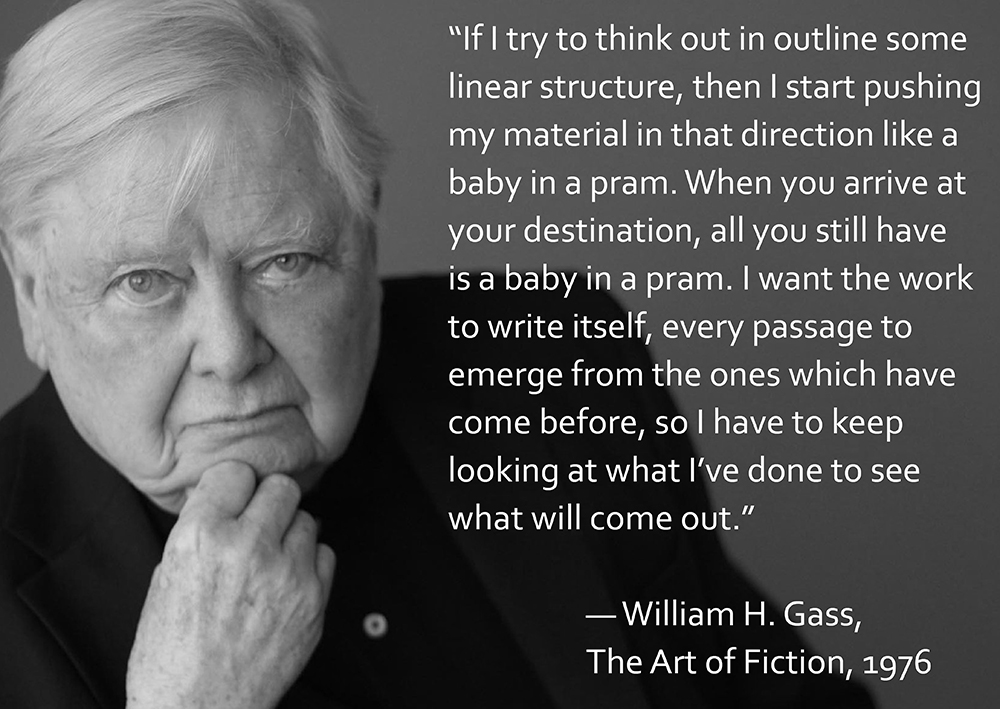
The similarities became troubling for readers and reviewers because Kohler is, well, not nice. In fact, he’s something of a monster. He is mean-spirited toward essentially everyone who has the misfortune of inhabiting his sphere, and he’s downright hateful to his wife, Martha, whom he thinks of as a “guard” that is confining him within the prison of his unhappiness. She has become essentially a non-person to him: “Martha’s face fades as her torso solidifies, her Aryan blood surfacing like lard. I work on her features, but I’ve forgotten what they are[.…] Without a mouth she’ll still talk back, from her crack like as not” (150-51). Worst of all, Kohler’s scholarly work on the Nazis appears more sympathetic toward them than many would like, including the administrators at his university (“those shit-resembling administrators,” he calls them) who overlook him for promotion because they consider him a “Nazi-nuzzler” (133). If Kohler seems to have a soft spot for Nazis and refers flippantly to the Holocaust, he must therefore be anti-Semitic; and if Kohler is an avatar for Gass himself, then the author, too, must be … so went the logic.
Gass anticipated readers who didn’t know how to read well would conflate the persona of the protagonist with the person of the author: “The resemblances between myself and my narrator are wholly trivial, I think, but I did emphasize them in order to test the reader’s sophistication (a test many reviewers failed). […] Unfriendly reviewers delight in the opportunity to clothe me in Kohler’s rags.” Against such charges, Gass pushed back, saying, “[T]he record will show, I believe, that I do not belong in Kohler’s camp” (Ziegler, “WHG in Germany” 116). (You will find the Works Cited at project site.)
The distinction between the author and his creation is a vital one to make as we attempt to read The Tunnel afresh in 2020, on its twenty-fifth anniversary.
[End excerpt]
As you will see in today’s talk, The Tunnel remains a special focus of Gass scholarship and appreciation. In light of that I will also call your attention to another of my contributions to the website: “The Tunnel: A Chronology & Bibliography,” (link) which documents Gass’s progress from its conception in 1966 to its publication in 1995 and beyond. The novel has a complicated publishing history, and my hope is that I will save scholars time and trouble tracking when attempting to piece together and track down the scattered excerpts of The Tunnel. As a writer myself, I always found it interesting that Gass seemed to have concept of how long the writing of the novel would take; so I’ve included quotes from Gass over time as he continued to reassess where he was in the process. Even from the start, completion of the novel always seemed to him a few years away. A complimentary piece at the website is Joel Minor’s “The Tunnel: A Survey of Published Excerpts,” [link] which takes a more scholarly, strictly bibliographic approach to the same sort of information I provide in my “Chronology & Bibliography.”
Let me return to 2024 … or rather December 2023, which is when I posted my first “William H. Gass at 100: A Reading Journal,” [link] in which I describe how I first encountered Gass via his novella (or long story) “In the Heart of the Heart of the Country.” I begin by saying, “As a Gass scholar and devotee (disciple isn’t too strong of a word), I have various projects in the works to mark the Master’s 100th year — all part of my ‘preaching the Gass-pel,’ an evangelism I embarked on more than a decade ago. No doubt I will use this forum to talk about some of those Gass Centenary projects, which tend to be formal and scholarly. It occurred to me that I also wanted to do something less formal, and more personal. It is not an overstatement to say that William H. Gass changed my life. His writing, his theories, his example as torchbearer in the cause of literature: everything has impacted me in ways that I can name and, doubtless, in ways that I cannot.”

My intention was to post a new reading journal, including a new video, periodically throughout 2024. It didn’t quite workout that way (as I feared). I included my various contributions to the Gass Centenary as journal entries, although that isn’t what I had in mind back in December 2023. One such contribution was my paper delivered here a year ago: “William H. Gass at 100: Looking Forward, Looking Backward” [link], which focuses mainly on the backward part as I provide a biography of Gass and his most notable works for the majority of the paper. Sadly, I’ve discovered that Gass is not especially well known, even in literary circles, so describing his career and achievements is necessary.
After the Louisville Conference paper, the next significant event was a panel at the American Literature Association Conference in Chicago in May 2024. In the panel, Joel Minor presented his Tunnel bibliography from thetunnelat25.com project; Ali Chetwynd (American University of Iraq, Sulaimani) presented “Literary Theory Teaching: Founded on William Gass”; and I presented “Let Us Now Praise William Gass’s Greatest Work – And It’s Not the One You Think” [link]. While I am, of course, a fan of The Tunnel, and I’ve presented several papers and published a few on Gass’s magnum opus, I don’t believe it was the most masterful of the master’s work. Rather, artistically, I feel that Cartesian Sonata and Other Novellas represents the pinnacle of his literary achievements. I’ll share the final paragraphs of that paper:
[Begin excerpt]
Though my catalog is incomplete, I’ll end where I began, with The (large, loose, baggie) Tunnel. Gass’s ambitions for the novel were epic, and it took him far longer—far longer—to write than he anticipated. He imagined, maybe, three years or so … let’s say, then, a publication date around 1970. But time marched on and the Master aged along with his aim for the book. He had about 600 manuscript pages in hand when, in 1991 (age 67), he went for an extended stay at The Getty Center in Santa Monica to devote himself fully to finishing the legendary book. Working into 1992, he doubled the size of the novel, completing it at about 1,200 manuscript pages. Begun in the sunny summer of literary postmodernism, the first half of the book displays many of the tropes and tricks that interested Gass in the 1960s and 70s—it resembles in many ways Gass’s wildly experimental novella Willie Masters’ Lonesome Wife (1968)—an experiment that Gass himself deemed a failure in retrospect.5 Though The Tunnel doesn’t quite conform to the chronology of its composition, the latter half doesn’t display the same fondness for postmodern play as the beginning sections do. Released at last in 1995, it was as if the postmodern novel had arrived at the party after practically all the guests had collected their coats and gone home to sleep it off.
Perhaps Gass wittily but unwittingly anticipated the fate of The Tunnel when he wrote the preface to In the Heart of the Heart of the Country (revised 1981):
“I write down these dates, now, and gaze across these temporal gaps with a kind of dumb wonder … hodge against podge, like those cathedrals which have Baroque porches, Gothic naves, and Romanesque crypts; time passed, then passed again, bishops and princes lost interest; funds ran out; men died; … and because they were put in service while they were still being built, the pavement was gone, the pillars in a state of lurch, by the time the dome was ready for its gilt or the tower for its tolling bell …” (xxxii).
We still ought to attend service in William Gass’s great cathedral, but our warmest words of worship should be reserved for Cartesian Sonata and Other Novellas.
[End excerpt]
Gass was born in Fargo, North Dakota, though he moved from there to Warren, Ohio, when still a baby. Nevertheless connections to North Dakota remained, and I attempted to organize some sort of event or conference in Fargo or nearby in the summer of 2024, ideally around Gass’s birthday, July 30. Unfortunately no one locally seemed to have the time or money or interest. Perhaps one day I’ll resume my efforts. Therefore, the next significant event was at Washington University in St. Louis October 3, “William H. Gass Centenary Celebration” [link]. The main event was a panel discussion that I had the honor of moderating. It included Patrick Davis (Unbound Press), Michelle Komie (Princeton University Press), and Gerhild Williams (Washington University German Department, retired). Much of the informal discussion focused on Gass’s founding and directing of the International Writers Center (1990-2000).
One of the more intriguing revelations from the panel discussion was that Patrick Davis, of Unbound Press, plans to republish The Tunnel in the form that Gass always had in mind: a loose collection of about 1,200 manuscript pages, and stuffed with things like paper bags, business cards, and crossword puzzles. Its publication may coincide with the novel’s 35th anniversary. I hope that it comes to pass.
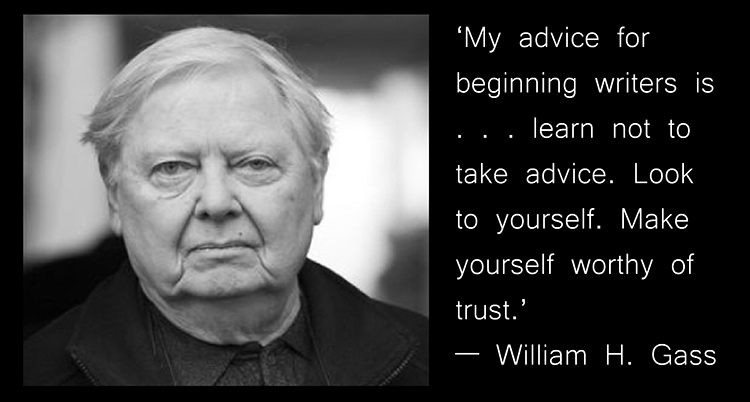
Interest in Gass’s work persists, if not as robustly as enthusiasts like me would prefer. Last year I was contacted by Apostolis Pritsas, who was translating Cartesian Sonata and Other Novellas into Greek, and he requested my informal consultation. I was happy to do it, and we exchanged a few emails over the summer and fall. The two novellas that generated the most questions were “Cartesian Sonata” and “Emma Enters a Sentence of Elizabeth Bishop’s”—both highly experimental works in terms of structure and narrative chronology. The Greek edition is slated for an early March release. Meanwhile, a Spanish-language edition of Cartesian Sonata appeared [link], which changes the order of the novellas, totally undercutting Gass’s concept of the collection.
Finally, I plan to edit, contribute to, and publish William H. Gass at 100: Essays later this year. Contributions include the following: “‘Inward Toward the Other’: The Dancing Minds of William H. Gass and Toni Morrison” by Jose Miguel Alvarado Mendoza; “In Search of William Gass” by Zachary Fine; “William Gass and the Power of Baroque Fictionality” by Yonina Hoffman; “The Meta-Novel as a Container of Self-Consciousness: Linguistic Order and Fascism of the Heart in William H. Gass’s The Tunnel” by Abbie Saunders; “Broken Windows and Dirty Mirrors: Metaphor and Mind in The Tunnel” by Jonathan Moreland; “Defying Form” by Nathan King; “To Create or Capture Consciousness: Reconsidering William H. Gass as ‘The Father of Metafiction’” by Alex Lanz; and “Medium-Specific Foundations: Teaching Literary Theory Across the Gass-Axis” by Ali Chetwynd.
I will draw from several of my Gass conference papers to put together a constellation of pieces, and I also will include a selection of Gass’s photographs. He was a serious photographer, but that aspect of his artistic life has received little attention.
On the Whale Road (Beowulf)
Introduction to the translation-in-progress
I’ve been fascinated by the Old English poem Beowulf since I was a teenager. Even though my primary focus was American postmodernism and the work of William H. Gass, my doctoral dissertation (2010) included chapters concerned with Beowulf. For my dissertation, however, I relied on modern-English translations of the poem. In 2012, I wrote my monograph, The “Beowulf” Poet and His Real Monsters, and tried my hand at translating the Old English for the first time. It was difficult, to put it mildly, but also invigorating. My translating for the monograph was primarily literal. Being a novelist, I wanted to try a literary translation, and I finally got around to it in 2019, focusing on the central section of the poem, the Grendel’s mother episode. The editors at EKL Review published my translation. Then in 2022, upon retiring from teaching full-time, I returned to the poem, and began translating it from the beginning.

Rather than searching for publishers as I completed each section, I decided to use the Kindle Vella platform and put the poem-in-progress out into the world myself. I managed six installments before Kindle Direct Publishing announced the closing of their Vella platform as of February 2025. At that time I migrated my translation-in-progress to this blog. The translation here appears in two parts, as I’m in the process of joining the beginning sections with the central section that I translated in 2019.
You’ll notice that I’ve changed the title from the typical, simply, Beowulf. That title is one of custom. In the codex that contains the one and only manuscript of the poem, it is untitled. We have no idea what name the story may have carried in the, likely, eighth and ninth centuries when it was perhaps a standard tale in Anglo-Saxon halls. Since I want my translation to be unique (among the approximately 350 other modern-English translations currently on record), I decided to give it a unique title, On the Whale Road, which includes a homage to Jack Kerouac and the Beats.
My secondary title — “A New & True Translation of the Poem Known as ‘Beowulf'” — reflects that my objective is to create a prose poetry version of the poem that has fidelity with the original poet’s intentions. That is, my translation is rooted in the poem’s original language, but I always have an eye (and ear) on the story’s narrative energy. The poem would be performed for a hall filled with probably boozy listeners, likely heavily armed — not to mention the capricious king himself. The poet had a vested interest in keeping his audience on the edge of their benches. So at every turn of the translation, when there are choices to be made among equally enigmatic options of Anglo-Saxon, I always choose the most captivating, or as we would say today, the most page-turning.
+ + +
BOOK I: DENMARK
—
Prologue (ll. 1-52)
A Leader for the Leaderless
Halt! – And recall the spear-wielding Danes of old, whose kings gifted greatness to their people and whose princes played the role of hero time and again.
Scyld Scefing served fear to his many enemies in their very own halls, unseated the terror-struck lords and murdered their mercenary bands, even the dread Eruli. He was a foundling forlorn, though consolation would come his way as he flourished beneath the sky, rising in fame and forcing tribute from foes near at hand whose misfortune arrived via the whale road. That was a virtuous king!
After a time, a son came to court, God-sent and a tremendous comfort to the community. He sensed the distress the leaderless Danes had long endured. Thus the Lord of Life, Warden of the Wide World, granted him glory, and the renown of Scyld’s son, Beaw, burst across his father’s land. Thus a young leader, while still at his father’s hearth and privy to his wealth, would do well to lavish gifts upon his close companions so that when war erupts their loyalty can be counted on. It’s true everywhere that noble deeds enrich a man’s name.
When destiny declared Scyld’s departure, the old man, still imbued with youthful strength, was called into the Lord’s keeping. He’d commanded his companions to carry his cherished body to the surging sea, which lapped at a land he had long ruled.
A regal ring-prowed ship – ice-adorned and eager – waited impatiently at the water’s edge. The beloved leader, illustrious ring-giver, was laid by the main mast, the beating heart of the breathtaking bark. Fabulous treasures from far-away lands were brought forth. Never have I heard of a ship so fulsomely equipped with weapons of war: swords made of malice and finely crafted mail. On his breast they heaped many a marvelous treasure to travel with him far onto the frothing flood. Their great gifts – finery of a faithful flock – were no less fantastic than those given him in the beginning when he embarked upon the waves, a little child alone.
High above his head they erected a gold-bright banner and allowed the sea to guide him, giving him back to the gaping ocean. They watched with sunken spirits and heavy hearts. No one can say precisely – neither hall councilors nor noble men under heaven – who received that precious cargo.
I (ll. 53-114)
The Hell-Born Fiend
Beaw, beloved leader of his people, held the land firmly and famously for a long time after his noble father had reached another realm – then he himself fathered highborn Healfdene, who ruled the glory-greedy Scyldings, becoming ancient and battle-hardened by the end. In time, four children were born to that unrivaled ruler of troops – Heorogar, Hrothgar and Halga the Good. I’ve heard that the daughter (Yrse, I think) was Onela’s queen, or at least the War-Scylfing’s favored bed companion.
Then Hrothgar became known for his war-glory and battle-savvy so that his novice followers blossomed into a mighty warrior band. A plan came to mind: he would command that a wondrous hall be built, a marvel to outlive memory for mead-drinking and the division of war booty among young and old alike – everything God had bestowed, save for common ground and men’s lives. I’ve heard that work orders spread widely across the region summoning craftsmen of every skill to build the people’s beautiful hall. As such, it was completed in no time, this grandest of greathalls. He whose words were not questioned anywhere said the hall’s name was Hereot. True to his boasts, at banquet he gave gifts of rings, treasure galore. The hall towered tall, gabled with horns and beckoning the unholy flames of war-wrath. The day of the blade-hate had not yet been born between son- and father-in-law, sown by a long-buried hostility.
A darkness-dwelling demon, powerful with pain, had long endured the din of debauched merrymaking in the meadhall. The harpstrings sang stingingly, as did the song-shaping poet, who could keenly recount the creation of men from long ago. He declaimed how the Almighty made the earth, a lovely land ringed with water and a triumph of design when the sun and moon were set in motion there; and how He ornamented every corner with branches and leaves while animating myriad forms of life.
They lived prosperously, a chosen people, until the hell-born fiend burned with rage, became fixed on their ruin. Grendel, the grim outcast was called, infamous guardian of lonely haunts, fens and forsaken wastes. The mournful monster had dwelt for a time among his kind, all expelled by God, the marked kin of the murderer Cain. For the slaying of Abel, the Lord exacted revenge. Indeed, he extracted no joy from that evil act, only the Lord’s hostility and banishment from humankind. Thereafter were born all manner of monstrous things – ogres and evil-minded elves and ghouls who go among the dead, as well as the giants that waged war against God for ages (an outrage for which they were fully compensated).
II (ll. 115-188)
The Burning Embrace
At nightfall, the Ring-Danes’ foe fell upon the awe-inspiring house, after the beer-drinking was done. Inside he beheld the noble band abed amid their abandoned banquet – their sleep was carefree, with no thoughts of the misery men must sometimes endure. The unclean creature, cruel and ruthless, was ready at once for a savage assault and wrested thirty thanes from their rest. Proud of his plunder, he left for his lair, his hellish home, bearing on his shoulders the bloody slaughter.

In the predawn twilight, Grendel’s war prowess was revealed, and the night’s raucous feasting was replaced by woeful wailing. The famous king, long-known for his nobility, sat stunned by sorrow. The great one grieved for his taken thanes as they beheld the track of that hated haint, that soulless specter. The fight proved fierce, pernicious and persistent. The very next night he resumed his murderous rampage, dedicated as he was to death and devastation, to unmitigated malice, doling out not a morsel of remorse. Many were the men, then, who found sleeping quarters elsewhere, a room removed from the hall and its unwelcome guest, once the unmistakable signs of his savagery were made abundantly clear. To escape the fiend, the deft sought safety via distance. Thus did Grendel ravage right, ruling over all until the hallowed hall was hollow.
The Scyldings’ patriarch suffered the pain of misfortune, the misery of unimaginable woe, for an interminable time, twelve withering winters. Reports of Grendel’s crimes were recited far from the site of his unending war on Hrothgar, so that a generation of children grew up hearing of his wicked and wrathful ways. He sought no substitute for his feud with the Danes – no pact, no price could curtail this deadly curse. Hrothgar’s hall councilors needn’t hope for a radiant reprieve from the death-dealer’s claws. On the contrary, the monster – shadow-cloaked and death-draped – continued to hunt whomever he pleased, from battle-weary warriors to dewey youths, plotting and pouncing from the mist-covered wastes where he presided over a never-ending night. No one can say where hell’s messengers may meet them on their meandering path.
So, mankind’s menace, always alone, committed uncountable crimes, unending acts of evil that caused unbearable anguish. On lead-dark nights he would occupy Heorot’s lonely treasure-laden halls. Unworthy, he avoided the hallowed throne, which was to be occupied by men deemed godlike — and never would he know such adoration. The Scyldings’ heartbroken lord suffered a misery that was acute. Men granted authority debated strategems by which the courageous could defend against the sudden assaults. Desperate, they would seek out heathen shrines and make pledges to the stealer of souls, soliciting diabolical assistance in hopes of halting the nation’s destruction.
Such was the heathens’ habit of mind, their misguided hope: they imagined that turning toward hell would be their salvation. They knew nothing of God, the Maker of everything who would judge their deeds. Their ignorance didn’t allow them to ask for the Lord’s protection – He whose glory gilded the world. Woe to those who throw their souls into hatred’s burning embrace, a sacrifice that will effect nothing no matter how desperate their desire. Well, though, will it be for those who find the enfolding arms of the Lord. A protective father’s comfort and security will be theirs!
III (ll. 189-257)
Across the Waves
So Healfdene’s son suffered ceaselessly, his sorrow seething without end, the best of princes unable to move past the perpetual grief. Nothing could overturn the trouble that had been wrought, that pernicious night-evil. It clung to him, loathsome and cruel.
In his distant home, a great man among the Geats, Hygelac’s thane, heard of Grendel’s misdeeds. Among men, back then, his might was unmatched, so too his nobility and his strength of character. He commanded that a sturdy seaworthy ship be outfitted for a crossing upon the swan-road to the war-king, the worthy prince who was in need of equally worthy warriors. Clever-headed men declined to dissuade him, though he was dear to them. Rather, they hailed him a hero, confident in the signs they studied. The born-leader selected from among the Geats the best and boldest – fourteen seasoned soldiers – and led his troops to the heavy-timbered ship. The warrior knew the ways of the sea and marched them to the water’s edge.
The time had come, and the boat waited upon the water. Floating just beyond the high beachhead. The eager warriors, noisy in their excited chatter, leaped above the twisting tide onto the boat. Each bore a splendid array of war-gear, stowing it in the bosom of the stout-timbered ship. The glad warriors were launched, then, on their glorious journey.
Wind-driven across the waves, the ship flew like a foam-plumed bird for a full day – until the sea-voyagers sighted land. Before the curved prow rose glimmering cliffs, abrupt bluffs, and fanning forelands. Then their sea-crossing had come to an end. The Weder Geats hastened to the hard ground, tying tight their ship, shaking out their mail-shirts, and gathering their war-gear. The crossing was easy, and, pleased, they thanked God.
From the high seawall, a Scylding watchman, charged with guarding the coast, counted as gleaming shields were carried across the gangway, followed by other worthy war-gear. Worry threatened to wreck him: he must know the minds of these well-armed men. Heavy shaft in hand, Hrothgar’s man boldly rode down to the strand to interrogate this newly arrived band:
Halt and identify yourselves! You chain-mailed men who have steered your ship here along the sea-path, skillfully crossing the deep. Long has it been my duty to dwell at land’s end and monitor the sea for hostile mariners who mean harm to the Danes. No shieldbearing warriors have disembarked so boldly, not without displaying some sign that they’d been granted permission. I have never beheld a man in battle-gear of greater stature – nowhere on earth is there such a fearsome figure. Unless his physique and even his fine face deceive, he is no mere hall hanger-on propped up with battle panoply. Now, before you advance farther into the land of the Danes, I must know where you came from – I must be convinced you are not false-hearted spies. Don’t hesitate, seafaring foreigners, and take me seriously when I say I must know your place of origin.
IV (ll. 258-319)
The Shining Hall
Their leader, who was eldest and wisest, unlatched his lockbox of language and answered: We are from Geat-land, hearth-guardians of our lord, Hygelac. My father’s name, Edgtheow, was synonymous with nobility, and known by people of many nations for his bravery in battle. He outlasted many bitter winters, proving their better, before leaving his home deep into old age. His memory lives on among the wisest advisers everywhere. We seek your leader, Healfdane’s son, lord and protector of his people. Our intentions are noble. Provide us your wise advice. We are on an errand of great import to the legendary leader of the Danes; and have nothing to hide, I assure you.
You must confirm if what we have heard is true, that among the Scyldings dwells some sort of destroyer, an enigmatic enemy who reveals his rage in the terror he brings on dark-black nights, unspeakable acts resulting in shame and slaughter. I have advice for Hrothgar that comes from a kindred spirit, a way for he who is wise and good to vanquish this villain and cool his accumulated cares, a remedy that will bring sweet relief. Otherwise he will eternally endure this troubled time, this everlasting season of distress, dwelling there in that high hall, gleaming emblem of his greatness.
Before speaking, the coast-warden, stalwart servant upon his steed, considered that a shrewd shield-warrior must be able to distinguish between words and deeds. Said: My sense is that your war-band is here on behalf of the lord of the Scyldings. Go forth, then, bearing weapons and armor. I shall be your guide. What is more, I shall command my young men, on their honor, to keep safe your ship against any ne’er-do-wells – this freshly tarred vessel on the beach – so that the stout timbers of its curved keel can easily return you, esteemed sea-farers, over the deep currents to your home coast in Wederland. May your noble intentions buy you protection in battle so that each of you comes through unharmed.
They then proceeded. Their boat floated quietly. The broad-beamed ship was at anchor and firmly secured with ropes. Golden boar images gleamed above their cheek-guards. The fire-hardened ornament was an added protection, and the grim masks were a reflection of their war-ready hearts. The troop hurried as one and soon beheld the high, timbered hall, magnificently trimmed in gold. Earthbound men held that it was the best-known building under heaven. Home of a powerful king, its brilliance beamed across many lands. The brave-hearted guard pointed out the straightest way to the shining hall, pride of the people. Turning his horse, the singular watchman shared these words: The time has come for me to depart. May Father Almighty look upon you all with favor in times of strife and bring you through it whole. I return to the seaside to resume my duty guarding against hostile troops.
V (ll. 320-370)
Audience with the King
The road, paved in stone, showed the group the way. Their iron mail was hard, hand-linked, and that shining war-gear made an unmistakable statement. Outfitted as they were, in their terrifying gear, they went directly to the hall and straight away placed their shields, which were wide, circular and sturdy, against the outside wall of the building. Weary from the sea, they rested on benches, their armor loudly announcing the arrival of brave men. These men of the sea stood their ash-wood weapons together, gray tips pointing up. The troop was impressively armed.
A fellow, uncowed, inquired of their origin: From where have you carried these gilded shields, these gray shirts of mail and grim-looking helmets, an armory of battle-ready spears? I am Hrothgar’s herald and servant. Never have I seen a gathering of men, foreigners too, whose deportment was so daring. I trust your motives in seeking Hrothgar are honorable, an expression of courage – not because you are needy exiles. The clear leader of the Weders, he of noble bearing, speaking firmly from beneath his helmet, answered with these well-chosen words: We are Hygelac’s close companions, table-mates. Beowulf is my name. I desire to explain my errand to Healfdane’s famous son, your lord, if he would be gracious enough to grant the time and allow an audience. Wulfgar – a leader of the Wendals, well-known for his war-skills and wisdom – replied: I shall approach the friend of the Danes, the Scyldings’ chief and ring-giver, and communicate your quest, as you ask, then quickly bring back whatever response the best of men cares to give.
With that, he went confidently to the place where Hrothgar, haggard and gray-headed, sat among his most-trusted men. The stalwart messenger, shoulders squared, stood before the lord of the Danes. He knew the ways of these noble people. Wulfgar spoke to his lord as one does who is a reliable retainer: Standing just outside, come from across the wide sea, are men of the Geats. This warrior band calls Beowulf their leader. They seek, my lord, a conference. I encourage you to grant their request, gracious Hrothgar. By the worth of their war-gear they warrant consideration. Their chief, without question, is a warrior worthy of respect.
VI (ll. 371-455)
A Single Request
Hrothgar, defender of the Scyldings, declared: I last saw him when he was but a boy. His honored father was named Ecgtheow, and it was to him that the Geat Hrethel gave his only daughter. Now the son, grown strong, is calling on a dependable friend. Those who have traveled across the sea, delivering gifts to the Geats to demonstrate our goodwill, report his hand-grip to be that of thirty men, giving him great advantage in battle. My hope is that he has been sent to us, the West Danes, by the grace of God to contend with Grendel’s terror. This good man shall receive great rewards for his courageous spirit. Quickly now, bring them in to see the assembled kinsmen. Say to them also, the words meaning they are welcome among the Danes.
Wulfgar went to the hall door and issued this summons: I have been instructed by the leader of the East Danes, a victorious king, to say he knows your noble lineage, and, stout-hearted seafarers, you are welcome guests. You may now go – in battle-gear, face-plates raised – to see Hrothgar. Leave behind your war-shields and -shafts until the conversation is concluded.
The powerful one rose from among his many powerful men, a loyal band. Some were instructed by their savvy leader to stay and watch the weapons. Promptly they walked as one, guided under Heorot’s roof. The bold one, stone-faced beneath his helmet, went forward until he stood in the center of the room. Beowulf spoke – his chain-mail shone, a war-net artfully woven by a master smith:
Hail to you, Hrothgar. I am Hygelac’s kinsman and subject. I have performed many magnificent feats in my youth. In my fatherland this affair with Grendel became well known to me. Seafarers say that this hall, the finest of such strongholds, stands vacant and worthless to warriors after the light hides in the night sky. All of my people, from the noblest to the most common, said I must place my uncommon strength at your service, great Hrothgar. They witnessed my return wearing my enemies’ blood after capturing a clan of giants, five strong, and slaughtering them, as I had water-monsters in night-waves. The Weders’ strife was mine to remedy, whoever meant them harm. They deserved utter destruction. And now with Grendel, that fiercest of fighters, shall I alone settle the score with the ogre.
To you now, prince of the Bright-Danes, shelter of the Scyldings, I must make a single request – do not deny me, fortress of fighting-men, proud prince of the people, now that I have come so far, I be allowed alone to purge Heorot, beside my band of worthy warriors. Furthermore, it is my understanding that the fierce foe brazenly forsakes weapons. Thus, in the spirit of honorable Hygelac I shall bear into battle neither shining sword nor gleaming shield. Rather, I shall wrestle the hateful wraith, grip against grasp, a fight that will leave only one of us living. Then he who is taken in death must trust in the Lord’s judgment.
I suspect, should he succeed, he will eat us Geats with gusto, as he has so often done the bravest Danes. No, my head shall not require a shroud, should death seize me, for it will be covered in blood as he carries off my gory corpse, intending, I should think, to make a meal of me. The solitary swamp-walker will eat it heartily, fouling his fen-hollow with the feast. My body then will be beyond your care, and, too, your worry. Should I be taken in battle, send to Hygelac my war-shirt, a finely wrought garment that has faithfully guarded my breast. It was handed down from Hrethel, the legendary work of Weland. It shall go as fate intends.
VII (ll. 456-498)
A Gathering of Heroes
Hrothgar, guardian of the Scyldings, said: You have assumed this quest, Beowulf my friend, from a sense of obligation, as well as kindness. Your father provoked a pestilent feud when he murdered Heatholaf, guest of the Wylfings. Then, afraid of war, his Weder clan was wary of having him. So over the swelling waves he came, seeking the people of the South Danes, the honorable Scyldings. I was a new ruler of the Danes at that time – yet my youthful hand held a wide-ranging realm, a land rich with heroes. Heorogar, my elder brother, had died–Healfdene’s heir, my better, dead! I paid the price of ancient treasure to settle the feud. The sea’s back bore it to the Wylfings, and he pledged an oath to me as repayment.
It is dispiriting to acknowledge to anyone how my heart is weighted with humiliation, sunken with shame to think what devastation Grendel’s attacks have brought to Heorot, laced with his hatred and hostility. My hall-troop has been decimated, my personal guard diminished, their fate to be swept away by Grendel’s grasping hate. God could quickly quell this deadly enemy’s deeds.
Often, drunk and full of beer-boasts, warriors would declare over cups their intention to await combat in the hall, meeting the horror of Grendel with their own horrible blades. Come morning, daylight revealed the noble hall’s benches dripping with blood, wound-gore everywhere. Death dispatched my dearest companions, taken from me one by one, diminishing the courageous band. Rest now, feast – feed your spirit in the hall where noble warriors like you have celebrated great victories. At once space was made for the Geatish men, a bench all their own in the beerhall, and the bold band took their seats, preening their strength. Then a serving-thane performed his duty to bring forth a decorated cup brimming with bright drink. The court poet sang clearly in Heorot as the sizable company of heroes, Geats and Weders, enjoyed themselves.
VIII (ll. 499-558)
A Public Challenge
Ecglaf’s son spoke, Unferth, seated at the feet of the Scyldings’ king, words weighted with provocation. Beowulf’s courageous coming here from across the sea irritated him in the extreme because he desired that no other man in middle-earth should accrue more daring deeds under heaven than himself. Aren’t you the Beowulf that competed with Breca on the open sea, the two of you quick to settle your quarrel, pride placing you in the deep water and risking your lives? No one, confidante or crank, could convince you two of the recklessness of your plan to row upon the open sea. There you both would accept the assessment of the sea-path, drawing the water with your arms, slipping over the surface that stretched before you: chaotic tides enkindled with winter’s temper. For seven long nights you labored against the water’s powerful pull. He bested you, Breca did, demonstrated mightier drive on the sea. Then the morning’s tide cast him upon the shore of the Heathoræmes. From there, well-loved by his people, the Brondings, he set out for his cherished homeland, where he ruled in its handsome citadel, keeping safe its citizens and its resources. Beanstan’s son followed through on his boast to beat you. So I imagine you will get the worst of it – even though elsewhere you met with success the rush of oncoming battle, grim warfare – should you dare to wait through the long night for Grendel’s grim hour.
Beowulf, Ecgtheow’s son, replied: Gee, Unferth my friend, you’ve said a lot about Breca and his harrowing time – with your beer-bathed tongue. I maintain, as a matter of truth, that I possessed mightier sea-strength, overcame more adversity on the waves, than any other man. The two of us vowed, when we were just boys, brimming with youth, that we would wager our lives out on the open ocean – thus we did. As we rowed at sea, we had at hand hardened swords, thinking we would use them to ward off whales. He was unable to drift beyond me, to float faster on the wicked waves. And I wouldn’t abandon him. Five nights we managed to stay together, until the turbulent sea tore us apart, separated by the surging swells. We battled bone-chilling storms, deepening night and a vicious north wind – everything turned against us.
The waves were wrathful. Outrage riled the sea-fish. Against their hatred I had my handmade mail, hard-woven war-gear threaded with gold, spread protectively across my breast. An especially angry beast hooked me in its horrible grip, pulling me to the depths. Nevertheless it was granted me that my sword-point should pierce the vile fighter. By my hand, the mighty ocean menace was dispatched in the frothing melee.
IX (ll. 559-661)
A Passing of the Torch
Again and again the hateful haints set upon me savagely. I repaid them appropriately with my most-trusted sword. The devious demons were disappointed in their design to devour me ’round a banquet-table near the bottom of the sea. But by morning they lay upon the beach – blade wounds from my sword had them resting peacefully. Afterward mariners could cross the high sea unhindered by their harassment. Light, God’s bright beacon, came in the east. Then the sea calmed and the wind-whipped cliffs of a cape appeared. Fate will often favor the brave, as yet unmarked for death, if their courage doesn’t falter. Thus it befell me to slay with my sword nine sea-beasts. I know of no more bitter combat contested by night beneath heaven’s arching buttresses, nor of a man in more dire circumstances caught in the ocean’s current. Nonetheless, I slipped their treacherous grip, saving my life, but worn out from the struggle. Then the sea’s surging current carried me to the land of the Finns – its frothing flood.
There are no such tales of your clashing combat, not that I have heard. Nothing at all about your dread sword. Neither you nor Breca ever achieved impressive deeds in battleplay, with swords gory with glory. My boast is no exaggeration. You, on the other hand, became the killer of your brothers, your own close kin. Your punishment will be to suffer in hell, and no amount of cleverness will save you.
I speak the truth, son of Ecglaf, when I say that menacing monster, Grendel, would never have inflicted such misery on your chief, painted Heorot in the hue of humiliation, if your mind and your fighting-spirit were as grim in battle as you yourself proclaim. But he has discovered he need not greatly fear a feud – no storm of swords – from the Victory-Scyldings. He levies his toll on the Victory-Scyldings without a tittle of mercy for the Danish people; indeed he satisfies his appetite, putting them to sleep and sending them off with no fear of fight from spear-fierce Danes. But very soon now I shall reveal to him the Geats’ strength and valor in battle. Go then boldly, those who so desire, to drink mead, once morning light – a new day’s gold-draped sun – rises in the south to shine over the children of men.
The giver of riches was rewarded with happiness then. The grayhaired and battle-savvy ruler of the Bright-Danes, shepherd of his people, believed that help had finally arrived in Beowulf, whose boasts showed his resolve.
Among and around the warriors a pleasant din developed: music, laughter, convivial conversation. Wealtheow then came forth, Hrothgar’s queen, well known for her courtesy. Glittering in gold, she greeted the men in the hall, and the dutiful wife gave the drinking-cup first to her husband, guardian of the East-Danes’ homeland – and wished him happiness in his beer-drinking, loved as he was by his people. Delighted, the king who was famous for his conquests accepted the ceremonial cup and thus initiated the feast. The lady of the Helmings then went around serving old and young (warriors all), tipping the precious pitcher herself, until the treasure-attired queen, true of heart, carried the container of mirth to Beowulf. She greeted the Geats’ leader with well-chosen words, thanking God that her desperate plea had been answered: that some noble soul would bring comfort by defeating their tormentor.
The battlefield killer, keen for the fight, accepted the brimful cup from Wealtheow and made a declaration. Beowulf, born of Ecgtheow, said, My intention when I boarded the boat with my brothers-in-arms and we launched upon the sea was that I would at once render complete relief to your kingdom, or fall a bloodied corpse in the baneful clutches of my foe. I shall accomplish this feat, marked with courage, or meet my end in this meadhall. The Geat’s speech, his well-chosen words, well pleased the queen. Aglow in gold, the cherished wife went to sit at her husband’s side.
It was then as before in the hall – the happy noise of an again brave nation, again recounting proudly (and loudly) their countless victories – until Healfdene’s son suddenly needed to seek his evening rest. No longer able to see the sun’s light, he knew the monster meant to hit the exalted hall, now that day had surrendered to night’s all-encompassing darkness, allowing shadow-draped shapes to approach unmolested. The hall-troops rose all. Then one guardian to the next, Hrothgar to Beowulf, offered him as good omen the wish for safe stewardship of the stately winehall, uttering these words: Never before have I entrusted to any other man the security of the Danes’ great hall – since raising my own hand and shield – that is, until now to you. Now have and hold this good house. Be mindful of glory, demonstrate your might, be ready for the coming wrath. Reward beyond your most ardent desires is forthcoming should you come through this courageous undertaking alive.
To be continued
+ + +
XX (ll. 1321-1382)
Retribution
Hrothgar, helmet of the Scyldings, replied [to Beowulf]: Ask not after our happiness—for sorrow again lurks in our luckless land. Aeschere, Yrmenlaf’s elder brother, is lost, my keeper of secrets and wellspring of wisdom. We stood shoulder-to-shoulder striking as one when clashing footsoldiers tried to remove our boar-crested heads. However bathed in bravery a man should be, demonstrating a nobility from olden times, that was princely Aeshere. But now a wandering blood-thirsty wight has snatched him from Hereot hoping for a rich reward. The bold terror has fled somewhere, perhaps to devour her hapless victim, I cannot say. She has avenged the crushing grip by which you caught Grendel on his last night, payment for my people’s pernicious annihilation. Something terrible has now befallen Aeschere in this feud, his future likely forfeited, as a new threat, a vicious visitant, has come to continue the deadly quarrel after a death among her clan. Many a thane knows the weight of a heart’s bitter weeping following the loss of a beloved brother-in-arms, a generous bearer of gifts. Now that hand which would have given you—all of you!—your heart’s desire is hidden from us.
It has been reported by those who work the land, and confirmed by my councilors, that two powerful prowlers have been spotted among the marshes, queer characters who rule over the waste-lands. One, according to the most reliable reports, has a feminine form, while the other misshapen outcast seems male, but larger and more powerful than any other . . . man at least: Grendel, or so he was named by the workers of the earth in days long gone. No father for the pair is known, nor whether any other fearsome creatures came before them. They live in a place shrouded in secrecy, a treacherous track thick with wolves, where windy cliffs loom above the waste-land and dark waters cascade into a tumult that races toward the nether-world. Marked off in miles, it is not far, their hoarfrosted fen, where firmly rooted woods darken the wretched water. There, kinsmen claim, flames flicker ominously upon the flood, night after night. No man lives, no matter how old or how wise, who can surmise the mere’s malignant depths. The hard-horned hart, high-stepper of the heath, pushed there by hounds, would rather surrender to the savage pack than hide—it is such an unholy place. Black waves blast toward the heavens when hostile storms further disturb the surge, salting the air as if the sky were weeping. Now you alone can save us, even though you know not this perilous place. You may find her there, this sinister creature. Dare to seek her, and if you survive the fight, I shall again reward you with the worthiest treasure of wound gold.
XXI (ll. 1383-1472)
A Churning Sea
Beowulf, son of ecgtheow, replied: Your wisdom must inform you it is better to punish those who pile sorrow at our door than to be forlorn over a friend’s sad fate. We must all bear knowing our life in this world will end. Allow whoever is able to achieve their glory before death. For afterward, it will be their most enduring memorial. Take heart, wisest watchman of the realm—we shall swiftly take to the track of Grendel’s dam, and on this threat I will make good: She has no chance to lose herself, not in the earth’s embrace, not among the mountain’s forest, not on the sea’s sandy floor—flee where she will. Patience can be excruciating, but I know you will practice it today. The ancient one’s spirit was lifted by this bold speech, and he gave thanks to God, praised the All-Powerful.
Then Hrothgar’s mount was duly dressed, a haughty warhorse with a mane of intricate braids. The wise old king set off in a magnificent manner, leading a fine troop of linden-bearing footsoldiers. The tracks were easily seen where she had borne the best of thanes along the forest floor and directly to her dark domain. The lifeless captive had always helped Hrothgar watch over his home. The king and his company worked their way along the unwelcoming path, at times so narrow they were compelled to squeeze through one by one, then edge along a high seawall where myriad monsters made their home. He went first, with some seasoned soldiers, to spy out the land. Quickly they came to a forbidding forest where mountain trees angled above gray rock. Below, the water was grim with gore. Misery dealt a murderous blow to the Danes on that sea-cliff—to every last warrior, including the friends of the Scyldings—when they came upon Aeschere’s severed head. The bloody sea-surge boiled with gore, upon which all were drawn to gaze. Then battle-horns sounded, singing their readiness for war—and the waiting soldiers stole a moment’s rest.
The water churned with many strange creatures of the sea, while kindred monsters lay upon the rocks, the sorts of sea-serpents and wild beasts that menace mariners as they navigate early-morning channels. The creatures sank away, furious and fulminating, the second they heard the battle-horns’ sharp song. A Geat, their chief archer, used his bow to bury a war-hardened shaft in one such water-beast, cutting short its struggles. It swam slowly in the surf toward the realm of death. A barbed javelin designed for hunting boars hooked the desperate wave-roamer and hauled it onto the rocks. All gaped at the gruesome guest.
Beowulf dressed for battle, not in the least mindful of his mortality. The well-made mail, ample and artfully adorned, must safeguard his body as he searched the sea, shielding his breast when caught in the grip of war, in the malicious grasp of a murderous foe. A rare helmet—refulgent and complete with a curtain of rings covering the neck, created by a master smith of the olden days—would protect the hero’s head; and when the sandy seafloor was churned into a cloud of chaos, a boar-crest amulet would prove impenetrable to any war-sword or battleax. At this critical moment Hrothgar’s humbled advisor, Unferth, lent Beowulf a powerful aid: the specially hilted sword known as Hrunting, a nightmare of a weapon, highly treasured in times of strife. Its ferric edge was festooned with terrible tendrils, poison-laced thorns hard-varnished with the blood of the vanquished. It had proved worthy of every warrior who had wielded it in the stronghold of his enemies. Indeed, this was hardly the first time it would be relied upon to carry out an act of courage. It seemed certain that Unferth, son of Ecglaf, wanted to forget the drunken insults he had hurled at the superior swordsman, skilled in feats of strength, when he lent him the weapon. He would not dare risk his life beneath that turbulent tide—in his failure to seek fame he lost his good name forever. Not so for the other, the man wardrobed in war-gear.
XXII (ll. 1473-1556)
The Mere-Wolf
Beowulf, son of Ecgtheow, said: I am eager to set off, son of Healfdene, wisest of kings and gold-friend to your men. Bear in mind our arrangement, of which we spoke before, that should I fall in fulfilling my promise, you will embrace the role of my father. Likewise, grant your guardianship to my young comrades, closest of companions, if this battle carries me off. Furthermore, beloved Hrothgar, forward to Hygelac the spectacular gifts you have showered upon me. Thus the great leader of the Geats, Hrethel’s son, when he is struck by the magnificence of the treasure, will realize that I have made the most of my time here and was richly rewarded by a gracious ring-giver. And you, Unferth, man widely known, have this revered heirloom—this hard-edged sword with its perfect blade expertly patterned after the sea. I shall bear Hrunting in my hunt for fame, or be borne away by death.
After these bold words, the much-loved leader of the Weather-Geats rushed away without awaiting reply, and the swirling sea accepted the impetuous warrior. Then daylight helped him discover the dim bottom.
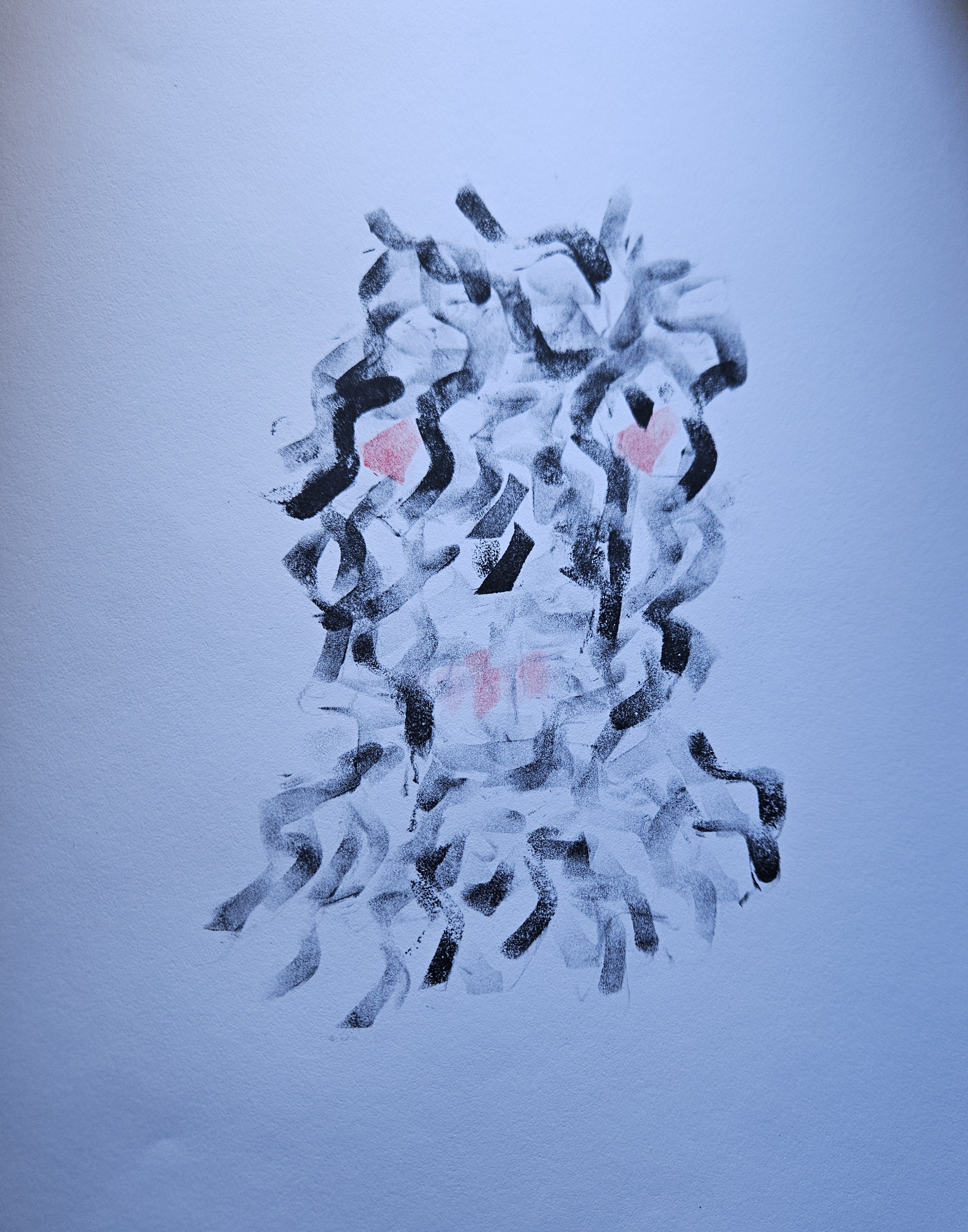
Soon the grim and greedy one who had ruled that watery realm with a ravenous ferocity for some fifty years sensed that a man from above was penetrating her unwelcoming place. She clutched the warrior in her wicked claws, hoping to pierce the woven rings of his shirt, but it saved his body and his life from her searching, sickening fingers. Coming to the bottom, the mere-wolf managed the ring-clad prince toward her warren, and, in spite of his resolve, he was restrained from freeing his weapon. All the while a bevy of mysterious sea-beasts beat at his battle-mail and tore at it with their tusks as they pursued the tangled pair. Then the hero discovered he had entered some kind of hostile hall, cut off from the water and the current’s cruel grip, due to the hall’s high roof. He saw the white light of a fire, its flames flickering brightly.
The valiant visitor also saw the sickening lake-wife, duchess of this lepers’ den. He swung the ring-embellished war-sword, saving nothing back, and its aria was a hideous battle-song against her head. But the guest found that the gleaming blade would not bite, let alone prove baneful, its edge failing the imperiled prince. That precious treasure had prevailed countless times in hand-to-hand conflict, cutting helmets, hewing harnesses, delivering enemies to their doom—this was its debut failure.
Recalling his fame and retaining his courage, the determination of Hyglac’s kinsman was intact. The enraged warrior tossed to the ground the artfully adorned sword, though rigid and razor-edged. He must trust in his own tireless grip. Such is required of a man if his reputation in battle is to become legendary. He must be willing to forfeit his life.
The War-Geats’ great prince grasped Grendel’s mother by her hair, harboring no remorse for the move. Many a hard battle helped him to keep his head, and he used his swelling rage to force his lethal lover to the floor. She instantly retaliated with the grasp of her terrible talons, clawing at him. The relentless onslaught wearied the strongest of warriors, the surest of foot, so that he stumbled and fell. She put her full weight upon the visitor to her hall and brandished a short sword, its blade broad and biting, meaning to avenge her only son, her sole offspring. Across his shoulder and breast lay the braided mail, and it protected his body from being pierced or hacked. The Geats’ guardian, Ecgtheow’s son, would have perished there, beneath the wide earth, if not for his battle-tested gear, true to its purpose in helping holy God determine the contest’s victor. The Ruler of the heavens easily foresaw the right result when Beowulf again was upright.
XXIII (ll. 1557-1590 )
Striking with Fury
Then he spotted among the scattered war-gear a blade imbued with countless victories in battle, an ancient sword, strong-edged and worthy of the finest fighters. It was a choice weapon but far more than most men could wield in combat—only the hardiest of heroes could harness its special might, manufactured, as it was, by giants. The Scyldings’ bold savior drew the ring-marked blade and struck with fury, breaking the bone-rings of her neck, the ancient blade slicing straight through, her body doomed. Lifeless, it crumpled to the floor. The sword-blade glinted with gore—the swordsman with satisfaction.
A light flared, illuminating the interior, as if heaven’s own candle had pierced the pall. He surveyed the chamber, quickly turning to the wall. Hygelac’s thane, still furiously focused, took up his weapon by its heavy hilt. The blade would prove its worth once more as the warrior wished to repay Grendel for the vicious work he performed on the West-Danes. Hrothgar’s hearth-friends, fifteen dozing Danes, were devoured during a recent attack, and as many carried off as a loathsome prize for later. The fierce champion had rewarded him for that, as was evident when he found Grendel, battle-worn, in his final resting-place. He lay dead, obviously drained of life, fatally injured as he was in Heorot. His shattered corpse split wide open, suffering a sort of second brutal death upon Beowulf’s merciless sword-stroke, severing completely his head.
To be continued
Note: All artwork by the author. All rights reserved.

 12 Winters Blog
leave a comment