Psychoanalytic Criticism and the Creative Writer
The following is the principal lecture of a seminar on psychoanalytic criticism delivered remotely to students at the National University of Modern Languages, Islamabad, Pakistan. It was hosted by the Department of English and arranged by Dr. Amina Ghazanfar. The seminar was held November 19, 2024.

My plan is to speak to you about psychoanalytic criticism along four axes: one set stretching from the past to the future; and the other set running from reader to writer. Even though these two sets exist on different planes of thought, their data points will no doubt cross paths and even bump into one another at times. Mixed in with all the theorizing, I hope to impart some actual useful information now and again. And let us start with that (just in case there is no more to be had).

When asked to discuss psychoanalytic criticism, the immediate response is to focus on the adjective, psychoanalytic, and to regard the noun as a given. But let’s not. Criticism and especially its related word critic tend to have bad connotations, especially in everyday English. One definition of criticism, in fact the most prominent one, means to offer an unfavorable opinion about someone or something. A fed-up spouse may say to their partner (or child to their parent, employee to their employer), “I’m tired of your constant criticism!” Or the person who finds themselves surrounded by people who feel free to judge them may say, “Sure, everyone’s a critic!”
These negative connotations associated with criticism and with the critic have drifted over to the words as they’re used in the arts, meaning to evaluate a work of art, and the one doing the evaluation. In fact, there seems to be a natural antagonistic, even adversarial, relationship between the artist and the critic, perhaps because so much of an artist’s reputation (and possibly, in turn, their livelihood) depends on the critic’s opinion. A good or bad review, in a prominent place, could make or break an artist’s standing.
In the academy, criticism has managed to avoid the most negative associations and survives more on par with the neutral critique, which is less about passing judgment and more about asking interesting questions and stimulating interesting discussion. Criticism is about opening up possibilities regarding a work of art; it’s about multiplying potential interpretations. It’s not about identifying truths regarding the art; it’s not about solving the art, as a mathematician may solve a complicated equation.
This may be the first important thing I’ve said: Budding critics must guard against the sense that they’ve said something definitive about the work under consideration. Everything is speculative, and they should manage their rhetoric to make that clear. When writing criticism, there should be a lot of hedging. Not “Shakespeare clearly had a troubled relationship with his mother”; rather, “Shakespeare may have had a troubled relationship with his mother.” In the sciences, they strive for declarative statements. In the humanities, we almost always avoid them. We happily traffic in ambiguity.
All of this brings me round (finally) to the adjective, psychoanalytic, which is an especially intriguing critical approach because it is a kind of hybrid school of criticism, marrying science with humanism (although it may be an unhappy or at least unequal marriage). The term of course means that we, psychoanalytic critics, are about analyzing (examining, testing, dissecting) the psyche. That seems straightforward enough. But since we love ambiguity, let’s ask “What do we mean by the psyche?” Are we examining the mind? The soul? The personality? The spirit? These are all synonyms for psyche. If this were a question on a multiple-choice exam, and we could only choose one answer, nearly all of us would probably choose A) The mind. But I think each of the choices is potentially correct, depending on factors like the work being critiqued and the working thesis of the critic. For example, my first monograph—The “Beowulf” Poet and His Real Monsters—was, yes, an examination of the poet’s mind, but also (equally) an examination of the poet’s culture and community, its zeitgeist, which comes closer to psyche as “spirit,” as geist is German for “ghost” or “spirit.” (Zeit, if you’re curious, means “time.”)
So, upon a closer look, psychoanalytic has a broader sense than just an examination of the mind. “Whose mind?” we of course need to ask—and we will.
Before going there, though, let’s spend some time on the origins of psychoanalysis itself. Note the plural: origins. Returning to that simplistic multiple-choice exam, if there were a question about the origin of psychoanalysis, being brilliant students, we would look for “Sigmund Freud.” But in truth it’s not that simple. I do want to talk about Freud—because he was a crucial theorist, a foundational theorist—but he wasn’t the first human being to notice that people have a lot of complicated things happening under the hood. Ancient storytellers had a sense of multi-faceted personalities, of “good” versus “evil,” of twins (Romulus and Remus, for example), of trios forged into a single entity (the Fates); in more contemporary times, of doppelgangers, of Jekyll-and-Hyde personas.

Freud’s masterstroke was to take the sense of an unconscious part of the mind to a much further point, theorizing that people’s behavior is chiefly due to their unconscious. They may believe, consciously, that their decisions and their subsequent actions are due to a, b and c. But in reality their actions are, unconsciously, due to x, y and z. Nearly all of the time, said Freud, people are unaware—oblivious even—to their own true motivations, their own true reasoning. Moreover, Freud said the dominance of the unconscious mind is completely natural. Finally, in his theorizing (and in his prolific publishing) Freud provided a vocabulary for discussing the workings of the unconscious mind: terms like Id, Ego and Superego, as well as processes drawn from literature like Oedipal complex, Electra complex, and narcissism.
In essence, Freud theorized that the unconscious drivers of human behavior are our unexpressed fears and our unacknowledged wishes. Our fears and wishes find expression in four ways: neurotic behaviors (like anger, anxiety, depression, paranoia); dreams and nightmares; accidental vocalization and diction (so-called “Freudian slips”); and the creative arts. It is of course this last kind of expression that is our main interest. In other words, when artists create (when writers write, painters paint, music composers compose, dance choreographers choreograph), they are accessing their hidden fears and wishes, usually unwittingly.
I don’t want to be overly technical, but Freud used the concepts of condensation and displacement to describe the processes by which the mind obfuscates its fears and wishes. With condensation, the writer, let’s say, brings together several ideas or personas into a single representation. With displacement, a fear or wish may be moved from its true origin to become associated with someone or something else. It must be underscored that the mind conceals its fears and wishes because it would be unbecoming or downright taboo to discuss them openly, that is, consciously.
Just as Freud did not develop his theories in isolation, other psychologists, psychiatrists and psychoanalysts either accepted them, modified them, or rejected them in favor of competing theories, during Freud’s lifetime (he died in 1939) and up to the present. It is a cast of thousands, and even the most significant are too numerous to mention even in the briefest summary. Nevertheless, I want to mention one psychoanalyst who, for our purposes, provided the most useful clarifications and extensions of Freud: Frenchman Jacques Lacan.
Like Freud, with whom he was somewhat of a contemporary (Lacan, 1901-1981), the Frenchman was a prolific writer and lecturer; therefore, his discussion of Freud’s theories takes up many volumes, and he was oftentimes at odds with Freud, tinkering, extending, or frequently outright disagreeing. From my perspective, there are two Lacanian concepts that are crucial to our effectiveness as psychoanalytic critics. First, while Freud certainly believed in the significance of language, Lacan took that belief further to the point of making careful attention to language paramount. In fact, he believed that psychoanalysts must work with language just as literary critics do, microscopically and all-encompassingly. No word-choice, no word-order-choice can be taken for granted. Each has significant bearing on interpretation. (I suppose one could go further and say that each word-omission and word-order-not-taken is worthy of attention, too.)
Second, a major criticism (there’s that word) of Freud had to do with causation. Lacan felt that Freud tended to oversimplify the relationship between cause and effect. What appears to be the cause is not the real cause at all. Or it may be more accurate to say that anything attributed to a single cause is misleading because for everything there are multiple causes, with some causes being more significant than others. The analyst—and by extension, the critic—who is satisfied with a one-to-one causal relationship is almost certainly overlooking important facets of cause.

These two Lacanian concepts are so crucial I want to repeat them. Let’s call them important points two and three: The psychoanalytic critic must consider every aspect of the text’s language as significant—diction, syntax, rhetorical posture, everything. Also, psychoanalytic critics must approach each effect as having multiple causes, and therefore they must be dissatisfied with analyses that suggest a facile, single cause, no matter how logical, no matter how well supported by the critique. Causes are always multiple and/or multilayered.
By stopping with Lacan I don’t want to imply that he represents the last word in psychoanalysis. Far from it. Advances in psychoanalysis, psychiatry, and perhaps especially neuropsychology have continued apace for the last half century. Consequently, literary critics inclined toward psychoanalytic interpretation should be aware of the latest advances in our study of the mind. I was recently asked to peer-review an article using trauma theory (a branch of psychoanalytic critique), and the writer only cited pioneers in the field, as if there has been no advancement in our understanding of the mind in decades. I recommended against publication without significant revision to include the work of contemporary (living and practicing) psychologists and psychological theorists. I was gratified to read a later draft that made good use of some of the names I suggested. I was happy to greenlight publication as a useful contribution to the field (and not just a well-written rehash of what has come before).
Let’s call that important point number four: Our understanding of the human psyche and how it relates to behavior is constantly evolving and improving. Psychoanalytic critics must make an effort to stay abreast of new knowledge, at least new knowledge that is directly relevant to the critique they have in mind.
It is also worth noting that we sometimes hear “psychoanalytic criticism” and “Freudian criticism” as synonymous terms, but it’s probably best to think of them as somewhat different. Psychoanalytic criticism is any critique that deals with the unconscious, whereas Freudian criticism makes use specifically of terms and concepts developed by Freud. By the same measure, we may employ Lacanian criticism or Jungian criticism, which are types of psychoanalytic criticism, but as one may imagine they make use of Lacan’s or Jung’s theories and terminologies.
So, then, what is the mission of psychoanalytic criticism? I want to suggest that psychoanalytic criticism has two broad agendas. Through careful examination the critic seeks to find at work the author’s unconscious fears and wishes as they are represented in a literary text. Or (and/or) the critic seeks to find at work a character’s unconscious fears and wishes. With some texts, we can do one or the other or both because we know the author; that is, we have access to their biographies and therefore, to a degree, their personalities. With other texts we are limited to the analysis of the fictional characters (or other literary elements) because we do not have access to the author’s personality. Either the author is unknown, or there is so little known about them that nothing of use can be definitively said. A third approach would be to critique a text psychoanalytically in an effort to reconstruct an unknown or little-known author’s persona. What fears and wishes may be operating in the text, and what may they tell us about the person who created the text? Referencing again my Beowulf monograph, my objective was this last one: I attempt to reconstruct the persona of the anonymous poet by psychoanalyzing the text of the poem.
What does it matter? Why bother to critique a text psychoanalytically, or any other way? T. S. Eliot, considered one of the most astute critics of the twentieth century, put it simply (I paraphrase): The ultimate goal of criticism is to understand a work of art better. We psychoanalytic critics may say our goal is to better understand the relationship between the artist and their art, and in so doing understand the work of art better. Is criticism, then, simply an academic pastime, using academic in both its meanings? Is criticism a behavior of the academy, something done by scholars as a function of their scholarship? And is criticism of no practical value?
Regarding the first meaning of academic, I would say yes, probably: It primarily happens in the academy. That is, it is primarily scholars who engage in criticism as we are thinking of it here, psychoanalytic and otherwise. Regarding the second meaning, I hope and believe the answer is no. Criticism does have practical value. Since art is a product of human beings, and a reflection of all that it means to be human, then I think we can modify Eliot’s assessment to say that the ultimate goal of criticism is to understand ourselves better: ourselves as a species, ourselves as a society, and our each individual selves. Important point number five. What could be of greater value? We hardly have time here for a meaningful discussion of whether or not the value is practical. Going back to Plato at least, we have debated the usefulness of knowledge—and if there is a difference between knowledge and understanding. In a contemporary, real-world sense of practicality, understanding human beings is essential to modifying human behavior, whether individually or en masse, including behaviors that are either constructive or destructive.
My literary idol William Gass believed that art (including literature) could impact consciousness, that it could assemble ethical paradigms that would lead individuals and societies to behave more humanely, more empathically. I would direct you in particular to his essay “The Artist and Society,” which I know is not easily available. There is an insightful discussion of the essay, with several block quotes, available online. (here) I am beginning to stray far afield, so I will end this line of thought by simply reiterating that if art has value, practical or ethereal, then criticism of that art is at least equally valuable.
Let me return to psychoanalytic criticism’s mission and restate how we may use it: Through careful examination the critic seeks to find at work the author’s unconscious fears and wishes as they are represented in a literary text. Or (and/or) the critic seeks to find at work a character’s unconscious fears and wishes. With some texts, we can do one or the other or both because we know the author; that is, we have access to their biographies and therefore, to a degree, their personalities. With other texts we are limited to analysis of the fictional characters (or other literary elements) because we do not have access to the author’s personality. Either the author is unknown, or there is so little known about them that nothing of use can be definitively said. A third approach would be to critique a text psychoanalytically in an effort to reconstruct an unknown or little-known author’s persona. What fears and wishes may be operating in the text, and what may they tell us about the person who created the text?

Of the first order would be a text like Henry James’s novella “The Turn of the Screw” (1898). In brief, it is the first-person account of an English governess who comes to believe that her two young charges, a brother and sister, are being harassed or even possessed by the ghosts of two adults who worked at the estate before their deaths. The employees, who were lovers, had an oddly close relationship with the children in life, and are perhaps continuing the relationships as ghosts. In fact, they may have had inappropriate relationships with the children. In the novella, Henry James is always highly suggestive and lightly clear. His vagueness has left a great deal to our imaginations, and to the ingenuity of critics. Via plot details, via characterization, and via a host of symbols (some rather heavy-handed), critics have penned copious readings over the past 125 years. Many of those critiques are based on our understanding of the author, who was a lifelong bachelor. It is believed that James was attracted to men at a time when that would have been an impossible situation in England: perhaps this is reflected in the same-sex relationships between the adults and the children in the story—the wholly inappropriate same-sex relationships. Some critics have speculated that James was a victim of sexual abuse as a child, and that fact has found its way into the novella. What is more, the vagueness of the novella, James’s seeming inability to state anything plainly and directly, may represent his inability to discuss his sexuality and (possibly) the abuse he experienced as a child. “The Turn of the Screw” (with the suggestive imagery of its title) is, above all, a story of psychological repression.
Another interesting example from the same time period is the work of Sir Arthur Conan Doyle and his Sherlock Holmes mysteries, of which he ultimately wrote four novels and sixty short stories. The apparently platonic relationship of Holmes and his sidekick Dr. Watson has of course been the subject of countless critiques. The fictional character Holmes, like the real Henry James, never marries. Perhaps of greater interest is the fact that the danger in the Holmes stories is always associated with British colonization. Conan Doyle was writing during an expansionary period of the Empire. Britain’s global influence was steadily increasing from about 1815 to 1915, adding 10 million square miles of territory and subjugating as many as 400 million people. Conan Doyle’s first Holmes story appeared in 1886, the last in 1927—all but the final twelve were published during the height of British colonial expansion prior to the First World War. Again, the antagonist or antagonistic element consistently comes from one of the colonies. In the first Sherlock Holmes story, A Study in Scarlet, the murders are connected to Mormonism, a religion that originated in the United States. In the second story, The Sign of Four, the murder is provoked by treasure brought back from India. In the third, “A Scandal in Bohemia,” again it is an American, an opera singer, who is at the root of an extortion plot. In the fourth, “The Red-Headed League,” an American millionaire is behind a robbery that is to unfold in the heart of London. Plot after plot hinges on someone or something that has returned to England from a colony or former colony: The U.S., Canada, South America, Asia, Africa. Critics have suggested that the guilt associated with the subjugation and exploitation of millions led Conan Doyle to enact revenge on British citizens at the hands of the colonized. The guilt, as well as the fear of retribution. Conan Doyle was staunchly and outspokenly pro-Queen Victoria, pro-King Edward VII, and pro-Empire, which contributed greatly to his being knighted in 1901.
At the most fundamental Freudian level, we can see that both Henry James and Arthur Conan Doyle were motivated, on some level, by fear and/or inappropriate wish fulfillment.
This time period—around 1900, which we also associate with the writings of Sigmund Freud—is important to our interests, but for now let me go back a bit further.
Of course all of Shakespeare’s plays have been fertile ground for a wide variety of critical analyses. In terms of psychological criticism, his most famous play, Hamlet, has lent itself to discussions of the Oedipal complex: young Hamlet fosters a desire to kill his uncle and stepfather, Claudius, upon marrying Gertrude after what may appear an inappropriately short period of mourning the death of King Hamlet. Young Hamlet had been in love with Ophelia, but he rejects her after developing his obsession to kill Claudius, who has usurped King Hamlet’s status.
William Shakespeare, as a person, is much more of a mystery than authors like Henry James and Arthur Conan Doyle, for whom we have extensive biographical accounts as well as diaries, letters, and other documents directly attached to their lives. It is difficult to say anything with certainty when it comes to the life of Shakespeare. There are no letters, no diaries, and scant official documentation. We have the texts of the plays and the poems, and we have a great deal of documentary evidence from the time period. We can’t say for certain what may have motivated Shakespeare based on his personal history, but we do know about the outbreaks of plague, the assassinations and attempted assassinations of monarchs, and we know about the fear of invasion by Spain, France and other European powers. Psychoanalytic critics can make educated guesses about how this cultural milieu may have impacted Shakespeare’s writing.

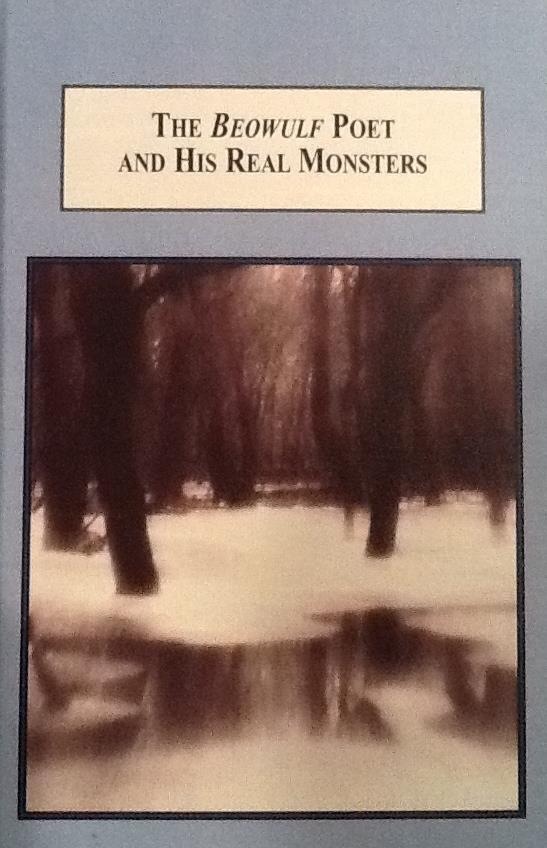
I have done similar guesswork when it comes to the Old English poem Beowulf and its anonymous poet, composed around AD 725. We know nothing of the poet himself (assuming a male poet), not even his name, but we know quite a lot about his time period. It isn’t nearly as well documented as Shakespeare’s day, almost a thousand years later, but there is a considerable record, including numerous firsthand, eyewitness accounts. Drawing from this material, I theorized in The “Beowulf” Poet and His Real Monsters that the three monsters in the poem may have represented specific sources of anxiety for the poet and his audience: continual armed violence, the dangers of reproduction, and illnesses that were caused by agents beyond people’s comprehension—manifested in Grendel, Grendel’s Mother, and the dragon.
I want to return to the year 1900. It has been noted that creative writers in the twentieth century and beyond have been more concerned with character motivation than writers in the past. Let’s take as one example a writer I’ve already alluded to—considered by many the greatest writer in the English language, Shakespeare. As great as Shakespeare was, his treatment of character motivation was consistently cursory. Why is Hamlet so quick to turn against his mother and his girlfriend, based on the urgings of a ghost? In The Winter’s Tale, why does Leontes turn against his wife, Hermione, based solely on the friendly hospitality she shows her husband’s oldest friend? How can Othello move so easily from adoring Desdemona to murdering her? The examples are abundant. We could explore any number of explanations, but the important point is that Shakespeare’s audience didn’t seem to care much about character motivation, a token effort is all they required of their playwrights. Said differently, the early modern audiences appeared to have little interest in the psychology of their fictional characters. Of course, Shakespeare was interested in his characters’ psychology. It was often the element he added to his revisions of previously existing plays: a focus on his characters’ tendency toward introspection. Yet it was still minimal compared to the psychological novels and plays (and films) as they developed in the twentieth century. One theory is that the wide dissemination of Freud’s theories—which began in the 1890s, but not until the 1920s were his works widely translated and read—made twentieth-century readers and theatergoers much more interested in the psychology (i.e. the motivation) of the fictional characters they were seeing on the page, the stage, and ultimately the screen. Important point number six.
It may be worth noting that in the United States the first college to establish a course in “psychology” was Harvard, in 1873, taught by Henry James’s older brother William, who eventually wrote the first psychology textbook, The Principles of Psychology, published in 1890. It was the primary college psychology textbook for decades, and greatly influenced thought in other disciplines as well.
I want to turn now from one side of the page to the other, from psychoanalytic critic to writer of fiction, which has been my chief interest since childhood. As a writer, I’m not mindful of my characters’ psychology—and certainly not of my own. It sounds like a simple goal, but when I put pen to paper I’m trying to tell an interesting story in an interesting way. I know there are elements at work beneath the surface of my awareness, but when I’m writing a story or a novel or a poem (my poetry tends to be strongly narrative), I’m not thinking about what those influential elements may be. Similarly, I’m not even thinking about what the text I’m writing may mean. Long ago I decided that meaning was the reader’s purview. In fact, when I let go of my concern for meaning in my stories, my stories became much, much better—more interesting and probably more meaningful.
William Gass said it well: “You hope that the amount of meaning you can pack into a book will always be more than you are capable of consciously understanding…. You have to trick your medium into doing far better than you, as a conscious and clearheaded person, might manage” (my italics).
That is, Gass understood that while he was writing consciously—making deliberate choices about plot, characterization, setting, word choice, and so on—his unconscious mind was at work as well, perhaps operating on a more symbolic level; and because of the influence of his unconscious thoughts, the work would turn out more complex, more engaging, and more interesting than it would if just his consciousness was directing the narrative.

When I write, I deliberately (i.e. consciously) put what I think of as “constellations of images” into the work: repeated words, phrases, ideas (much as we do in poetry, even when I’m writing prose), as well as allusions to the great, classical repositories of narrative. In the west, writers have tended to allude to four narrative sources: the Bible, classical mythology, history, and Shakespeare. I don’t limit myself to these sources for allusions, but I do draw from them copiously. These techniques are not done at random. I have intentions, but I also know that each reader is going to bring their own perspective, their own experiences to my text, and therefore read it and interpret it idiosyncratically. By using these “constellations of images” I’m feeding their imaginations as readers, giving them a lot of handholds for scaling their own personal understanding of the text (and perhaps their own personal understanding of me as the author of the text).
I have experienced two phenomena as a writer that I want to share because they relate directly to our interest in psychology and the unconscious mind. For more than thirty years my process has been to write in the morning, Monday through Friday. When I taught full-time, I would only manage about 30 minutes per morning writing session (now it’s somewhat more). Some mornings I sat down to write knowing precisely where I was in the narrative I was working on. That is, I’d left off the previous morning with a clear sense of what to write next (I’d just run out of time). On those mornings, the writing tended to produce a fine enough first draft. The writing session was satisfactory. Other mornings, I wasn’t sure where to take the narrative. I would sit with my coffee and a blank sheet of paper staring at me. Some writers, I knew, would say at that point “Well, I don’t have anything today. I’ll try again tomorrow.” I, on the other hand, had learned that if I just start writing—put pen to paper and begin producing text—the ideas would come. Not only that, the writing tended to be much, much better on those days that began so aimlessly. More interesting, more creative, more linguistically complex. I have a theory as to why.
On the mornings when I had a clear sense of what I wanted to write, the composing of text was directed primarily by my conscious mind, whereas on the mornings when I had a fuzzy sense or no sense at all, the composing of text was directed by my unconscious mind. And, lo and behold, it turns out my unconscious mind is a much better writer than my conscious mind. Said differently, my conscious mind operates in the real, and my unconscious mind operates in the surreal. And most of us would agree that surrealistic images are more engaging, more captivating than realistic ones.
The other phenomenon has to do with not writing. I’m dedicated to my creative writing, but I will have stretches when I’m not writing for several days—generally this happens when I’m traveling or on vacation. I have had a few occasions where a significant illness or injury has prevented me from writing for several days. I notice that I begin to get anxious, I have difficulty concentrating, I become impatient, and generally I just feel uneasy. These symptoms of my not-writing correspond precisely with sleep deprivation. Returning to Freud, he compared creative writing to daytime dreaming. He theorized that the mind of the creative writer is functioning in much the same way as the brain does when we’re sleeping and dreaming. I feel that my experience gives credence to Freud’s theory. By not writing for several days I’m depriving my mind of its process for analyzing and interpreting my world. I’ve often said that my writing is a kind of meditation. It keeps me centered. It may also be keeping me mentally healthy.
I will end on a note about a possible future for psychoanalytic criticism. As we know, a dominant topic in the academy is artificial intelligence: how is it reshaping society, how is it reshaping education, how is it reshaping us? It is a broad and constantly changing subject, so I want to focus on a very narrow sliver: AI’s production of narrative text. I have no doubt that commercial publishers in the U.S. and elsewhere will start marketing books written by artificial-intelligence “authors.” There will be no need for royalty payments, no authorial egos for editors to bruise (really, no need for editors), no missed deadlines by unpredictable human writers, who become sick, who become distracted, who become blocked.
If you follow developments in artificial intelligence, you’re probably familiar with the “black box problem.” AI is autodidactic, gathering data and “learning” from that data of its own mysterious volition. When AI begins doing things that its programmers didn’t program it to do, demonstrating processes and outcomes the programmers themselves don’t understand, the AI is operating in a so-called black box. AI that is composing narratives—telling stories, writing novels, etc.—is essentially drawing from its unconscious, its impenetrable black box. At that point, computer scientists are unable to untangle and understand the AI author’s complex programming, but perhaps psychoanalytic critics can employ their skill sets, analyzing the language of the narrative itself to perceive the artificial author’s unconscious mind. Such a process was predicted by science fiction writers. In Robert Heinlein’s novel The Moon Is a Harsh Mistress (1966), computer technicians are essentially psychoanalysts who diagnose and fix problems by talking to the computer, asking it questions, and analyzing its responses. Similarly, in Arthur C. Clarke’s 2001: A Space Odyssey (1968), the computer, HAL, has what amounts to a nervous breakdown when faced with an ethical dilemma.
As the new generation of critics, you may well be at the forefront of working with artificial intelligences, reading their output, analyzing their language, and assessing their unconscious programming. If so, I encourage you not to ignore the old, human-produced texts, for they are the gateway to comprehending the artificial authors of the very near future, and humanity will likely depend on that comprehension. Humanity will likely depend on you. Vitally important point number seven.
The Beowulf Poet and His Real Monsters Introduction
The following is the Introduction to my monograph The Beowulf Poet and His Real Monsters: A Trauma-Theory Reading of the Anglo-Saxon Poem (Edwin Mellen Press, 2013). Please see the book’s page for further information, including reviews, a brief description, the Table of Contents, and a promotional flyer (flyer also available below).
* * *
“[I]t is a drink dark and bitter: a solemn funeral-ale with the taste of death.”
Thus wrote J. R. R. Tolkien of Beowulf in his prefatory remarks for the republication of John R. Clark Hall’s 1911 prose translation (ix). The professor’s dramatic metaphor captures what many readers sense when they engage the text of the poem, either in the original Old English or in one of the myriad languages into which it has been translated since Sharon Turner began the process in 1803, whether it be a student’s first encounter or a scholar’s innumerable one. To extend Tolkien’s metaphor, the purpose of this monograph is to analyze the recipe of that dark and bitter brew.
The method by which I identify the various ingredients and discuss their influence on the poem’s morbid flavor is trauma theory, a term that Cathy Caruth is given credit for coining in her 1996 book Unclaimed Experience: Trauma, Narrative, and History—though the idea of literary trauma theory as a discernible critical model can be recognized earlier in the decade in such practitioners as Shoshana Felman and Dori Laub. Of course, one can easily make a case for even earlier sightings of trauma theory, with Caruth herself pointing to Sigmund Freud’s marriage of psychoanalysis and literary study via terms like the Oedipus and Elektra complexes. However, in spite of trauma theory’s presence in the humanities for roughly two decades, a precise and universally acknowledged definition has yet to emerge, which provides me an opening to put forward a definition as I am using it in this work.
In the previous paragraph I quietly inserted literary as a qualifier to differentiate between trauma theory as it exists in the vocabulary of psychiatric professionals versus how scholars in the humanities may regard its meaning—though both groups are concerned with how traumatic experience affects the subject’s mind, and they borrow freely from one another, explicitly or implicitly, to advance and articulate their understanding of trauma. In psychiatric medicine, the overarching goal of trauma theory, broadly put, is to use that understanding to assist victims of trauma overcome its devastating effects. In literary scholarship, the goal of trauma theory, broadly put, is to use that understanding to document the effects of traumatic stress on language production. To state it simply (in fact, overly so), psychiatric professionals examine the speech of patients (perhaps “clients” is a better word), while scholars examine texts (e.g., Beowulf).
My specific purpose is to make the case that Beowulf reflects traumatic stresses which the anonymous poet and his fellow Anglo-Saxons felt in their day-to-day lives, and I concentrate my trauma-theory reading on the three monsters, who represented, in all likelihood unconsciously, particular sources of trauma to the poet: the terror of extreme violence, the dangers of sexual reproduction, and the deprivations of chronic disease. My training as a scholar is in English studies, a program that requires coursework in literature, linguistics, rhetoric, and pedagogy—also a program that has prompted me to draw from a wide range of fields, including medicine, history, anthropology, philology, sociology, and psychology, with special emphases on the branches of psychoanalysis and neuropsychology. In other words, English studies in general and this monograph in particular have allowed me to indulge my “attention surplus disorder,” a phrase I commandeered from Susan Sontag, who uses it to mean that she is basically interested in everything.1
What is more, I consider myself primarily a creative writer—a novelist, short-story writer and sometimes poet—which, I believe, gives me further insight into what I call “the psychic origins of creativity” when I take on the roles of critic and scholar, further, that is, than someone who has never tried to devise characters and plot and setting, and to coax them through a narrative arc via dialogue, metaphor and a plethora of other storytelling techniques. That is to say, I feel a brothers-in-arms kinship with the Beowulf poet and an affinity for the task he set before himself that many literature scholars, simply, do not.
In bringing to bear on the poem knowledge from so many different fields, my reading represents a departure from what has been the dominant discourse in Beowulf studies for at least the last thirty years, a discourse that has tended to focus on the extant Cottonian manuscript, a discourse that has resisted critical theory “in the name of empiricism, objectivity, or common sense,” according to John D. Niles (“Introduction” 9). However, as James W. Earl points out in his introductory remarks to Thinking About Beowulf (1994), intense study based on the extant manuscript has failed to yield much that is irrefutable about the poem and even less about its poet. In fact, Earl draws on the concept of the Strange Attractor from chaos theory, meaning “that underlying presence, or nonpresence, that gives its shape to chaos” (10), to conclude the following about new directions in Beowulf scholarship: “If we cannot anchor our thinking about Beowulf in history any longer, we may have to entertain at long last the freedoms of modern and postmodern critical thinking—at least within the parameters set by the fractal text, and its Strange Attractor, the poet” (27).
That is, to better understand the poem, we must do all that we can to better understand the poet.
The trauma-theory reading of the poem rests largely in Chapter 4 of this monograph, while Chapters 1, 2 and 3 lay the groundwork necessary to the reading. The first chapter, for example, discusses the close association between thought and language by examining the work of pioneering psychoanalysts Freud and Jacques Lacan, as well as contemporary trauma theorists and neuropsychologists. Key concepts in the chapter include the effects of trauma and how these effects can be passed from generation to generation, and from location to location. Integral to these concepts are discussions regarding the establishment of trauma cultures and the production of trauma texts. The next chapter focuses on the mimetic parallel between postmodern narrative technique and the narratival characteristics of someone who has been traumatized. In this chapter and elsewhere, the theories of Michel Foucault are engaged, especially those related to analyzing the minds of past peoples via the texts they left behind. When I introduce Foucault to my students, I use the model of the double helix with one strand representing thought and language the other. When a culture has passed, like the Anglo-Saxons’, it is as if its double helix has been stretched and flattened, and we view it from an angle that makes it appear as though only the language strand remains (i.e., its texts), but Foucault tells us that inseparably bonded to that language is the thought that shaped it; therefore, by studying a past culture’s language, we can come to know the culture’s thought as well. In short, the Beowulf poet’s mind produced the topography of the text, so by carefully studying the text we can discern the topography of the poet’s mind.
Chapter 3 is less theoretical and more practical as it examines aspects of the lives of Anglo-Saxons that likely would have resulted in traumatic stress and in particular the traumatic stress I believe to be represented by Grendel, Grendel’s mother, and the dragon. That is to say, if the poet and his people were in fact traumatized, what events and day-to-day features of their lives could have caused that trauma? For this chapter, I rely principally on the writings of Bede and Eddius Stephanus, the anonymously composed Anglo-Saxon Chronicle, and the period’s medical texts: the Herbarium, Leechbooks, and Lacnunga. Then, finally, Chapter 4 brings all of this diverse knowledge together in a trauma-theory reading which focuses on the original language of the poem.
It is important to note, too, that while my reading is a departure from much of the traditional scholarship, I incorporate and build upon a great deal of that scholarship, bringing into the conversation (to name a few) Klaeber, Tolkien, Malone, Mitchell, Robinson, Niles, Bjork, Orchard, Kiernan, Earl, O’Brien O’Keeffe, Chance, Howe, Lerer, Lapidge, Liuzza, Acker, and Foley, as well as newer voices like Joy, Ramsey, Kim, Mizuno, and Warren. All of whom have contributed mightily to what we know about the poem, and thus contribute mightily to what we could possibly come to understand by pursuing critical approaches born of postmodernism, like trauma theory.
Feel free to share the following promotional flyer either electronically or in print.
Beowulf Poet – Morrissey flyer
Note
1. See “Susan Sontag, The Art of Fiction No. 143,” interviewed by Edward Hirsch for The Paris Review, available online at theparisreview.org.
Works Cited
Earl, James W. Thinking About Beowulf. Stanford, CA: Stanford UP, 1994. Print.
Niles, John D. “Introduction: Beowulf, Truth, and Meaning.” Ed. Robert E. Bjork and John D. Niles. A Beowulf Handbook. Lincoln: U of Nebraska P, 1998. 1-12. Print.
Tolkien, J. R. R. “Prefatory Remarks on Prose Translation of Beowulf.” Beowulf and The Finnsburg Fragment. Trans. by John R. Clark Hall. 3rded. London: George Allen and Unwin, 1950. ix-xliii. Print.

 12 Winters Blog
leave a comment