Digital Resources that Facilitate the Study of English through Its Various Stages
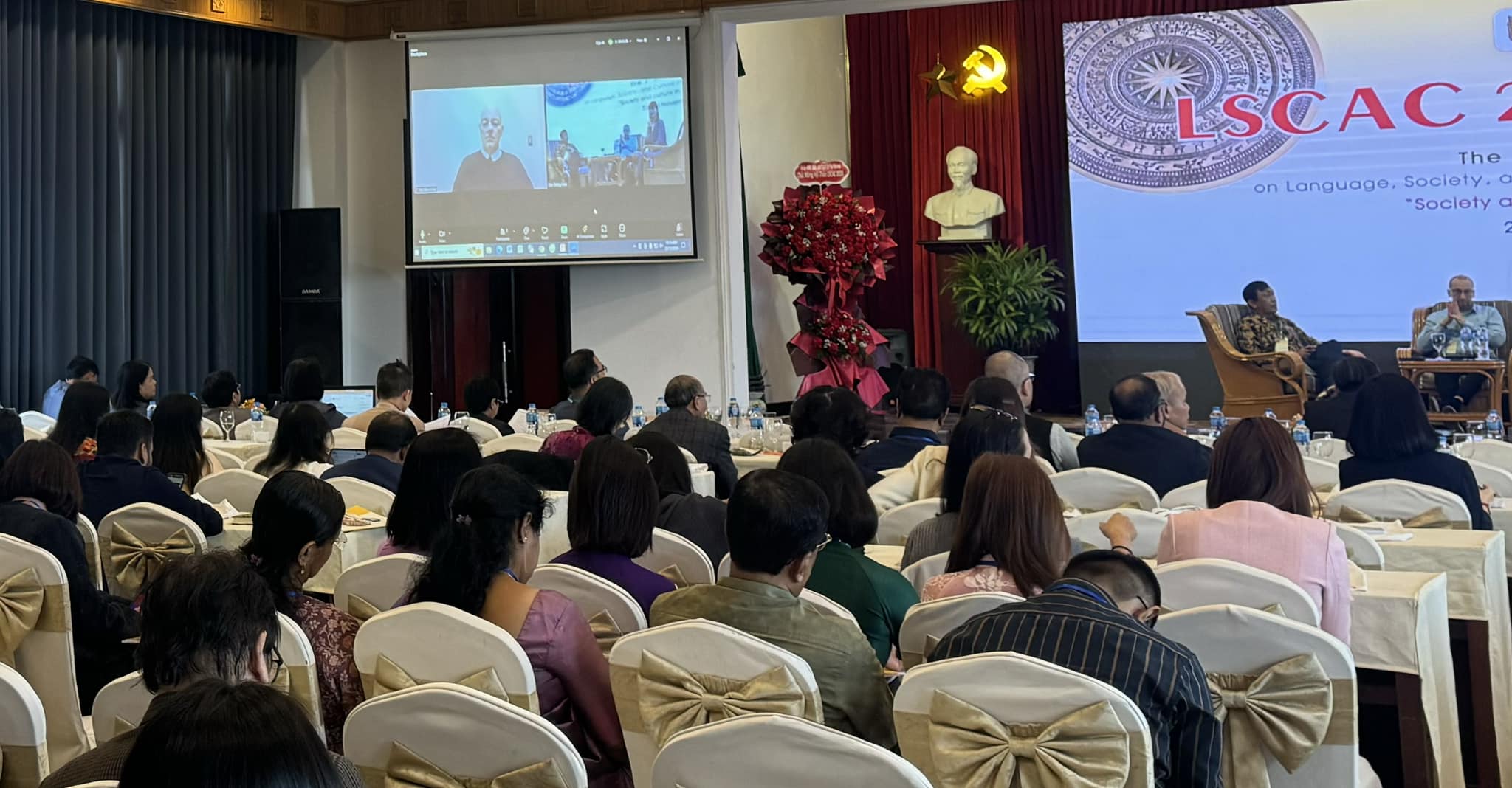
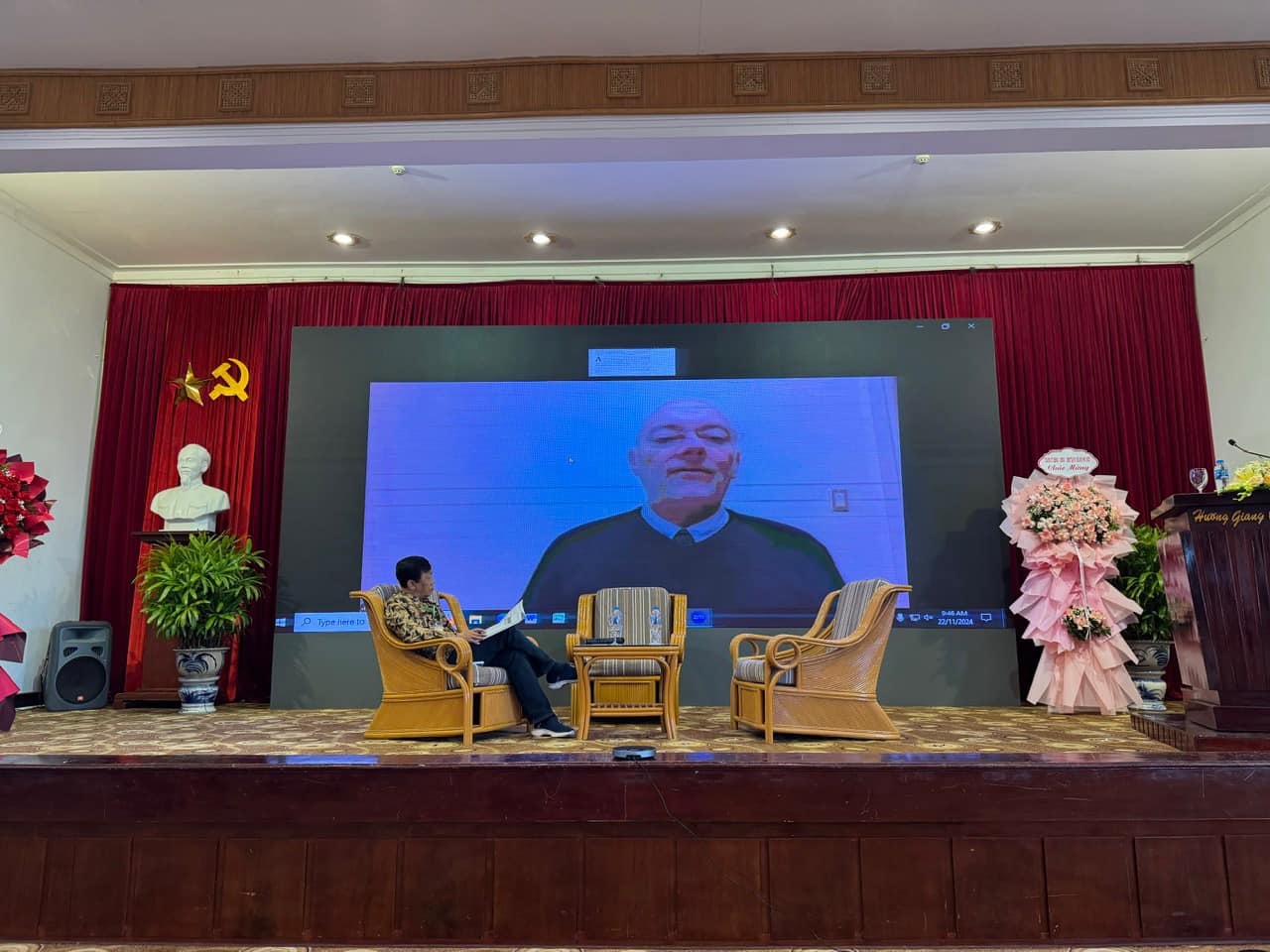
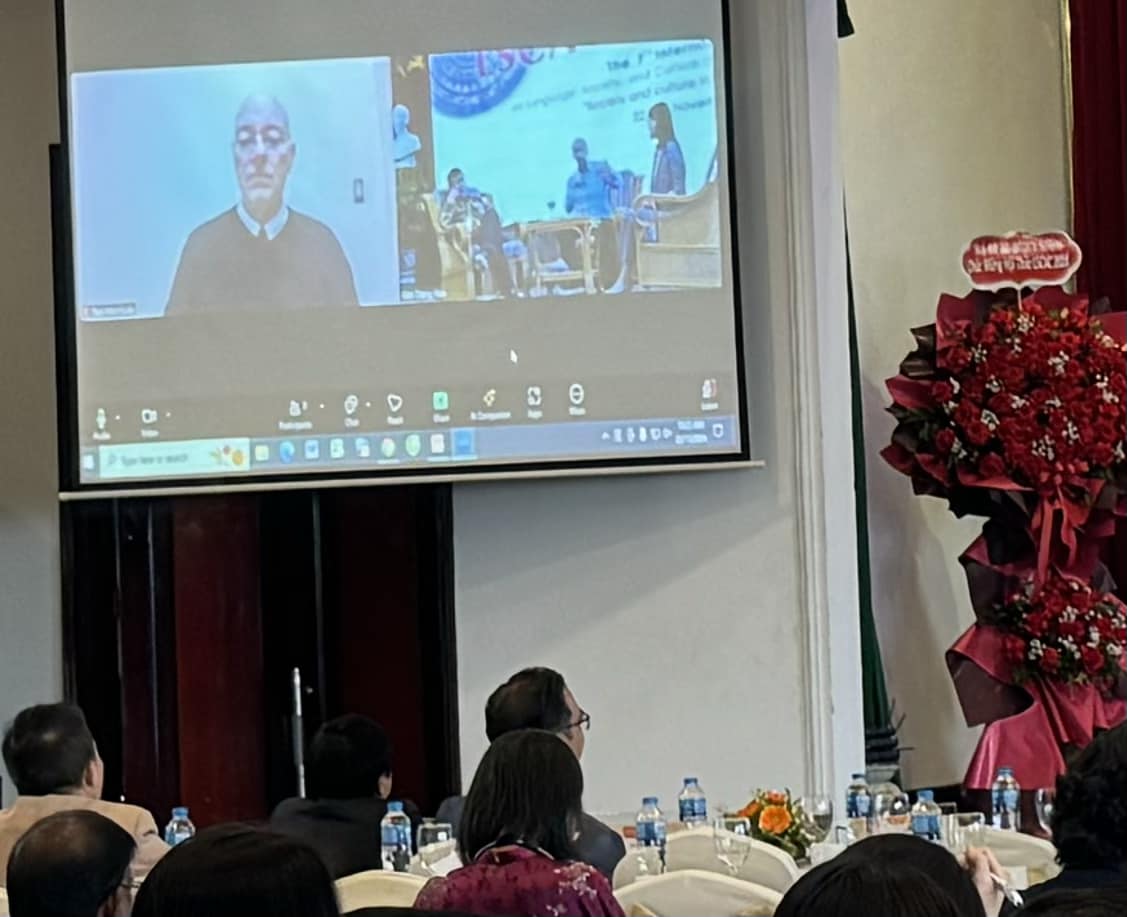
This text—“Digital Resources that Facilitate the Study of English Through Its Various Stages: Old, Middle and Modern”—was a keynote address at the 7th International Conference on Language, Society and Culture in Asian Contexts, organized by The Institute of Cultural Anthropology, held in Hue, Vietnam, November 22-24, 2024. It was delivered remotely concurrently with a translation into Vietnamese.

This paper has a few modest goals. Principally, I want to identify various digital resources that facilitate the study of the English language, from its earliest form to the present. In particular I will focus on the poem known as Beowulf, which was composed in the earliest form of recognizable English, called either “Anglo-Saxon” or “Old English.” I also want to suggest reasons why students in Asia may find such study both useful and engaging. What is more, a program in Old English and related subjects at Nanjing University in China provides a precedent of success for such study.

First, some background information regarding the evolution of English through its three phases as an identifiable language: commonly known as Old English, Middle English, and Modern English. It is convenient to begin a discussion of English with the retreat of the Romans, who colonized and occupied the island of Britain for approximately 350 years, until A.D. 410. Under Roman rule, Latin was the dominant language. However, in the sudden absence of Roman control, a language emerged that was greatly influenced by native tribes in (current-day) England and Scotland, as well as Germanic and Scandinavian groups arriving from mainland Europe. Though dialects varied widely, this language has become known as “Old English.” It’s worth noting that a synonym for Old English used by many is “Anglo-Saxon,” but it’s a term that has fallen further and further out of favor in recent years for a variety of reasons. Nevertheless, when searching for information about Old English, one definitely would want to include the phrase Anglo-Saxon and recognize that they are referring to the same language and literature.
The language we call Old English was the dominant language throughout Britain until the dramatic events of 1066, when the French-Norman King William (also known as “William the Conqueror”) defeated the Anglo-Saxon King Harold at the Battle of Hastings, in southeast England. The quickly ensuing “Norman Conquest” of England led to the evolution of Old English into the language we term “Middle English,” a hybrid of the native language and the French-Norman language (also known as “Old French”), which was spoken by William, his army, and the thousands of his subjects who flooded into England over the next two decades. Middle English, then, is derived from both the Germanic branch of languages and the Latin branch (so-called Romance languages). It is a gross oversimplification, but essentially Old English words were largely retained, but the mechanics associated with syntax and conjugation were adopted from Old French (that is, French-Norman).

Middle English was the dominant vernacular from, roughly, 1100 to 1430, when, mainly due to bureaucratic necessity, a standard language was adopted by law. This government-sanctioned language was the beginning of what we call “Modern English.” It is worth noting that the adoption of this standard form of English was more or less concurrent with the invention and development of the printing press in the West—a fact which has led to the difficulties of spelling modern English. With the advent of mass printing, when English was still using phonetically spelled Middle English vocabulary, those spellings were in essence frozen in time. Meanwhile, spoken English continued to evolve, which was primarily a process of simplification. For example, many two-syllable words (like bake, cake and take) became pronounced as one-syllable words; yet English retained their Middle-English two-syllable spellings. Now we say such words have a “silent e.” We have many silent letters and letter combinations in modern English because words continue to be spelled in their Middle-English forms but spoken in simplified and streamlined modern English.
For different reasons, we have relatively little literature from either the Old English period or the Middle English period. We have a dearth of Old English texts because of their agedness and also because of deliberate destruction by King Henry VIII during his feud with the Catholic Church (monasteries—repositories of such texts—were burned to the ground). We have very few Middle English texts because they were written prior to the printing press and only exist in rare hand-copied illuminated manuscripts, and most writers during this period were composing in French (not in the common vernacular of Middle English). Therefore, the texts we have from these two language periods are treasured examples of England’s national literature. From the Old English period, the crown jewel is clearly the poem Beowulf (approximately A.D. 725). From the Middle English period, Geoffrey Chaucer’s The Canterbury Tales (circa 1380) stands apart.
The text of Beowulf exists in a single volume, copied by hand on vellum, dating from about the year 1000. The poem is one of four texts gathered into what is known as The Nowell Codex, housed in the British Library. The Codex is in poor condition, due to its antiquity, rough handling, and a famous fire in 1731 that could have destroyed it completely if not for a librarian’s quick action. Consequently, there are passages in the poem of 3,182 lines that are essentially unreadable and passages that have disappeared off the page entirely—which has led to a great deal of scholarly speculation. Old English is so far removed from modern English that contemporary readers must rely on the work of translators (to date there have been more than 350 modern-English translations of Beowulf).
Given the fragile condition of the Beowulf manuscript, it is extremely difficult to gain access to its crumbling pages. Luckily, there are many digital resources that can substitute for access to the original. Here I will identify only a small sample of such resources.
To examine the original Beowulf manuscript itself, the most useful resource is Electronic Beowulf: Index & Guide (https://ebeowulf.uky.edu/), made available by University of Kentucky and edited by the esteemed Beowulf scholar Kevin Kiernan. The site features high-resolution digital images of the Beowulf manuscript, page by page, searchable via a variety of options, including line number and word entry. There is a wealth of other information available at the site; I only provide the briefest sketch here.
Another especially valuable site is Fordham University’s Internet History Sourcebooks Project, edited by Paul Halsall. Again, it is a treasure trove of information, divided into three general categories: Ancient, Medieval, and Modern. Moreover, it is not limited to English texts (geographically). Given my focus here, I will underscore that it provides reliable texts of Beowulf in both Old English (https://origin.web.fordham.edu/halsall/basis/beowulf-oe.asp) and in translation, by Francis Gummere (https://origin.web.fordham.edu/halsall/basis/beowulf.asp).
There are numerous side-by-side translations available. That is, on one side of the screen is Beowulf in Old English and opposite is the modern-English translation. One such site is based on Seamus Heaney’s widely read translation (https://www.hieronymus.us.com/latinweb/Mediaevum/Beowulf.htm). Another especially ambitious bilingual site is Beowulf in Steorarume, edited by Benjamin Slade, who provides detailed hypertextual notes along with the side-by-side translation (https://heorot.dk/beowulf-rede-text.html). Perhaps the simplest and most straightforward bilingual edition available online is provided by Massachusetts Institute of Technology as Bilingual Beowulf in a downloadable PDF format (https://www.mit.edu/~jrising/webres/beowulf.pdf).
As I say, these are only a few of the countless online resources that provide the poem in Old English, in translation, or both. I believe them to be especially reliable. For assistance with Old English itself I recommend the “Old English dictionary” provided by Lexilogos: Words and Wonders of the World (https://www.lexilogos.com/english/english_old.htm); and I am especially fond of the site’s link to “Old English Translator” (https://www.oldenglishtranslator.co.uk/), a handy online tool for translating Old English words to modern English, or vice versa. For simplicity and thoroughness, I also like the Old English “Glossary” (http://www.oereader.ca/glos.htm) that can be quickly searched using the “find” function on one’s computer.
In addition to teaching the poem Beowulf for decades, I have been working on my own modern-English translation. All of the sources discussed above have been invaluable in my work as both a teacher and a translator. Of course, there are myriad printed texts that are of great importance, but they may not be readily available in all locations. Online resources tend to be.
In the interest of brevity, I will not go into as much detail regarding resources associated with Middle English, but they are just as copious as those dedicated to Old English and are easily found online. Here are three especially useful and well-vetted sources: Rider University Library’s “English Language History and Linguistics” (https://guides.rider.edu/c.php?g=420552&p=2872234); University of Michigan Library’s “Middle English Compendium” (https://quod.lib.umich.edu/m/middle-english-dictionary); and Harvard University’s “METRO Resources” (https://chaucer.fas.harvard.edu/metro-resources-0).
This topic was largely inspired by a program of study at Nanjing University in China. Professor Leonard Neidorf, a leading medieval scholar, teaches courses in Old English, Middle English, and Old Norse, as well as literatures composed in those languages. Chinese students complete both M.A. and Ph.D. degrees under Dr. Neidorf’s supervison, and they are widely published in English in the field of medieval studies. See Dr. Neidorf’s supervision page online (https://leonardneidorf.com/supervision). I have interacted with the students via Zoom; their erudition and enthusiasm are both obvious and impressive.
Beyond the inherent value of serious study, scholarship and publication, engaging with works like Beowulf can provide a bridge between cultures. Researchers in psychology, for example, have long been aware of myths, folktales and themes that appear ubiquitously across cultures. Claude Lèvi-Strauss developed his concept of “mythemes” as a way of identifying the structures that build similar narratives across cultures and languages. As just one small but obvious example, I will point to the dragon that appears in the final sections of Beowulf. Dragons, or dragon-like creatures, appear in stories on practically every continent, in untold numbers of cultures and languages, including, of course, the origin tales of Vietnam in the form of Lạc Long Quân. So, even in the stories of medieval England, in a language as remote as Old English (which was practically a dead language even among native English speakers for several centuries), students everywhere can find common elements that engage them both intellectually and emotionally.
Indeed, I believe that students who approach a poem like Beowulf from a cultural perspective that is definitively non-Western can detect aspects of the work previously unexplored through scholarship. In spite of intense academic study for more than 200 years, there remain an infinite number of new things to discover and to say about the old poem and its literary kin. My hope is that this brief presentation will spark interest in medieval studies, and that I have provided a few useful resources to begin to explore that interest.
Locating Our Common Humanity through Expressive Writing
The following was the opening keynote address at the Fifth International Conference on Language, Society and Culture in Asian Contexts, “Inclusiveness and Sustainability of Asian Societies,” Hue City, Vietnam, May 25 – 26, 2018.
When the conference committee graciously invited me to speak to you, my first response was to go to the conference’s website and read about its overarching objective, which, I discovered, has to do with breaking down cultural barriers between nations. Even though I do not regularly travel between nations, it is an idea with which I am profoundly familiar. In the United States, the election of our current president has dramatized the theory that we have within our borders two distinct cultures, two dominant ideologies, two divisive world views which threaten to tear us into two separate nations. Or perhaps a better way of contextualizing the situation is to say that the wound caused by our Civil War which nearly broke us in two 150 years ago has never actually healed—and the current administration has merely made us painfully aware of what has always been true.
One can despair when one considers the seeming hopelessness of bridging political, ideological and cultural divides. Emotions run deep, and people are quick to anger and to become defensive when their worldview, when their belief system is challenged. In my classroom, I encourage my students to engage in discussions of the issues that divide them: gun control, immigration, gay rights, reproductive rights, among many others. I daresay that little progress appears to be made in convincing either side to alter their perceptions.
However, when my students access other aspects of their lives—when they move away from issues related to ideologies—they instantly have things in common. In fact, I would assert, they have everything in common. When I ask them to access their emotions—their joys, their disappointments, their frustrations, their achievements—they speak the same language, regardless of whether they are conservative or liberal, straight or gay, gun-owning or gun-controlling, gendered or gender-neutral, Pro-Life or Pro-Choice. That is to say, when they are asked to communicate expressively, students, above all else, are human.
 Which brings me at long last to my thesis: Through expressive writing, we can locate our common humanity. In other words, what divides us tends to be the product of intellect, while what unites us is our emotional responses to the world.
Allow me to take a moment to define some terms, especially to define them as I am using them in this presentation. The key term, obviously, is “expressive” writing, by which I mean writing that explores and communicates one’s emotional reaction to a given situation, generally a situation that one has experienced personally. I am adopting and somewhat adapting concepts discussed by James Britton, who identified three writing functions: transactional, expressive, and poetic. Briefly, “transactional” writing aims to inform and/or persuade the audience through the manipulation of primary- and secondary-source material (i.e. “research”), and in this transactional mode the writer’s self all but disappears. Transactional writing, in academic settings, takes the form of analyses and research-based reports, wherein personal experience, even in the form of anecdotal evidence, is frowned upon almost to the point of nonexistence, especially in the sciences but even in the humanities.
As Jeff Park remarks in his book Writing at the Edge, transactional writing is by far the dominant mode in the academy, while expressive writing “continues to be underdeveloped” (25). Returning to James Britton’s terms, the other modes besides “transactional” are “expressive” and “poetic.” Here things can become confusing. By “poetic,” Britton means something made out of language for language’s own sake but having little to do with writers’ expressing their feelings on the subject. Riddles, puns, acrostics, limericks may be examples of poetic language use in the way that Britton is defining the term.
Generally, though, poetry refers to writing that is highly personal and expressive. Therefore, when I use the phrase “expressive writing” I am using it as synonymous with what, in the U.S., we most often term “creative writing,” which includes fiction, poetry, and creative nonfiction (or the personal essay). Adding to the confusion is the fact that writers can certainly create stories, novels, poems, and essays that are not especially expressive of their emotions. They may be trying to entertain, to titillate, or to expound on some subject, but they are not trying to communicate a personal experience and how it affected them on an emotional level.
Here, today, I am specifically advocating expressive writing as a means to breaking down or through cultural barriers.
Educators have long advocated reading as a key to developing empathy in students, including empathy for people of other cultures. I certainly agree that reading about other sorts of people can spark interest and understanding, which can in turn lead to empathy. More often that not in the U.S., however, reading literature is the sole means of encouraging empathy in the humanities. Empathy development is not bolstered routinely with expressive writing, and that, I believe, is a mistake. We should be having our students write expressively—and, importantly, sharing their writing through some means of publication (more on this in a moment).
While literary study may be only one component of fostering empathy, it is through literary study that we can most vividly see evidence of our common humanity, which is so often obscured by our politics and competing ideologies. I do not want to get too sidetracked here, but I am referring to the concept of archetypal narratives which seem to spring from a common past that transcends geography and culture. I give as just one example, in brief, the narrative of the woebegone sailor who, driven off course, finds himself and his men trapped inside the dwelling of a man-eating giant. Through his cleverness and courage, the sailor manages to blind the giant and escape the dwelling by hiding amongst the giant’s grazing flock. Whether one recognizes this as the story of Odysseus, or of Sinbad, or of the Man with No Legs depends on whether one is familiar with a Greek, Persian, or Korean literary tradition.
In essence, then, the tale of the woebegone sailor is foundational in Western, Middle Eastern, and Eastern cultures (to use Western distinctions)—a tale so ancient no one can cite its precise origin. These parts of the world are sharply divided when it comes to religions and political ideologies, yet the tale of the woebegone sailor must speak to us all: the disorientation and frustration of being lost, the primal fear of being trapped by a predator of superior power, the exhilaration of resourcefulness, and the joy of our life-preserving escape: all peoples, everywhere, can relate to these emotional registers in the common story.
Through expressive writing—that is, writing that accesses and communicates our emotions rather than our ideologies—students from diverse backgrounds can locate their common humanity, and see there is as much that unites us as there is that divides us.
 This topic is obviously complex, and I can only begin, here, to outline some of its component parts, but I will touch on the following areas: the theories which underpin the effectiveness of expressive writing for fostering empathy; the likelihood of students engaging in traumatic writing when given the opportunity to express themselves; some of the side benefits of expressive writing; the importance of publishing, and not just creating, the results of expressive writing; and some concrete classroom practices if one is inclined to use expressive writing in their curriculum.
Theories about expressive writing & empathy
First, then, how does expressive (or creative) writing create a connection between writer and reader that goes beyond, that goes deeper than other sorts of modes of communication? To respond, I turn to the work of Marcelle Freiman, who is especially interested in the cognitive connections between creative writers and their readers. Building on the work of cognitive scientists like Gerrig, Oatley and Djikic, Freiman asserts that “human long-term memory” is not only “‘based on memory’” but also “‘actively generates meaning’” (133). Thus, the act of writing helps writers to organize their thoughts and reconstruct memories—including all the associations those memories evoke—and it creates “an extended, externalised mental model” which readers are invited to enter. A well-wrought narrative can make a reader experience the story as if they had direct involvement in it. I am referring to the phenomenon of being lost in a story, to which nearly everyone can relate.
Freiman theorizes that the phenomenon is caused by the reader in essence “‘writing’ the text (in the mind) while reading” (134). Here she quotes Hawkes directly: “[Writers] thus involve us in the dangerous, exhilarating activity of creating our worlds now, together with the author, as we go along” (135, emphasis in the original). Freiman is suggesting that the relationship between writer and reader goes beyond being complementary into the realm of genuine partnership; the writer and reader are literally working together to create meaning. This process of shared responsibility in the text is true of all writing, says Freiman, but it has an enhanced dynamic when it comes to expressive writing: “This capacity for the writing of the creative or literary text occurs, perhaps, even more vividly ‘as experience’ because now the process involves imagination, including experiential representations of referents such as perceptions and emotions, in the language that writes what is imaginatively construed, to be read by a reader” (135). I want to underscore the words perceptions and emotions as these are key elements in an act of empathy. Understanding how others perceive their world and the emotions their perceptions elicit is absolutely vital to seeing people as people and not merely avatars for the ideologies they appear to represent.
Likelihood of students writing about trauma
Let me move on to the question, why are students likely to write about trauma when given the opportunity to write expressively? When left to choose their own subject, many students will, of course, elect to write about happy things, which is valid. Writing about successes, about favorite memories, about the love of family and friends are all legitimate responses to an open-ended task to compose; and others can relate to positive experiences. But many, many students will choose to write about a traumatic experience in their lives, and it is due to the nature of trauma. The term “trauma” is slippery, and it is used to describe a vast array of life experiences; thus, depending on how widely or how narrowly one defines what constitutes “trauma,” the number of people who are suffering from some level of traumatic stress fluctuates up and down. Various studies identify between a quarter and three-quarters of the U.S. population as having had some kind of traumatic experience.1 People who have been traumatized tend to want to write about the experience, either explicitly or implicitly. Studies in the field of neuropsychology have suggested that trauma-related language dominates the linguistic functioning of victims.2 As MacCurdy observes, “Invariably writers gravitate to their difficult stories, the ones that cause the most pain and confusion . . .” (15).
Because the academy does not privilege expressive writing, relatively few educators are trained to facilitate it, and, consequently, to respond to students’ writing about their traumatic experiences. When students elect to write about traumatic episodes in their lives, the complexities of the writing classroom multiply exponentially. The most immediate question educators must ask themselves is “Which is more important: the student’s acquisition of writing skills, or the student’s emotional welfare, which may be improved by engaging the traumatic event?” Before responding to my own question, I should say that communicating one’s trauma is a standard practice in therapy, either through one-on-one discussions with one’s therapist, in a group-therapy setting, or through writing (or some combination of these basic approaches). Once a teacher encourages students to engage their trauma in the classroom, the distinction between teacher and therapist can become murky. MacCurdy attempts to draw a distinction when she writes, “Teachers are advisers, mentors, and role models. Listening with compassion helps to fulfill those responsibilities and creates the trust needed for the student to delve into a difficult topic. . . . However, teachers are not therapists. While a therapist may listen and then counsel, teachers listen and, if appropriate, suggest counseling and other professional services” (6).
I find no fault with MacCurdy’s assessment other than to say that she makes it plain why teaching—and perhaps especially teaching writing—is more art than science. Knowing when and how to respond to students’ work relies almost entirely on professional judgment; there are no clear-cut guidelines to follow, as much as we may wish at times there were.3
Benefits of expressive writing
So, writing about trauma can have therapeutic benefits for students. If one looks at that aspect of trauma writing—potential emotional benefits—certain pedagogical difficulties emerge regarding the sort of work students produce (in essence, how fragmentary or how complete it may be or must be), the ways in which it should be assessed (according to traditional guidelines for written work or by some other kind of rubric), and whether or not it should be shared with others (that is, published). How one responds to each of these issues may depend in large part on the end goal. If the end goal is for students to produce something that is most definitely going to be shared with others (versus something mainly for their own experiencing of the process), then the pedagogy must shift accordingly.
Again, we are in the realm of art more than of science. The difference between students writing something only for themselves and students writing something which will be shared with others may lie in how the teacher contextualizes the act of writing and the possible benefits of sharing highly personal experiences. Allow me to say what may be needless to say: The best writing—the best art—is generally rooted in the highly personal experience. In order to create texts that are meaningful, and emotionally and intellectually engaging for readers, writers must be willing to reveal their most personal and their most private experiences and ideas. Marguerite MacRobert recommends that writers use techniques similar to those employed by method actors (à la Stanislavski). She says, “Writers are often spoken of as observers, and many writing workshops hone observation skills, but what Stanislavski says of acting could be emphasised in writing too: openness to experience as it occurs and being able to access emotional memories are crucial writing abilities. . . .” (353).
I will add anecdotally that when I took fiction writing workshops with the novelist Kent Haruf, in the opening class session Kent would always ask us to share something personal about ourselves that we had never shared with anyone else. The point of his exercise was that to be effective fiction writers we must be willing and able to share our most personal thoughts and experiences with our readers. Holding back leads to writing that is less than it could be. This sort of openness may seem like a tall order to expect of young students, but recall that traumatized students generally want to write about their traumatic experiences. In fact, they need to write about them. The pedagogical trick is not to get them to write personally, but to be willing to share their personal writing with others: to instill them with confidence, and to teach them that their sharing can benefit others, namely their readers.
Given our setting and the conference’s overarching mission it is vital to note that expressive writing can transcend language barriers, and in fact can benefit from them. That is, students writing in languages other than their primary language (in English for instance) can be beneficial to the expressive-writing process in several ways. Here I will turn to the work of Owens and Brien, who developed a project in which international students attending universities in Australia wrote expressively in English with the goal of producing a published journal. Too often, international students’ language skills are viewed as a weakness or an obstacle to be overcome; however, Owens and Brien, among others (I included), advocate seeing these students’ language skills as a strength and an opportunity. They write, “[P]erceptions about the English skills of [Learners of English as an Alternative (or Additional) Language] have serious implications for large numbers of students, teachers, employers and, more broadly, the higher education industry. . . . [R]ecognising these learners as linguistically complex (rather than deficient) and finding new and enhanced methods to support their language needs . . . could transform both university practices and the students’ experience of those practices” (361-362). In particular, Owens and Brien advocate the use of creative writing as a way to foster these learners’ acquisition of alternative languages and to ease their assimilation into unfamiliar environments.
In Owens and Brien’s project, they found that international students were drawn to writing about the difficulties associated with cultural assimilation. While writing in a language other than their mother tongue did present some challenges, there were also numerous benefits. They write, “[Alternative Language speakers] have both less (English) and more (languages other than English) lexical-syntactic-semantic knowledge than monolingual English speakers. They rely on a more restricted English resource but have alternative language options available to express meaning. . . . So, whilst mother tongue speakers may use their language creatively in response to situational characteristics, Alternative Language speakers may use English more creatively . . .” (362). What is more, the way Alternative Language speakers approach language may lead to particularly poetic constructions, say Owens and Brien. As someone who has taught Alternative Language speakers in creative writing workshops (especially speakers of Asian languages and, most often, speakers of Chinese), I can attest that even beginning creative writers can compose some startlingly beautiful phrases and images in English because of their knowledge of multiple languages, not in spite of it.
Importance of sharing & publishing
It definitely goes without saying that if expressive writing is going to help break down cultural barriers, it must be shared across borders (both geographic and ideologic), which is where publication enters the discussion. Though discussing their project in the microcosm of their university settings, Owens and Brien found that Alternative Language students writing expressively benefited both the writers themselves and their audience: “It allows readers, such as academic staff as well as other students, to gain insight into the cross-cultural experience and develop greater empathy for the cultural sojourner” (369). Moreover, “the act of authoring such texts” can be “empowering” on multiple levels: “Promoting the creative and unique English language capacities of [Alternative Language students] . . . across English speaking host-communities, can help . . . build empathy, understanding and appreciation in a language context where they are conventionally de-valued” (369). Moreover, Jess-Cooke believes that students’ producing “a completed piece of work is a significant part of building self-esteem, and therefore contributes to wellbeing” (254).
Fortunately, we live in a time when sharing writing (or video or audio) across the globe is relatively simple. Material can be posted to the Web of course. Texts can be made available to download to various sorts of e-readers (Kindle, etc.), and print-on-demand options make physically published anthologies readily and cheaply available via outlets like Amazon among many others. Speaking as a publisher and author, the challenge is not to make students’ writing available across cultural boundaries, but rather how to help others realize it is available in the flood of material that is published, one way or another, every day. Some estimates put the number of new book titles alone released each year in the neighborhood of a million. On any given day, several thousand new titles may become available. Unfortunately I have not solved this conundrum. I would say, as with any project, the way to begin, at least, is to start small. That is, micro-target specific audiences, perhaps via university networking opportunities, as afforded via conferences like this one. Work with colleagues in other countries to produce expressive writing and share it beyond physical borders. Perhaps combine the work of students from several countries in a single anthology to be shared and distributed amongst the project participants. Students’ texts could be captured via audio recordings and video performances, adding additional contextual layers to the communicated experiences.
Concrete classroom practices
I would like to end with a practical suggestion for a writing prompt. I have found that students respond quite effectively to what I call “A Moment of Clarity” narrative essay. I ask them to write about a time when they came to understand something about themselves or about their world due to a specific event in their lives. (I have provided the specific assignment and pre-drafting activity as an appendix to this presentation.) Some students write about positive things in their lives: learning the importance of teamwork or dedication, discovering what they want to do with their lives, embracing their spiritual selves, accepting their true sexuality, and so on. More students, though, tend to write about traumatic, life-transforming experiences: the death of a loved one, a near-death experience of their own, the separation of their parents, the crushing loss of a best friend or first girlfriend or boyfriend.
Allow me to share some brief excerpts of papers my students wrote this past year as a response to the “Moment of Clarity” prompt (the students have granted their permission, and I have obscured their identities):
 From a student whose boyfriend was driving recklessly and lost control of his car: “The convertible Mustang [car] flipped, pinning me underneath the vehicle. The only thing that kept me from getting my head smashed was the headrest that held it up just enough. I needed to stay calm. I couldn’t focus on anything else but the sound of the blood dripping on the ground. I tried to move my right arm and couldn’t.”
 From a student who struggled with the death of her grandmother after a long illness: “Now I understand that death occurs in everyone’s life and everyone is affected by it differently. She was in pain because of the cancer and all of the medicine she was taking. Seeing her in the casket was different because she looked peaceful and beautiful compared to the cancer’s effect on her. I have to let her go because I love her and she would not want me to be afraid or sad. She would want me to strive and achieve my goals and to live my life.”
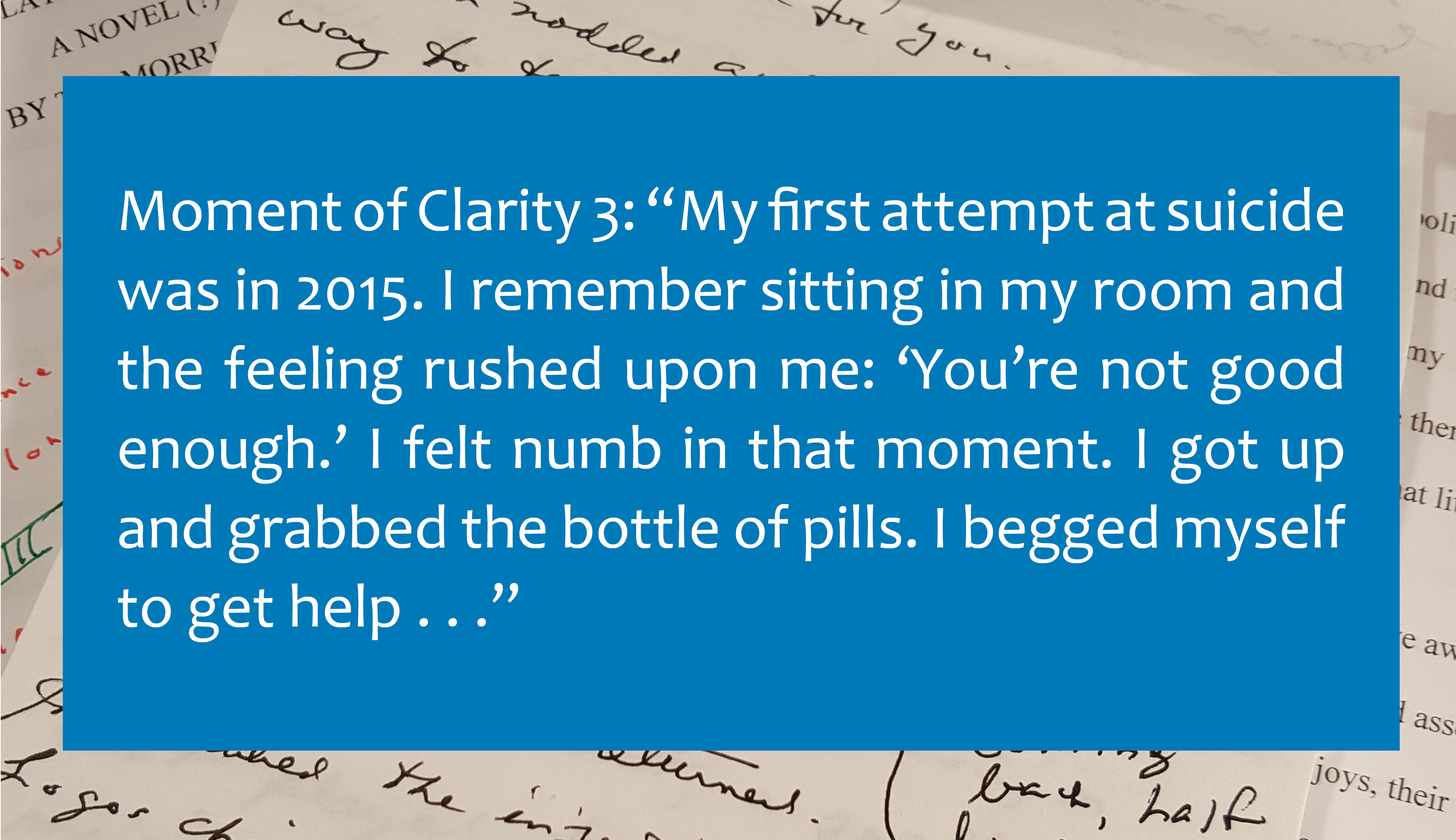 From a student who attempted suicide: “I spent my teenage years begging myself at night not to give up, not to kill myself. My first attempt at suicide was in 2015. I remember sitting in my room and the feeling rushed upon me. ‘You’re not good enough . . . you don’t deserve to live . . . just do it.’ I felt numb in that moment. I didn’t feel like a person. I got up and grabbed the bottle of pills. I begged myself to get help and go get my mother, but all I could think about was swallowing the pills and not being here anymore.”
 From a student who has given up her Christian faith: “I think how many Native Americans think. How we’re all connected and that you should put out what you want in return. I feel life is sacred, but so is the afterlife. The two worlds co-exist with one another. Death doesn’t mean the end of life, it’s just the beginning.”
These narratives were written by young people living in a small town in the heart of the United States, but I daresay they express feelings and concerns and issues that young people—that all people—face daily, no matter their culture, no matter their country, no matter their ideology.
Notes
- See Bessel A. Van der Kolk, Alexander C. McFarlane, and Lars Weisaeth, editors. Traumatic Stress: The Effects of Overwhelming Experience on Mind, Body, and Society. Guilford, 2007, p. 5.
- See Jennifer J. Vasterling, and Chris R. Brewin, editors. Neuropsychology of PTSD: Biiological, Cognitive, and Clinical Perspectives, Guilford, 2005. In particular see Joseph I. Constans. “Information-Processing Biases in PTSD,” Vasterling and Brewin, pp. 105-130.
- See Ted Morrissey. Trauma Theory As a Method for Understanding Literary Texts: The Psychological Basis of Postmodern Hermeneutics, Edwin Mellen, 2016. In particular see Chapter 7, “Pedagogical Implications and Conclusions,” pp. 185-224.
Works Cited
Freiman, Marcelle. “A ‘Cognitive Turn’ in Creative Writing — Cognition, Body and Imagination.” New Writing: International Journal for the Practice and Theory of Creative Writing, vol. 12, no. 2, 2015, pp. 127-142.
Jess-Cooke, Carolyn. “Should Creative Writing Courses Teach Ways of Building Resilience?” New Writing: International Journal for the Practice and Theory of Creative Writing, vol. 12, no. 2, 2015, pp. 249-259.
MacCurdy, Marian Mesrodian. The Mind’s Eye: Image and Memory in Writing about Trauma. U of Massachusetts P, 2007.
MacRobert, Marguerite. “Exploring an Acting Method to Contain the Potential Madness of the Creative Process: Mental Health and Writing with Emotion.” International Journal for the Practice and Theory of Creative Writing, vol. 9, no. 3, 2012, pp. 349-360.
Owens, Alison R., and Donna L. Brien. “Writing Themselves: Using Creative Writing to Facilitate International Student Accounts of Their Intercultural Experience.” New Writing: International Journal for the Practice and Theory of Creative Writing, vol. 11, no. 3, 2014, pp. 359-374.
Park, Jeff. Writing at the Edge: Narrative and Writing Process Theory. Peter Lang, 2005.

 12 Winters Blog
leave a comment