12 Winters Blog

Men of Winter paperback proofs, and ‘Melvill’ available again

Posted in November 2010 by Ted Morrissey on November 28, 2010

I received the proof of the paperback edition of Men of Winter, and it looks good. The back cover and spine are a bit out of whack and the printer will have to correct them before the presses roll — but it’s very close to being done. The ebook and paperback are available on the Punkin House Press website, specifically punkinbooks.com, listed in the fiction section. Now I’ll have to focus on finding places to read and otherwise promote the novel. I’d like to enter it in some contests for first novels, etc., but, looking online, several require copies of the book by early or mid December, which seems odd to me — why not mid January so that all 2010 novels could be submitted? Some accept bound galleys in lieu of the book itself, but I’m not really in a position to get something like that together either. These are small matters, however, and overall it’ll be good to get it out in the world.

Speaking of being out in the world, the excerpt from my novella Weeping with an Ancient God, titled “Melvill in the Marquesas,” is available again online. It was published in the journal The Final Draft, but was taken down after a few weeks. It now has permanent link (thank you, again, to editor Bob Rothberg). I hope to publish the novella along with a collection of previously published stories in the coming year. I was gratified that I received three offers of publication after The Final Draft had taken it (even though I’d immediately withdrawn it), and at least two other editors who took the time to say how much they liked it even though they weren’t offering to publish it. Perhaps, then, there will be some interest in the novella when it becomes available in full. For years novellas were very difficult to place with a publisher, but given our culture’s shrinking attention span, perhaps the twenty-first century will see a revival in the novella form.

Contributing to this revival may be the ereader. I’m reading Tolstoy’s Anna Karenina, and last week I stumbled upon another blogger, Diane Farr, reading the novel, but doing so via a kindle. In her blog, The Best by Farr, she talks about liking her new kindle, but, reading something like Anna Karenina, it’s difficult to get a sense of where she is in the book. I haven’t tried using an ereader, but I think I would miss the concrete sense of knowing I’m a  third through the book, or half, or nearly finished, etc. Perhaps, then, the boom in ereadership will make shorter works like novellas especially attractive. Diane makes some interesting observations about Anna Karenina and the experience of reading it, so check out her blog post (linked above).

I’ve also returned to some degree to the Quiddity fold. I had been an editor for the journal for its first four issues, but I resigned to focus on finishing my Ph.D. and devoting more energy to my own writing and publishing. I was especially involved in producing the journal. They’d encouraged me to come back to that post, of producing the journal, but I didn’t want to invest that much time (and brain power); however, I have started reading for the journal again. I have a batch of newly arrived poems, for example, that I’ll take a look at this afternoon. Luckily, one of my former students, Laurel Williams, was able to take the production job; I know she’ll be a tremendous addition to the Q crew.

On the creative writing front, it took about six weeks but I finished a draft of chapter 19 of my novel in progress, the Authoress. Part of that time was spent reading and researching Romeo and Juliet, so it wasn’t, strictly speaking, all writing time — but the reading and researching were necessary parts of the composing process. With all the hubbub  associated with bringing out Men of Winter, I’ve nearly forgotten about my story “The Composure of Death” that will be appearing in Pisgah Review — but I’m very pleased to be a part of Pisgah‘s pages, edited by Jubal Tiner. I suspect the issue with “Composure” will be out in the spring. I’m also proud and honored to have a how-to piece coming out some time in the next few months in Writers Ask, a publication of Glimmer Train Press.

tedmorrissey.com

Tolstoy a century later; Men of Winter to be released soon

Posted in November 2010 by Ted Morrissey on November 21, 2010

Yesterday marked the 100th anniversary of Tolstoy’s death, and as a matter of coincidence I’ve been reading Anna Karenina. One of my followees on Twitter posted an English-language Russian news segment reporting on the author and what an industry he’s become, especially his home, Yasnaya Polyana, as a tourist destination. The news reporter interviewed Tolstoy’s great grandson, who talked about the irony of the fact that very few of the tourists who enthusiastically flock to Tolstoy’s home have in fact read any of his work. Then he went on to discuss how it’s a shame that the vast majority of people only read classics that are required of them in high school. He made sure to take nothing away from contemporary books and authors, who should be read too, but insisted that classics, like Tolstoy’s Anna Karenina or War and Peace, still have much to offer modern readers. My favorite author, William H. Gass, also laments that too few people today read classic literature, which he believes helps to develop the mind in ways that popular fiction is unable to. I’m on the other end of the spectrum in that I’m drawn to classics and don’t read new authors as much as I feel I should — but there are only so many hours in the day: with working three jobs and giving daily attention to my own writing, there’s not nearly enough time left to read as I would alike. I’m ashamed to admit that I don’t take a newspaper, though the idea of sitting down with a big thick paper, like The New York Times, and a good cup of coffee is very appealing. To find that time, however, I’d have to forfeit time spent reading other things (like the three hours I spent with Tolstoy this morning) that I find nourish both my intellect and my soul.

Speaking of my writing, Men of Winter is supposed to be out this week (though I’m not holding my breath). It is fair to say that it will be out soon. Meanwhile I’ve uploaded videos of my reading chapter 1 of the novel to both Vimeo and YouTube; so far neither site has garnered very many hits, not surprisingly. Also I launched Pathfinding: a blog devoted to helping new writers find outlets for their work as my Punkin House author’s blog, though I’m not yet listed among their blogging authors (I believe PHP is redoing their webpages). On the one hand, I’m looking forward to having my novel out in the world, but on the other I feel a bit handicapped in trying to promote it as neither my three-job lifestyle nor pocketbook easily lends itself to aggressive promotion in terms of scheduling readings and attending book fairs, etc. I will do my best, however. (This past week I did receive an invitation to read the first chapter of Men of Winter at The Louisville Conference on Literature and Culture Since 1900 in February — now just to find some way to pay for attending the conference. . . .)

I continue work on the Authoress, soldiering my way through chapter 19. It’s slow but I like what I have, which isn’t to say it won’t need much revision. It will.

In a bit I’m headed to the local Barnes & Noble for a school library fundraiser — just what I need: a good excuse to buy books.

tedmorrissey.com

Vimeo, new blog, Dracula, and a touch of Tolstoy

Posted in November 2010 by Ted Morrissey on November 14, 2010

With the release of Men of Winter just days away (though I’ll believe it when I’m holding a copy in my hands), I’ve been working on increasing its (my) web presence, and one project has been to make a recording of myself reading the first chapter of the novel. Originally my thought was to embed the mp3 file at my website, but it seems WordPress doesn’t support that sort of link (or I’m just an idiot). Then I thought I’d turn the audio file into a multimedia file combining it with the image of the book cover, which I did, and embed that file at my website. However, that didn’t seem to work either. So … I uploaded the video to YouTube, except it turns out YouTube has a fifteen-minute limit, and my video is over sixteen minutes. Persevering, I’ve had an account at Vimeo for a few months but haven’t done anything with it except comment on various filmmakers’ projects and subscribe to a few of my favorites. Anyway, I uploaded my video (which is mainly audio) to Vimeo, god bless ’em, and I put the link on my webpage. Also, I’ve made an abridged audio file of my reading so that in the next couple of days I can transform it into a video and upload it to YouTube, just to have a bit more exposure.

Meanwhile back at the ranch, my publisher, Punkin House Press, encourages its authors to maintain a blog, so the question became, do I continue to use 12 Winters Blog only, or do I also start a special blog (on Blogger) that will be linked to PHP’s blogpage? Figuring that, perhaps, more is better (after all, this is America, people), I went with the latter option. I pondered for a few days how I might make my PHP blog different from 12 Winters Blog, which I use as a sort of online journal of my reading and writing life, and it occurred to me that there doesn’t seem to be a lot of practical information on the web about the mechanics of finding a publisher for one’s shorter work. I’ve come across a lot of sites that give writing tips, and there’s a lot of information about how to shop a book-length manuscript; however, for the so-called “new” writer/poet who is wanting to start seeing work in print, there doesn’t seem to be much out there. Hence, my Punkin House blog, which I launched yesterday — perhaps you heard something about it on the evening news. (Disclaimer: We seem to be having some technical difficulties related to its being a shared site, and thus far I haven’t been able to spruce up the generic template — but, fear not, I’m working on it.)

With my current writing project, the Authoress, a new novel, I’m toiling away on chapter 19, which is set during an … unusual performance of Romeo and Juliet. It’s taking awhile to compose my way through the scene, but I’m getting to spend some quality time with the Bard’s words (always a plus), and, in a strange way, I’m getting to stage the performance. In other words, I’m essentially the director/choreographer of this fictionalized nineteenth-century production in my head, and that in itself has been a lot of fun. (Who knows? Maybe one day I’ll try to stage an actual production of the play as I’m imagining it for my novel — it’d be interesting.)

Speaking of staging, last night I saw the final performance of Dracula at the Community Players Theatre in Bloomington, Illinois. To quote the website:

Adapted from the novel by Bram Stoker, this stage adaptation served as the basis for the 1931 Universal horror film classic starring Bela Lugosi as Count Dracula. Written in 1923 with the blessing of Stoker’s widow, this critically acclaimed version presents the classic Dracula we know so well today. The 1977 Broadway production, which won Tony Awards for Best Revival and best Costume Design, featured Academy Award nominee and three-time Tony Award winner, Frank Langella, as the nefarious Count Dracula.

The 1923 stage version was the first to present Dracula as a suave and sophisticated figure, and not the monstrous persona that Stoker wrote in his 1897 novel (according to my former dissertation director, Bob McLaughlin, who played Dr. Seward in the Community Players production). In a sense, then, this stage version laid the groundwork for today’s vampire craze with its plethora of sexy vampires. It was a small cast and deserves what little recognition I can provide here: Leah Pryor (Miss Wells, the maid), Gerald Price (Jonathan Harker), Bob McLaughlin (Dr. Seward), Joe Strupek (Abraham Van Helsing), Brian Artman (R. M. Renfield), Jeff Ready (Butterworth), Kristi Zimmerman (Lucy Seward), and Paul Vellella (Count Dracula); co-produced and co-directed by Bruce and Kathleen Parrish. As I said, it was the final performance, but the Community Players have several other shows planned for the season, including a one-weekend performance of “Art”, November 18-21 (that’s next weekend).

Finally, I’ve been wanting to read Tolstoy’s Anna Karenina (1878) for a long, long time, and I’ve taken the plunge. I’m on Part 1, Chapter 14 — so far, so great. My favorite line to date: Oblonsky observes, “All the variety, all the charm, all the beauty of life is made up of light and shadow” (p. 42, Barnes & Noble Classics edition, 2003; 1.11). For me it captures something that for the last couple of years in particular I’ve been working to get across to my students, who seem increasingly to see the world as black or white, and have little sense of (or use for) nuance, contradiction and complexity. Thus, literature becomes a calculus problem to be solved, to be reduced to its lowest, most simplified expression; but the purpose of literature is not to be solved per se — rather literature invites us to ponder and embrace the irreconcilable contradictions of being human. As I say at times, we don’t fully understand our own behavior, our own feelings, let alone other people’s. Yet we must try, for as we come closer to knowing them, we come closer to knowing ourselves. Heavy.

tedmorrissey.com

Women Writers reading, and release date for Men of Winter

Posted in November 2010 by Ted Morrissey on November 7, 2010

Last evening the Women Writers Association of Central Illinois, in conjunction with the Sangamon Watercolor Society, held an open-mic reading with the release of Mosaics 3: Art anthology of short stories and poetry.  The reading, held at Hoogland Center for the Arts in Springfield, Illinois, was well attended, and I daresay no one could have been disappointed in the material presented by the poets, writers, and watercolorists who came together for the event. The Women Writers Association is marking its twenty-seventh year.

The event was MC-ed by Dr. Rachell N. Anderson, formerly of Springfield but now residing in Mississippi, who has been a member of the WWA for twenty-five years. In addition to her MC duties, Rachell read a memoir piece from Mosaics, “For the Kindness of Strangers,” that was humorous, touching, and insightful. She writes of nearly running out of gas while driving through Arkansas, discovering, in a sudden panic, that she’d absentmindedly left behind her purse and with it the wherewithal to fill her tank. Other readings from the anthology that impressed me very much were Kimberly K. Magowan’s long poem “The Pebbled Path” (dealing with the tragic effects of Alzheimer’s disease), Pat Martin’s poem “Life Line” (about waiting for a call from a daughter who’s in the path of a tornado), and Debi Sue Edmund’s memoir “Moving Day” (in large part about the family cat who refuses to enter his pet carrier to be transported to his new abode).

In listing these, I leave out many worthy others. Other contributors to Mosaics 3 are Kathleen O’Hara Podzimek, Linda McElroy, Celia Wesle, Anita Stienstra, Jennifer C. Herring, Cindy Ladage, and Jean Staff. I want to make special note of not only Anita Stienstra’s remarkable reading of two ekphrastic poems that she wrote in connection with watercolor pieces by Sangamon Society members, but also that she edited and produced Mosaics 3, a lovely book that features cover art by Kathleen O’Hara Podzimek. Anita is editor and publisher of Adonis Designs Press, which does the important work of bringing out local voices who otherwise may not be heard. As a teacher, I’m especially appreciative of Anita’s efforts to produce The Maze, an anthology of work by local teenagers.

On the Men of Winter front, the publisher, Punkin House Press, has indicated my novel will be officially released November 23. PHP’s founding CEO, Amy Ferrell, and I will talk tomorrow about marketing and so forth. Somewhat along those lines, I’m playing around with making an audio recording of my reading the novel’s first chapter to post at the website. If it goes well, I may record myself reading one or two of my short stories also. Obviously, I hope the recordings might bring some (positive) attention to my work — but also I just enjoy reading aloud. In class these days we’re reading Frankenstein, and I especially love reading Mary Shelley’s prose aloud. (An editor who rejected my work said that he liked it, but my prose was “overheated” — which I took as a compliment as it is exactly how I would describe Mary Shelley’s style in Frankenstein — hmmm, does that mean that I write like a 19-year-old girl? So be it.)

On my current writing project, the Authoress, I’ve taken a few days away from composing to read, carefully, Romeo and Juliet, as the play seems to want to colonize my novel as a subtext. Before diving into the play itself, I’m glad that I read Gail Kern Paster’s essay “Romeo and Juliet: A Modern Perspective” in the Folger Library 1992 edition of the play. In it, Paster makes the case that Juliet’s rejecting her father’s plans for her marriage and her choosing her own marital path is a challenge to long-standing patriarchal order, or in Paster’s words, a “conflict between traditional authority and individual desire” (p. 255). Paster’s essay made me more keenly aware of challenges to traditional authority in the play, and this is precisely what my novel is looking for in directing me toward Romeo and Juliet. I’ve been especially interested in issues of identity and naming in the play. In the iconic first orchard scene, for example, Romeo’s identity is “bescreen’d in night,” and when Juliet asks him pointblank, “Art thou not Romeo and a Montague?” he is ready to shed both “if either thee dislike” (2.2). An especially provocative image, given this reading of the play, is Juliet’s declaration that if she awakens in the Capulet vault and discovers that her and Romeo’s desperate plan to be together has not come to fruition, she will “dash out [her] desperate brains . . . with some great kinsman’s bone” (4.3).

I’m just about done reading/annotating the play, so hopefully I can get back to writing chapter 19 on the morrow.

tedmorrissey.com

In memoriam: Jake

Posted in October 2010, Uncategorized by Ted Morrissey on October 31, 2010

Yesterday Jake McNamara would have turned 19, but, as many who read this blog will know, Jake was in a fatal auto accident July 29 at a dark, country-road intersection (where, since then, a four-way stop has been established). In recent days especially, many folks have been talking about Jake and posting new pictures on Facebook, attesting to the positive impact he had on so many in his too few eighteen years. I had the sad honor of speaking at his memorial service. Since so many of us are thinking of Jake on this Halloween weekend (I don’t know for certain, but I suspect he enjoyed Halloweens very much), I thought it might be appropriate to post the words that I read that day, as my main message was that we mustn’t be afraid to speak of Jake and to remember him fondly.

Jake McNamara, 1991-2010

I had the privilege of getting to know Jake in a couple of different contexts:  first, as a student in my speech and English classes; then, as a regular visitor to my home as he became friends with my sons Ethan and Spenser.  To his credit, Jake was Jake no matter what role he was playing.  In both my classroom and my home, Jake was well-mannered, friendly, active of mind, and happy to talk about books, movies and music.  Also, we regularly enjoyed conspiratorial moments as rabid supporters of Barack Obama, long before the bandwagon grew crowded.

Jake’s list of achievements speaks for itself so there’s no question that he was active and successful in school.  What I would like to emphasize though was Jake’s gift with language.  For his creative writing project, Jake shared with me the beginning of a movie script he’d written.  It was very Quentin Tarantino-esque but also very good.  It didn’t have to be a creative writing project per se because Jake’s inherent creativity was reflected to some degree in everything he did, and I have no doubt he would have made his mark in movies or music or in whatever area he focused his intellectual energies.

I must confess my own selfishness and say that as I got to know Jake better and better his senior year, I thought that perhaps the planets had aligned in a very special way that would allow me to achieve a long-standing goal.  For many years now I’ve wanted to see a robot in the cast of characters for Madrigals—a chunky, metallic, 1950s B-science-fiction-movie robot—right there on stage with the king and queen, lords and ladies, serving wenches, jesters, huntsman . . . robot.  And with nothing in the storyline to account for it.  It’s simply there, dancing and singing and wassailing (whatever that really is).  With Jake’s being a senior choir member and, then, king of the Madrigal performers, I talked to him about it on several occasions—and Jake got it, Jake understood.  But alas the inertial forces of tradition were too powerful and it wasn’t to be yet again.

Perhaps, though, Jake’s intellectual maturity was demonstrated most vividly in his genuine appreciation of the greatest film in the history of cinema, 2001:  A Space Odyssey—placing Jake in a special pantheon of my former students, that being students who didn’t make fun of Kubrick’s masterpiece.  With the addition of Jake, that pantheon now stands at . . . three.

In the spring Jake came to me for a recommendation for a poem to be read at the National Honor Society induction.  Being something of a one-trick pony, I suggested the same poem that I’d suggested on the two previous occasions over the years when a student had come to me about a poem for the induction ceremony.  The poem I recommended was “Ithaka” by the early twentieth-century Greek poet Constantine Cavafy.  In the five-stanza poem Cavafy crystallizes one of the central metaphors in Homer’s Odyssey.  Cavafy suggests that the treasure we seek in life is in fact the seeking itself; in other words, no matter how much or how little material wealth we acquire in life, the truest treasure lies in the experiences of living.

My poem recommendation is meant to inspire young people to be open to life’s possibilities as they set sail from their homeport of high school.  Unfortunately, in cases like Jake’s the poem amplifies the tragedy of youth struck down, for our sadness at Jake’s passing is due in large part to the sense that our Jake has been robbed of the opportunity to seek the treasure of life’s experiences.  I know my son Ethan in particular was very much looking forward to experiencing the treasures of going to college this fall with his friend Jake.

However, we should look elsewhere in the great poem that inspired Cavafy to write “Ithaka.”  Homer begins his long tale by invoking the collective memory, the communal memory—quite literally the “memory of the community”—because Odysseus’s journeys were already in the distant past when Homer began recounting them, and therefore Homer’s audience would have known the people and the places and the events already, or, more accurately, each audience member would have known something of them—so through the act of storytelling the poet and his audience, together, bring the people and places of the Odyssey to life.

We must do the same for Jake.  We must remember him well—that is to say, we must be good at remembering him.  And we mustn’t be afraid to speak of our friend for when we do, he is brought back to us again each time.  And Jake will once again make us smile, and laugh, and think—just as he would if he were still with us.

Quiddity fall release gala, and Men of Winter proofs

Posted in October 2010 by Ted Morrissey on October 24, 2010

This past Thursday I attended the fall issue release gala for Quiddity international literary journal and public-radio program at historic Brinkerhoff Home on the campus of Benedictine University at Springfield. As usual, it was an enjoyable and stimulating evening (even though the guest of honor, issue 3.2, was a no-show as its cover was still drying at the printer’s — a not uncommon occurrence at release parties). Most of the usual cast of characters were present: Joanna Beth Tweedy (founding editor and host of the radio program), David Logan (prose editor), Judi O’Brien Anderson (poetry editor), Michael Gammon (layout and web design), Pamm Callebrusco (associate editor), and Marianne Stremsterfer (art editor), plus loyal interns John McCarthy and Stacie Lynn Taylor.

Best of all, there were readings by David Bertaina, poet and translator of Semitic languages; and by Tracy Zeman, “nature poet of the sublime.” As if that weren’t enough, Croatian artist Magda Osterhuber was present to discuss her paintings that were being exhibited in Becker Library Gallery, a short walk from (historic and haunted) Brinkerhoff Home.  Throw in some food and wine and acoustic-guitar folk music, and you’ve got a pretty splendid way to spend a Thursday evening.  Work by Bertaina, Zeman and Osterhuber are included in Quiddity 3.2.  Here is 3.2’s table of contents, which also allows you to hear some of the work included in the issue — a feature that most literary journals don’t offer. The Quiddity radio programs are archived here.

On the Men of Winter front, the publisher sent me the page proofs, which I returned yesterday with corrections — so a release date begins to loom larger and larger, though it isn’t set in stone just yet.  I mentioned in a previous post that the first chapter of my novella Weeping with an Ancient God was published in The Final Page. A new edition of The Final Page has since been posted, and it seems the journal doesn’t archive their older issues — in other words, the excerpt, “Melvill in the Marquesas,” was available online for a few weeks, but, alas, is no more. A couple of editors of other journals expressed an interest in it after it had already been taken by The Final Page, so I may see if someone is interested in “reprinting” the excerpt; or I may just archive it here at 12 Winters Blog. I was really hoping it’d be floating around on the web for a few months, in anticipation of the novella’s publication.

In my novel in progress, the Authoress, I surpassed the 300-manuscript-page mark, and I’m very much enjoying the writing process. I had come to a chapter (the nineteenth) whose function I understood, but the narrative particulars of which were fuzzy, to put it mildly. But I’ve worked through some of those issues and now have a definite bead on the chapter, which is a much better feeling than the murky one I had just a few days ago. I liked another idea, but the narrative timeline just wouldn’t support the development I had in mind — which worked to my benefit as the new trajectory is superior in just about every way. For me, writing a novel is a bit like filling up a hallway closet with stuff, and everything I need to complete the project is in there — sometimes it’s just a matter of sorting through its accumulated contents to find the items I need.

I’m still reading — and enjoying! — Adam Braver‘s Crows over the Wheatfield (though I cheat every now and then, and read some Gogol).

tedmorrissey.com

Notes on Poets and Painters; some progress on Men of Winter

Posted in October 2010 by Ted Morrissey on October 10, 2010

This past week I had the pleasure of attending Poets and Painters at the H. D. Smith Gallery in the Hoogland Center for the Arts — a collaboration between two Springfield, Illinois-based groups: Springfield Poets and Writers, and Prairie Art Alliance. The poets and writers were invited to select a work from the gallery for which they would compose an original poem, which was then read at the Poets and Painters event October 7. The president of Springfield Poets and Writers, Anita Stienstra, served as the mistress of ceremonies; the inspirational piece of artwork would be displayed near the podium, then Stienstra would introduce the poet, who read the resulting poem; then the artist would be introduced and have an opportunity to speak about her/his piece. It was a great synergy of artistic expression, taking ekphrasis further than its usual mode, wherein a poem may be published alongside a piece of artwork that inspired it, by having the art and poem displayed together, live, via the artist and poet who created them, and adding an enthusiastic audience into the mix as well — a point that was well-articulated during the program by Ethan Lewis, a literature professor at the University of Illinois at Springfield who read his poem based on Jennifer Davis’s black-and-white photograph Welcome to Highgate. As an added bonus, each poet had his/her poem specially printed and framed, turning it into a piece of visual art as well.

I was impressed by all that I heard and saw, but I have to note in particular Anita Stienstra’s heart-wrenchingly beautiful poem that she wrote in association with Felicia Olin’s painting Blue Blooded. (When I first entered the gallery, I took special note of Olin’s gothic-esque portrait and knew that, if I’d been given the task, I would have chosen that piece as well.) This was the second Poets and Painters event, and examples from the first can be viewed at this blogspot. Do yourself a favor and check out the poems and artwork (Olin has two pieces on display on the site, Girl with Blue Hair and Heroine, both of a similar style to Blue Blooded).

On the creative writing front, graphic artist Julie McAnary sent me a proof for the back cover and spine of Men of Winter. I offered a couple of suggestions, but otherwise I’m very, very pleased. Punkin House Press is still looking at a November release as far as I know. Also, the editor of Pisgah Review, Jubal Tiner, sent me the galleys for “The Composure of Death,” which will appear in an upcoming issue. They look great — I’m impressed with the journal’s professional handling of me and my story.

I continue to read and enjoy Adam Braver‘s novel Crows over the Wheatfield — in fact, I’m going to cut this post a bit short so I can take advantage of this beautiful October day and go read on my front porch.

tedmorrissey.com

Filmmaker Jovanna Tosello and a little Gogol

Posted in October 2010 by Ted Morrissey on October 3, 2010

In my last posting I neglected to mention a recent (exciting!) development regarding my forthcoming novel Men of Winter — perhaps it slipped my mind because it’s just too darn cool to be true. A couple of postings ago I mentioned attending the Route 66 International Film Festival and seeing a short animated film, The Magical Porno Theater, that was a real mind-bender. As I watched the film, I started ruminating about the fact that I really wanted to have some sort of video piece associated with my novel (I’ll use the somewhat crass term “a book trailer”), and wouldn’t it be terrific if the Magical Porno filmmaker, Jovanna Tosello, would develop something incredible based on Men of Winter? So I took a chance, found her on the web and hence her gmail address, sent my heart-felt kudos about her film and gingerly floated the idea of her putting something together based on my book, if she had the time and interest (expecting, quite frankly, for her to say thanks, but no thanks). I suspect you can guess where this blog is headed: she said yes. Wow. As I told her in my email, I would rather there was a video out there that drew attention to my book that was also a piece of art in itself, as opposed to any old trailer whose sole purpose in the cosmos is to sell a couple copies of Men of Winter.

Jovanna apparently originally hails from Reykjavik, Iceland, but now lists her location as Los Angeles. According to her website, she has a BFA in character animation from California Institute of the Arts, and she’s working on her MFA in animation and digital art at USC. You can check out The Magical Porno Theater on Vimeo, along with some of Jovanna’s other animated film work — and I highly recommend it. You can also find out more about Jovanna and view her work at her blogger site. To say that I’m thrilled to have Jovanna’s talent and creativity lending their services to my modest novel doesn’t begin to describe it.

In other news, I’ve been reading Adam Braver’s Crows over the Wheatfield, and his work always reminds me of the Russian masters, and as such I developed a yen for some Nikolai Gogol and have been reading a bit from Dead Souls (1842), a novel I’ve been curious about for some time. I wasn’t expecting it to be so downright funny. One of my favorite lines thus far occurs when the main character, Tchitchikoff, and his driver have lost their way at night in a terrible rainstorm, and they come upon a house, immediately to be greeted by some “ill-tempered” dogs — Gogol writes, “[O]ne, throwing back his head, gave a prolonged howl, with as much care as though he had received wages for it” (p. 41, 1966 Airmont edition, trans. Zoe Girling).

Meanwhile, I’ve been working away on the Authoress, my novel in progress, and am feeling very good about the way the narrative is shaping up. The writing is slow, but it progresses. I’m nearly finished with chapter 18 and am at the 290-plus manuscript page mark. It’s all rather nebulous, but I hope to have a complete draft of the novel by next summer, in about another 100 pages or so.

tedmorrissey.com

“Melvill” finds a home, more on Braver’s Crows

Posted in September 2010 by Ted Morrissey on September 26, 2010

Since the last posting, I found a home for “Melvill in the Marquesas,” the first chapter of my novella Weeping with an Ancient God, and in fact it’s already published: the wonders of electronic journals. It is in the current edition of The Final Draft, edited by Bob Rothberg. The Final Draft has a magazine look that I like. Bob has generously played up the coming release of Men of Winter, which Punkin House Press is planning for November. The front cover is set, and graphic artist Julie McAnary is at work on the spine and back cover; meanwhile, I presume work is also being done with designing and setting the pages, but so far I haven’t seen any galleys. Referring back to “Melvill,” the tentative plan is for PHP to publish Weeping with an Ancient God along with a collection of a dozen previously published stories in 2011.  Right now, of course, the focus is to get Men of Winter out (and promoted).  Weeping, by the way, is a highly fictionalized “biography” of Herman Melville’s encounter with cannibals in the Marquesas Islands in 1842. To write it, I researched Melville, especially his childhood and his time spent on the whaling ship the Acushnet, but also I carefully read his debut novel Typee, which is his own highly autobiographical account of the event in the Marquesas Islands. I elected to spell Melville’s name minus the last “e” as that was the family’s original spelling — before the “e” was added to make it look more American in hopes of improving their business prospects (I believe it was Melville’s older brother who made that decision, but I’d have to refer back to my research on that one).

In any event, it feels good to have a bit of Weeping out there in the world, and I appreciate the professional job that Bob Rothberg has done in presenting it in The Final Draft. I don’t seem to find an archive button at the journal’s site, so I’m not sure if it will be possible to access “Melvill” after the next installment of the The Final Draft is uploaded, but I hope there will remain a permanent link.

While I’m posting, I want to give a quick shout out to M. R. Branwen for having her poem “Flora, Fauna” nominated by Metazen for the 2010 Best of the Net Anthology. It is a well-deserved honor; check out her poetry.

In addition to continuing my work on the Authoress, my novel in progress, I’ve been reading Adam Braver’s Crows over the Wheatfield and enjoying it very much. I’m especially enjoying its intertextual nature as Braver mixes the novel’s main plot, about a professor/scholar of art history, with excerpts from the professor’s manuscript (one presumes) on Vincent van Gogh — the juxtapositioning is provocative and engaging. Then of course there is the novel’s overarching intertextual relationship with van Gogh’s famous painting, Wheat Field with Crows. Braver’s clean and concise prose style belies the book’s thematic complexities, thus amplifying those complexities even further. I’m sure there will be more to follow on Braver’s superb novel.

tedmorrissey.com

Cover for Men of Winter; Notes from the Route 66 Film Festival

Posted in September 2010 by Ted Morrissey on September 19, 2010

Working with graphic artist Julie McAnary, we’ve finalized a cover design for Men of Winter, and to say I’m quite pleased with it would be a gross understatement. In one of our many email exchanges, I told Julie I’d like the cover to be both austere and alluring; and, by George, I think we’ve done it. The original cover idea I pitched to her, months ago, wound up being a no go because we couldn’t secure the rights to the photograph (a photo of a German soldier from the Second World War I found online — I couldn’t track down anyone who claimed ownership of the rights, hence there was no one to grant permission to use it). But that ended up being a stroke of great luck because it sent us back to the proverbial drawing board. I spent several hours culling the net for a photo or painting from a contemporary artist who could grant us permission to use her/his work (or not). After about three hours and lord knows how many pictures, I came across the portfolio of Paul Casagrande and specifically a set of portraiture titled “Sara & Stefano” — I was thunderstruck and I instantly envisioned how one of the photos in particular could be the focal point for a powerful cover. I immediately went about tracking down contact information for Mr. Casagrande, who is Italian. I sent him a message via Facebook, and was shortly contacted by his associate Gianluca Precone (who, by the way, has an amazing portfolio on photo.net as well). Gianluca indicated that his colleague was willing to let us use his work as a courtesy, one artist to another (amazing generosity!). We had a series of exchanges, with the help of Google translator (and, as luck would have it, one of my students this semester is from Italy and is fluently bilingual — so with Nate’s expert assistance we nailed down some of the particulars). Thus this beautiful photograph, “Beyond thought,”
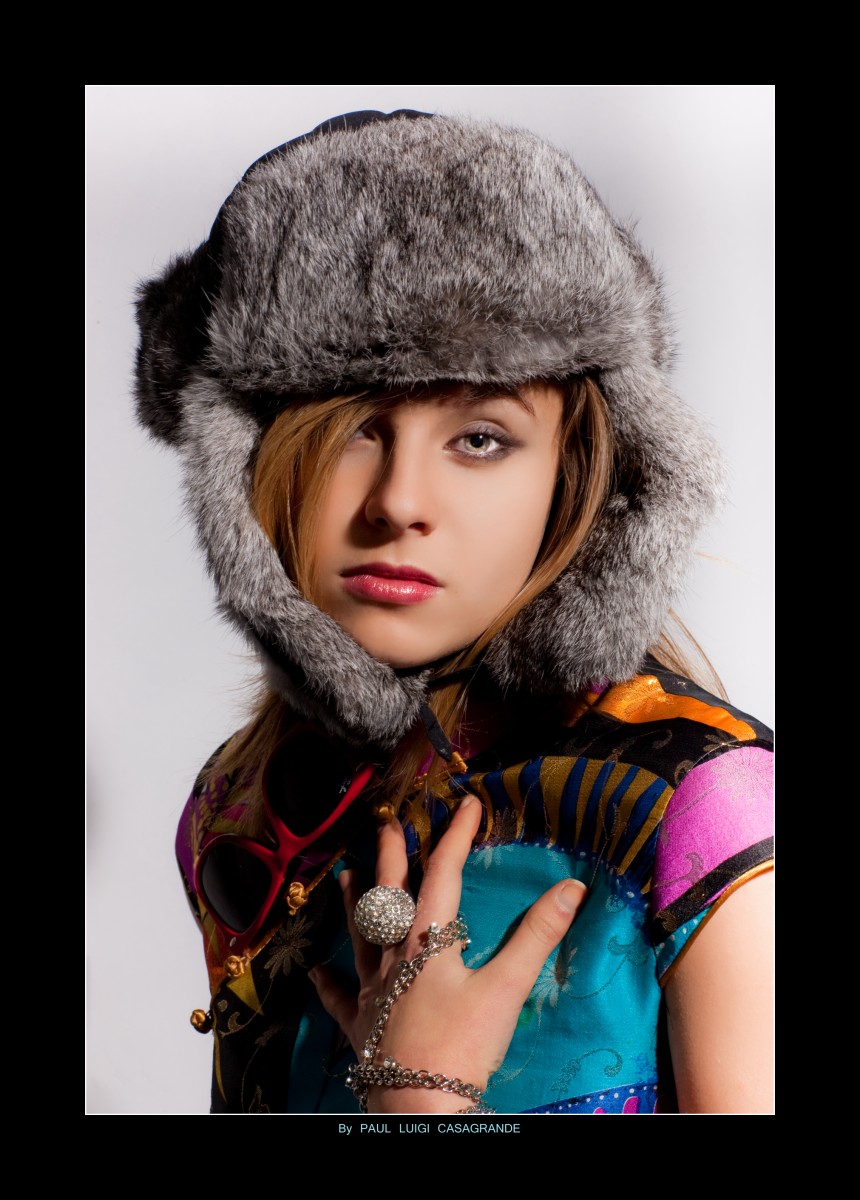
from Paul Casagrande's "Sara & Stefano"

became the focus of this (thanks to Julie McAnary) beautiful cover

Cover for Men of Winter

I floated it on Facebook, and it received rave reviews — so thank you, Paul, Gianluca, Julie (and, absolutely, Nate) — I just hope the stuff between the front and back covers lives up to this amazing piece of art. While I’m at it, another thank-you to M. R. Branwen, the editor of Slush Pile Magazine, who graciously blurbed my book earlier this summer, and who graciously published an excerpt from Men of Winter in the debut issue of Slush Pile when it was still just a manuscript looking for a home. Speaking of Men of Winter, Punkin House Press has pushed back the release date a bit, now proposed for November, which is all right — I’d rather see it done well, if a bit behind original plans, than to have it rushed to press.

With the front cover under our belt, I revised tedmorrissey.com and added a page devoted specifically to Men of Winter. Feel free to visit, as often as you like.

Switching gears, this weekend is the Route 66 International Film Festival here in Springfield, Illinois, and my son and I attended last night’s double session, and were thus treated to some terrific independent films. I don’t have space to do them justice here, but I want to give kudos to a few films in particular. One of our favorite dramas was Ben-Hur Sepehr’s The Desperate, which won Best History Short — about a Nazi general who pleads with a Jewish doctor to save the general’s only son: in a word, tremendous. We also greatly enjoyed the film that won Best Drama Feature, Alex Gaynor’s Wid Winner & the Slipstream: quirky, touching, somehow both sad and uplifting: terrific filmmaking, terrific storytelling. In the thriller/horror contest session, we got a great kick out of David Britton’s Parking Space — very Twilight Zone-esque, and I say that as an extreme compliment. We also enjoyed Sunday Punch by Dennis Hauck (whose lead actor, Dichen Lachman, is a treat as cool, tough and razor-sharply sarcastic boxing ring-girl Jill). However, both my son and I had to give our audience votes to Delaney by Carles Torrens: horrific, weird, laugh-outloud funny, with a host of offbeat characters whom one comes to love against all common sense (of decency).

I also have to mention an animated short that blew me away: The Magical Porno Theater by Jovanna Tosello: strange, yes, but Tosello’s use of cool colors and odd imagery, juxtaposed in intriguing ways, gives an undercurrent (could be an inside pun, but isn’t) of narrative to what otherwise seems a chaos of barely related yet fluid (another non-inside pun) scenes. When one sees what can be done with a modest budget but a lot of talent and creativity, it really underscores how amazingly bad most Hollywood offerings are.

A last note today: I’m reading Adam Braver‘s Crows over the Wheatfield, and I just wanted to share a brief passage that is so engaging I lingered over it for several minutes this morning:

Claire skirted across the lawn on a treaded path, where the trees were bare, like sadly misshapen arms shamed without strength. And in them, their simplicity was their beauty, their resolve to stand defenseless against the elements. Still they stood proud, their mangled branches witnessing the events that had passed under them. (p. 64, Harper Perennial paperback edition)

Quite lovely.