12 Winters Blog

Looking back, and a bit of True Grit

Posted in December 2010 by Ted Morrissey on December 31, 2010

On the one hand, I claim not to put a lot of stock in the significance of certain dates for their own sake, but the last day of the calendar year seems to encourage reflection. From a writing standpoint in particular, it’s definitely been a good one. I placed the odd and off-color story “Unnatural Deeds” with Leaf Garden, issue #8. Frankly, it took several months to find a publisher for that one, but I’m proud of it in the sense, especially, that the story is a testament to honesty — life as it really is, and not a sanitized version of it. It raised a few eyebrows, that I know of. I also placed the story “Walkin’ the Dog” in the debut issue of Spilling Ink Review. In that story I’d experimented with narrative that rests more heavily than usual (for me) on repetition of specific images, especially the color orange. It hasn’t come out yet, but Pisgah Review took my story “The Composure of Death”; it should be out this winter or spring. I realize now all three stories have in common that I borrowed their titles from other literary sources: Macbeth (5.1), “Unnatural deeds do breed unnatural troubles”; the title of Walter Mosley’s conceptual novel Walkin’ the Dog; and Nathaniel Hawthorne’s “The Minister’s Black Veil,” “[T]he corpse had slightly shuddered, rustling the shroud and muslin cap, though the countenance retained the composure of death.”

The biggest stroke of luck of course was finding a publisher, finally, for my novel Men of Winter, which the new small press Punkin House picked up in the spring and released at the end of November. Thus 2011 will be in large part about promoting the novel. I also hope to release Weeping with an Ancient God, a novella and story collection, tentatively taken by Punkin House. The first chapter of Weeping, titled “Melvill in the Marquesas,” was published in September in The Final Draft. (I meant to provide a link to the story, which was published online, but the link has become inactive again — a bit disconcerting, as I’ve been hoping it would be floating around in the ether promoting in its way the coming novella release.) I thought I would have difficulty placing the novella excerpt — it is a bit unusual, in essence a fictionalized biography of Herman Melville’s experience among cannibals in 1842, during the whaling adventure that led to his eventually writing Moby Dick — but The Final Draft picked it up pretty quickly, and even though I withdrew it promptly from other journals’ consideration, I received three other offers of publication, and two rejections with long notes of praise (highly unusual, from my experience). So maybe the novella itself will generate some reading interest.

I was also invited to contribute to Glimmer Train Press’ Writers Ask series, a well-respected how-to publication, and thus my piece “Researching the Rhythms of Voice” will appear this winter or spring. I wrote about the process I’ve gone through to write my current project, whose working title is the Authoress, as its first-person protagonist is modeled after the nineteenth-century American writer Washington Irving. In particular I’ve been reading an obscure collection of Irving’s letters in order to get the feel of his more informal prose style. I’ve written about 340 manuscript pages of the Authoress, and hope to finish within a year or so. One other writing development was my establishing a new blog via my publisher, Punkin House. I decided what the world may need is a blog devoted to helping new(er) writers find outlets for their work, thus Pathfinding.

The Authoress has taken up all my writing energy, so I haven’t written any shorter pieces, nor any scholarly papers — both of which I miss, but it’s important to devote the necessary time and mental processing to the new novel. I’m not short on ideas: I have several writing projects, both small and large, creative and scholarly, in mind.

Finally, I don’t normally write about cinema, especially contemporary American cinema, but the other day I saw the Coen Brothers’ newest offering, True Grit, and I found it quite mesmerizing and wonderful. The acting is superb (and why wouldn’t it be, given the cast?), but beyond that the cinematic style is quite engaging, epic and even biblical in its scope. I know there have been some naysayers who don’t like the idea of remaking the 1969 John Wayne classic, directed by Henry Hathaway — and I love that True Grit, too — but the Coen Brothers have remained truer, apparently, to Charles Portis’s 1968 novel, and have given us a film that is darker and, well, grittier, than the original film, great as it is.

On the reading front, I continue to make my way through Tolstoy’s Anna Karenina, and am enjoying it very much. Winter break is nearly over, and it will be back to the three-job grind, but I’ve managed to make a lot of progress on the Authoress.

tedmorrissey.com

Men of Winter

Men of Winter fully released, and a little Kerouac

Posted in December 2010 by Ted Morrissey on December 12, 2010

Men of Winter is fully released, meaning that all three versions — paperback, ebook, and Kindle — are available from Punkin House Press at punkinbooks.com. I haven’t seen the finished paperbacks yet, but I trust they’re on their way. As I discussed in a previous post, Punkin House Press is experimenting with different approaches to green publishing, described on PHP’s blog page. The fact that Men of Winter is available in Kindle is important, I think, as it encourages a wider readership. I saw a video blog in which the blogger was from Australia and she was saying that she’s become a much more voracious reader of new fiction thanks to ereading, as Kindle versions of books are much cheaper “downunder” than even paperback releases. In short, she simply couldn’t afford to buy a lot of print books. My Punkin House blog, Pathfinding, is on Blogger, which lets you see where people are who’ve looked at your post, and while I haven’t had a lot of traffic, period, yet, I have had people checking in from places like Russia, Croatia, Singapore, Italy, and of course the UK and Canada. So if folks abroad are going to buy Men of Winter, it’s more likely they’ll buy the Kindle or ebook versions.

Last Wednesday, the Poetry Collective at the University of Illinois at Springfield hosted a screening of the documentary What Happened to Kerouac? (1986), which I enjoyed very much (even though it was pretty late after teaching all day, and night). For a time I was a Kerouac fanatic, beginning with my reading of On the Road (1957) when I was in my mid thirties. I went on to read several, though not all, of Kerouac’s books. Probably, after On the Road, my next favorite is Tristessa (1960). The film uses footage from The Steve Allen Show in 1959 when Kerouac read from On the Road to Allen’s jazz accompaniment on the piano; in a word, it’s moving. The clip is available on YouTube, of course:

For Kerouac fans, or students of American literature, especially mid-twentieth-century, the film is well worth seeing, as it has extensive interview clips and rare footage from other Beat Generation notables like Allen Ginsburg, Gregory Corso, William S. Burroughs, Neal Cassady, and Beat scholar and biographer Ann Charters.

On the reading front, I continue to read and enjoy Tolstoy’s Anna Karenina — it’s a wintry morning here, and ideal for a cup of coffee and Tolstoy (though I’m in a springtime section of the novel — drats the timing). On the one hand, I enjoy Tolstoy’s description of the simple and happy peasants, who get such great joy from working the land; but I know that for the peasants themselves, toiling away on the land chiefly for the benefit of the owner was hard, hard work and probably joyful less often than Tolstoy’s book would lead one to believe. Nevertheless, the complexity of the novel, in terms of the diverse range of issues Tolstoy works into the narrative, is astounding.

I continue to work on my novel in progress, the Authoress, and will perhaps have a little surge of additional progress over winter break.

tedmorrissey.com

Men of Winter

Punkin House Books

Print edition available Tuesday, PHP’s greenness, and more Tolstoy

Posted in December 2010 by Ted Morrissey on December 5, 2010

The ebook of Men of Winter has been available since last week, but Punkin House says the print edition will be available Tuesday. A Kindle version should be available soon. Punkin House took a big step forward this past week, too, in its goal to become a greener publisher. For one thing, the paperback edition is printed on 30% recycled paper stock, and, I must say, it looks very good. Beyond that, however, they’ve launched a unique publishing model called the ROGO Program (for Recycle One Get One). In a nutshell, when you purchase a Punkin House book, you can return it and receive 20% off your next purchase — in an effort to get more authors read, bookshelves less cluttered, and fewer trees killed. They have other innovative green initiatives that are explained in more detail at their Punkin Green Commitment page — please take a look. It’s serendipitous that a house that’s committed to green publishing has taken on me and my work, as I’ve been committed to greener practices myself for years. You go, Punkin House.

I’ve been working away on my novel in progress, and am enjoying the process very much. On the one hand, it’s moving in the basic narrative direction I’ve had in mind for some time, but it still surprises me on a regular basis. In fact, the chapter I’m working on right now (20) is in itself a surprise; originally I’d planned the protagonist’s next move after chapter 19 to be further along the temporal sequence, but instead I’m inserting an entirely new scene that occurred to me as a good idea as I was finishing a draft of chapter 19. What I had planned for chapter 20 will now be chapter 21 (as it stands currently), so the new addition isn’t altering the basic narrative trajectory, but I believe it will enrich the final chapters of the book.

On the reading front, I’m still making my way through Tolstoy’s Anna Karenina, and the more I read of it, the more I enjoy it. Even though really big novels are out of vogue — notable exceptions of late being Adam Levin’s The Instructions (McSweeney’s), and Jonathan Franzen’s Freedom (Farrar, Straus and Giroux) — there’s something to be said for delving that deeply into characters’ lives, and living with them for as long as it takes to make one’s way through the narrative. There are many short novels and novellas that I love, but a shorter work is a different reading experience than a long work. A key work in my dissertation was William H. Gass’s The Tunnel, also a big, wonderful book. Wow, I just discovered that Dalkey Archive Press has published a casebook for the The Tunnel, edited by H. L. Hix — okay, so now I know what to ask Santa for.

tedmorrissey.com

Men of Winter

Pathfinding (my Punkin House author’s blog)

Men of Winter paperback proofs, and ‘Melvill’ available again

Posted in November 2010 by Ted Morrissey on November 28, 2010

I received the proof of the paperback edition of Men of Winter, and it looks good. The back cover and spine are a bit out of whack and the printer will have to correct them before the presses roll — but it’s very close to being done. The ebook and paperback are available on the Punkin House Press website, specifically punkinbooks.com, listed in the fiction section. Now I’ll have to focus on finding places to read and otherwise promote the novel. I’d like to enter it in some contests for first novels, etc., but, looking online, several require copies of the book by early or mid December, which seems odd to me — why not mid January so that all 2010 novels could be submitted? Some accept bound galleys in lieu of the book itself, but I’m not really in a position to get something like that together either. These are small matters, however, and overall it’ll be good to get it out in the world.

Speaking of being out in the world, the excerpt from my novella Weeping with an Ancient God, titled “Melvill in the Marquesas,” is available again online. It was published in the journal The Final Draft, but was taken down after a few weeks. It now has permanent link (thank you, again, to editor Bob Rothberg). I hope to publish the novella along with a collection of previously published stories in the coming year. I was gratified that I received three offers of publication after The Final Draft had taken it (even though I’d immediately withdrawn it), and at least two other editors who took the time to say how much they liked it even though they weren’t offering to publish it. Perhaps, then, there will be some interest in the novella when it becomes available in full. For years novellas were very difficult to place with a publisher, but given our culture’s shrinking attention span, perhaps the twenty-first century will see a revival in the novella form.

Contributing to this revival may be the ereader. I’m reading Tolstoy’s Anna Karenina, and last week I stumbled upon another blogger, Diane Farr, reading the novel, but doing so via a kindle. In her blog, The Best by Farr, she talks about liking her new kindle, but, reading something like Anna Karenina, it’s difficult to get a sense of where she is in the book. I haven’t tried using an ereader, but I think I would miss the concrete sense of knowing I’m a  third through the book, or half, or nearly finished, etc. Perhaps, then, the boom in ereadership will make shorter works like novellas especially attractive. Diane makes some interesting observations about Anna Karenina and the experience of reading it, so check out her blog post (linked above).

I’ve also returned to some degree to the Quiddity fold. I had been an editor for the journal for its first four issues, but I resigned to focus on finishing my Ph.D. and devoting more energy to my own writing and publishing. I was especially involved in producing the journal. They’d encouraged me to come back to that post, of producing the journal, but I didn’t want to invest that much time (and brain power); however, I have started reading for the journal again. I have a batch of newly arrived poems, for example, that I’ll take a look at this afternoon. Luckily, one of my former students, Laurel Williams, was able to take the production job; I know she’ll be a tremendous addition to the Q crew.

On the creative writing front, it took about six weeks but I finished a draft of chapter 19 of my novel in progress, the Authoress. Part of that time was spent reading and researching Romeo and Juliet, so it wasn’t, strictly speaking, all writing time — but the reading and researching were necessary parts of the composing process. With all the hubbub  associated with bringing out Men of Winter, I’ve nearly forgotten about my story “The Composure of Death” that will be appearing in Pisgah Review — but I’m very pleased to be a part of Pisgah‘s pages, edited by Jubal Tiner. I suspect the issue with “Composure” will be out in the spring. I’m also proud and honored to have a how-to piece coming out some time in the next few months in Writers Ask, a publication of Glimmer Train Press.

tedmorrissey.com

Women Writers reading, and release date for Men of Winter

Posted in November 2010 by Ted Morrissey on November 7, 2010

Last evening the Women Writers Association of Central Illinois, in conjunction with the Sangamon Watercolor Society, held an open-mic reading with the release of Mosaics 3: Art anthology of short stories and poetry.  The reading, held at Hoogland Center for the Arts in Springfield, Illinois, was well attended, and I daresay no one could have been disappointed in the material presented by the poets, writers, and watercolorists who came together for the event. The Women Writers Association is marking its twenty-seventh year.

The event was MC-ed by Dr. Rachell N. Anderson, formerly of Springfield but now residing in Mississippi, who has been a member of the WWA for twenty-five years. In addition to her MC duties, Rachell read a memoir piece from Mosaics, “For the Kindness of Strangers,” that was humorous, touching, and insightful. She writes of nearly running out of gas while driving through Arkansas, discovering, in a sudden panic, that she’d absentmindedly left behind her purse and with it the wherewithal to fill her tank. Other readings from the anthology that impressed me very much were Kimberly K. Magowan’s long poem “The Pebbled Path” (dealing with the tragic effects of Alzheimer’s disease), Pat Martin’s poem “Life Line” (about waiting for a call from a daughter who’s in the path of a tornado), and Debi Sue Edmund’s memoir “Moving Day” (in large part about the family cat who refuses to enter his pet carrier to be transported to his new abode).

In listing these, I leave out many worthy others. Other contributors to Mosaics 3 are Kathleen O’Hara Podzimek, Linda McElroy, Celia Wesle, Anita Stienstra, Jennifer C. Herring, Cindy Ladage, and Jean Staff. I want to make special note of not only Anita Stienstra’s remarkable reading of two ekphrastic poems that she wrote in connection with watercolor pieces by Sangamon Society members, but also that she edited and produced Mosaics 3, a lovely book that features cover art by Kathleen O’Hara Podzimek. Anita is editor and publisher of Adonis Designs Press, which does the important work of bringing out local voices who otherwise may not be heard. As a teacher, I’m especially appreciative of Anita’s efforts to produce The Maze, an anthology of work by local teenagers.

On the Men of Winter front, the publisher, Punkin House Press, has indicated my novel will be officially released November 23. PHP’s founding CEO, Amy Ferrell, and I will talk tomorrow about marketing and so forth. Somewhat along those lines, I’m playing around with making an audio recording of my reading the novel’s first chapter to post at the website. If it goes well, I may record myself reading one or two of my short stories also. Obviously, I hope the recordings might bring some (positive) attention to my work — but also I just enjoy reading aloud. In class these days we’re reading Frankenstein, and I especially love reading Mary Shelley’s prose aloud. (An editor who rejected my work said that he liked it, but my prose was “overheated” — which I took as a compliment as it is exactly how I would describe Mary Shelley’s style in Frankenstein — hmmm, does that mean that I write like a 19-year-old girl? So be it.)

On my current writing project, the Authoress, I’ve taken a few days away from composing to read, carefully, Romeo and Juliet, as the play seems to want to colonize my novel as a subtext. Before diving into the play itself, I’m glad that I read Gail Kern Paster’s essay “Romeo and Juliet: A Modern Perspective” in the Folger Library 1992 edition of the play. In it, Paster makes the case that Juliet’s rejecting her father’s plans for her marriage and her choosing her own marital path is a challenge to long-standing patriarchal order, or in Paster’s words, a “conflict between traditional authority and individual desire” (p. 255). Paster’s essay made me more keenly aware of challenges to traditional authority in the play, and this is precisely what my novel is looking for in directing me toward Romeo and Juliet. I’ve been especially interested in issues of identity and naming in the play. In the iconic first orchard scene, for example, Romeo’s identity is “bescreen’d in night,” and when Juliet asks him pointblank, “Art thou not Romeo and a Montague?” he is ready to shed both “if either thee dislike” (2.2). An especially provocative image, given this reading of the play, is Juliet’s declaration that if she awakens in the Capulet vault and discovers that her and Romeo’s desperate plan to be together has not come to fruition, she will “dash out [her] desperate brains . . . with some great kinsman’s bone” (4.3).

I’m just about done reading/annotating the play, so hopefully I can get back to writing chapter 19 on the morrow.

tedmorrissey.com

Quiddity fall release gala, and Men of Winter proofs

Posted in October 2010 by Ted Morrissey on October 24, 2010

This past Thursday I attended the fall issue release gala for Quiddity international literary journal and public-radio program at historic Brinkerhoff Home on the campus of Benedictine University at Springfield. As usual, it was an enjoyable and stimulating evening (even though the guest of honor, issue 3.2, was a no-show as its cover was still drying at the printer’s — a not uncommon occurrence at release parties). Most of the usual cast of characters were present: Joanna Beth Tweedy (founding editor and host of the radio program), David Logan (prose editor), Judi O’Brien Anderson (poetry editor), Michael Gammon (layout and web design), Pamm Callebrusco (associate editor), and Marianne Stremsterfer (art editor), plus loyal interns John McCarthy and Stacie Lynn Taylor.

Best of all, there were readings by David Bertaina, poet and translator of Semitic languages; and by Tracy Zeman, “nature poet of the sublime.” As if that weren’t enough, Croatian artist Magda Osterhuber was present to discuss her paintings that were being exhibited in Becker Library Gallery, a short walk from (historic and haunted) Brinkerhoff Home.  Throw in some food and wine and acoustic-guitar folk music, and you’ve got a pretty splendid way to spend a Thursday evening.  Work by Bertaina, Zeman and Osterhuber are included in Quiddity 3.2.  Here is 3.2’s table of contents, which also allows you to hear some of the work included in the issue — a feature that most literary journals don’t offer. The Quiddity radio programs are archived here.

On the Men of Winter front, the publisher sent me the page proofs, which I returned yesterday with corrections — so a release date begins to loom larger and larger, though it isn’t set in stone just yet.  I mentioned in a previous post that the first chapter of my novella Weeping with an Ancient God was published in The Final Page. A new edition of The Final Page has since been posted, and it seems the journal doesn’t archive their older issues — in other words, the excerpt, “Melvill in the Marquesas,” was available online for a few weeks, but, alas, is no more. A couple of editors of other journals expressed an interest in it after it had already been taken by The Final Page, so I may see if someone is interested in “reprinting” the excerpt; or I may just archive it here at 12 Winters Blog. I was really hoping it’d be floating around on the web for a few months, in anticipation of the novella’s publication.

In my novel in progress, the Authoress, I surpassed the 300-manuscript-page mark, and I’m very much enjoying the writing process. I had come to a chapter (the nineteenth) whose function I understood, but the narrative particulars of which were fuzzy, to put it mildly. But I’ve worked through some of those issues and now have a definite bead on the chapter, which is a much better feeling than the murky one I had just a few days ago. I liked another idea, but the narrative timeline just wouldn’t support the development I had in mind — which worked to my benefit as the new trajectory is superior in just about every way. For me, writing a novel is a bit like filling up a hallway closet with stuff, and everything I need to complete the project is in there — sometimes it’s just a matter of sorting through its accumulated contents to find the items I need.

I’m still reading — and enjoying! — Adam Braver‘s Crows over the Wheatfield (though I cheat every now and then, and read some Gogol).

tedmorrissey.com

Notes on Poets and Painters; some progress on Men of Winter

Posted in October 2010 by Ted Morrissey on October 10, 2010

This past week I had the pleasure of attending Poets and Painters at the H. D. Smith Gallery in the Hoogland Center for the Arts — a collaboration between two Springfield, Illinois-based groups: Springfield Poets and Writers, and Prairie Art Alliance. The poets and writers were invited to select a work from the gallery for which they would compose an original poem, which was then read at the Poets and Painters event October 7. The president of Springfield Poets and Writers, Anita Stienstra, served as the mistress of ceremonies; the inspirational piece of artwork would be displayed near the podium, then Stienstra would introduce the poet, who read the resulting poem; then the artist would be introduced and have an opportunity to speak about her/his piece. It was a great synergy of artistic expression, taking ekphrasis further than its usual mode, wherein a poem may be published alongside a piece of artwork that inspired it, by having the art and poem displayed together, live, via the artist and poet who created them, and adding an enthusiastic audience into the mix as well — a point that was well-articulated during the program by Ethan Lewis, a literature professor at the University of Illinois at Springfield who read his poem based on Jennifer Davis’s black-and-white photograph Welcome to Highgate. As an added bonus, each poet had his/her poem specially printed and framed, turning it into a piece of visual art as well.

I was impressed by all that I heard and saw, but I have to note in particular Anita Stienstra’s heart-wrenchingly beautiful poem that she wrote in association with Felicia Olin’s painting Blue Blooded. (When I first entered the gallery, I took special note of Olin’s gothic-esque portrait and knew that, if I’d been given the task, I would have chosen that piece as well.) This was the second Poets and Painters event, and examples from the first can be viewed at this blogspot. Do yourself a favor and check out the poems and artwork (Olin has two pieces on display on the site, Girl with Blue Hair and Heroine, both of a similar style to Blue Blooded).

On the creative writing front, graphic artist Julie McAnary sent me a proof for the back cover and spine of Men of Winter. I offered a couple of suggestions, but otherwise I’m very, very pleased. Punkin House Press is still looking at a November release as far as I know. Also, the editor of Pisgah Review, Jubal Tiner, sent me the galleys for “The Composure of Death,” which will appear in an upcoming issue. They look great — I’m impressed with the journal’s professional handling of me and my story.

I continue to read and enjoy Adam Braver‘s novel Crows over the Wheatfield — in fact, I’m going to cut this post a bit short so I can take advantage of this beautiful October day and go read on my front porch.

tedmorrissey.com

“Melvill” finds a home, more on Braver’s Crows

Posted in September 2010 by Ted Morrissey on September 26, 2010

Since the last posting, I found a home for “Melvill in the Marquesas,” the first chapter of my novella Weeping with an Ancient God, and in fact it’s already published: the wonders of electronic journals. It is in the current edition of The Final Draft, edited by Bob Rothberg. The Final Draft has a magazine look that I like. Bob has generously played up the coming release of Men of Winter, which Punkin House Press is planning for November. The front cover is set, and graphic artist Julie McAnary is at work on the spine and back cover; meanwhile, I presume work is also being done with designing and setting the pages, but so far I haven’t seen any galleys. Referring back to “Melvill,” the tentative plan is for PHP to publish Weeping with an Ancient God along with a collection of a dozen previously published stories in 2011.  Right now, of course, the focus is to get Men of Winter out (and promoted).  Weeping, by the way, is a highly fictionalized “biography” of Herman Melville’s encounter with cannibals in the Marquesas Islands in 1842. To write it, I researched Melville, especially his childhood and his time spent on the whaling ship the Acushnet, but also I carefully read his debut novel Typee, which is his own highly autobiographical account of the event in the Marquesas Islands. I elected to spell Melville’s name minus the last “e” as that was the family’s original spelling — before the “e” was added to make it look more American in hopes of improving their business prospects (I believe it was Melville’s older brother who made that decision, but I’d have to refer back to my research on that one).

In any event, it feels good to have a bit of Weeping out there in the world, and I appreciate the professional job that Bob Rothberg has done in presenting it in The Final Draft. I don’t seem to find an archive button at the journal’s site, so I’m not sure if it will be possible to access “Melvill” after the next installment of the The Final Draft is uploaded, but I hope there will remain a permanent link.

While I’m posting, I want to give a quick shout out to M. R. Branwen for having her poem “Flora, Fauna” nominated by Metazen for the 2010 Best of the Net Anthology. It is a well-deserved honor; check out her poetry.

In addition to continuing my work on the Authoress, my novel in progress, I’ve been reading Adam Braver’s Crows over the Wheatfield and enjoying it very much. I’m especially enjoying its intertextual nature as Braver mixes the novel’s main plot, about a professor/scholar of art history, with excerpts from the professor’s manuscript (one presumes) on Vincent van Gogh — the juxtapositioning is provocative and engaging. Then of course there is the novel’s overarching intertextual relationship with van Gogh’s famous painting, Wheat Field with Crows. Braver’s clean and concise prose style belies the book’s thematic complexities, thus amplifying those complexities even further. I’m sure there will be more to follow on Braver’s superb novel.

tedmorrissey.com

Cover for Men of Winter; Notes from the Route 66 Film Festival

Posted in September 2010 by Ted Morrissey on September 19, 2010

Working with graphic artist Julie McAnary, we’ve finalized a cover design for Men of Winter, and to say I’m quite pleased with it would be a gross understatement. In one of our many email exchanges, I told Julie I’d like the cover to be both austere and alluring; and, by George, I think we’ve done it. The original cover idea I pitched to her, months ago, wound up being a no go because we couldn’t secure the rights to the photograph (a photo of a German soldier from the Second World War I found online — I couldn’t track down anyone who claimed ownership of the rights, hence there was no one to grant permission to use it). But that ended up being a stroke of great luck because it sent us back to the proverbial drawing board. I spent several hours culling the net for a photo or painting from a contemporary artist who could grant us permission to use her/his work (or not). After about three hours and lord knows how many pictures, I came across the portfolio of Paul Casagrande and specifically a set of portraiture titled “Sara & Stefano” — I was thunderstruck and I instantly envisioned how one of the photos in particular could be the focal point for a powerful cover. I immediately went about tracking down contact information for Mr. Casagrande, who is Italian. I sent him a message via Facebook, and was shortly contacted by his associate Gianluca Precone (who, by the way, has an amazing portfolio on photo.net as well). Gianluca indicated that his colleague was willing to let us use his work as a courtesy, one artist to another (amazing generosity!). We had a series of exchanges, with the help of Google translator (and, as luck would have it, one of my students this semester is from Italy and is fluently bilingual — so with Nate’s expert assistance we nailed down some of the particulars). Thus this beautiful photograph, “Beyond thought,”
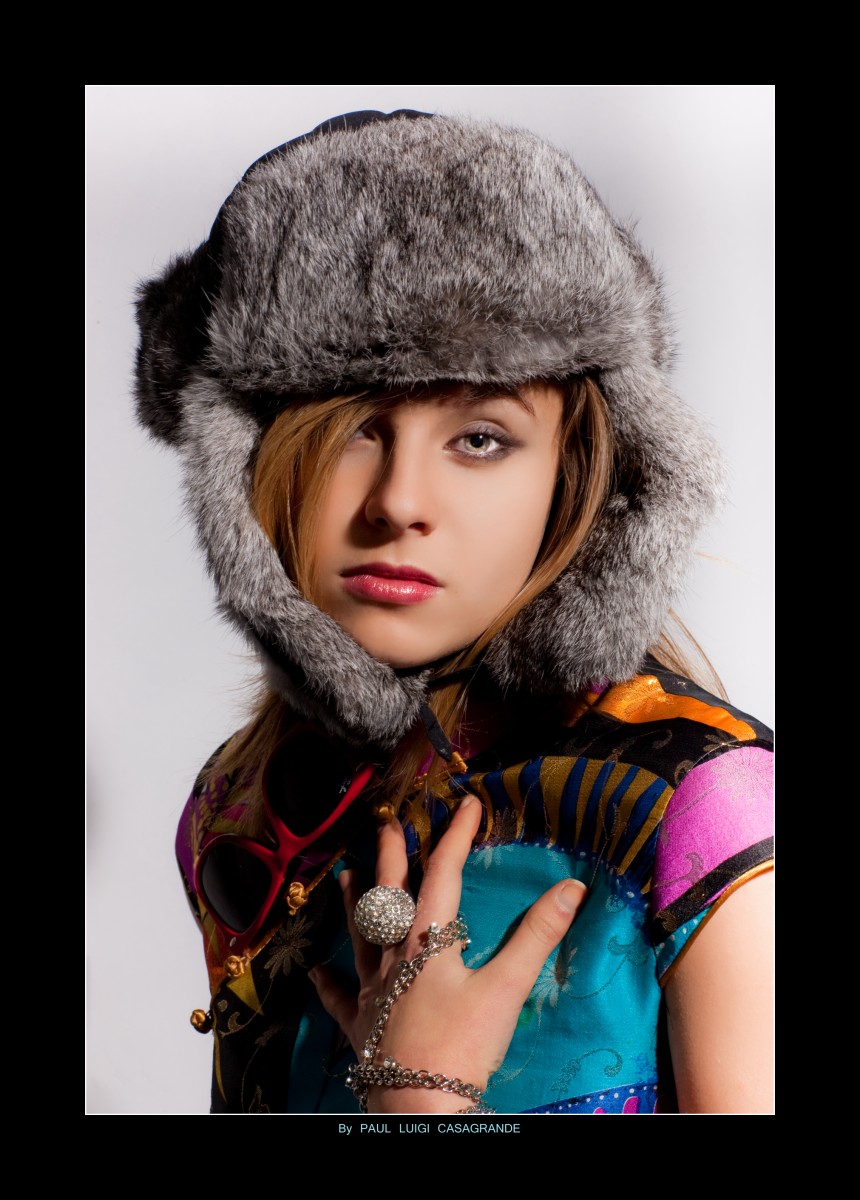
from Paul Casagrande's "Sara & Stefano"

became the focus of this (thanks to Julie McAnary) beautiful cover

Cover for Men of Winter

I floated it on Facebook, and it received rave reviews — so thank you, Paul, Gianluca, Julie (and, absolutely, Nate) — I just hope the stuff between the front and back covers lives up to this amazing piece of art. While I’m at it, another thank-you to M. R. Branwen, the editor of Slush Pile Magazine, who graciously blurbed my book earlier this summer, and who graciously published an excerpt from Men of Winter in the debut issue of Slush Pile when it was still just a manuscript looking for a home. Speaking of Men of Winter, Punkin House Press has pushed back the release date a bit, now proposed for November, which is all right — I’d rather see it done well, if a bit behind original plans, than to have it rushed to press.

With the front cover under our belt, I revised tedmorrissey.com and added a page devoted specifically to Men of Winter. Feel free to visit, as often as you like.

Switching gears, this weekend is the Route 66 International Film Festival here in Springfield, Illinois, and my son and I attended last night’s double session, and were thus treated to some terrific independent films. I don’t have space to do them justice here, but I want to give kudos to a few films in particular. One of our favorite dramas was Ben-Hur Sepehr’s The Desperate, which won Best History Short — about a Nazi general who pleads with a Jewish doctor to save the general’s only son: in a word, tremendous. We also greatly enjoyed the film that won Best Drama Feature, Alex Gaynor’s Wid Winner & the Slipstream: quirky, touching, somehow both sad and uplifting: terrific filmmaking, terrific storytelling. In the thriller/horror contest session, we got a great kick out of David Britton’s Parking Space — very Twilight Zone-esque, and I say that as an extreme compliment. We also enjoyed Sunday Punch by Dennis Hauck (whose lead actor, Dichen Lachman, is a treat as cool, tough and razor-sharply sarcastic boxing ring-girl Jill). However, both my son and I had to give our audience votes to Delaney by Carles Torrens: horrific, weird, laugh-outloud funny, with a host of offbeat characters whom one comes to love against all common sense (of decency).

I also have to mention an animated short that blew me away: The Magical Porno Theater by Jovanna Tosello: strange, yes, but Tosello’s use of cool colors and odd imagery, juxtaposed in intriguing ways, gives an undercurrent (could be an inside pun, but isn’t) of narrative to what otherwise seems a chaos of barely related yet fluid (another non-inside pun) scenes. When one sees what can be done with a modest budget but a lot of talent and creativity, it really underscores how amazingly bad most Hollywood offerings are.

A last note today: I’m reading Adam Braver‘s Crows over the Wheatfield, and I just wanted to share a brief passage that is so engaging I lingered over it for several minutes this morning:

Claire skirted across the lawn on a treaded path, where the trees were bare, like sadly misshapen arms shamed without strength. And in them, their simplicity was their beauty, their resolve to stand defenseless against the elements. Still they stood proud, their mangled branches witnessing the events that had passed under them. (p. 64, Harper Perennial paperback edition)

Quite lovely.

Dostoevsky’s “The Double” and Earl’s “Forbidden Beowulf”

Posted in September 2010 by Ted Morrissey on September 4, 2010

It’s been awhile since I entered the blogosphere, so I thought I’d do a post.  As I’d written about a couple of times, at the end of the summer I was reading a collection of Turgenev’s stories that I enjoyed very much, which encouraged me to pick up a collection of Dostoevsky’s shorter works that I’ve had lying about for, well, years, and have been wanting to crack open.  So I have.  I’ve been reading the collection’s opening tale, “The Double” (1846, trans. George Bird), and have found it a classic indeed.  Thus far it’s been both haunting and funny by turns.  The descriptive paragraphs are most remarkable.  Here’s the opening to one that I read over again and again because it’s just so good:

It was a dreadful night, a real November night, dark, misty, rainy and snowy, a night pregnant with colds, agues, quinsies, gumboils, and fevers of every conceivable shape and size — put in a nutshell, bestowing all the bounties of a St. Petersburg November. (p. 38, Great Short Works of Fyodor Dostoevsky, ed. Ronald Hingley, Perennial Classic, 1968)

There is much to love here, but I especially admire the image of the pregnant night and the sarcasm of referring to the bounties of such a night. My first encounter with Dostoevsky, I believe, was reading Crime and Punishment in a world lit seminar while working on my doctorate. I’m partly on my Russian writers kick because I’ve always been interested in their works but have managed to miss most of them in my life as a student — but also the great William Gaddis scholar Steven Moore said somewhere (maybe it was on the Gaddis list serve) that there hasn’t been much work done on the Russians’ influence of Gaddis’s fiction, and there ought to be. Moore’s comment, wherever I read it, has stuck with me, and I fancy that eventually I’ll try to connect some of the dots between Gaddis and the Russians.

In addition to Dostoevsky, I’ve spent the last couple of days reading through James W. Earl’s article “The Forbidden Beowulf: Haunted by Incest” in the March 2010 PMLA. I’m a great admirer of Earl’s Beowulf scholarship, and it was very useful to me when working on the Beowulf chapters of my dissertation, though I came to it rather late in the process. A fellow after my own academic heart, Earl brings much to bear on the poem from other (perhaps unexpected) disciplines — psychology, yes (which, of course, is expected), but, as in this article, a little astronomy and quantum physics as well.  He writes,

How can we tell whether an author knows or does not know such backstories [e.g., Homer’s knowing the judgment of Paris] if he or she does not tell them? The situation is a little like detecting dark matter in the universe: the best we can do is try to detect subtle distortions in the matter that we can see. (p. 289)

Something that I really appreciate about Earl’s technique in the article is that, while he does put forward a thesis, his organizational strategy is essentially thinking through the related issues and the various scholars who have weighed in on them, and considering how their views may affect his own leanings. He concludes his third paragraph by saying, “I pose many questions and try to untangle such a mess of evidence that it is bound to get confusing at times” (p. 289). His erudition is impressive, to put it mildly, yet his tone is . . . inviting, one might even say conversational, at times anyway — of course, it’s a conversation with a very learned scholar who wants you to be learned too, someday, if not today exactly. Earl suggests that the mood of foreboding that Beowulf tends to cast upon readers, experienced and inexperienced ones alike, has more to do with what’s not said in the poem than what is on the page:

Beowulf is haunted by these [Scylding] analogues, and much of what is disturbing about the poem is due to this haunting. The poem is disturbing in many ways, among them the feeling one gets after long familiarity with it that something is missing, that something important is not said — or, as Freud might say, that something is repressed. (p. 292)

Given my interests in the psychic origins of creativity — of creating fictive narrative especially — Earl’s observations are most provocative.

On the creative writing front, the editor of Pisgah Review, Jubal Tiner, suggested that my story “The Composure of Death” should keep its title, but that we use the quote from Hawthorne’s “The Minister’s Black Veil” — where I derive the phrase — as an epigraph to the story: a good suggestion indeed. I sent an electronic copy of the story, epigraph included, to Jubal last week. I’m not sure which issue the story will appear in.

With the arrival of September, the floodgates have opened and lit journals across the land are accepting submissions again. As such, I’ve been busily getting “Melvill in the Marquesas” (the opening chapter of my unpublished novella Weeping with an Ancient God) in the mail (e- or otherwise). In the process of looking for journals to send it to, I came across a unique one: Textofiction, which is “an online literary publication dedicated to bringing the best writing in under 140 characters” — clearly inspired by Twitter. When I was working on my masters, Kent Haruf (who ended up being my thesis chair) liked to begin writing workshops by having us write complete stories in under 250 words, and that was a challenge. I’m not sure how one writes a complete story in 140 characters or less. I’ll have to keep an eye on the journal to see what writers come up with.

As far as  I know, my publisher, Punkin House Press, is still planning on releasing Men of Winter in October, but I haven’t seen a page proof or a cover design yet; perhaps soon.

tedmorrissey.com