’Tis the season–to traumatize young teachers
Illinois has many seasons–bow season, shotgun season … and every March is “traumatizing young teachers” season as school administrators across the state dismiss nontenured teachers, and they’re not even required to give a reason for the dismissal, hence, oftentimes they don’t. Teachers are left devastated, humiliated, and profoundly confused about whether they’ve chosen the right professional path after all.
A few years ago the Illinois legislature, in one of the opening salvos in its campaign to destroy and demoralize educators, expanded the length of time that teachers could be let go without cause to four years, which means that young professionals (or older ones entering the profession later in life) can be dedicated, hard-working teachers who are establishing themselves in their communities and developing collegial relationships for one, two, three and even four years when they’re blindsided by the administrator’s news that they won’t be coming back the following year.
Sometimes, of course, there have been issues raised, and the teacher has not corrected them to the administrator’s satisfaction; and sometimes the school district’s desperate financial situation has led to the dismissal. Too often, though, the young and developing educators are sacked without any warning whatsoever–they’ve fallen prey to the caprices of an administration that has no one to answer to, excerpt perhaps school board members, who tend to know only what administrators tell them since they rarely have direct contact with the teaching staff.
The situation has been exacerbated in the past year by the state’s mandate of a new model for evaluating teachers. It is more complicated and more labor intensive than the tools most district’s had been using. The increased complications and time commitments have not led to a better approach to evaluation, however. They’ve only opened the door for even more nebulous assessments of a teacher’s performance. Teacher evaluation is a rich subject in itself, too rich of a subject to discuss here–but the bottom line is that teaching is far too complex an endeavor to be reasonably evaluated by a single rubric that is used across grade levels, disciplines, and teaching assignments. In fact, it’s insulting to the profession that so many people believe such a model can be devised and successfully implemented. Physicians, attorneys, engineers, business professionals–and politicians!–would never allow themselves to be evaluated the way that a teacher’s worth is determined.
But no matter how simple or how complex the evaluation process is, its usefulness and fairness depend on the sagacity and integrity of the evaluating body. Unfortunately, sagacity and integrity are not prerequisites for becoming an administrator or a school board member. There are good administrators out there, of course, and well-meaning board members; but administrators and board members come in all stripes, just like the human population as a whole. Yet there is no check-and-balance built into the process. Young teachers who are dismissed unfairly, and the professional associations who represent their interests, have no recourse. No recourse at all.
In other words, there is no evaluation of the evaluator, whose sagacity and integrity, apparently, are assumed by the Illinois General Assembly … in all of its sagacity and integrity.
When there is an unfair and unwarranted dismissal, a shockwave goes through the faculty and the student body almost as palpable as an accidental death. Other nontenured teachers become like deer in hunting season and worry that they’ll be next–if not this spring maybe the next, or the next, or the next, or the next. Tenured teachers are angered, saddened and frustrated by the loss of a valuable colleague and trusted friend. It greatly diminishes their respect for their superiors and their good will in working with them. It disrupts students’ focus, and it teaches them a hard lesson about the perils of choosing a career in education. And once a district becomes known as one that mistreats young professionals, word spreads virulently and the best and brightest don’t bother to apply.
Who, in their right mind, would want to work for an administration and board that will dismiss them without reason after a year, or two, or three, or four of hard work and dedication? Who, in their right mind, would chance subjecting their spouse and possibly children to the trauma of a lost job beyond their control?
Young teachers have mainly debt (nowadays from colossal student loans) and very little savings. It’s frightening to be jobless, especially when it’s due to no fault of their own–at least, no fault they’ve been made aware of. Yet teachers must continue to teach for the remainder of the school year, while also looking for new employment. They are often–magnanimously–given the option of resigning instead of being dismissed, but it’s likely a thin disguise that fools no one in their search for another teaching job. They find themselves in very difficult situations when interviewing elsewhere because the question must come up “Why did you leave such-and-such school?” What, then, do they say that won’t compromise either their honesty or their chances of landing another job?
The fact that we as a society allow this devastating unfairness to be visited on our young teachers every spring is just another indication of how little we value education, educators and–for that matter–the children they’ve dedicated themselves to educating.
Theory into Praxis: William H. Gass’s Middle C
My paper, “Theory into Praxis: William H. Gass’s Middle C,” was presented Feb. 20, 2014, at the Louisville Conference on Literature Culture Since 1900 as part of the panel “The New Adventures of Old Debates: Postmodernism and the New Sincerity,” chaired by Nick Curry, University of Louisville. Other papers presented were “‘Everything is ending but not yet’: Post-Modern Irony and the New Sincerity in Jennifer Egan’s A Visit from the Goon Squad” by Katherine Leake Weese, Hampden-Sydney College; and “Liminality and Dialogism: Dreamscape Narratives in Donald Barthelme’s Postmodern Paradise” by Nicholas Sloboda, University of Wisconsin-Superior. (A much abridged version of this paper appeared as a review in North American Review, 298.4. Search this blog for other Gass papers.)

Theory into Praxis: William H. Gass’s Middle C
by Ted Morrissey, University of Illinois Springfield
A long and complex novel, or series of novels . . . may present us with a world complete through every principle and consequence, rivaling in its comprehensiveness the most grandiose philosophical systems. (Gass, “Philosophy and the Form of Fiction” 9)
With the release of Middle C in 2013, William H. Gass’s third novel, one imagines that Gass has attempted to do just that: present us with a world complete. For the past half century, William Gass has been one of America’s most prolific essayists and literary critics, as well as one of its most receptive interviewees. Consequently, his ideas about writing, especially about writing the novel and what makes a great one, are well documented, and they’ve remained amazingly consistent decade after decade. Middle C, even more so than his previous two novels, is a praxis of his most heartfelt theories—which makes it a deliberately challenging read, deliberately aimed at a rapidly disappearing readership. What is more, given Gass’s age, Middle C may prove to be the final argument in his legendary debate with John Gardner in which aesthetics was pitted against morality as the rubric for assessing great literature.
Gass, who was born in Fargo, North Dakota, in 1924, is a self-acknowledged slow writer of his own fiction. Therefore, his novels have appeared with great gaps of time in between: Omensetter’s Luck (1966), The Tunnel (1995), and now Middle C—with an iconic collection of stories, In the Heart of the Heart of the Country (1968), a highly experimental novella (?), Willie Masters’ Lonesome Wife (1968), and a collection of novellas, Cartesian Sonata (1998), rounding out his books of fiction. Meanwhile, the professor of philosophy, retired from Washington University in St. Louis, has published ten collections of essays and criticism between 1970 and 2012. Conversations with William H. Gass, a compendium of just some of his copious interviews, was released by University Press of Mississippi in 2003.
This paper will deal with Gass’s concept of narrative structure that he refers to as layering, his views on characterization, and his sense of morality’s proper place in fiction.
In Middle C, via the novel’s singular focus, music professor Joseph Skizzen, Gass demonstrates the narrative elements he believes to be essential to great fiction, but also the ones that have prevented him from being a best-selling author—though they have garnered him numerous honors and accolades, including the American Book Award for The Tunnel, a ponderous novel twenty-six years in the writing, and a Guggenheim Fellowship.
Though not a musician himself, Gass has long been fascinated with musical composition and has tried to structure his novels as if they were orchestral arrangements. More important, Gass’s nonlinear structural technique that he refers to as layering mimics musical composition, he believes, because the goal of a great novel is to affect the reader as a whole creation: “[T]he linear element in fiction is inescapable and must be dealt with, used just as it is in music, but there are other elements too, equally important. So I have a kind of view of a work as being layered: certain layers, or certain aspects of it, are nonlinear and certain aspects are linear. Then what becomes interesting is the tension, the contrasts, contradictions between the layers” (Janssens 60-61).
The result of layering is a narrative that shifts relentlessly between Skizzen’s childhood, adolescence, young adulthood and beyond to nearing retirement age, forcing readers to acquire their temporal bearings with each new section. It is useful that each phase of Skizzen’s life tends to take place in a distinct setting with different casts of characters (except for the professor’s mother, Miriam, as she is a constant throughout). Gass also provides some assistance in how he references Skizzen as either Joey or Joseph, but ultimately the two names appear side by side in the novel as if the young and old versions of his character become conjoined twins and experience the world through dual perceptions.
The merciless shifting in time is due to the thematic elements in the book. Gass writes in “The Concept of Character in Fiction,” “But there are some points in a narrative which remain relatively fixed; we may depart from them, but soon we return, as music returns to its theme” (49). In The Tunnel, Gass employed a twelve-part structure suggestive of Schoenberg’s twelve-tone pattern. “That is how I began working out the way for the various themes to come in and out,” said Gass. “It’s layered that way too” (Kaposi 135). In Middle C, Gass has returned to the concept of Schoenberg’s twelve-tone system but even more overtly. For one thing, Arnold Schoenberg and his disciples, like Alan Berg and Anton Webern, are discussed at various points in the novel via Professor Skizzen’s lectures; and Skizzen himself effects the aura of a Viennese intellectual, reflective of Schoenberg’s Second Viennese School of musical composers. Also, throughout the novel Skizzen wrestles with a sentence, or series of sentences, having to do with the destructive nature of the human race, as he continually composes the thought, critiques it, and revises it. Skizzen believes he is on the right track when he writes the sentence in twelve beats, and near the end of the novel he feels he has the sentence perfect:
First Skizzen felt mankind must perish
then he feared it might survive
The Professor sums up his perfect creation: “Twelve tones, twelve words, twelve hours from twilight to dawn” (352). Gass, through his narrator, does not discuss the sentence’s direct correlation to the Second Viennese School’s twelve-tone system, but it does match it exactly. The twelve-tone system has four parts, described as Prime—Retrograde—Inverse—Retrograde Inverse. As such, the primacy of “First Skizzen felt” is represented literally with the word First, while “mankind must perish” suggests the retrograde movement of the species from existence to extinction. “Then he feared” marks the inverse of Skizzen’s initial impression, and “it might survive” is the retrograde inverse because it reverses his belief that mankind will become extinct and concludes that it will actually persist.
In a microcosmic sense, Skizzen’s capturing of the perfect expression of his fears about the human race reflect Gass’s overarching strategy of novel composition, which he expressed in a 2012 Tin House interview: “You want to organize and make sense out of it on a conceptual level as well as a physical, or musical, level. And indeed, a spatial level. Like a parking garage, there are a bunch of levels” (Gerke 41). On the page, Gass, as he often has, uses typographical features to suggest the multilayered nature of Skizzen’s expression, by indenting, tabbing and boldfacing the words, so that visually they draw attention to their deeper meanings and associations. This evolving thought about humanity is associated with another reoccurring element in the novel, Skizzen’s Inhumanity Museum, which is a collection of newspaper and magazine clippings, and handwritten notecards that detail horrific human actions:
The gothic house he and his mother shared had several attic rooms, and Joseph Skizzen had decided to devote one of them to the books and clippings that composed his other hobby: the Inhumanity Museum. . . . Sometimes he changed the [name] placard to an announcement that called it the Apocalypse Museum. . . . Daily, he would escape his sentence to enter yesterday’s clippings into the scrapbooks that constituted the continuing record. (55)
And just as Gass returns to the evolving sentence throughout the novel, he also references the Inhumanity Museum and its growing record of atrocities. Hence, the motif of humans’ inhumanity to other humans demonstrates one of Gass’s other important theories about fictional narrative: that anything can be a character and people don’t make for the most interesting ones. He writes, “Characters are those primary substances to which everything else is attached. [. . . A]nything, indeed, which serves as a fixed point like a stone in a stream or that soap in Bloom’s pocket, functions as a character” (“The Concept of Character” 49, 50). Perhaps Gass’s interest in developing ideas as characters and not people stems from his most fundamental affections. In the Tin House interview, he acknowledged that he “hate[s] the species” and aligns himself with Spinoza’s advocacy of “lov[ing] ideas” (Gerke 33, 36). People, he says, are less trustworthy than objects, and the singular focus of Middle C, Joseph Skizzen, reflects that lack of trustworthiness in that the music professor is a complete fraud who constructs his career, and his very life, from forged documents and fabricated CVs.
Gass said that Skizzen was based on a real history professor at Wooster College in Ohio who was living under a false identity and on the run from both the English and Canadian authorities. Gass remarked, “I want to talk about—or deal with—somebody who’s a counterfeit of that sort. Professor Skizzen obtains his position with false CVs [. . .] but he gradually expands his dreamland to include the classes he starts to teach” (Gerke 37-8). Skizzen’s falseness even extends to his supposed admiration of Schoenberg, whom he chose as a pet topic because no one knew much about him. Perhaps Skizzen’s irreverent strategy reflects to some degree Gass’s own choice of Schoenberg’s twelve-part system to use as a controlling structure for his fiction. In writing criticism, Gass had to stay within the boundaries of expectation, he said, but for his fiction, which has been more important to him, “there are no expectations, there is no job to fulfill,” allowing him “to be more outrageous, or daring” (32).
Gass’s emphases in Middle C on inhumane behavior and on Skizzen’s profound falseness represent another of his theories about artistic, versus popular, writing. On the one hand, Gass has said that significant novels need to be about significant themes. In the essay “Fiction and the Figures of Life,” Gass writes, “[T]he form and method of metaphor are very much like the form and method of the novel. . . . [T]he artist is able to organize whole areas of human thought and feeling, and to organize them concretely, giving to his model the quality of sensuous display.” He goes on,
[T]hen imagine the Oriental deviousness, the rich rearrangement, the endless complications of the novel conceived as I suggest it should be, as a monumental metaphor, a metaphor we move at length through, the construction of a mountain with its views, a different, figured history to stretch beside our own, a brand-new ordering both of the world and our understanding. (68-9)
Yet this world-altering effect must be executed via mundane plot details. Gass said, “. . . I want to avoid as much as possible situations, extreme situations whose reality is strong because then the reader is reading it like a newspaper or something. If you’re going to write aesthetically about it, you have to defuse its power in order to get anybody to pay any attention to the nature of the prose” (Gerke 42-3). He said that “ninety percent of bad literature” was due to writers focusing on the sensational act itself, the part of real life that is “quite shattering, or pornographic, or whatever. And it isn’t art” (43). As such, Professor Skizzen’s achievement of the perfect twelve-part sentence about humans’ inhumanity acts as a kind of climax for Middle C, and Skizzen’s feared defrocking, which occupies the final pages of the novel, is a sort of anticlimax juxtaposed against the truly climactic narrative event.
This avoidance of the extreme situation has been practiced by Gass ever since his very first written narrative, from about 1951, the novella “The Pedersen Kid,” which carefully sidesteps descriptions of child abuse, molestation, kidnapping, rape and murder, leaving them merely implied on the fringes of the plot. And in The Tunnel, Gass’s most ambitious work, the Holocaust remains in the background while the novel’s protagonist secretly digs a hole to nowhere in his basement.
Gass is in his ninetieth year, and it’s all but certain that he will not write any other novels. He’s said that more novellas, stories, essays and literary criticism could be forthcoming, so Middle C may well be his closing argument in his famous debate with John Gardner, who died in 1982. Gass and Gardner’s debate regarding the chief aim of fiction was often carried out in private, but it also became very public, being transcribed in various interviews and even fictionalized by Larry McCaffery in The Literary Review as a Point-Counterpoint-style “confrontation” (135). At the risk of oversimplifying their positions … Gardner believed that literature’s highest calling was to put forward a moral, life-affirming message, while Gass believed that literature’s highest calling was to be something beautiful, a work of linguistic art. Gass said in a 1978 interview, “There is a fundamental divergence about what literature is. I don’t want to subordinate beauty to truth and goodness. John and others have values which they think are important. Beauty, after all, is not very vital for people. I think it is very important . . .” (LeClair 55). Gardner’s view was that “you create in the reader’s mind a vivid and continuous dream . . . living a virtual life, making moral judgments in a virtual state” (49-50).
More than a decade after Gardner’s death, with the publication of The Tunnel, whose narrator, history professor Frederick Kohler, seems to sympathize with the Nazis, Gass was still clarifying his position on morality versus art in literature. He said that his “position [had] been frequently misunderstood, almost invariably” (Kaposi 122). He went on,
Ethical, political, and social concerns will be present in every writer’s work at every point. The question is not that; the question is how you write about them. . . . My view is that you don’t judge a work to be beautiful because it’s morally uplifting or tells the truth about things. And it’s perfectly possible for a work to be beautiful and not tell the truth, and in fact to be morally not a very nice thing. Ideally of course it would be all these things at once. (122)
Unlike Kohler, Joseph Skizzen is clearly appalled by human behavior, like the Holocaust. In his lectures on Schoenberg’s Moses und Aaron, Skizzen contemplates how Jews were able to reconcile “the Almighty’s malevolence . . . a punishment long in coming and therefore most deserved” (209). Thus, in the context of a novel in which nothing much happens, certainly nothing earthshattering, Gass interjects significant moral issues, especially involving humakind’s inhumane treatment of itself. In The Tunnel, Gass created a character and a book who were “morally not a very nice thing,” and it seemed to distract many readers from its artfulness, its literary beauty. In a 1998 interview, Gass responded to critic Robert Atler’s assertion that The Tunnel was an immoral book because of the way it treated the Holocaust by saying that it must be “to some sorts of reader an immoral book. I want it to be for them. I want it misread in a certain way by certain people. It’s for me the proof in the pudding” (Abowitz 144). Gass said that he considers Middle C “a much lighter” book (Gerke 38), even though he deals with many of the same issues as in The Tunnel. What makes it seem lighter, perhaps, is the first-person narrator’s posture toward atrocities like the Holocaust.
In the end, then, Gass has found a way to create a work of literary art while also taking the higher moral ground that his friend John Gardner advocated. Gardner said in 1978 that his “ambition in life is to outlive Bill Gass and change all of his books” (LeClair 55)—maybe he managed to change Gass’s final novel from beyond the grave.
Gass is adamant that he’s written his last novel as a matter of practicality—after all, eighteen years elapsed between The Tunnel and Middle C (“I can’t live forever,” he told the St. Louis Post-Dispatch)—but he’s working on a collection of essays, a collection short stories (alluded to in the mid-1990s and still not complete apparently), and he’s planning another novella or two.
Let me end on a personal and professional note: I’m planning to edit a series of books on Gass’s work through Twelve Winters Press, and about a week ago I put out a call for submissions (of abstracts) for the first anthology, titled Critical Perspectives on William H. Gass: The Novellas. Please visit TwelveWinters.com/submissions for details and to access the submissions portal. You can also follow my 12 Winters Blog and ReadingGass.org for updates on the project.
Works Cited
Abowitz, Richard. “Still Digging: A William Gass Interview.” 1998. Ammon 142-48.
Ammon, Theodore G., ed. Conversations with William H. Gass. Jackson: UP of Mississippi, 2003. Print.
Gass, William H. “The Concept of Character in Fiction.” Fiction and the Figures of Life. Boston, MA: Nonpareil, 2000. 34-54. Print.
—. “In Terms of the Toenail: Fiction and the Figures of Life.” Fiction and the Figures of Life. Boston, MA: Nonpareil, 2000. 55-76. Print.
—. Middle C. New York: Knopf, 2013. Print.
—. “Philosophy and the Form of Fiction.” Fiction and the Figures of Life. Boston, MA: Nonpareil, 2000. 3-26. Print.
Gerke, Greg. “Many-Layered Anger: A Conversation with William Gass.” Tin House 14.2 (Dec. 2012): 30-45. Print.
Janssens, G. A. M. “An Interview with William Gass.” 1979. Ammon 56-70.
Kaposi, Idiko. “A Talk with William H. Gass.” 1995. Ammon 120-37.
LeClair, Thomas. “William Gass and John Gardner: A Debate on Fiction.” 1978. Ammon 46-55.
McCaffery, Larry. “The Gass-Gardner Debate: Showdown on Main Street.” The Literary Review 23.1 (fall 1979): 134-144. Print.
The Psychic Origins of Creativity by Ted Morrissey
Thanks for posting, NAR.


For quite some time now, I’ve been interested in what I’ve come to call “the psychic origins of creativity.” That is, where do the guiding inspirations for a creative work come from? I’m mainly interested in writing, especially fiction, but I think the question pertains to any creative endeavor. In an earlier draft of this post I wrote the above question as “where does the guiding inspiration,” but I think making the question singular is rooted in the well-established romantic notion that a piece of writing grows from a single inspirational event, person or object—and that’s a gross oversimplification of the process. Many things, most of them mostly unconscious, contribute to shaping a novel, short story, poem, musical composition, work of art, and so on.
View original post 591 more words
Men of Winter Redux
My novel Men of Winter originally appeared in 2010, brought out by a new press, but I was never very happy with the end result, and overall my experience with the press was pretty frustrating. Not surprisingly, the press went out of business last year, leaving my book “out of print,” at least in paperback (the digital versions represent a different tale of woe). Because of this event, combined with the extreme difficulty of getting challenging work in print, period, I decided to start my own publishing business, Twelve Winters Press, which I founded in 2012.

Twelve Winters Press’s first order of business was to make Men of Winter available again (for one thing, I wanted to use myself as a guinea pig, before approaching others about publishing their work). However, as long as I was troubling to bring it out again, I decided to release a revised and expanded edition of the novel. New to this edition are a Preface (written by me), an interview by Beth Gilstrap (an abbreviated version of which originally appeared in Fourth River), an Afterword by Adam Nicholson, and discussion questions designed to make the book better suited for book clubs and classrooms. In terms of revisions, I’ve made a few wording changes and corrections here and there, but the most obvious revision is the addition of epigraphs at the head of each chapter from either the Iliad or the Odyssey. For the cover art, Gina Glover generously allowed me to use her pin-hole photograph, Amandine, Usedom, Germany.
Men of Winter, A Revised & Expanded Edition, is currently available from Amazon, Barnes & Noble, and Espresso Book Machine. It will soon be available from Baker & Taylor, Ingram, and NACSCORP. Please note that the Kindle and Nook editions are the 2010 version of the novel, of which I haven’t received a royalty payment in more than two years (folks are making money off the book, but I’m not among them). I’m currently in communication with Amazon and Barnes & Noble regarding the situation and plan to have new digital versions available in the near future.
I’m working on getting my newest novel, An Untimely Frost, ready for publication, projected release this fall. Meanwhile, I have the good fortune of my talented and enthusiastic Quiddity colleague John McCarthy coming on board as a contributing editor, and John is going to spearhead some special projects so that Twelve Winters is not simply my own self-publishing venture.

Many of you reading this blog, may have read Men of Winter in its earlier incarnation, and I would encourage you to spread the word regarding its re-release. And if you haven’t read the book … well, your support would be greatly appreciated. I’m hoping especially to market the novel to book clubs, with whose members I would be honored to join in conversation either in person or via Skype. So if you have any book-club connections (or aspirations), again, I’d greatly appreciate your spreading the word.
Please visit tedmorrissey.com.
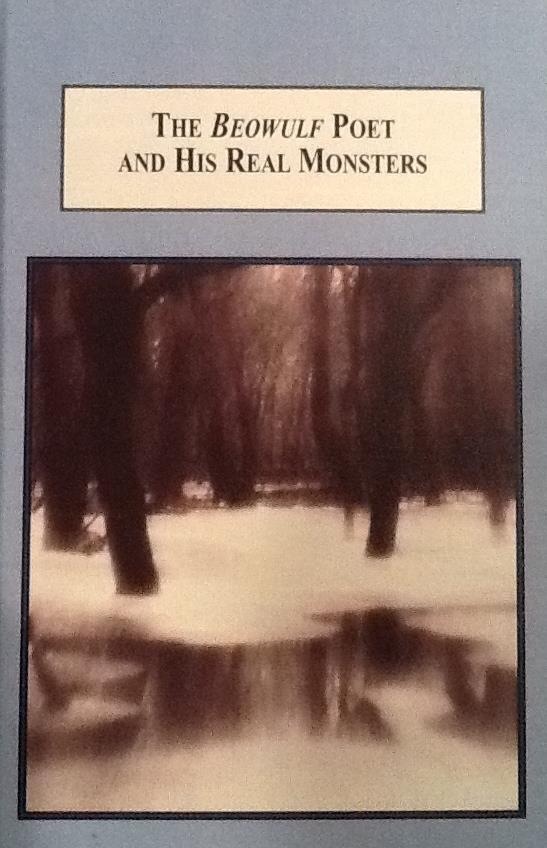
The Beowulf Poet and His Real Monsters Introduction
The following is the Introduction to my monograph The Beowulf Poet and His Real Monsters: A Trauma-Theory Reading of the Anglo-Saxon Poem (Edwin Mellen Press, 2013). Please see the book’s page for further information, including reviews, a brief description, the Table of Contents, and a promotional flyer (flyer also available below).
* * *
“[I]t is a drink dark and bitter: a solemn funeral-ale with the taste of death.”
Thus wrote J. R. R. Tolkien of Beowulf in his prefatory remarks for the republication of John R. Clark Hall’s 1911 prose translation (ix). The professor’s dramatic metaphor captures what many readers sense when they engage the text of the poem, either in the original Old English or in one of the myriad languages into which it has been translated since Sharon Turner began the process in 1803, whether it be a student’s first encounter or a scholar’s innumerable one. To extend Tolkien’s metaphor, the purpose of this monograph is to analyze the recipe of that dark and bitter brew.
The method by which I identify the various ingredients and discuss their influence on the poem’s morbid flavor is trauma theory, a term that Cathy Caruth is given credit for coining in her 1996 book Unclaimed Experience: Trauma, Narrative, and History—though the idea of literary trauma theory as a discernible critical model can be recognized earlier in the decade in such practitioners as Shoshana Felman and Dori Laub. Of course, one can easily make a case for even earlier sightings of trauma theory, with Caruth herself pointing to Sigmund Freud’s marriage of psychoanalysis and literary study via terms like the Oedipus and Elektra complexes. However, in spite of trauma theory’s presence in the humanities for roughly two decades, a precise and universally acknowledged definition has yet to emerge, which provides me an opening to put forward a definition as I am using it in this work.
In the previous paragraph I quietly inserted literary as a qualifier to differentiate between trauma theory as it exists in the vocabulary of psychiatric professionals versus how scholars in the humanities may regard its meaning—though both groups are concerned with how traumatic experience affects the subject’s mind, and they borrow freely from one another, explicitly or implicitly, to advance and articulate their understanding of trauma. In psychiatric medicine, the overarching goal of trauma theory, broadly put, is to use that understanding to assist victims of trauma overcome its devastating effects. In literary scholarship, the goal of trauma theory, broadly put, is to use that understanding to document the effects of traumatic stress on language production. To state it simply (in fact, overly so), psychiatric professionals examine the speech of patients (perhaps “clients” is a better word), while scholars examine texts (e.g., Beowulf).
My specific purpose is to make the case that Beowulf reflects traumatic stresses which the anonymous poet and his fellow Anglo-Saxons felt in their day-to-day lives, and I concentrate my trauma-theory reading on the three monsters, who represented, in all likelihood unconsciously, particular sources of trauma to the poet: the terror of extreme violence, the dangers of sexual reproduction, and the deprivations of chronic disease. My training as a scholar is in English studies, a program that requires coursework in literature, linguistics, rhetoric, and pedagogy—also a program that has prompted me to draw from a wide range of fields, including medicine, history, anthropology, philology, sociology, and psychology, with special emphases on the branches of psychoanalysis and neuropsychology. In other words, English studies in general and this monograph in particular have allowed me to indulge my “attention surplus disorder,” a phrase I commandeered from Susan Sontag, who uses it to mean that she is basically interested in everything.1
What is more, I consider myself primarily a creative writer—a novelist, short-story writer and sometimes poet—which, I believe, gives me further insight into what I call “the psychic origins of creativity” when I take on the roles of critic and scholar, further, that is, than someone who has never tried to devise characters and plot and setting, and to coax them through a narrative arc via dialogue, metaphor and a plethora of other storytelling techniques. That is to say, I feel a brothers-in-arms kinship with the Beowulf poet and an affinity for the task he set before himself that many literature scholars, simply, do not.
In bringing to bear on the poem knowledge from so many different fields, my reading represents a departure from what has been the dominant discourse in Beowulf studies for at least the last thirty years, a discourse that has tended to focus on the extant Cottonian manuscript, a discourse that has resisted critical theory “in the name of empiricism, objectivity, or common sense,” according to John D. Niles (“Introduction” 9). However, as James W. Earl points out in his introductory remarks to Thinking About Beowulf (1994), intense study based on the extant manuscript has failed to yield much that is irrefutable about the poem and even less about its poet. In fact, Earl draws on the concept of the Strange Attractor from chaos theory, meaning “that underlying presence, or nonpresence, that gives its shape to chaos” (10), to conclude the following about new directions in Beowulf scholarship: “If we cannot anchor our thinking about Beowulf in history any longer, we may have to entertain at long last the freedoms of modern and postmodern critical thinking—at least within the parameters set by the fractal text, and its Strange Attractor, the poet” (27).
That is, to better understand the poem, we must do all that we can to better understand the poet.
The trauma-theory reading of the poem rests largely in Chapter 4 of this monograph, while Chapters 1, 2 and 3 lay the groundwork necessary to the reading. The first chapter, for example, discusses the close association between thought and language by examining the work of pioneering psychoanalysts Freud and Jacques Lacan, as well as contemporary trauma theorists and neuropsychologists. Key concepts in the chapter include the effects of trauma and how these effects can be passed from generation to generation, and from location to location. Integral to these concepts are discussions regarding the establishment of trauma cultures and the production of trauma texts. The next chapter focuses on the mimetic parallel between postmodern narrative technique and the narratival characteristics of someone who has been traumatized. In this chapter and elsewhere, the theories of Michel Foucault are engaged, especially those related to analyzing the minds of past peoples via the texts they left behind. When I introduce Foucault to my students, I use the model of the double helix with one strand representing thought and language the other. When a culture has passed, like the Anglo-Saxons’, it is as if its double helix has been stretched and flattened, and we view it from an angle that makes it appear as though only the language strand remains (i.e., its texts), but Foucault tells us that inseparably bonded to that language is the thought that shaped it; therefore, by studying a past culture’s language, we can come to know the culture’s thought as well. In short, the Beowulf poet’s mind produced the topography of the text, so by carefully studying the text we can discern the topography of the poet’s mind.
Chapter 3 is less theoretical and more practical as it examines aspects of the lives of Anglo-Saxons that likely would have resulted in traumatic stress and in particular the traumatic stress I believe to be represented by Grendel, Grendel’s mother, and the dragon. That is to say, if the poet and his people were in fact traumatized, what events and day-to-day features of their lives could have caused that trauma? For this chapter, I rely principally on the writings of Bede and Eddius Stephanus, the anonymously composed Anglo-Saxon Chronicle, and the period’s medical texts: the Herbarium, Leechbooks, and Lacnunga. Then, finally, Chapter 4 brings all of this diverse knowledge together in a trauma-theory reading which focuses on the original language of the poem.
It is important to note, too, that while my reading is a departure from much of the traditional scholarship, I incorporate and build upon a great deal of that scholarship, bringing into the conversation (to name a few) Klaeber, Tolkien, Malone, Mitchell, Robinson, Niles, Bjork, Orchard, Kiernan, Earl, O’Brien O’Keeffe, Chance, Howe, Lerer, Lapidge, Liuzza, Acker, and Foley, as well as newer voices like Joy, Ramsey, Kim, Mizuno, and Warren. All of whom have contributed mightily to what we know about the poem, and thus contribute mightily to what we could possibly come to understand by pursuing critical approaches born of postmodernism, like trauma theory.
Feel free to share the following promotional flyer either electronically or in print.
Beowulf Poet – Morrissey flyer
Note
1. See “Susan Sontag, The Art of Fiction No. 143,” interviewed by Edward Hirsch for The Paris Review, available online at theparisreview.org.
Works Cited
Earl, James W. Thinking About Beowulf. Stanford, CA: Stanford UP, 1994. Print.
Niles, John D. “Introduction: Beowulf, Truth, and Meaning.” Ed. Robert E. Bjork and John D. Niles. A Beowulf Handbook. Lincoln: U of Nebraska P, 1998. 1-12. Print.
Tolkien, J. R. R. “Prefatory Remarks on Prose Translation of Beowulf.” Beowulf and The Finnsburg Fragment. Trans. by John R. Clark Hall. 3rded. London: George Allen and Unwin, 1950. ix-xliii. Print.
Notes from the Illinois Education and Technology Conference 2012
(It’s been several months since my last post. I’ve been writing a monograph on the Anglo-Saxon poem Beowulf, and it’s soaked up a lot of my time and writing energy. In particular, Sunday mornings have been my preferred blogging time, but that has also been the best hours to work on my Beowulf project, which is now far enough along that I can start to devote some thinking-writing time to other pursuits, like this blog. I know: Hooray!)
I’ve deliberately restricted the subject matter of this blog to my reading and writing life, which means I’ve deliberately avoided writing about other things that are important to me, like education. But I’ve been a public schoolteacher for 29 years, plus I’ve also been an adjunct instructor at two universities, one public, one Catholic, for 15 years — so I have a lot of opinions about education (informed opinions, I like to believe). I’ve avoided blogging about education-related issues for a couple of reasons, most likely. One, so much of my life and my being are devoted to teaching, it’s a pleasant break to blog about other pats of my life that are important to me. Two — and no. 2 is the more practical matter — to write about education is to, inevitably, critique education, and since my experiences are limited to specific faculties and specific superiors, that means I must at times critique my colleagues, my administrators, and my school board members.
I believe no. 2 is the reason that one hears so little (i.e., reads or sees via interviews, etc.) from actual practicing teachers: all the power and authority flow in one direction, from the top down. Quite frankly, a school board or an administration that decides it wants to make a teacher’s life miserable can quite easily do so. I know that the media makes it sound like “teacher unions” are these all-powerful entities, but the truth is there’s very little associations can do to shield teachers from their superiors’ day-to-day ire. New tenure/seniority and evaluation laws in Illinois make it fairly easy for administrations to circumvent tenure protection — but even before such laws were adopted, administrations could always rely on the oldest trick in the book: perhaps they couldn’t very easily out and out fire a teacher they didn’t like, but there was nothing preventing them from making his life so miserable that he opted to resign or retire ahead of schedule.
Consequently, the ones who know education best — the classroom teachers who are in the trenches day in and day out — are left standing silently on the sidelines of debates, allowing their associations to speak for them en masse (associations, a.k.a, unions that have been demonized in the media as all that is wrong with education in the United States).
In my long layoff from blogging, while the presidential campaigns burned with rhetorical fury, often misrepresenting teachers and their collective mission, I decided to lift my own ban on writing about education … and I’ll begin by writing about the 19th annual Illinois Education & Technology Conference that I attended in Springfield November 29 and 30. To set the stage, I have been a long-time critic of technology’s powerful role in education. I’m not a Luddite, not by any means. I love technology. I maintain multiple websites, I write two different blogs, I’m on Facebook (too much), I began tweeting before 90% of the world had heard of Twitter, I Skype, I have a smart phone, a netbook, a school-purchased iPad, and this desktop on which I’m writing this post; I love Netflix and Hulu, I have a YouTube channel, I’m on Vimeo, I’ve been into desktop publishing since the mid 80s. . . .
But at the same time, I believe our society and our schools have gone overboard with their worshiping of technology and their advocacy of its use in all circumstances. Quite simply, when it comes to developing the mind via reading, writing and thinking skills, ancient, time-tested (non-computer-technological) ways are still the best — by far. (Now that I’ve lifted my moratorium on discussing education-related issues I’m sure I’ll post more on these specific issues in the coming months.)
So I went to the conference as a devout skeptic, but I was truly hoping to find some reason for hope: some concrete method for employing technology with my students that seemed to be beneficial, or at least some sense that technology would one day be viewed as a tool to be used when circumstances warranted, and not an idol who required daily pacification.
In a word, after two full days of conferencing, I was disappointed.
First of all, there were very few sessions that even pretended to offer practical advice on classroom pedagogy. Many, if not most, of the sessions were conducted by school IT people, the people who bring technology into their districts then keep it running (and expanding). It’s not universal of course, but many IT people seem to view teachers as impediments to their getting the coolest technology into the hands of students. One presenter (who I’m sure is a nice guy in the regular part of his life) even complained about teachers who have the audacity to ask “Why?” — that is, teachers who aren’t willing to embrace every piece of hardware and software that appears at their classroom door, but, rather, they respond critically (as in critically thinking) by asking what the potential benefits and drawbacks are. (One notable exception was Jon Orech, of Downers Grove South High School, who said that asking why is, in fact, the most vital question when it comes to new technology, not what and how as so many seem to think.)
Another IT-person presenter referred to some teachers in his district as being “rock stars,” that is, teachers who use a lot of technology with their students — which of course suggests that more circumspect and more traditional teachers are, sadly, what, Fred Rogers-like? This presenter’s co-presenter expressed what also seems to be a common theme among the pro-tech folks: That if all teachers would simply embrace all that the newest technologies have to offer, then students could finally reach their full potential. Sounds great, except I don’t know what it means, in a practical sense, to embrace the newest technologies. What would that look like in the classroom on a daily basis? How would teachers have to change their approaches to unleash this revolution? No one can seem to say. For that matter, what sorts of potentials in students are we talking about? It seems to have something to do with making them more creative. Achievement is a popular concept; students using technology will achieve more or higher … or something.
Although, the gentleman who made the “rock star” comment also stressed to his fellow IT-ers in the audience, do not — repeat, do not — tell your administration that students will do better on achievement tests, because they probably won’t and then what do you do? He was specifically referring to the concept of one-to-one computing, a trend in education that features giving each student a device of some sort (usually a laptop or a tablet, especially these days an iPad) and having them do just about everything via the device, avoiding traditional textbooks, and paper-based exams and projects, etc. “Rock-star” man also advised his fellows not to count on saving some money in the budget by reducing the amount of paper being used, because this, in essence, “paperless” approach seems to use just as much paper as always.
One-to-one computing, or at least the idea of it, is big right now, especially in the Chicago suburbs it would seem. Schools on the east coast started the trend several years ago, and most have already abandoned it — which isn’t stopping us Midwesterners from giving it a spin around the dancefloor. “Rock star” guy’s co-presenter — both of whom, by the way, seem like very decent and funny human beings — said that their administrator wanted to go to one-to-one because neighboring superintendents were doing it, and he didn’t want to seem out of step. This is another problem in education: many school boards and administrators make decisions out of, basically, peer pressure, and not because of solid research results that support the approach, whichever one we’re talking about.
My final observation: The iPad is extraordinarily popular right now in education — in spite of the fact no one seems to know how to use it in a classroom setting very effectively. It doesn’t easily integrate with existing equipment, like other non-Mac computers, projectors and printers; plus its on-screen keyboard is awkward to use. Teachers really, really like it, but they appreciate what it does for their professional and private lives, not for what it can do in the classroom, which doesn’t seem to be much. I count myself among them. I like my school-purchased iPad a lot and use it every day … at home. I’ve found almost nothing that I can do with it in the classroom, in spite of wanting to find useful applications, which was one of the reasons I attended the conference.
Don’t get me wrong: There were several sessions focused on using the iPad in the classroom, and I of course couldn’t attend all of them — so maybe I just missed the best of the best (my life can be like that) — but based on their descriptions and the sessions I did attend, the suggestions are pretty elementary, and consist of using the iPad in lieu of something else that’s more traditional and more common. For example, use the iPad to make pictures, well, cave children made pictures on their school-cave walls; or use the iPad to make music, well, … you get it. In other words, it seems like a lot of the pedagogical suggestions for the iPad are about playing. And playing, I agree, can be very beneficial and even very educational, but since when did every kid need an iPad to play?
Let me just end by saying that I know tech people are good people, and teachers and administrators who fervently promote technology are good people — it’s just that too many people in education in general are working under the assumption that society has sold them: that technology is inherently positive, and the more schools use it, the better those schools will be at teaching students. We used to think smoking was healthy, too, and that asbestos was a wonderful, life-saving product. Sometimes, even with the best of intentions, we’re wrong; and we have to acknowledge it, and re-think and re-shape what we’re doing. I’d like to believe that time is coming soon in education, but I suspect we’ll be lounging in our asbestos-tiled rooms taking drags on our unfiltered Camels for decades to come.
Campbell, Smith and Stein — not a law firm but a great National Poetry Month
April, as everyone knows, is National Poetry Month, and here in Springfield, Illinois, we’ve had a great one. Among the highlights have been the visits of Bonnie Jo Campbell, Marc Kelly Smith and Kevin Stein. At the risk of doing each an injustice, I’ll mention here their readings in summary. First, though, I’ll point out that while it’s National Poetry Month, I prefer to think of poetry as Aristotle did: as writing that is imaginative and creative in nature — therefore, fiction and creative nonfiction are forms of poetry as well.
It makes perfect sense then that Bonnie Jo Campbell, known mainly as a novelist and short-story writer, kicked off a terrific string of events by delivering the John Holtz Memorial Lecture April 20 at Brookens Auditorium on the campus of University of Illinois, Springfield. (For you purists out there, she did read a couple of her poems as well). In addition to attending her reading and lecture, I had the good fortune of being able to sit in on her craft talk with creative writing students at the university, and also to be among those who accompanied her to dinner before her event. Even though she did deliver the memorial lecture, calling it a lecture is a bit misleading because Campbell was so down-to-earth with her audience, the word lecture isn’t right in terms of mood as it implies a certain amount of stuffiness, and she was anything but stuffy (in fact, she abandoned the podium on the stage to literally come down to the floor of the auditorium so that she could speak more intimately with the audience). Her plain cotton shirt, faded blue jeans and well-worn boots added to her folksy and completely genuine charm. However, if one thinks of lecture as meaning a vehicle by which to deliver insightful wisdom, then lecture is precisely the right word.
In addition to the poetry, Campbell read from her short fiction and from her latest work, the novel Once Upon a River. In between readings, she would discuss various topics, including her writing process (which she describes as hard work), and the joys and perils of publishing. Interestingly, she read the manuscript version of her story “The Solutions to Brian’s Problem” which is notably different from the version included in her collection American Salvage — not because she prefers it, but because she likes the idea that writers, like visual and musical artists, can have multiple perspectives on a single subject.

With Bonnie Jo Campbell after her reading and lecture at Brookens Auditorium, UIS, April 13. Photo by Shannon Pepita O'Brien.
I’ve been to a lot of readings, but Bonnie Jo Campbell’s was truly one of the most engaging that I’ve had the pleasure of attending. My thanks to the university in general (notably the English Department and Brookens Library) but especially to my friend and colleague Meagan Cass, who did the extensive leg work and made sure the copious i’s and t’s were dotted and crossed to bring this extraordinary writer to Springfield.
A week later, on April 20, The Pharmacy hosted an event with the Father of Slam Poetry, Marc Kelly Smith, who had the dual purpose of performing (and I mean performing) his own poetry and also educating the audience as to the origin and tenets of slam poetry (I’ll be the first to admit, I needed an education). Smith was, in a word, fabulous — even though I was the first “victim” he took from his seat for some spontaneous (and totally unanticipated) audience participation, for which I was prevailed upon, among other things, to spit on the floor and imitate a train whistle.
Smith emphasized that slam poetry is rooted in bringing poetry from some sacred altar, where only the well-educated are allowed to espouse it, and return it to the people, whose feelings, ideas and experiences are just as worthy as the tweed-wearing academic Poet’s, and whose appreciation of language is just as great. Smith conducted a competitive slam so that neophytes, like yours truly, could see how one operates — although he underscored that the efforts of the inexperienced newcomer are just as valid as the veteran poet’s, because slam poetry is about inclusion, as opposed to the university brand of poetry that tends to be exclusionary.
Many thanks to the fine folks at The Pharmacy who made Smith’s visit possible, especially Adam Nicholson, who among other things took the lead in advertising the event, and his efforts paid off as The Pharmacy was packed to its plaster-flaking rafters.

Doing some unexpected audience participation with slam poet Marc Kelly Smith at The Pharmacy April 20. Photo by Shannon Pepita O'Brien.
Last but certainly not least was Illinois Poet Laureate Kevin Stein’s reading and presentation at the Vachel Lindsay Home yesterday, April 21. I’ve had the pleasure of attending Stein’s readings on two other occasions so I knew the enjoyment that was in store. As poet laureate, a post he’s held since 2003 (following Gwendolyn Brooks), Stein, like Smith, has been focused on making poetry accessible to everyone, especially children and teenagers. Stein discussed his efforts to encourage students to write poetry, via his Illinois Youth Poetry project, telling stories about some of his experiences working in schools and also reading some of the poems written by young poets. Speaking from the parlor of the historic Vachel Lindsay Home, Stein also read some of his own poetry and from his most recently published essay collection, Poetry’s Afterlife.
Though not a “tech guru” himself, Stein said, he’s been focused on using technology to promote poetry since he first became laureate, encouraged in large part by his own children, who knew that their peers would more readily respond to audio and video of poetry being recited and performed, more so than plain words on a page or computer screen. They apparently were right because data from his website show that visitors are much more likely to watch and listen to poetry than to simply read it as print text; and, moreover, the video and audio with the most hits are also the texts of poems that have the highest number of hits, suggesting that visitors are more likely to read poetry if they’ve first seen or heard the piece recited.
As with the other writer/poet visitations, bringing Kevin Stein to the Vachel Lindsay Home was a group effort, but special thanks go to Home manager Jennie Battles as well as my friend and colleague Lisa Higgs, president of the Vachel Lindsay Association.
Just a personal update (though not that personal): I’m starting to put together some readings and talks for the summer of my own, and so far only have one date on the calendar, June 16 in Ft. Wayne, Indiana (details to follow). My publisher, Punkin House, is planning to have my novella and story collection Weeping with an Ancient God out by the end of summer. I’ve just finished writing a long short story, “Figures in Blue,” and am starting to send it out to meet people; meanwhile, my stories “Crowsong for the Stricken” and “Beside Running Waters” are due out this spring in the Noctua Review (see the cover) and Constellations, respectively. Also, I’ve accepted a contract with Edwin Mellen Press to write a scholarly monograph (very tentatively working-titled “The Beowulf-poet and His Real Monsters”) on the poem Beowulf, the manuscript of which I hope to have completed by September 1.
Finally, and perhaps most importantly (certainly most fun-ly), my friends Meagan Cass, Lisa Higgs, Tracy Zeman and I are working with Andrew Woolbright and Adam Nicholson to offer a series of fiction and poetry workshops this summer at The Pharmacy, co-sponsored by the Vachel Lindsay Association — much, much more information to follow.
Notes from the Louisville Conference and AWP 2012
The transition of February into March was exceedingly busy for me as I attended both the Louisville Conference on Literature and Culture Since 1900 (Feb. 23-25) and the Association of Writers & Writing Programs (AWP) Conference in Chicago (Feb. 29-March 3). I’ve been a regular attendee and presenter at Louisville the past eight years, but I’ve only attended AWP twice, the other time being Chicago 2004. Hecticness aside, the conferences were well worth the effort, and for this post I’ll record some thoughts and observations about each.
This year’s installment was the fortieth Louisville Conference, and it was typically excellent. I presented a paper on William H. Gass’s novel The Tunnel and how the fallout-shelter phenomenon of the 1950s and ’60s may have affected its writing. The novel, which won the American Book Award in 1996, took Gass nearly thirty years to write, and he published 19 excerpts of The Tunnel in literary journals, commercial periodicals, and as small-press monographs between 1969 and 1988. Given my paper’s focus and the necessary brevity of the presentation, I concentrated my analysis on the two earliest published excerpts: “We Have Not Lived the Right Life” in New American Review (1969) and “Why Windows Are Important to Me” in TriQuarterly (1971). My paper was essentially a companion to a paper I presented at Louisville in 2010 on Gass and nuclear annihilation in general, focusing somewhat on The Tunnel but mainly on his classic short story “In the Heart of the Heart of the Country” (1968).
My paper was part of a prearranged panel for The PsyArt Foundation, organized by Andrew Gordon. My scholarly interests have been associated with literary trauma theory; that is, looking at texts, especially postmodern texts, that may have been significantly influenced by the writer’s traumatized psyche. And I’ve been especially interested in cultural trauma, whereby an entire nation or some other large group of people has experienced the zeitgeist of trauma (e.g., fear of nuclear annihilation). When my interests in literary trauma theory began around 2008, it was not an area that a lot of scholars were exploring; however, the theoretical paradigm seems to be catching on as I was surprised to find that at the 2012 Louisville Conference there were numerous papers involving trauma-theory readings of texts. In fact, in the online program I found 23 panels and papers that contained the word “trauma.” Unfortunately, the Conference doesn’t seem to archive its past programs online, and this link will likely go dead in the near future.
The overall quality of the presentations at Louisville is always excellent, but here are some papers or readings that I found to be especially engaging: The panel on “Modernism & Experimentation” was very thought provoking with presenters Lindsay Welsch (on Forster’s A Passage to India), Elizabeth J. Wellman (on Djuna Barnes), and — especially — Christopher McVey’s paper “Book of Lief, A Comedy of Letters: Finnegans Wake, Historiography, and the Heliotrope.” I also learned a lot from Carolyn A. Durham’s paper “The Spy Novel Parodied: Diane Johnson’s Lulu in Marrakech.” In a panel that I chaired, there were two exceptional papers on films: Patrick Herald’s “I Have Lost Something: Fantasy in American Beauty” and William Welty’s “‘That Rug Really Tied the Room Together’: Why The Dude Is a Lacanian.”
In the creative panel that I was part of, reading “Crowsong for the Stricken,” I had the pleasure of hearing Don Peteroy’s entertaining short story “Too Much Anthropology” and the spellbinding poetry of Cecilia Woloch.
In mentioning these few, I have omitted countless excellent others, but in the interest of everyone’s attention span I’ll move on to some words about AWP 2012. I’d never attended a conference that had literally sold out, but AWP in Chicago did, as there were more than 9,000 participants this year. Besides presentations and readings, one of the most notable aspects of the annual conference is its bookfair, where hundreds of presses (especially small and university presses) and literary journals display the fruits of their labors (of love). I attended AWP as part of the “Q crew” (as I call us), the editors, readers and interns of Quiddity international literary journal and public-radio program, housed on the campus of Benedictine University at Springfield, Illinois. Frankly, I enjoy hanging out at the Quiddity table and telling passers-by about the journal and radio program, but I also attended some very interesting panels and readings.
Among the interesting panels that I attended were “The Fiction Chapbook — A Sleeper Form Wakes Up” (by Nicole Louise Reid, Eric Lorberer, Diane Goettel, Keven Sampsell, and Abigail Beckel) about how the chapbook, known mostly as a format for poetry, could become an excellent way to get short fiction into the hands of readers; and “The Science of Stories: What Cognitive Science Can Tell Us about Making Narratives” (by Jack Wang, Andrew Elfenbein, Tim Horvath, Austin Bennett, and Livia Blackburne) about how and why readers respond to various aspects of storytelling.
I also attended an excellent reception/reading hosted by Ruminate Magazine, Rock & Sling, and WordFarm. Then following that reception was one of the historic moments of the conference, a reading by U.K. and U.S. Poets Laureate Carol Ann Duffy and Philip Levine — I mean, how often does one get to hear a national poet laureate, period, leave be the current U.K. and U.S. poets on the same stage?
My double conference extravaganza was a bit taxing, but both were well worth the time and effort. Just a couple of other quick notes regarding my own writing and publishing: My story “Primitive Scent” appeared in the fall 2011 issue of the Tulane Review. Also, on the day I was to read “Crowsong for the Stricken” at the Louisville Conference I received an email that it will appear in this spring’s edition of Noctua Review. Moreover, just before leaving for AWP I had an email that Constellations will be publishing “Beside Running Waters” in its forthcoming issue. And finally, I’ve heard that the issue of Pisgah Review with my story “The Composure of Death” is out. (The Pisgah website is a bit behind and still featuring the winter 2010 issue.)
The publisher of Men of Winter, Punkin House, plans to bring out my novella and story collection Weeping with an Ancient God. Originally it was slated for spring 2012, but there’s been no movement on it, so that time frame is probably not very realistic. If interested (or even if not), see my website tedmorrissey.com for updates regarding its publication and other news.
Reflections on Best of the Net
The last several weeks have been so busy that time for blogging was all but nonexistent. There was syllabus writing, and preparing my presentation on William H. Gass’s The Tunnel for the fast-approaching Louisville Conference on Literature and Culture Since 1900, and — most time-consuming, but also most interesting, of all — was reading fiction for the Best of the Net 2011 anthology, published by Sundress Publications.
Sundress was founded and is managed by Erin Elizabeth Smith (whom I had the pleasure of meeting and hearing her read her own poetry in the fall), but it was my friend and colleague Meagan Cass who invited me to read fiction nominations for Best of the Net, which strives to publish the best poetry, fiction and nonfiction that appeared originally in online journals. Journal editors must nominate the work (unless it was self-published, in which case the author may submit the piece). See Sundress’s submissions page for full guidelines.
Meagan had lined up several readers for fiction, so I was in a group that was assigned just under seventy short stories to read; in other words, I read about half of the total fiction submissions — so the observations I’m about to share are based solely on that half; perhaps the other half would have suggested different impressions altogether (though I suspect not). According to the email to readers that organized the reading, this was the largest number of nominations Best of the Net had received, a sign, it seems clear, that the anthology is catching on and more and more editors are aware of it and appreciate its mission to give kudos to work published online, as opposed to that which first appeared in print publications.
Strictly online publications (though many do their own “best of” print editions on, say, an annual basis) are gaining legitimacy to be sure. The Modern Language Association, for example, has been establishing criteria for online publication of scholarly work to assist in the tenure-granting process as more and more academics have been turning to peer-reviewed online and e-outlets. (See the MLA’s “The Future of Scholarly Publishing.”)
There remains a certain prestige to being published in traditional print, especially if by a long-established journal (this is true for both academic and creative writers), but I do believe electronic publication is catching up — thanks to a complex web (ha) of factors, including projects like Best of the Net that call attention to the excellent writing which is appearing in online venues.
It was an honor to be asked to read for Sundress’s project, and I knew it would be an educational experience. As a writer (especially as a creative writer) I’m very much interested in trends in electronic publication, and I had certain questions going into my reading that I hoped the experience would help me answer — and I believe it has. First and foremost I was curious about this legitimacy issue; that is, I wanted to know how online-published work seemed to stack up against work appearing in more traditional, and established, journals. I wondered about the writers themselves: Would they primarily be first-timers in terms of publication, or ones who had only published in obscure and eclectic online sites?
And I wondered about the journals and their editors and designers. I’m hardly a babe in the woods when it comes to my exploring and reading online publications (in fact, I like to think of myself as something of an expert, or as much of an expert as one can be in a field that literally changes by the minute); however, I knew the project would introduce me to journals I’d never encountered, in spite of my regular trolling of Duotrope’s Digest, NewPages.com, and the Council of Literary Magazines and Presses’ member directory. I wondered where these journals were originating (from a university English department or from somebody’s basement or from somebody’s smartphone while sipping a latte at Starbucks). I wondered who their editors were, and I wondered what sorts of designs and formats were being used (and how reader friendly they were).
I’m about to get to my observations, I promise, but I should probably point out that I’ve been reading literary journal submissions for years, going back to my undergrad days at Southern Illinois University-Carbondale reading and editing the English Department’s Grassroots journal, but much more recently I published/edited my own chapbook-style journal, A Summer’s Reading, from 1997 to 2004, and since 2007 I’ve been editing then simply reading for Quiddity international literary journal and public-radio program.
So let’s just say I’ve supped deeply from the slush pile.
I suppose I thought reading for Best of the Net would be a lot like slush-pile reading in that I would discover early on in a given piece that I wasn’t smelling what its author was cooking, but this wasn’t the case at all. I said earlier that it was time-consuming, and that’s because I found I really needed to read just about every piece to the final mark of punctuation to try to decide yea or nay, and even then it was often a difficult decision. We fiction readers had been charged with finding only about twelve to fifteen “yeses” (in other words, we had to say “no” to around fifty-five in our own batch). I discovered that the writing was overall very, very good; and, for me, it was often the end of the story that moved my metaphorical thumb up or down — which I suppose isn’t surprising seeing that as a writer and teacher I know how difficult endings can be (much more challenging than writing an effective beginning).
The process was also time-consuming because by and large the submissions were full-length stories. Reading online, it’s difficult to gauge lengths as one might when reading from paper, but in my group there were only a handful that I’d call flash fiction or even a short short, and a roughly equal number were in the neighborhood of 10,000 words (which in paper manuscript would be about forty pages). As an editor and publisher of print journals, I’ve been frustrated by space limitations and have had to say “no” to many a worthy offering because there simply wasn’t room for it in the journal; and, as a writer, I’ve been curious why more journal editors didn’t take advantage of the infinity of cyberspace by publishing longer pieces (to be read by whom I’m not precisely sure — but that’s a whole different issue).
In terms of form, I’d say that in contrast to the cutting-edge nature of online publishing, the stories themselves tended to be very traditional. Again, I’d say only a half dozen or so of my seventy-ish were what I’d term experimental in narrative structure or style. I suppose since writers tend to write in a way that would be publishable by either print or online journals, the web editors receive pieces that have also been sent to their print counterparts. And even the story-writers who did play with form did so in a way that would translate to paper-print in essentially the same manner. (Here I am, I should acknowledge, writing quite specifically for the web, and yet I’m composing almost exactly as I did thirty-five years ago when writing a sports story for the Galesburg Register-Mail newspaper, so it seems the medium itself has not greatly affected how we write and process text, regardless of whether we are a forty-something or a twenty-something.)
Thus it’s fair to say that I was surprised by both the consistently high quality of the nominated pieces and also by their consistent ties to their print forebears. Perhaps online editors had published numerous highly experimental pieces but chose to nominate their more traditional ones. My sense, however, from both my Best of the Net reading and my usual snooping about online journals, is that the vast, vast majority of what’s being published on the web would be equally suited to traditional print.
As far as the writers themselves go, I only scanned bios after I’d read the piece and made my yea/nay decision, but I found quite a mix, just as one does in a print publication. There were writers who had not published before and ones who had only published in barely-on-the-radar venues, but there were also many, many writers who had impressive lists of credits and awards. Also just like their traditional brethren, the editors of these online journals tend to be academically trained and, often, affiliated; they are writers and poets themselves, with their own publishing credits and accolades; many are MFAs and PhDs, or are candidates, respectively.
I found that many of the journal sites were attractive and very readable, but at the same time there were those whose designers didn’t appear to believe that people would actually be attempting to read what they were publishing — with tiny, highly compressed text that seemed to say “Go ahead, just try to read me … I dare ya!” Reader fatigue was a problem I often struggled with, and I tried not to let it affect my judgment of the individual story. I should say that editors tended to nominate pieces in two forms, both in text documents and with links to their publications; I generally toggled back and forth to determine which would be easier on my eyes (even if I opted for the text document, I was curious about the journal itself and would poke around a bit).
Here are just a few journals I encountered due to my BOTN reading that I was especially impressed with in terms of design and, in some cases, general mood or aesthetic philosophy, but it is hardly an exhaustive list: Juked, Cha, Serving House Journal, Fiction Weekly, Ghost Ocean Magazine, and Up the Staircase Quarterly.
The bottom line is that there’s a lot of excellent work being published in online venues, thanks to the loving labor of a lot of dedicated editors and web designers, and as a consequence web-based publication, at least in the creative arts, is quickly achieving the prestige which had been granted exclusively to traditional print journals.
So kudos to these writers and editors; and to presses like Sundress that are dedicated to recognizing online excellence.
Pathfinding: a blog dedicated to helping new writers find outlets for their work

 12 Winters Blog
8 comments