Writer, Critic, Poet, Educator, Artist — Reflecting on the William H. Gass Centenary

I was invited to deliver this paper at the Louisville Conference on Literature and Culture, Feb. 2025, but unfortunately a bout of influenza prevented my attending. I had written the paper ahead of time, so I post it here, as an undelivered address. I did not finely tune as I normally would (given my weakened condition).
This past year, 2024, marked the centenary of William H. Gass (1924-2017), who is perhaps best known as the author of the postmodern mega-novel The Tunnel, both revered and reviled by reviewers when it landed in 1995. Via conferences here in Louisville and the American Literature Association Conference in Chicago, a day-long program at Washington University in St. Louis, and the forthcoming collection William H. Gass at 100: Essays, the many aspects of Gass’s literary contributions to both American and international letters were emphasized and examined. This paper will survey some of the most vital takeaways regarding Gass’s work, especially in areas not typically addressed, like Gass the poet, Gass the teacher, Gass the mentor, and Gass the photographer. The centenary made clear that William Gass has admirers around the world, and this paper offers a plethora of little-explored avenues for continued Gass scholarship. What is more, translations of various Gass texts are underway, and this paper will speak to some of that work as well (especially the project of translating Cartesian Sonata and Other Novellas into the Greek language, detailing some of the specific issues raised by the translator).

Before talking about 2024 and beyond, I would like to go backward … to 2020, which marked the 25th anniversary of the publication of The Tunnel. That year was the abyss of the Covid pandemic, and nearly everyone was hunkered down in their homes. It occurred to me that the 25th anniversary should be noted, and it could be done online as well as during an in-person event; thus, I conceived of thetunnelat25.com, a website that would publish various contributions by Gass scholars, aficionados and fans regarding the 650-page, postmodern behemoth. Working with Mary Henderson Gass and Catherine Gass (the author’s widow and daughter), I assembled a list of “Gass people” and reached out via email. Responses were enthusiastic, although not everyone felt that they could contribute. Nevertheless, the project took shape. I was actually supposed to deliver a paper on The Tunnel at 25 project at this conference in 2022, but a conflict prevented my attendance. Let me take you on a quick tour of thetunnelat25.com, and highlight some material that is appropriate to our topic today. (You’ll have to tour on your own.)
One of the pieces I contributed to the project was “Stripping the Master of Kohler’s Rags,” and here is an excerpt:
[Begin excerpt]
“People, in my view, are many people. It’s not that we fall apart all the time into separate personalities, but under certain circumstances we display different values and feelings and modes of thinking” (Ziegler, “WHG in Germany” 115). Thus said William H. Gass when asked about the department colleagues of William Kohler, the narrator of The Tunnel. That is, Kohler’s fellow historians (Culp, Governali, Herschel and Planmantee) “each represents a theory of history, and each gets his own little story.” Like so much else in The Tunnel, it is not clear whether Kohler is describing actual colleagues, or, rather, projections of his own multifaceted personality. “I wanted to leave the ontological status of these characters in doubt,” said Gass. “Either these are real people in his world […] or they are simply aspects of his own personality mildly at war with one another” (115).
Given that one of the consistent complaints about The Tunnel when it appeared in 1995 was that its protagonist, Kohler, seemed uncomfortably similar to the author himself, the idea of multidimensional personalities is well worth exploring in a symposium that hopes to re-introduce the reading public to Gass’s magnum opus. There was the name, of course: the given name of William paired with a family name of German ancestry. There was the occupation: a professor at a Midwestern university, one quite like Purdue, where Gass was teaching when he began writing the novel. There was the affinity for many of the same writers: most notably the German poet Marie Rainer Rilke, perhaps Gass’s greatest influence. Over time, another similarity became the length of time Kohler took to write his magnum opus, Guilt and Innocence in Hitler’s Germany: thirty years, four more than the number Gass required to complete a book he imagined finishing in just a fraction of that time. These are only some of the correspondences between the author and his narrative creation, William Frederick Kohler.
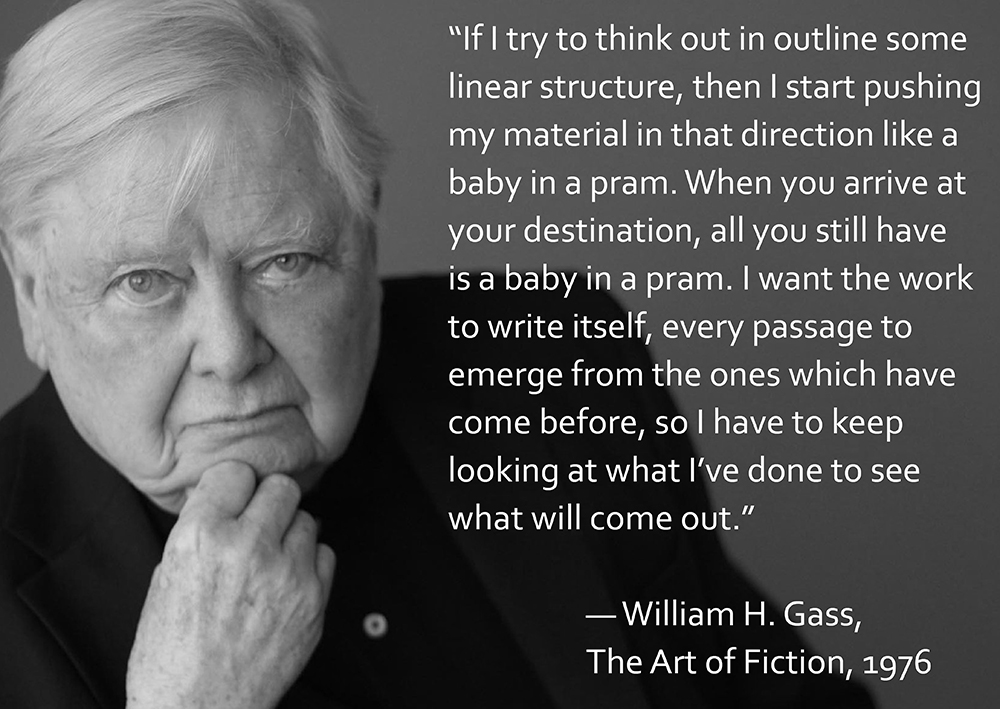
The similarities became troubling for readers and reviewers because Kohler is, well, not nice. In fact, he’s something of a monster. He is mean-spirited toward essentially everyone who has the misfortune of inhabiting his sphere, and he’s downright hateful to his wife, Martha, whom he thinks of as a “guard” that is confining him within the prison of his unhappiness. She has become essentially a non-person to him: “Martha’s face fades as her torso solidifies, her Aryan blood surfacing like lard. I work on her features, but I’ve forgotten what they are[.…] Without a mouth she’ll still talk back, from her crack like as not” (150-51). Worst of all, Kohler’s scholarly work on the Nazis appears more sympathetic toward them than many would like, including the administrators at his university (“those shit-resembling administrators,” he calls them) who overlook him for promotion because they consider him a “Nazi-nuzzler” (133). If Kohler seems to have a soft spot for Nazis and refers flippantly to the Holocaust, he must therefore be anti-Semitic; and if Kohler is an avatar for Gass himself, then the author, too, must be … so went the logic.
Gass anticipated readers who didn’t know how to read well would conflate the persona of the protagonist with the person of the author: “The resemblances between myself and my narrator are wholly trivial, I think, but I did emphasize them in order to test the reader’s sophistication (a test many reviewers failed). […] Unfriendly reviewers delight in the opportunity to clothe me in Kohler’s rags.” Against such charges, Gass pushed back, saying, “[T]he record will show, I believe, that I do not belong in Kohler’s camp” (Ziegler, “WHG in Germany” 116). (You will find the Works Cited at project site.)
The distinction between the author and his creation is a vital one to make as we attempt to read The Tunnel afresh in 2020, on its twenty-fifth anniversary.
[End excerpt]
As you will see in today’s talk, The Tunnel remains a special focus of Gass scholarship and appreciation. In light of that I will also call your attention to another of my contributions to the website: “The Tunnel: A Chronology & Bibliography,” (link) which documents Gass’s progress from its conception in 1966 to its publication in 1995 and beyond. The novel has a complicated publishing history, and my hope is that I will save scholars time and trouble tracking when attempting to piece together and track down the scattered excerpts of The Tunnel. As a writer myself, I always found it interesting that Gass seemed to have concept of how long the writing of the novel would take; so I’ve included quotes from Gass over time as he continued to reassess where he was in the process. Even from the start, completion of the novel always seemed to him a few years away. A complimentary piece at the website is Joel Minor’s “The Tunnel: A Survey of Published Excerpts,” [link] which takes a more scholarly, strictly bibliographic approach to the same sort of information I provide in my “Chronology & Bibliography.”
Let me return to 2024 … or rather December 2023, which is when I posted my first “William H. Gass at 100: A Reading Journal,” [link] in which I describe how I first encountered Gass via his novella (or long story) “In the Heart of the Heart of the Country.” I begin by saying, “As a Gass scholar and devotee (disciple isn’t too strong of a word), I have various projects in the works to mark the Master’s 100th year — all part of my ‘preaching the Gass-pel,’ an evangelism I embarked on more than a decade ago. No doubt I will use this forum to talk about some of those Gass Centenary projects, which tend to be formal and scholarly. It occurred to me that I also wanted to do something less formal, and more personal. It is not an overstatement to say that William H. Gass changed my life. His writing, his theories, his example as torchbearer in the cause of literature: everything has impacted me in ways that I can name and, doubtless, in ways that I cannot.”

My intention was to post a new reading journal, including a new video, periodically throughout 2024. It didn’t quite workout that way (as I feared). I included my various contributions to the Gass Centenary as journal entries, although that isn’t what I had in mind back in December 2023. One such contribution was my paper delivered here a year ago: “William H. Gass at 100: Looking Forward, Looking Backward” [link], which focuses mainly on the backward part as I provide a biography of Gass and his most notable works for the majority of the paper. Sadly, I’ve discovered that Gass is not especially well known, even in literary circles, so describing his career and achievements is necessary.
After the Louisville Conference paper, the next significant event was a panel at the American Literature Association Conference in Chicago in May 2024. In the panel, Joel Minor presented his Tunnel bibliography from thetunnelat25.com project; Ali Chetwynd (American University of Iraq, Sulaimani) presented “Literary Theory Teaching: Founded on William Gass”; and I presented “Let Us Now Praise William Gass’s Greatest Work – And It’s Not the One You Think” [link]. While I am, of course, a fan of The Tunnel, and I’ve presented several papers and published a few on Gass’s magnum opus, I don’t believe it was the most masterful of the master’s work. Rather, artistically, I feel that Cartesian Sonata and Other Novellas represents the pinnacle of his literary achievements. I’ll share the final paragraphs of that paper:
[Begin excerpt]
Though my catalog is incomplete, I’ll end where I began, with The (large, loose, baggie) Tunnel. Gass’s ambitions for the novel were epic, and it took him far longer—far longer—to write than he anticipated. He imagined, maybe, three years or so … let’s say, then, a publication date around 1970. But time marched on and the Master aged along with his aim for the book. He had about 600 manuscript pages in hand when, in 1991 (age 67), he went for an extended stay at The Getty Center in Santa Monica to devote himself fully to finishing the legendary book. Working into 1992, he doubled the size of the novel, completing it at about 1,200 manuscript pages. Begun in the sunny summer of literary postmodernism, the first half of the book displays many of the tropes and tricks that interested Gass in the 1960s and 70s—it resembles in many ways Gass’s wildly experimental novella Willie Masters’ Lonesome Wife (1968)—an experiment that Gass himself deemed a failure in retrospect.5 Though The Tunnel doesn’t quite conform to the chronology of its composition, the latter half doesn’t display the same fondness for postmodern play as the beginning sections do. Released at last in 1995, it was as if the postmodern novel had arrived at the party after practically all the guests had collected their coats and gone home to sleep it off.
Perhaps Gass wittily but unwittingly anticipated the fate of The Tunnel when he wrote the preface to In the Heart of the Heart of the Country (revised 1981):
“I write down these dates, now, and gaze across these temporal gaps with a kind of dumb wonder … hodge against podge, like those cathedrals which have Baroque porches, Gothic naves, and Romanesque crypts; time passed, then passed again, bishops and princes lost interest; funds ran out; men died; … and because they were put in service while they were still being built, the pavement was gone, the pillars in a state of lurch, by the time the dome was ready for its gilt or the tower for its tolling bell …” (xxxii).
We still ought to attend service in William Gass’s great cathedral, but our warmest words of worship should be reserved for Cartesian Sonata and Other Novellas.
[End excerpt]
Gass was born in Fargo, North Dakota, though he moved from there to Warren, Ohio, when still a baby. Nevertheless connections to North Dakota remained, and I attempted to organize some sort of event or conference in Fargo or nearby in the summer of 2024, ideally around Gass’s birthday, July 30. Unfortunately no one locally seemed to have the time or money or interest. Perhaps one day I’ll resume my efforts. Therefore, the next significant event was at Washington University in St. Louis October 3, “William H. Gass Centenary Celebration” [link]. The main event was a panel discussion that I had the honor of moderating. It included Patrick Davis (Unbound Press), Michelle Komie (Princeton University Press), and Gerhild Williams (Washington University German Department, retired). Much of the informal discussion focused on Gass’s founding and directing of the International Writers Center (1990-2000).
One of the more intriguing revelations from the panel discussion was that Patrick Davis, of Unbound Press, plans to republish The Tunnel in the form that Gass always had in mind: a loose collection of about 1,200 manuscript pages, and stuffed with things like paper bags, business cards, and crossword puzzles. Its publication may coincide with the novel’s 35th anniversary. I hope that it comes to pass.
Interest in Gass’s work persists, if not as robustly as enthusiasts like me would prefer. Last year I was contacted by Apostolis Pritsas, who was translating Cartesian Sonata and Other Novellas into Greek, and he requested my informal consultation. I was happy to do it, and we exchanged a few emails over the summer and fall. The two novellas that generated the most questions were “Cartesian Sonata” and “Emma Enters a Sentence of Elizabeth Bishop’s”—both highly experimental works in terms of structure and narrative chronology. The Greek edition is slated for an early March release. Meanwhile, a Spanish-language edition of Cartesian Sonata appeared [link], which changes the order of the novellas, totally undercutting Gass’s concept of the collection.
Finally, I plan to edit, contribute to, and publish William H. Gass at 100: Essays later this year. Contributions include the following: “‘Inward Toward the Other’: The Dancing Minds of William H. Gass and Toni Morrison” by Jose Miguel Alvarado Mendoza; “In Search of William Gass” by Zachary Fine; “William Gass and the Power of Baroque Fictionality” by Yonina Hoffman; “The Meta-Novel as a Container of Self-Consciousness: Linguistic Order and Fascism of the Heart in William H. Gass’s The Tunnel” by Abbie Saunders; “Broken Windows and Dirty Mirrors: Metaphor and Mind in The Tunnel” by Jonathan Moreland; “Defying Form” by Nathan King; “To Create or Capture Consciousness: Reconsidering William H. Gass as ‘The Father of Metafiction’” by Alex Lanz; and “Medium-Specific Foundations: Teaching Literary Theory Across the Gass-Axis” by Ali Chetwynd.
I will draw from several of my Gass conference papers to put together a constellation of pieces, and I also will include a selection of Gass’s photographs. He was a serious photographer, but that aspect of his artistic life has received little attention.
Popular Fiction – An Historical Perspective
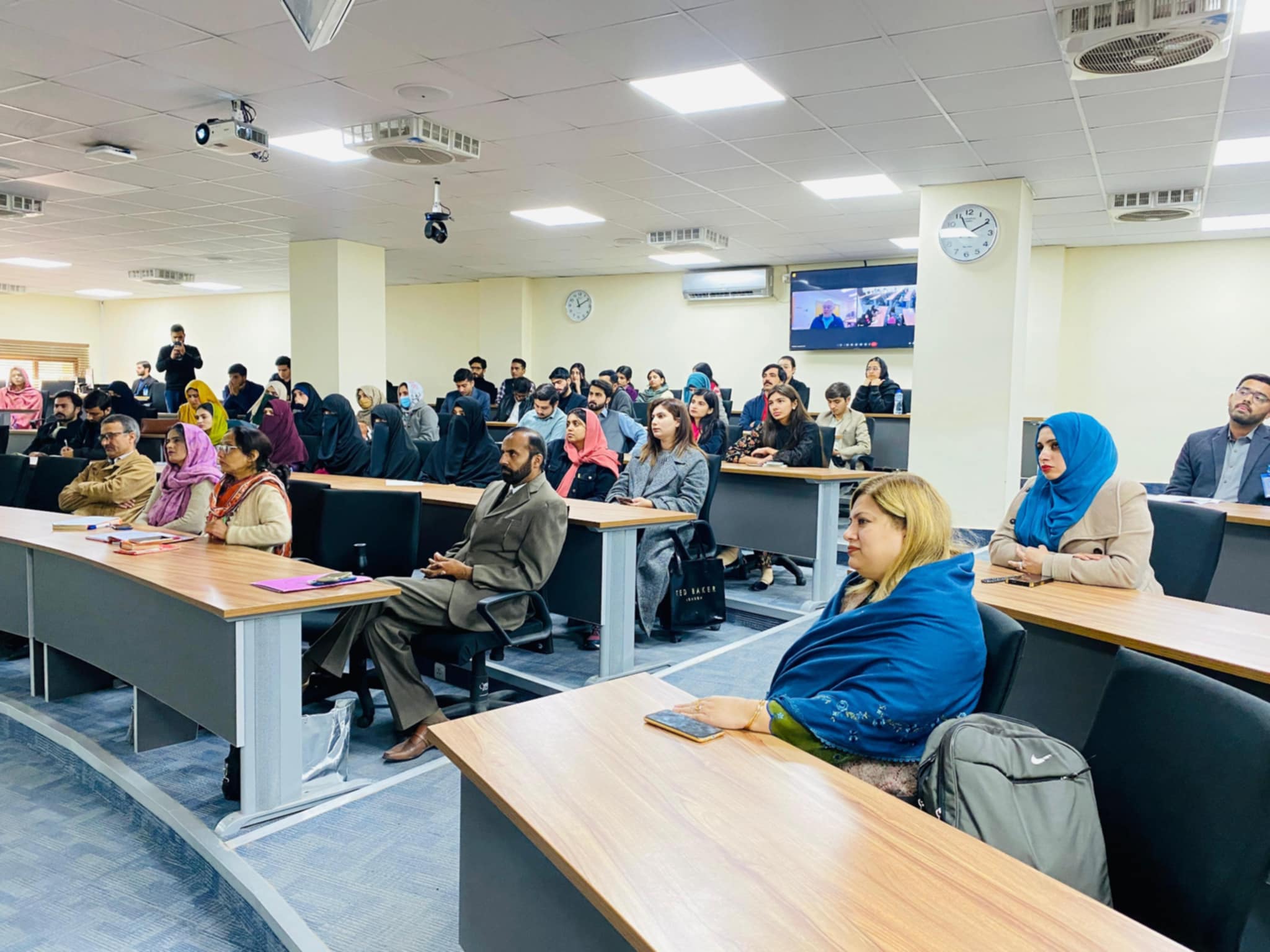
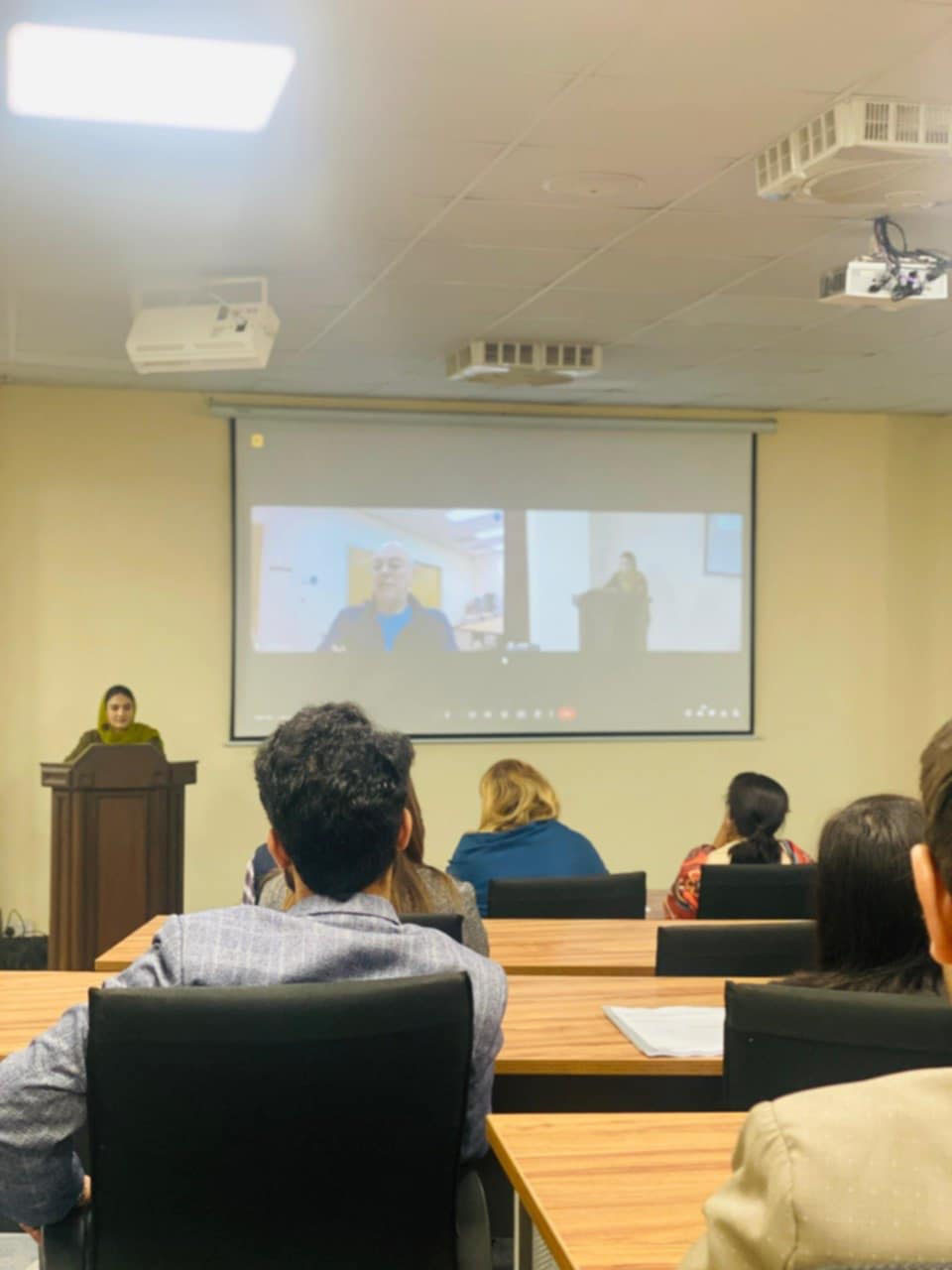
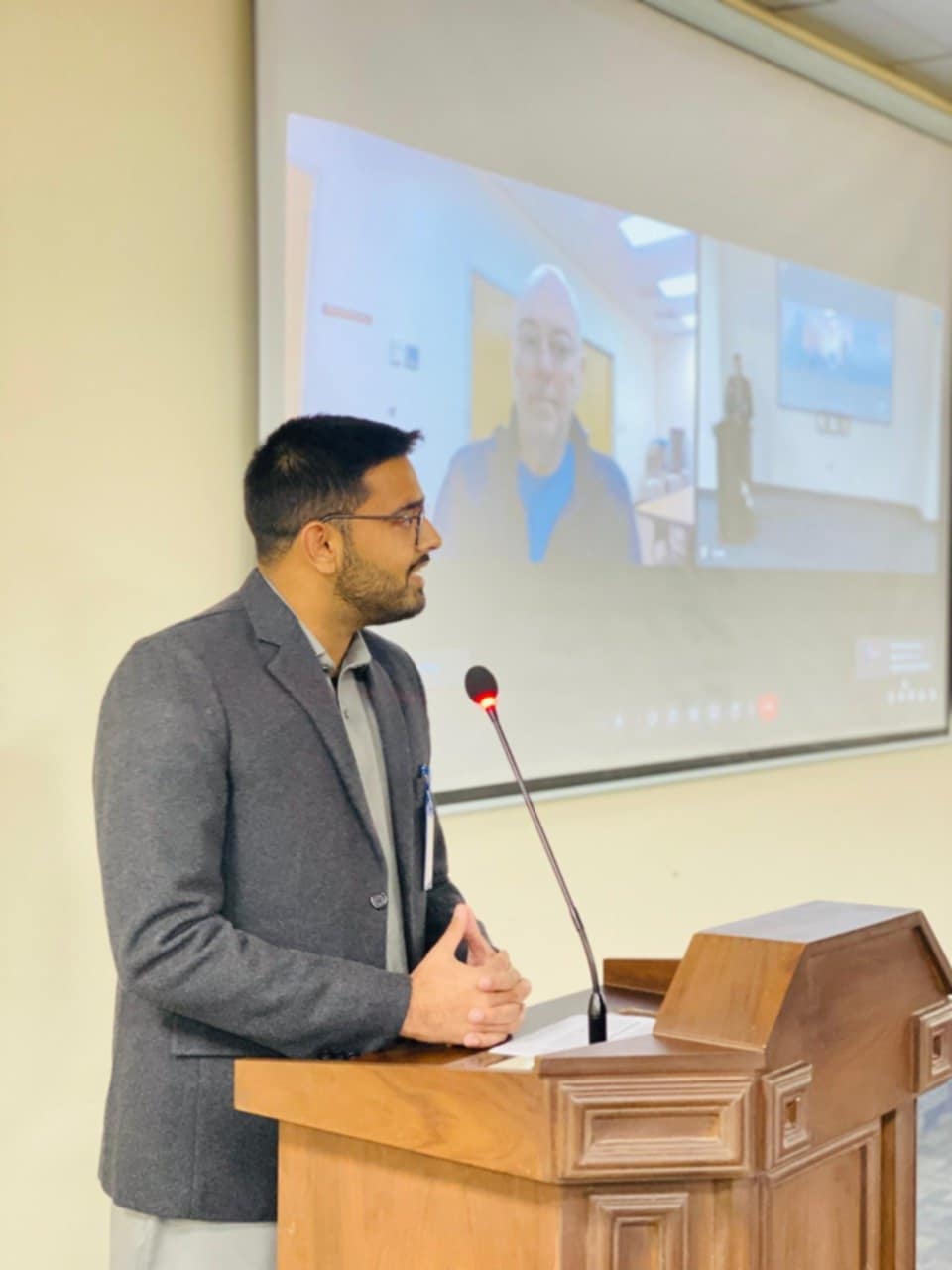
(The following lecture was presented remotely to students and faculty at the National University of Modern Languages, Islamabad, Pakistan, on February 12, 2025. It was at the invitation of and organized by Ms. Ambrina Qayyum, Dr. Amina Ghazanfar, and Ms. Farihatulaen Rizvi; with student organizers Moazzam Ali and Minha Iman.)

I begin with a quotation:
“Persons attempting to find a motive in this narrative will be prosecuted; persons attempting to find a moral in it will be banished; persons attempting to find a plot in it will be shot.” – the “Notice” that appears on the title page of Adventures of Huckleberry Finn, by Mark Twain (1884), considered by many the quintessential American novel. As you may know, Adventures of Huckleberry Finn is a picaresque novel narrated by the title character, Huck, who is about 13 years old. Huck and the escaped slave Jim travel down the Mississippi River on a raft, having a series of adventures along the way. I feel like beginning with this quotation is appropriate to our purposes here because the Notice seems to be the author’s warning to the reader not to take the book too seriously. Its purpose is entertainment, and thinking about loftier things, like the novel’s meaning, will not be tolerated. Mark Twain, whose real name was Samuel Clemens, was a master storyteller and satirist. So how serious was Clemens in his Notice? Did he truly not want readers to search for motive, moral, and plot in his book? If there was some sincerity to his Notice, it may have been because he anticipated that Huckleberry Finn would be a highly controversial book.
Sincere or not, his Notice was disregarded, and Adventures of Huckleberry Finn has been one of the most studied and discussed novels in American (and world) literature. And in spite of the seriousness that readers have found in the text, it became a fabulously popular novel and contributed to Mark Twain (aka, Samuel Clemens) becoming the most popular author in the U.S. by the end of the nineteenth century.
Let me leave Samuel Clemens and Huckleberry Finn for now.
I’ve been asked to speak on “popular fiction,” and I agreed even though at the time I realized the term was malleable in my mind. That is, I wasn’t completely sure what the term even meant. In the last month or so I’ve been looking into the topic – browsing the internet, reading articles, giving it some quasi-serious thought – and I can say with confidence that I’m still not sure what it means. I have, however, stumbled across a lot of interesting ideas associated with the concept of “popular fiction,” so I’ll share them with you (in the hope that you’ll find them interesting too). What is more, largely due to my roles as a writer and publisher, but also as a teacher of writing, I’ve been interested in the history of the publishing industry (in the West, and in particular the United States), and I’ve presented some conference papers on the topic. I will draw from these as well.
Let me begin with some assumptions and/or questions that first came to mind when considering this topic:
What do we mean by popular?
What is the measuring stick for determining popularity?
That is, how popular does a novel have to be to be considered “popular fiction”?
Can a novel be “popular fiction” without actually being popular?
Is popular code, or a kind of euphemism, for bad?
Is the previous question elitist?
How do we determine good versus bad fiction?
For that matter, who determines it?
If popular does mean bad fiction, what is the term for good fiction?
Again, how do we judge?
Again, who judges?
And if the fiction is so darn good, why isn’t it popular?
When did the idea of a book being a “bestseller” begin?
How is bestselling determined?
Ok, I’ll stop there for now. Let’s begin to consider these questions.
From one perspective, popular fiction is fiction (probably in the form of novels) that is read by a lot of people in a given culture. A book gains the label “popular fiction” by attracting a significant number of readers. From this perspective, books are not published as “popular fiction,” but they may become popular over time. Nowadays we call such books “bestsellers,” but that itself is a nebulous term. Quite honestly, until I started researching for this talk I didn’t know much about how a book (or an author) earns the epithet “bestselling.” For the last quarter century I’ve also worked as a librarian, and every week we add new titles to our shelves that are said to be bestsellers or by bestselling authors—books and authors, oftentimes, I’ve never heard of, which suggests that the standard for determining bestselling is fairly low. Low, of course, is relative, but my research has determined that the standard is both nonstandard and mysterious. What I mean by nonstandard is that different organizations will disseminate “bestseller” lists, and each will use its own criteria. In the U.S., we tend to think of The New York Times newspaper and its The New York Times Book Review as the arbiter of bestseller status, but, really, there are many bestsellers lists: Publishers Weekly, USA Today and Indiebound are among the more common publications that provide lists of bestsellers. Moreover, booksellers, like Amazon and Barnes and Noble, will put out their own lists of bestsellers. Complicating things further is the fact that each will put out multiple lists, based on categories of books and types of book (hardback versus paperback versus ebook).
Each entity and each list generated will have its own criteria for determining bestseller status. They’re all based on sales, kind of, but on data that comes from a wide variety of sources. I say “kind of” because the sales data can be rather fluid and open to interpretation, so that, in some lists more than others, the accolade of “bestseller” may be as much subjective impression as empirical conclusion. (Indiebound, for example, tends to rely more on booksellers’ hunches than actual hard sales figures.) Another nonstandard element is sales period. One list may be based on a week’s worth of sales, Monday to Sunday, say, (reported from here versus there), while another list considers data drawn from a different period of time, longer or shorter, or simply a different bracketing of time.
Even though numbers have nebulous meanings, for a frame of reference let’s look at The New York Times bestseller list. To make the list in a given week, a novel must sell between 1,000 and 10,000 copies. However, such sales do not guarantee inclusion on the list because it also depends on other factors, like the total number of books that achieve those sales figures for a single week. Earlier I said the standards were both nonstandard and mysterious; here is where the mystery comes in. The New York Times won’t reveal precisely how they determine the bestseller lists. Sales are an important factor, but there are others that are closely held secrets. Allegedly even the editors of The NYT Book Review aren’t privy to the exact methodology. Their secrecy, they say, is partly in an effort to prevent people from manipulating the system. Nevertheless, people (like authors, agents and publishers) do try to manipulate the system, and if the NYT suspects such manipulation they’ll mark a title on the list as suspicious, printing a dagger symbol next to it.
Another aspect of popularity is the number of weeks that a book remains on the bestseller list. About a quarter of novels make the NYT list for a single week. Incidentally, it seems the idea of a bestsellers list, as we think of it, began in 1895 with the New York-based journal The Bookman. The New York Times began publishing its list in 1936 (based only on New York City sales). The list, resembling its current form, became established by the 1950s.
I said that people will try to manipulate the bestseller lists, and the reason for that is that appearing on a bestseller list can be a major boon for sales, especially for “new” and little-known authors. So, appearing on a bestseller list reflects some level of popularity, and it further promotes popularity. Said differently, bestsellers sales are self-perpetuating. [In addition to Wikipedia entries, information for these last few paragraphs was taken from “The Convoluted World of Best-Seller Lists, Explained” by Constance Grady.]
In recent years another route to popularity has emerged, namely social media. I would like to speak to this phenomenon, but I find such a discussion will have to wait for another occasion.
For now, let’s shift our perspective on the term “popular fiction,” away from a status based (obliquely) on sales, to a term we use to describe a kind of fiction. One can find many definitions of popular fiction as a kind of writing. I like Britannica.com’s definition:
“[S]ome common attributes of popular literature have been defined. First, it is crafted primarily to entertain the reader, as entertainment is a quality that attracts and appeals to a wide audience. To promote a pleasurable reading experience, works of popular fiction are usually written in a simple and straightforward style. They are largely plot-driven, rather than character-driven, and adhere to conventional narrative structures. As such, they are intended less to provoke deep reflection or aesthetic appreciation than to be read casually and quickly. Books that are successful at this aim, especially through their employment of techniques that stimulate readers’ interest and compel them to continue reading, are praised as ‘page-turners.’”
Popular fiction tends toward escapism rather than self-reflection. That is, readers of popular fiction often want to be distracted from their cares and concerns, not prompted to think deeply about them. As a consequence, popular fiction frequently falls into various genre categories: romance, Western, science fiction, mysteries, so-called “chic lit.” All in all, popular fiction is written to be accessible to the average reader. Literary fiction, meanwhile, (sometimes just called “literature” among other synonyms) tends to require more of the reader: more careful attention, more time, more cognitive effort, a broader working vocabulary.
Nowadays, we tend to think of a wide schism between popular fiction and literary fiction. Writers must be either fish or fowl. Indeed, many earlier texts—let’s say, pre-twentieth century—are studied today because of their seriousness; that is, their author’s attention to significant issues, and the book’s facilitation of meaningful analysis and discourse. Whether it’s Mary Shelley’s meditations on society and the individual, Jane Austen’s examination of unequal inheritance laws, Charles Dickens’s depiction of the mechanisms of poverty, Charlotte Brontë’s proto-feminism, or Joseph Conrad’s indictment of colonialism—the writers and their works were unquestionably popular. That is, they sold well, were widely reviewed, and frequently discussed across social strata.
These writers, of course, benefited from the popularity of reading in general. Authors competed with playwrights (who often adapted authors’ works to the stage, without necessarily paying for the privilege), but reading for pleasure was a major pastime for both men and women, across socioeconomic lines. Periodicals were hugely popular. These were newspapers and magazines that printed stories and excerpts from novels and sold them quite inexpensively. It was common practice for a novel to appear in a periodical serially, and then later be brought together for book publication. Serialization didn’t seem to negatively impact eventual book sales. One can find examples of authors or publishers shying away from periodical publication to begin with for fear of it diminishing the sales potential of the book version. Nevertheless, serialization was an effective way for the reading public to become familiar with an author and their work.
Charles Dickens’s The Pickwick Papers (1836) is often cited as the work that popularized the approach of serialization, first, followed by the book publication. Throughout the nineteenth century and well into the twentieth, magazine publication (either of serial installments of a longer work, or stand-alone stories) was the vehicle that brought mass popularity to authors. Popularity gained through magazine publication was not limited to England, where authors like Wilkie Collins, Elizabeth Gaskell, William Thackeray, Anthony Trollope, and Arthur Conan Doyle thrived. In France, a notable example is Alexander Dumas, whose The Three Muskateers (1844) and The Count of Monte Cristo (1844-1846) were widely read serials. Another would be Gustave Flaubert and his serial publication of Madame Bovary (1856). In Russia, both Leo Tolstoy and Fyodor Dostoevsky found readers via the serialization of Anna Karenina (1875-1877), and The Brothers Karamazov (1879-1880), respectively. In the U.S., publishers were quick to follow Dickens’s example, and many writers found popularity via magazine publication and serialization, among them Harriet Beecher Stowe, Henry James, and Herman Melville. Across Europe and into Asia and Australia, having their work appear in magazines was vital for authors achieving popularity.
Obviously not everything published in this time period combined popularity with serious literary merit. For that matter, it’s difficult to know how serious authors were when writing the books that became popular. Their literary quality—and their ability to generate in-depth study and discourse—may be in part due to our projections. That is, we recognize the significance of their work when they, perhaps, did not. They were merely trying to tell an entertaining tale, but because of the milieu in which they were writing, and their own inherent insightfulness, they wove into the telling significant issues. I think, for example, of a writer like Jane Austen and her series of drawing-room romances, like Sense and Sensibility (1811), and Pride and Prejudice (1813), where the plots mainly center on the marriageability of young women without financial means. They are in some ways extensions of Samuel Richardson’s rather vapid Pamela (1740) and Clarissa (1748). Yet Austen also examines the unequal roles of men and women in marriage, the unfairness of English law when it came to inheritance and gender, the hypocrisy of the Church, and myriad other significant issues, including family dynamics and the interrelationships of siblings.
From almost precisely the same period, an antithetical example would be Mary Shelley’s Frankenstein (1818). On the one hand, it is a fantastical Gothic tale about a creature who has been constructed from body parts, both human and animal, brought to life, then left to fend for himself in a harsh and unsympathetic world. From the start of its composition, however, the teenage author saw the potential for her novel to be so much more than a sensational page-turner. Throughout she alludes to numerous books—which she had thoroughly digested, often in their original language and not in translation—regarding science, history, geography, philosophy, religion, and ethics. Like all authors I suppose, Mary Shelley hoped that her book would be popular, but she did not expect it. She and her husband, Percy Shelley, and their children left for the Continent before Frankenstein was published, and Mary was quite surprised several months later when she heard, while in Italy, that her strange book was the talk of London. It has never been out of print.
What all of these pre-twentieth-century books—the merely popular and the popular while also being serious—have in common is accessibility. That is, they are highly readable regardless of one’s educational background. Frankenstein, for all the complex issues that it raises, remains a novel that can be read and understood by practically anyone who is functionally literate. Whether they recognize the complex issues in the book and whether they consider them deeply, those are other matters.
It is worth noting that there were authors in the nineteenth century who became canonized in academic circles, but they were not especially accessible in their day. Nor, then, were they popular. Two well-known examples are Nathaniel Hawthorne and his friend and neighbor Herman Melville. Both are considered giants of the nineteenth century, and for much of the twentieth century they were staples on high school and college syllabi in the U.S. Hawthorne—famous now for such novels as The Scarlet Letter and The House of the Seven Gables—was frustrated and perplexed by his slow book sales. Meanwhile, authors whom he considered inferior enjoyed wide popularity. He was especially annoyed by the status enjoyed by Henry Wadsworth Longfellow, someone he knew in their younger days as a fellow student at Bowdoin College. To compare, 10,000 copies of The Scarlet Letter were printed, and during Hawthorne’s lifetime only 7,800 copies were sold. Meanwhile, Longfellow’s poem The Song of Hiawatha sold 50,000 copies in its first year, 1857. It was just one of Longfellow’s highly popular publications. It’s estimated that during his lifetime, Longfellow wrote more than 20,000 letters in response to the fan mail that he received. (One close friend speculated that Longfellow’s dedication to responding to his fans led to exhaustion and a too-early grave.) [For this section, I relied on various Wikipedia entries as well as the article by Lauren Gatti “Seriously Popular: Rethinking 19th-Century American Literature through the Teaching of Popular Fiction,” published in The English Journal, vol. 100, no. 5, 2011, pp. 47–53, available via JSTOR.]

Hawthorne’s friend and neighbor, Melville, is another interesting case when discussing authorial popularity. Melville’s first novels were page-turning sea adventures, based on his real-life adventures as a seaman. However, he longed to write something more complex, more artistic, even though he knew such a book wouldn’t be popular. In a famous letter to Hawthorne (May 1851), Melville spelled out his dilemma: “Dollars damn me … What I feel most moved to write [Moby Dick], that is banned,—it will not pay. Yet, altogether, write the other way I cannot. So the product is a hash, and all my books are botches.” In other words, writing simple sea adventures was profitable but they bored him; instead, he wanted to write a book that was much more complex and artistically challenging, even though it likely wouldn’t sell. In the end, he chose artistic satisfaction over popularity. There were 3,000 copies of Moby Dick printed, and copies were left unsold forty years later at Melville’s death. Both Hawthorne and Melville had to support their families by taking low-paying government jobs.
In retrospect, we can see that writers like Hawthorne and (especially) Melville were ahead of their time. A novel like Moby Dick has much more in common with the modernist experimental books produced seventy years later by James Joyce, T.S. Eliot, Virginia Woolf, and D.H. Lawrence. In fact, Moby Dick was essentially rediscovered in the 1920s (thirty years after its author’s death), which led to its becoming a classic and a staple on college syllabi by the 1950s. Hawthorne and his works were also canonized in the twentieth century, while Longfellow and other popular writers of the nineteenth century became marginalized in the academy.
So, if depth of thought and the poetic quality of the language do not lead to popularity, what is the key? I’ve already used the word several times: accessibility. In essence, a book has to be easily comprehensible for it to be widely read and have the potential to become a bestseller. In other words, to become “popular fiction” a book must be written in the style of “popular fiction.” To cement this idea, let me repeat Britannica’s definition: “First, it is crafted primarily to entertain the reader, as entertainment is a quality that attracts and appeals to a wide audience. To promote a pleasurable reading experience, works of popular fiction are usually written in a simple and straightforward style. They are largely plot-driven, rather than character-driven, and adhere to conventional narrative structures. As such, they are intended less to provoke deep reflection or aesthetic appreciation than to be read casually and quickly. Books that are successful at this aim, especially through their employment of techniques that stimulate readers’ interest and compel them to continue reading, are praised as ‘page-turners.’”
I began this talk with a reference to Mark Twain and Adventures of Huckleberry Finn, published in 1884, a novel that has the patina of a simple tale of adventure, perhaps even one for younger readers, but in fact is packed with serious and controversial ideas, especially regarding the institution of slavery (which had been abolished two decades before, but its aftermath was still very much a part of American society … as, sadly, it is today). It is a gross overgeneralization, but we could think of Huckleberry Finn as a kind of temporal marker: a delineation between a time when authors could be both serious and popular, and a time when authors had to choose between the two. Herman Melville’s conundrum of the 1850s (to write Moby Dick and forfeit his growing popularity, or not) foreshadowed the dilemma that increasing numbers of writers would face in the twentieth century and beyond: To be either a writer of popular fiction (read by the masses) or to be a writer of serious fiction (read mainly in academic circles)?
The so-called modernist writers who began publishing after the First World War—Pound, Eliot, Stein, Woolf, Joyce, Forster, Lawrence, et al.—were rejecting accessibility for deeper (especially psychological) meaning. They were grappling with the horrors of the War and developing styles of narration and poetics that responded to both personal and cultural trauma. While the modernists may not have been bestselling authors, they were known and therefore influential. Some of their less challenging work (especially stories and individual poems) appeared in popular magazines (while their more challenging work came out in literary journals, including via serialization—all three of James Joyce’s high-modernist novels, A Portrait of the Artist as a Young Man, Ulysses, and Finnegans Wake, were first published serially). But even if people weren’t reading Joyce, Stein, Woolf, etc., they knew who they were and what kind of writing they were doing because the popular press closely covered the modernist movement. As an example, when Gertrude Stein, one of the least comprehensible modernists, returned to the United States after a self-imposed thirty-year exile in France, she was met by a group of reporters at the New York City docks, and lights in Times Square announced “Gertrude Stein Has Arrived.” Next to no one in the U.S. had actually read Stein’s highly experimental work (and even fewer understood it), yet she had gained celebrity status among the general public. Stein was, in a word, popular. I must acknowledge that the previous year, 1933, Stein had published The Autobiography of Alice B. Toklas, which was by far her most readable book, and its accessibility and popularity contributed to her surprisingly warm welcome home.
During this period, while writers like Stein, Joyce and Eliot prided themselves on the difficulty of their texts, there were many writers who sought both kinds of attention. They thought of themselves as serious literary artists, but they also wanted to be widely read (and well paid). There could be many examples, of course, but two that come to mind are Ernest Hemingway and F. Scott Fitzgerald. Though they had very different personalities, they took similar approaches to achieving both popularity and respect from the high-literary establishment. Again, I oversimplify, but Hemingway saw his short fiction and his novels as products of his highest literary aspirations; while his nonfiction, especially his journalism and newspaper reporting, helped to fund his adventurous lifestyle. Similarly, Fitzgerald devoted great time and energy to his novels, wanting them to be as complex and as literary as possible, but at the same time he churned out one lackluster short story after another to sell to magazines and support his dizzyingly wild lifestyle (his and his wife Zelda’s).
Writers like Hemingway and Fitzgerald were able to aim for both kinds of writing—popular and serious—because the periodical industry was still thriving in the U.S. and elsewhere. Allow me to share a quote from Theodore Peterson’s Magazines in the Twentieth Century (University of Illinois Press, 1956):
“Despite pessimistic forecasts from time to time … magazines had a tremendous growth between 1900 and 1955. The number of magazine readers increased remarkably. When Frank Munsey brought out his Mimsey’s Magazine in 1893, he later estimated, there were about 250,000 magazine purchasers in the United States. By 1899, the ten-cent magazine, he further estimated, had increased the number to 750,000. In 1947, in its nationwide audience study, the Magazine Advertising Bureau found 32,300,000 magazine reading families—those in which members could identify specific items from recent issues. The number of individual magazines also increased; there were well over a thousand more magazines in the United States in 1955 than in 1900. The aggregate circulation of all magazines in the United States mounted steadily, and the sales of individual publications soared from thousands to millions. In 1900 there seems to have been no magazine with a circulation of a million; in 1955 there were at least forty-six general and farm magazines with circulations of one million or more, and one of them had a circulation of more than ten million for its domestic edition alone.”
While not all of these magazines published short fiction, I will risk saying that the majority did. Many, in fact, specialized in publishing fiction in the form of short stories and serialized novels. Moreover, they paid writers well. Let me quote from my introduction to Delta of Cassiopeia (which is available online at Twelve Winters Miscellany):
“There had been a Golden Age of magazine publication for much of the twentieth century, when fiction writers could make a good living selling stories to magazines. In the 1920s, F. Scott Fitzgerald and Zelda lived their legendary high life almost solely from Fitz’s short stories, which could fetch as much as $4,000 each (nearly $60,000 in 2023 money). It’s estimated that during the 1920s and 30s Fitzgerald made almost a quarter of a million dollars from 164 magazine stories (more than $3.25 million today). A generation later, in the 1950s, Kurt Vonnegut Jr. sold four stories to magazines in the course of about eighteen months, allowing him to quit his job in the marketing department at General Electric and devote himself fully to writing. At the time, Vonnegut was supporting a wife [who didn’t work] and six children.”
I continue from my introduction:
“By the 1960s, however, television had begun turning the Golden Age into lead. And by the time I started to write effectively enough to publish, the Golden Age was a rapidly receding memory. In sum, television had superseded book reading as a popular pastime, and nationally distributed magazines had either severely cut back or eliminated space for short stories altogether, thus closing a crucial avenue for new writers to build an audience—let alone make a living.”
From then on it’s been a succession of inventions and developments that have made reading books a lower and lower priority for mass culture: the microcomputer (1980s); the internet and World Wide Web (1990s-2000s); social media and streaming services (2000s-present). Concurrent with these technological arrivals, the publishing industry was consolidated into a handful of multinational entertainment conglomerates. Here I’ll draw from my paper “The Loss of the Literary Voice and Its Consequences” (available at tedmorrissey.blog):
“[T]he corporate takeover of the publishing industry … was largely undocumented when André Schiffrin wrote The Business of Books (2000). ‘In Europe and in America,’ writes Schiffrin, ‘publishing has a long tradition as an intellectually and politically engaged profession. Publishers have always prided themselves on their ability to balance the imperative of making money with that of issuing worthwhile books.’ However, in the turbulent sixties, large conglomerates began acquiring publishing houses. Schiffrin continues, ‘It is now increasingly the case that the owner’s only interest is in making money and as much as possible’ (emphasis in original). Schiffrin’s study is wide-ranging and thorough, but he focuses particular attention on the demise of Pantheon, where he’d been managing director for a number of years when it was acquired by Random House, which in turn was purchased by media mogul S. I. Newhouse, who inevitably insisted on changes to try to increase profits, unreasonably and unrealistically so, according to Schiffrin: ‘As one publishing house after another has been taken over by conglomerates, the owners insist that their new book arm bring in the kind of revenue their newspapers, cable television networks, and films do. … New targets have therefore been set in the range of 12-15 percent, three to four times what publishing houses have made in the past.’”
The only way for these remaining commercial publishers to achieve the sort of profits that are expected by their parent companies (and the companies’ shareholders) is to only publish fiction that has the potential to become popular. In other words, it must be easily accessible to the small percentage of the public that continues to read fiction. The internet is full of statistics that highlight the rapid decline of reading (and therefore in people’s ability to read well). One reliable source in the U.S. is the National Endowment for the Arts. NEA’s report from October 2024 said that in its most-recent surveyed year, 2022, just over a third of American adults reported reading a novel or a short story in the previous year. Let me emphasize: a novel or a short story, singular. And practically every survey from practically every organization confirms a downward trend over several decades. Test Prep Insight published a less thorough but even more recent report (January 2025) that confirms this same kind of decline in reading. The report cites several factors:
- The fast pace of the modern world: With the demands of work, family, and social obligations, many people feel they simply don’t have time to read.
- The rise of digital media: In our constantly connected world, it’s easy to get your news and entertainment from sources other than books.
- The cost of books: Books can be expensive, especially if you’re buying them new. Used books are a cheaper option, but many people simply don’t have the time to hunt for them.
- The declining popularity of reading: As fewer people read, it becomes less socially acceptable to do so. This can create a vicious cycle that leads to even fewer people reading.
So what does all this mean in terms of our topic, “popular fiction”? For one thing, in the West at least, there are fewer and fewer authors who can achieve popularity. Also, for those writers who desire mass appeal, they must make sure their books are easily accessible (that is, as easy to read and comprehend as possible).
There are many interesting issues associated with the idea of fiction’s popularity, like the following:
How has social media, especially TikTok, impacted popular fiction?
How do contemporary authors navigate writing for popularity versus writing for artistic satisfaction?
Why, in the U.S., are we seeing an explosion in creative writing programs at universities (and an explosion in the number of creative writers) during the same period that we see a steady decrease in the number of readers?
How do factors like the age and gender of readers affect what books are being published by the few remaining commercial publishers?
I will have to leave these and other questions unanswered for now.
In the Heart of the Heart of William Gass Country
For me 2024 marks a special year: the centenary of William H. Gass (1924-2017). As a Gass scholar and devotee (disciple isn’t too strong of a word), I have various projects in the works to mark the Master’s 100th year — all part of my “preaching the Gass-pel,” an evangelism I embarked on more than a decade ago. No doubt I will use this forum to talk about some of those Gass Centenary projects, which tend to be formal and scholarly. It occurred to me that I also wanted to do something less formal, and more personal. It is not an overstatement to say that William H. Gass changed my life. His writing, his theories, his example as torchbearer in the cause of literature: everything has impacted me in ways that I can name and, doubtless, in ways that I cannot.
Thus, “William H. Gass at 100: A Reading Journal.”
My intention is that throughout 2024 I will post to my blog impressions and musings regarding Gass’s works and words: his fiction, his essays, his reviews, his translations, his thankfully copious interviews. I probably won’t post as frequently as I would like (for one thing, those other Gass Centenary projects are going to be time-consuming and labor-intensive), but hopefully I will be able to share some of the wisdom and insights that have been so meaningful to me, and in the process reflect on how they have affected me: my writing certainly, my teaching definitely, and, most profoundly so therefore also most elusively, my thinking.
I don’t have a set agenda for these posts. The various foci will be organically chosen. Nevertheless, there are some topics that I feel deserve particular attention: Gass’s philosophy when it comes to composing narratives; his magnum opus The Tunnel, which took him more than a quarter century to write; the influence of the German poet Rilke on Gass’s work; his innovative prose techniques; his unflagging support of other writers; and the late work, which hasn’t received nearly the attention it deserves.
That’s a lot, and I will almost certainly fall short of my ambitions. If this reading journal has any success it will be measured in the number of readers who, because of it, have their curiosity piqued and as such will read the Master, perhaps for the first time.
For this journal, I will begin where William Gass began for me, with my almost accidental reading of his long story (some say novella) “In the Heart of the Heart of the Country.” I have told the tale elsewhere. The year was 2009, and I was in the process of amassing as many books as I could afford having to do with postmodernism. I was in the final stages of a Ph.D. in English studies at Illinois State University, rather late in life (46 at the time). Over the previous seven years, chipping away as a part-time student, I had completed my coursework, passed the comprehensive exams, and had my dissertation topic approved. I was looking at the psychological origins of postmodernism, and my plan all along had been to focus on the work of Thomas Pynchon and, especially, William Gaddis.
One of the many books I’d purchased was a (very) used copy of Norton’s Postmodern American Fiction. The well-worn book had recently arrived, and one afternoon, after a day of teaching high school, I decided to thumb through it, briefly. One piece in particular arrested my attention because it was heavily highlighted in yellow by a previous owner of the anthology. Upon further inspection, I saw that it had a strangely long and redundant title, and it was broken up into small sections, each with its own heading.
I began reading the opening, subtitled “A Place,” which starts more in the shape of a poem than a short story: “So I have sailed the seas and come . . . / to B . . . / a small town fastened to a field in Indiana.” I was instantly ensorcelled by the writer’s prose, and I think it was this early set of sentences that hooked me, and hooked me for life: “It’s true there are moments — foolish moments — ecstasy on a tree stump — when I’m all but gone, scattered I like to think like seed, for I’m the sort now in the fool’s position of having love left over which I’d like to lose; what good is it now to me, candy ungiven after Halloween?”
I quickly discerned that “In the Heart of the Heart of the Country” didn’t have a plot per se, at least not in a traditional sense, and it barely had a central character. If it did, it was an aging poet who has come alone to this small Midwestern town, a place that is described in poetic bursts: “Where sparrows sit like fists. Doves fly the steeple. In mist the wires change perspective, rise and twist. If they led to you, I would know what they were. Thoughts passing often, like the starlings who flock these fields at evening to sleep in the fields beyond . . .”
Like so many readers, I knew this place. I’d grown up in the Midwest, and when I encountered “In the Heart” I’d been teaching in a tiny town that reminded me in so many (unpleasant) ways of the fictional “B.” Moreover, I knew these feelings, especially of “having love left over.” I’d been surviving a miserable marriage for two decades, and the plan was to divorce as soon as I completed my doctorate (an agreement we’d reached to put off the inevitable).
As I said, my intention that fateful day was to only skim through the book to get a sense of its contents and what may be of use (I probably mainly bought the book for its introduction). But I couldn’t stop reading “In the Heart of the Heart of the Country.” In Gass I detected a kindred soul, and it was dawning on me that perhaps he would be a better focus for my dissertation than Pynchon and Gaddis. As good fortune would have it, within a week or two I attended the AWP Conference in Chicago. When I arrived at the hotel, late one frigid February night, I perused the conference program and discovered there would be a special program in honor of William H. Gass, a tribute, at which he would give a reading. What luck!
Again, this was 2009. Yet I recall the event and his reading with amazing vividness. It was in a ballroom that seemed suited for a thousand revelers, enormous chandeliers illuminated the room like a rugby pitch, revealing what appeared to be only a handful of audience members. I (im)patiently waited for three speakers to proclaim Gass’s greatness in frustrating detail. Finally the Master was allowed to speak. He had opted for an entomologically themed reading, beginning with his classic short story “Order of Insects,” followed by excerpts from other works that involve insects. I wasn’t yet familiar with Gass’s oeuvre, so I didn’t securely connect the passages to their works, but I know he read the swarm-of-grasshoppers scene from The Tunnel. Always self-deprecating, Gass joked that his reading demonstrated how little he had evolved as a writer over the decades.
Whatever had begun in me with the reading of “In the Heart of the Heart of the Country” it was amplified, intensified and made permanent by the Master’s serendipitous reading at the AWP Conference. I went about collecting all of his works of fiction (at the time), as well as some of the nonfiction; and I changed my dissertation’s focus to Gass. Fortunately my dissertation director, Bob McLaughlin, was quite familiar with Gass, which proved a great asset as I retooled my approach.
Thus began my mission to spread the word about our greatest writer, William H. Gass. My evangelism has mainly taken the form of conference papers (with the majority of them delivered at the Louisville Conference on Literature and Culture Since 1900); but I have preached the Gass-pel elsewhere, including in Portugal and (in 2023) Singapore. Plus at the peak of the pandemic I organized an online symposium focused on The Tunnel, which turned 25 in 2020. For 2024, I plan to edit and publish William H. Gass at 100: Essays (currently just a Call for Papers).
I feel like I should say so much more about “In the Heart of the Heart of the Country.” Perhaps, instead, I will direct the curious to papers I’ve presented previously: “In the Heart of the Heart of the Cold War” (Louisville Conference, 2013); “In the Heart of the Heart of Despair” (American Literature Association Conference, Boston, 2017); and “From Tender Buttons to the ‘Heart of the Country'” (Louisville Conference, 2019). Note that this last paper includes images of early drafts of “In the Heart” from the Gass Papers at Washington University in St. Louis.
I’ll conclude by referring to the title of this post, “In the Heart of the Heart of William Gass Country.” What I mean by it, at least, is that Gass was known as a Midwestern writer. He was born in Fargo, North Dakota, but his parents soon moved to Warren, Ohio, where he graduated from high school in 1942. His undergraduate degree was from Kenyon College. His teaching posts were the College of Wooster (in Ohio), Purdue University, University of Illinois (Urbana), and Washington University in St. Louis. The settings of his stories, novellas and novels were consistently in the Midwest, sometimes explicitly, sometimes implicitly.
Though it likely proved a barrier to his work being embraced by the New York literary establishment, Gass had a great appreciation for the Midwest and how it could function in his fiction. He said in 1997, “The landscape that I work with — the weather and the geography — are designed to be projections of the interior state of the individual or the meaning of the scene. The actual Midwest landscape is by turns cold and beautiful, and like fall here now . . . the leaves are just drifting down, and it’s 72 degrees and gorgeous.” Then he added, “But, of course, you know it may rain in the heart if it rains in the town. That’s the idea. So if my scenery is bleak, it’s because the meaning or the characters’ souls are. It doesn’t mean the Midwest is.”
Thank you for reading my first William Gass reading journal. If I’ve whetted your appetite, “In the Heart of the Heart of the Country” is available in both the collection In the Heart of the Heart of the Country and Other Stories (1968) and The William H. Gass Reader (2018). Or, like me, the ambitious could track down a copy of New American Review No. 1, where the story first appeared in 1967.
Here’s a video I made in conjunction with this blog post:
Preface to ‘Mrs Saville’–2021 Reboot
My novel Mrs Saville was published in 2018, although it had begun to appear two years earlier in serialized installments at Strands Lit Sphere. It was important to me that the book come out in 2018, the bicentennial year of Mary Shelley’s novel Frankenstein, because, as the cover makes plain, Mrs Saville is “a novel that begins where Mary Shelley’s Frankenstein ends.”
I thought it was appropriate homage to the novel, and the author, that inspired my sequel; and I hoped it would be a statement readers would find intriguing. In retrospect, tying Mrs Saville so overtly to Mary Shelley’s classic may have been a marketing misstep. Mrs Saville has been languishing without readers for going on three years — a situation I hope to ease in 2021.

I’ve been teaching Frankenstein for more than twenty years, and I always begin our study by noting that students probably think they know the basic story already, but in fact what they know is a greatly simplified misrepresentation of what Mary Shelley wrote as a profoundly depressed, yet highly motivated, as well as eclectically educated, teenager. The novel was published anonymously in January 1818. In spite of a small initial press run, Frankenstein; or, The Modern Prometheus caused an immediate stir among readers and reviewers alike.
Several editions soon followed, as did stage productions that proved highly profitable (not to Mary, however, as modern copyright laws did not yet exist). Beginning with the stage adaptations and continuing with screen adaptations almost the moment cinema was invented (Thomas Edison’s film company produced the first Frankenstein movie, a silent film, in 1910), the novel was reduced to a simplistic horror story about a mute monster terrorizing his creator and anyone unlucky enough to encounter him.
This basic narrative was solidified in the cultural psyche with director James Whales’ wildly popular 1931 movie Frankenstein, and Boris Karloff’s portrayal of the creature (bolts in his neck and all) became emblematic of Mary Shelley’s novel, even though the movie and the monster have little to do with what she created on the page. In the film, Karloff’s creature is an inarticulate fiend, unable to control his emotions and his strength.
The Whales film, like the adaptations that came before and the majority to follow, misrepresented Frankenstein, the novel, as a story about a frightening, out-of-control monster. So, perhaps, my tying Mrs Saville directly to the novel may encourage would-be readers to think my book is just the further exploits of a monster running amok. Such an assumption about Mrs Saville would be as far from the truth as the stage and film adaptations have been from Mary Shelley’s original.
Readers who open the pages of Frankenstein soon find out just how watered-down the story has become in the popular imagination. Scholar Susan J. Wolfson covers the misrepresentation well in her introduction to the Longman Cultural Edition of the 1818 text. Frankenstein is
a vibrant intersection of interlocking cultural concerns: the claims of humanity against scientific exploration; the relationship between ‘monsters’ and their creators; the questionable judgments by which physical difference is termed monstrous; the responsibility of society for the violent behavior of those to whom it refuses care, compassion, even basic decency; the relationships between men and women, and parents and children (and the symbolic version in care-givers and care-receivers); and the psychological dynamics of repression, doubling, and alter egos.
Wolfson’s description accurately represents the novel for which I wrote a sequel. A lot is going on in Frankenstein, and (I like to believe) a lot is going on in Mrs Saville. That said, I don’t want to make my novel out to be a dry, introspective treatise. Far from it. Nor was Mary Shelley’s. Regarding her book’s genesis, she tells us in the introduction to the novel’s 1831 edition:
I busied myself to think of a story; . . . One which would speak to the mysterious fears of our nature, and awaken thrilling horror–one to make the reader dread to look around, to curdle the blood, and quicken the beatings of the heart. If I did not accomplish these things, my ghost story would be unworthy of its name.
In writing Mrs Saville, similar goals were foremost in my mind as well. Otherwise, my sequel would be unworthy of its connection to Frankenstein, a book I have loved nearly all of my adult life.
When a reviewer for Kirkus Reviews wrote that Mrs Saville is “a fantastically chilling psychodrama intelligently woven into literary history,” I felt that I had hit my mark. Moreover, in an unsolicited review, the novelist Spenser Stephens said of the book: “The author fits the pieces together with a seamless and terrifying logic. He shows a nuanced understanding of the darkness that lives within us all.”
I was gratified by these early assessments, and further gratified when Mrs Saville began to receive some critical distinctions. It was a quarterfinalist for the ScreenCraft Cinematic Novel Award in 2018, and the same year the novel was a finalist for American Book Fest’s Best Book Award. Then in 2020 Mrs Saville won the Manhattan Book Award in the category of literary fiction.
I felt that the accolades, modest though they be, vindicated the artistic risks I took with the novel. I wanted Mrs Saville to seem an artifact of the same time period and the same place as its impetus; that is, London at the dawn of the nineteenth century. I tried to achieve this effect primarily through two means. Like Mary Shelley’s original, I used an epistolary structure (a novel told via a series of letters). I also imagined Margaret Saville, my narrator, as a woman similar to Shelley in that she was largely self-educated via her own voracious reading.
My novel also needed to be in British English, as opposed to American English, meaning spellings, expressions, punctuation style, syntax, and so forth in the manner that Mary Shelley used in the early 1800s. I found that I had difficulty composing while keeping in mind British English’s differences from modern American English, so I decided to write the first drafts as I was accustomed to writing; then to convert my Americanisms into nineteenth-century British vernacular in the processes of revising and editing. I found, then, that the unfamiliar style didn’t impede my creativity.
In spite of the work I’d put into writing Mrs Saville, and its good reviews and modest accomplishments, finding readers for the book has proven a considerable challenge. I wasn’t able to capitalize on its winning the Manhattan Book Award to any great extent because I was notified of the prize in the summer of 2020, when the pandemic was peaking again. Furious debates were raging everywhere about opening up businesses, etc., and whether or not schools should open in August. Everyone, including me, was distracted by weightier matters than a novel’s winning a prize.
I promoted Mrs Saville on social media, and I purchased advertisements here and there (spending more money than I care to recall . . . in the thousands of dollars), but none of it accomplished much as far as attracting readers. Nearly every writer is facing this challenge. It is estimated that more than 3 million books are published each year, and yet only a handful of authors account for the vast majority of books sales, according to EPJ Data Science.
Writers trying to build a readership face a classic catch-22: Librarians and bookstore managers are reluctant to devote shelf space to an author that readers don’t recognize; and readers don’t recognize these authors because librarians and bookstore managers are reluctant to devote shelf space to them.
So, instead of relying on social media and costly advertising, for this promotional reboot I’m targeting book clubs in hopes of getting Mrs Saville directly into the hands of readers. From the start, however, there’s an obstacle. Book clubbers don’t tend to buy books, preferring to borrow them from libraries — therefore, if libraries haven’t acquired your title, book clubs will most likely pass.
To overcome this obstacle, I’m happy to send interested book clubs copies of Mrs Saville. I’d much rather spend money on getting my books out into the world, as opposed to buying a few meager inches of expensive and inconsequential advertising space. Moreover, I’ll be happy to speak with groups, in person or via Skype or Zoom, etc. I’m happy to do readings and interviews — essentially anything to connect with potential readers.
Here is the novel’s description:
Margaret Saville’s husband has been away on business for weeks and has stopped replying to her letters. Her brother, Robert Walton, has suddenly returned after three years at sea, having barely survived his exploratory voyage to the northern pole. She still grieves the death of her youngest child as she does her best to raise her surviving children, Felix and Agatha. The depth of her brother’s trauma becomes clear, so that she must add his health and sanity to her list of cares. A bright spot seems to be a new friendship with a young woman who has just returned to England from the Continent, but Margaret soon discovers that her friend, Mary Shelley, has difficulties of her own, including an eccentric poet husband, Percy, and a book she is struggling to write. Margaret’s story unfolds in a series of letters to her absent husband, desperate for him to return or at least to acknowledge her epistles and confirm that he is well. She is lonely, grief-stricken and afraid, yet in these darkest of times a spirit of independence begins to awaken. ‘Mrs Saville’ begins where Mary Shelley’s ‘Frankenstein’ ends. The paperback edition includes the short story “A Wintering Place” and an Afterword by the author.
It’s important to note that even though Mrs Saville is a sequel to Frankenstein, it’s not necessary to have read Frankenstein in order to understand and (I trust) enjoy my novel.
Anyone interested in talking with me about using Mrs Saville for their book club or another literary function, please contact me through my website — tedmorrissey.com — or email me, jtedmorrissey [at] gmail [dot] com.
I’ve always written, and I’ve always written in the same state as most writers — largely without readers. I will always write, but some readers would be nice.
Preface to ‘The Artist Spoke’
Like all novels, The Artist Spoke is about many things — some that I, as the author, am privy to, and some, as the author, I am not. One of the things it’s about (I know) is what it means to be a writer when the book, as an art form, is gasping its final breaths. Why labor over a novel, a story, a poem, an essay when you’re certain almost no one is going to read it?

It’s a question I’ve been contemplating, on various levels, for a number of years — as a writer certainly, but also as a publisher, a teacher, a librarian, and a reader. I have found solace in the words of my literary idol William H. Gass: “Whatever work [the contemporary American writer] does must proceed from a reckless inner need. The world does not beckon, nor does it greatly reward. . . . Serious writing must nowadays be written for the sake of the art.”
Gass shows up, explicitly, a couple of times in The Artist Spoke. I use most of the above quote as an epigraph for Part II of the novel, “Americana.” Then later, the two main characters, Chris Krafft and Beth Winterberry, visit a bookstore where they briefly discuss Gass’s iconic essay collection Fiction and the Figures of Life and specifically its concluding piece “The Artist and Society.” I read the essay often, as a reminder — a kind of mantra — that what I do, answering the call of the “reckless inner need,” is not only worthwhile but important.
Quoting the Master again: “[The world] does not want its artists, after all. It especially does not want the virtues which artists must employ in the act of their work lifted out of prose and paint and plaster into life.” Gass goes on to discuss these virtues, which include honesty, presence, unity, awareness, sensuality, and totality (that is, “an accurate and profound assessment of the proportion and value of things”).
Gass concludes the essay, written toward the end of the 1960s (the Vietnam era), by saying that “the artist is an enemy of the state [. . . but also] an enemy of every ordinary revolution [. . . because] he undermines everything.” That is, to be true to their art, artists must be ready to stand alone. As soon as they lend their voice to a cause, their art becomes something else, like propaganda, jingoism, a corporate slogan.
The Artist Spoke is a departure for me in several ways. For one, it has a contemporary setting. When I began writing the novel, in late 2015 or early 2016, I even intended for it to have a somewhat futuristic setting — but when it takes five years to write a novel nowadays, the future quickly becomes the now, if not the past. My other novels and novellas have been set in the past: Men of Winter (early twentieth century, First World War-ish), Figures in Blue (also early twentieth century), Weeping with an Ancient God (July 1842), An Untimely Frost (1830s), Crowsong for the Stricken (1950s, mainly), and Mrs Saville (1816 or 17).
I prefer writing in a past setting. My current project is set in 1907 (the first three episodes are going to be published by Wordrunner as an e-novella or abbreviated collection, First Kings and Other Stories). I like the definitiveness of the past, and I enjoy reading history — so doing research is one of the most pleasurable parts of the writing process. What rifle would the hunter have been using? When did electricity come to that part of the country? How were corpses embalmed?
Though a devout atheist, I’m fascinated with the Bible, as a narrative and as a cultural artifact, so I often incorporate biblical elements into my fiction. I did this to some degree in Crowsong for the Stricken, but in the current project all the stories (episodes?) are rooted in Bible stories and biblical imagery, which is reflected in their titles: “First Kings,” “Hosea,” “The Widow’s Son,” and (the newest) “The Buzite.”
Religious faith is explored in The Artist Spoke as well. For instance, the novel asks, is faith in literature — or devotion to a particular author — not a kind of religion, and one that could be more meaningful than a traditional religion? A faith’s liturgy, after all, is at the core of its beliefs (in theory). Are not Joyceans, then, a kind of congregation? People who consider life’s meaning through the lenses of Ulysses or Finnegans Wake or another Joyce text, like “The Dead”?
For me, though a fan and admirer of Joyce, my religion is rooted in the writings of William H. Gass. They help me to understand the world and to sort through my own opinions and feelings regarding what the world offers up to me, like a pandemic, like a country where many of its citizens refuse to take precautions against spreading the virus, believing it to be some sort of hoax or conspiracy. Gass said, “One of the themes of my work is that people certainly do not want to know the truth, and they construct all sorts of idiocies to avoid facing it.” Amen.
Reading Gass helps me to cope with what is going on in the country right now. I would want that sort of solace for anyone, for everyone — but one needs to read literature and read it well and read it often. And those days are quickly coming to an end.
Another way that The Artist Spoke is a departure for me is that I feel I have stepped from behind a curtain to acknowledge that the book is all me: I wrote it, I took the photographs, I designed the book, I designed the cover, I edited it. I have done everything. I have been slowly inching my way into full view. With my last book, Mrs Saville, I was essentially out but was perhaps not quite as vocal about it.
Self-publishing is still seen by many as “vanity publishing.” In other artistic fields, taking charge of your own art is viewed as rebellious and bold: musicians who create their own labels, fashion designers who found their own boutiques, visual artists who start their own galleries, etc. The simple truth is that commercial publishing houses are not interested in what I’m doing in my writing, thus literary agents aren’t either. Nevertheless, I still feel that “reckless inner need”; and, what is more, I enjoy the entire process. I love writing the stories and novels, and I enjoy designing the books and illustrating them.
By taking control of the whole process, I can shape the book into a unified artistic expression. The design can complement the words. I’ve had run-ins over the years with editors, and I’ve been disappointed by the efforts of graphic designers who didn’t seem to get my work (perhaps they didn’t read it, or comprehend it).
That said, I do have an ego, so I seek publication for pieces of my books as I work on them (perhaps I am more sensitive to the charge of vanity publishing than I like to let on). Most of The Artist Spoke appeared in print, here and there, prior to the novel’s full publication, in Floyd County Moonshine, Lakeview Journal, Adelaide Magazine, Central American Literary Review, and Litbreak Magazine. I say in the Acknowledgments, “I wrote this book in fits and starts, often losing my way, at one point abandoning it for nearly two years. The editors who saw something of value in the work and published pieces of it over time provided more encouragement than they can know.”
My ego also hopes at least a few people read and enjoy The Artist Spoke, but I didn’t write it for a mass audience. Ultimately, I suppose, I wrote it for an audience of one. In any case, I give it to the world, to take or to leave. Gass-speed, little book.
The Loss of the Literary Voice and Its Consequences
The following paper was presented at the MLA International Symposium in Lisbon, Portugal, July 23-25, 2019, on “Remembering Lost Voices.” The panel was titled “The Reading Public: Recovering Reader Experiences and Agency.” Other papers were “Recovering the Lost Voices of Nonprofessional Readers” by Tomas Oliver Beebee, Penn State; “Unplugged Reading: Digital Disconnect as a Form of Resistance” by Cátia Ferreira, Católica Portuguesa; and “Recovering Voices Lost: The Reader-Listener as Secondary Witness” by Eden Wales Freedman, Mount Mercy. Helen Groth, New South Wales, served as (impromptu) chair and discussant.
Be forewarned: This paper likely proposes more questions than it offers anything remotely resembling solutions. But as we know framing the proper questions, or framing the questions properly, is a necessary step in any process which hopes to advance some positive effect. Much of this paper is based on the writings and observations of American author William H. Gass (1924-2017), of whom I’ve been a devotee (some may say “disciple”) for a decade. In 1968, at the height of Vietnam War protests, Gass published the essay “The Artist and Society,” in which he states “[naturally] the artist is an enemy of the state . . . [who] is concerned with consciousness, and he makes his changes there.” He goes on to say that “[artful] books and buildings go off under everything—not once but a thousand times” (287, 288). Then Gass asks, “How often has Homer remade men’s minds?” That is, Gass seemed to believe that artists, including literary artists like himself, could have a profound impact on society, enough of an impact to sway governments from one policy position to another, through the sheer force of their art. Reading his words and others’, and taking in other forms of art, could, in fact, alter human consciousness.
Gass of course was hardly alone in this observation, and it may have been believable in 1968 when the Counterculture, led by the United States’ youth and the country’s intellectuals, were reshaping public opinion on the war in Southeast Asia. But changes were already afoot that would undercut the reformative powers of literature, and Gass’s optimism for that matter. In retrospect we can see that many such changes were afoot by the late sixties, but in this paper I want to concern myself chiefly with two: the corporate takeover of the publishing industry, and the coming of age of the Internet and, with it, social media.1

Indeed, Gass’s change of heart, from one of optimism to one of pessimism, can be seen in the preface he wrote in 1976 for the re-release of his seminal story collection In the Heart of the Heart of the Country (1968): “The public spends its money at the movies. It fills [sports] stadia with cheers; dances to organized noise; while books die quietly, and more rapidly than their authors. Mammon has no interest in their service” (xiii). He continues, “The contemporary American writer is in no way a part of the societal and political scene. He is therefore not muzzled, for no one fears his bite; nor is he called upon to compose” (xviii). So in less than a decade, Gass went from suggesting that literature could remake human consciousness and reform government policy, to believing that serious writing had no impact on society whatsoever.
What the heck happened?
One of the things that happened was the corporate takeover of the publishing industry. The process was largely undocumented when André Schiffrin wrote The Business of Books (2000). “In Europe and in America,” writes Schiffrin, “publishing has a long tradition as an intellectually and politically engaged profession. Publishers have always prided themselves on their ability to balance the imperative of making money with that of issuing worthwhile books” (5). However, in the turbulent sixties, large conglomerates began acquiring publishing houses. Schiffrin continues, “It is now increasingly the case that the owner’s only interest is in making money and as much as possible” (5, emphasis in original). Schiffrin’s study is wide-ranging and thorough, but he focuses particular attention on the demise of Pantheon, where he’d been managing director for a number of years when it was acquired by Random House, which in turn was purchased by media mogul S. I. Newhouse, who inevitably insisted on changes to try to increase profits, unreasonably and unrealistically so, according to Schiffrin: “As one publishing house after another has been taken over by conglomerates, the owners insist that their new book arm bring in the kind of revenue their newspapers, cable television networks, and films do. . . . New targets have therefore been set in the range of 12-15 percent, three to four times what publishing houses have made in the past” (118-19).
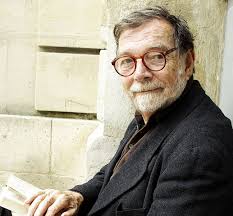
Schiffrin documents in detail the mechanisms put in place to try to flog more profits out of the book business, but for our interests perhaps the most fundamental change was the expectation that every title must make a profit, and not just a modest profit. Before the corporate takeover of publishing, it was common practice for publishers to bring out authors’ first books, knowing they would likely lose money and that it may take years and several books before an author found enough of an audience to be profitable. In the meantime, other titles on a publisher’s list could subsidize the nurturing of a new(er) author. A good example is Cormac McCarthy, who is now a household name among readers of contemporary fiction. But McCarthy’s status as an award-winning and best-selling author was a longtime coming. As Daniel Robert King notes in Cormac McCarthy’s Literary Evolution (2016), “Random House took on [in 1965] and retained McCarthy as one of their authors despite unpromising sales over the first twenty years of his career” (23). In fact, McCarthy’s longevity at Random House was due to the loyalty and hardheadedness of his editor Albert Erskine, who insisted that McCarthy’s early titles stay in print in spite of their anemic sales, even in paperback (32-33).

But such loyalty would come to an end when corporations took over the industry, and editors were pitted against each other to reach ever-increasing profit expectations. Decisions about which titles to acquire, how large the print runs should be, and whether or not a contract should be offered for a second book from an author increasingly became the purview of the accounting and marketing departments, and not editorial. By 1990, corporate publishers only wanted to publish books that warranted 100,000 press runs. Anything less wasn’t worth the effort, according to Marty Asher, with the Book-of-the-Month Club and then Vintage (qtd. in Schiffrin 106). Obviously such bottom-line-minded expectations would make it foolhardy for an editor to take on a first book from just about any author, even a Cormac-McCarthy-to-be.
This emphasis on profit also impacted representations of ideology. By and large, corporations are run by conservatives (think Rupert Murdach), so it hasn’t just been new authors who have been silenced but any author writing from a liberal perspective. For a time, this corporate bias toward conservatism was somewhat offset by university and independent publishers, but they, too, have been impacted by changes in the publishing world, either due to acquisitions or universities which have had to be more money-minded to stay afloat. It is worth noting that André Schiffrin’s book on the demise of independent publishing is nearly twenty years old. On nearly every front things have gotten worse since 2000. Today there are essentially five commercial publishers remaining in the United States, according to Publisher’s Weekly, the so-called “Big Five”: Penguin Random House, HarperCollins, Simon & Schuster, Hachette Book Group, and Macmillan (Scholastic is number-six, thanks in large part to their publishing the Harry Potter series) (Milliot). These publishers account for more than eighty percent of sales in the U.S.
All of this has led to a homogenization in publishing. It is fiscally safer to publish book after book by the same few dozen authors (James Patterson, Danielle Steele, Nora Roberts, Dan Brown, etc.) than take a chance on a new voice, or if it is a new author, it’s a new author whose book sounds very much like one that proved successful. The runaway success of Stephenie Meyer’s Twilight series, for example, gave birth to a new genre: “teen paranormal romance,” essentially beautiful but troubled young women falling in love with vampires, werewolves, ghosts, sea monsters, etc.—Prince Charmings, with fangs, fur, chills or gills.
Meanwhile, along came the Internet. Towards the end of Schiffrin’s book on publishing, again, which came out in 2000, he was mildly optimistic that technological advances could be an avenue for worthwhile books to reach readers. In a sense, his optimism was well-founded. The rise of e-readers and print-on-demand books, in both hardcover and paperback, has made it possible for almost anyone to get their words into print. For example, in 2012 I established Twelve Winters Press, a print-on-demand and digital publisher, to produce my own books as well as other worthy books whose authors were frustrated in finding outlets for their work. We’ve averaged four to six titles per year, mainly fiction, but also poetry and children’s books. Our books are available globally and are reasonably priced. Titles have won awards, and one of our books recently won best cover design in the category of fiction.
We’re only missing one element to be considered a rousing success in independent publishing: readers, also known as book sales. Practically no one will read our books. It is extremely difficult to get our books reviewed—and literally impossible to get them reviewed by major reviewers—and when they are reviewed, reviewers seem duty-bound to moderate their praise with some bit of negative criticism. But it probably wouldn’t matter. Even glowing book reviews have little to no impact on sales. Nearly all of the prestigious book competitions are off limits to small, independent publishers. Either their entry fees are too high, or they require a minimum print run that small presses can’t attain. We’ve had some success in indie competitions, but even they are expensive by small-press standards, and, again, success doesn’t translate to sales. We advertise our books and authors through social media, and for the last couple of years we’ve spent $2,000 to $3,000 annually on traditional advertising, including ads in The New York Review of Books. Practically nada, almost literally nothing. I may as well have shoveled all that cash into an incinerator.
The problem is that a smaller and smaller percentage of Americans are readers, and those who are readers are not interested in well-written, challenging texts. Data on how little Americans read, in every age group, are readily available. What is difficult to discern in the numbers is how little literature is being read. Surveys and studies tend to identify how frequently novels are being read, but it would seem that the vast majority of those books are mysteries, thrillers and other light genres. Perhaps one way of getting some idea of how much literature is being read is to compare it to poetry. According to Statista, eleven percent of Americans claim to read poetry on a regular basis. The reliability of these numbers is suspect, of course, but it may give us some sense of the situation.
One difficulty is answering the question, How does one define literature? William Gass seemed to have a working definition at least, one that he shared in a 1981 interview when he said, “Readers don’t want difficult works—not just mine—anybody’s. The reward for the time, effort, agony of getting into some of these things is always problematic” (Castro 71). Nearly a decade before, Gass compared writing serious fiction to writing poetry, as far as reception was concerned:
I think fiction is going the way of poetry. It’s getting increasingly technical, increasingly aimed at a small audience, and so forth. And this is what happened to poetry—over a long period of time. And now fiction, which I suppose was once a leading popular art form, certainly isn’t any more. And serious fiction does not even hope for it. (Mullinax 14)
If not serious fiction, then, what is being published, especially by the Big Five commercial publishers? According to Gass, in 1976, “[a] lot of modern writers . . . are writing for the fast mind that speeds over the text like those noisy bastards in motor boats. . . . They stand to literature as fast food to food” (LeClair 25). Indeed, in the early 1970s Gass saw the trend developing of a negative correlation between the quality of the writing (the seriousness of it) and its likelihood for being published at all. Regarding his eventual novel The Tunnel, Gass said that if he achieved his goal “perhaps it will be such a good book no one will want to publish it” (McCauley 12). It was published eventually, in 1995, after nearly thirty years of literary labor. By then Gass claimed that he “expected to be ignored. . . . There were some [critics] who were quite enthusiastic, but by and large it was the usual: just shrugs and nobody paid much attention” (Abowitz 145).
In essence, then, our culture—really, Western culture—has lost the literary voice: today’s Joyce, Woolf, Faulkner, Lawrence, Gass, and so on. It’s an uphill struggle to find a publisher, and once found an even steeper struggle to find readers. Who today would publish Ulysses, leave be Finnegans Wake? If published, perhaps self-published, who would read it?
My time for this presentation grows short, so let me shift gears to the issue of What does it matter that less and less literature is being read? For one thing, I see the rise of Trump and Trumpism, which is synonymous with racism, White Nationalism, xenophobia, misogyny, and a host of other evils, as being related to the loss of the literary voice. This topic is clearly complex, and I can only barely begin to introduce it here, but we know that Trump supporters are in the minority in the United States, perhaps thirty to forty percent of the population, and we know that most of those Trump supporters live in non-urban areas—places where the demographic of white, Christian, heterosexual, patriarchal folks reside in insulated enclaves. They are fed their news and their views from conservative outlets and from Trump himself via Twitter, Fox News, Breitbart, etc. Meanwhile, we know that reading increases awareness of others—let’s say capital “O” Others—and study after study has shown that reading about those not like ourselves also fosters empathy.
Interwoven here is the subject of censorship, which I want to touch on briefly. In The Business of Books, Schiffrin discusses how right-leaning conglomerates overlook left-leaning authors, but beyond that editors in dog-eat-dog corporate publishing houses reject material for fear of its unpopularity, which would in turn adversely affect their pay and job security. Another disturbing trend is self-censorship among readers. It seems that the rising tide of conservatism is creating readers who won’t allow themselves to read material they deem immoral. A couple of anecdotes. In January I attended the MLA National Convention in Chicago, and one of the panels I went to was on Philip Roth’s Portnoy’s Complaint turning fifty. Two of three Roth scholars were from Midwestern universities, and they said they hadn’t actually taught Portnoy’s for years because their graduate students are too squeamish to discuss the book in class. The third Roth person was a professor at Princeton, and he was nonplussed. Apparently he teaches his Ivy Leaguers Portnoy’s every other semester.
I had a similar experience just last quarter. For our final reading I had assigned William Gass’s novella Willie Masters’ Lonesome Wife. I had one grad student refuse to read it when he discovered it contained “raunchy” language. A couple of other students read it but were put off by its language and sexual subject matter. I’ve been thinking that a fascist society hardly needs to bother imprisoning writers and burning books in the square if they can create a culture where most people don’t like to read and even budding “intellectuals” censor themselves on moral or religious grounds.
Speaking of Gass, long before the deleterious effects of the Internet and cable news could be known, he saw the handwriting on the wall. In his commencement address to the Washington University (St. Louis) Class of 1979, Gass cautioned the grads: “We are expected to get on with our life, to pass over it so swiftly we needn’t notice its lack of quality, the mismatch of theory with thing, the gap between program and practice. . . . We’ve grown accustomed to the slum our consciousness has become” (“On Reading to Oneself” 222) The cure Gass advised is the reading of great books, “for reading is reasoning, figuring things out through thoughts, making arrangements out of arrangements until we’ve understood a text so fully it is nothing but feeling and pure response” (227). Elsewhere Gass emphasized that “the removal of bad belief [is] as important to a mind as a cancer’s excision [is] to the body it imperil[s]. To have a head full of nonsense is far worse that having a nose full of flu . . .” (“Retrospection” 51). He went on to recommend rigorous self-skepticism regarding one’s own ideas, “theorizing” about errors in thinking: “Skepticism,” he said, “was my rod, my staff, my exercise, and from fixes, my escape.”
We must make those who are prone to bigotry, who believe brown-skinned migrants deserve to be tossed in cages or left to perish in rivers and at sea, who are anxious to accept any fraudulent information that supports their worldview, who deny the threat of climate change in spite of the data, who believe healthcare is a privilege—we must make them self-skeptical, as Gass advised. We must get them in the habit of questioning their own beliefs. We must get them reading again. Or as Laurie Champion describes it, in her article on Thoreau and Bobbie Ann Mason, we must get people in “a transcendental state of mind that involves intellectual and spiritual searches that lead to clear sight” (57).
Doing that, no matter how difficult, must be our mission.
Note
1 I realize of course that I’m not the first person to lament the sorry state of serious writing in their time. Just a few examples: Emerson, Margaret Fuller and other Transcendentalists founded The Dial in 1840 due in large part to the dearth of decent reading material in spite of their periodical-rich time period. Victorian and Edwardian editor and critic Edward Garnett frequently clashed with the publishers for whom he worked because he felt they didn’t do enough to cultivate a more cosmopolitan appetite among England’s overly conservative and insulated readers. James Joyce famously exiled himself to the Continent mainly due to the sad state of Irish letters. A key difference perhaps, between these thens and now, is that there were a lot of people reading a lot of material, whereas today fewer and fewer people are reading, anything, period.
Works Cited
Abowitz, Richard. “Still Digging: A William Gass Interview.” Ammon, pp. 142-148.
Ammon, Theodore G., editor. Conversations with William H. Gass. UP of Mississippi, 2003.
Castro, Jan Garden. “An Interview with William Gass.” Ammon, pp. 71-80.
Champion, Laurie. “‘I Keep Looking Back to See Where I’ve Been’: Bobbie Ann Mason’s Clear Springs and Henry David Thoreau’s Walden.” Southern Literary Journal, vol. 36, no. 2, 2004, pp. 47-58.
Gass, William H. “The Artist and Society.” Fiction and the Figures of Life, Knopf, 1970, pp. 276-288.
—. “On Reading to Oneself.” Habitations of the Word, Simon & Schuster, 1985, pp. 217-228.
—. Preface. In the Heart of the Heart of the Country, by Gass. 1968. Godine, 1981, pp. xiii-xlvi.
—. “Retrospection.” Life Sentences. Knopf, 2012, pp. 36-55.
King, Daniel Robert. Cormac McCarthy’s Literary Evolution: Editors, Agents, and the Crafting of a Prolific American Author. The U of Tennessee P, 2016.
LeClair, Thomas. “William Gass: The Art of Fiction LXV.” Ammon, pp. 17-38.
McCauley, Carole Spearin. “William H. Gass.” Ammon, pp. 3-12.
Milliot, Jim. “Ranking America’s Largest Publishers.” Publisher’s Weekly, 24 Feb. 2017, https://www.publishersweekly.com/pw/by-topic/industry-news/publisher-news/article/72889-ranking-america-s-largest-publishers.html. Accessed 14 April 2019.
Mullinax, Gary. “An Interview with William Gass.” Ammon, pp. 13-16.
Schiffrin, André. The Business of Books. Verso, 2000.
Modernism’s Last Gasp and the Architecture of William H. Gass’s The Tunnel
This paper, “Modernism’s Last Gasp and the Architecture of William H. Gass’s The Tunnel,” was presented at the Louisville Conference on Literature and Culture Since 1900 on 23 Feb. 2017 as part of the panel titled “Imagining Space: Experiments in Narrative Form.” The paper veered from its original intent and perhaps a suitable secondary title may be “A Text Suddenly of Our Time.” The panel was chaired by Liana Babayan, Augusta University. Other papers presented were “Louis Aragon’s Paris Peasant and Architectural Liminality” by Adam McKee, Queensborough Community College, CUNY; “Haunted Houses from House of Leaves to House of Fiction” by Amanda Davis, University of Chicago; and “Contrasting Spaces in Jean Genet’s Miracle de la Rose” by Maria Slocum, Missouri University of Science and Technology. Other papers on William H. Gass’s work can be found at this site by searching “gass.”
“For me a book tends to exist in a metaphorical relationship to a building. For me architecture represents best the basic metaphorical image of the way a text exists, say, metaphorically or philosophically” (Janssens 66). Thus spake William H. Gass in a 1979 interview, about midway through the composition process of his magnum opus The Tunnel, which was published in 1995 after a nearly thirty-year gestation. Sections began appearing in print as early as 1969 and continued off and on for almost two decades, garnering numerous accolades (for example, inclusion in The Best American Short Stories of 1980), and in two instances being released as stand-alone, limited-edition books by art presses. In 1996 Gass’s massive book (over 650 pages of dense prose, riddled with myriad experimental techniques, a host of fonts, amateurish doodles, and other graphic representations) won the American Book Award. Meanwhile, it spawned copious reviews which ranged from fawning to furious. Even some of the novel’s harshest critics, however, acknowledged that it would take decades of scholarly work to fully come to terms with Gass’s achievement—no matter whether one believes he achieved a masterpiece or a monstrosity. Sadly, that work remains largely undone.
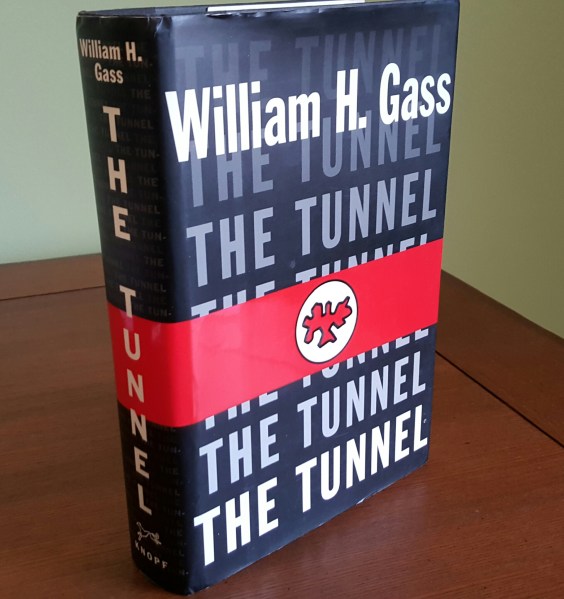
This is at least the third paper I’ve presented at this conference chiefly focused on Gass’s The Tunnel. When his next novel appeared in 2013, Middle C, that much more manageable book led me away from The Tunnel for a paper or two; and I also did some work on Gass’s earlier publications: one of his earliest pieces of published fiction, the novella The Pedersen Kid, and then a paper focused mainly on Willie Masters’ Lonesome Wife and On Being Blue. Pondering possibilities for this year’s conference, I decided it was time to return to the excavation site and say something further about The Tunnel. I’ve been coming here for more than a decade, and I can only recall one other Gass paper being presented in that time (a Willie Masters’ paper). (When I first started attending the conference I was a William Gaddis guy; I hadn’t yet fallen under the Master’s spell.) My hope has been that by keeping the spark of scholarly interest alive others will join the conversation—and that hope has rested mainly on the book’s artistic merits. However, between the time that I proposed this particular paper topic and now, something historically monumental happened which makes The Tunnel vitally relevant: the election of Donald J. Trump as president of the United States (and the rise of the alt-right in general). That is to say, the overarching theme of The Tunnel—which Gass has described as “the fascism of the heart”—makes the book amazingly and unfortunately up-to-date. Perhaps an appropriate secondary title for my paper would be “A Text Suddenly of Our Time.”
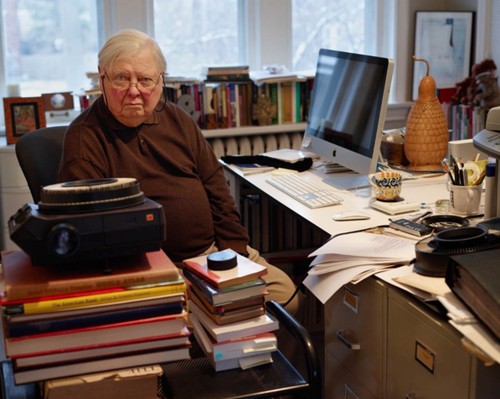
Our times have led to a rekindled interest in Orwell’s Nineteen Eighty-Four and other dystopian books. For the same reasons it is worthwhile to descend into William Gass’s tunnel, a place whose squalidness has turned away many readers—but these, my friends, are squalid times. So, in the interest of truth in advertising, I am going to discuss (to some degree) the structure of The Tunnel and its relationship to architecture; but I’m also going to talk about the fascism of the heart and what the book has to say about the Trump phenomenon.
The basic plot of the novel is fairly straightforward (although plot doesn’t mean quite the same thing in Gass’s world as it does in most fiction writer’s): The first-person narrator, William Kohler, is a middle-aged history professor at a Midwestern university who has finally completed his magnum opus, prophetically thirty years in the writing, Guilt and Innocence in Hitler’s Germany. He has sat down in his basement office to write the book’s preface (the final nail in this towering edifice, so to speak) when he finds himself blocked and therefore begins writing, instead, a very personal memoir about his unhappy childhood, lackluster career, loveless marriage, lost loves, disappointing children, and irritating colleagues. He slips the pages of this tell-all autobiography in between the manuscript pages of Guilt and Innocence so that his wife won’t see them (having no interest whatsoever in his life’s work), and, meanwhile, he begins to dig a tunnel out of his basement—or at least so we’re told. Gass himself has written in the liner notes of the audiobook edition of The Tunnel (45 hours of listening pleasure) that his narrator is “wholly unreliable”: “That does not mean he never tells the truth. He may always tell the truth. He may never. But he can’t be trusted. So he may not be digging a tunnel out of his basement” (emphasis added). Either way, writes Gass, “[t]he pointlessness of this activity has to be stressed.”

Returning to my opening quote, Gass has said that “architecture represents best the basic metaphorical image of the way a text exists.” He has had a long-standing interest in architecture. It is difficult to say which came first, the chicken or the egg, as Gass married Mary Henderson in 1968. Mary Henderson Gass has had a distinguished career as an architect in St. Louis since moving there with her husband in 1979 when he accepted a professorship at Washington University. (He retired from the university in 2000.) Gass has found the experimental designs of architect Peter Eisenman especially akin to his own literary aesthetic. “He does crazy things in one sense,” said Gass, “but he is really a serious artist, first rank, I think. He is not just doing things to shock people, or surprise them or be different” (Janssens 68). Gass’s statement about Eisenman and his work sounds a lot like what defenders of Gass and especially The Tunnel have been saying for years.
In explaining how The Tunnel functions architecturally, Gass has contrasted his work to James Joyce’s, especially Ulysses and Finnegans Wake. Gass said,
Now, the idea of a book as fundamentally or conceptually a structure in which you are being taken on a tour by the author—I think a lot of modern works are constructed this way, Joyce, for instance, makes Ulysses in such a way that it is not possible for you to conceive the book and hold it in your head at the same time, you have to go back and forth in it. He takes you through the first time; you may jump around in it later as you wish—and Finnegans Wake is certainly constructed that way. (Janssens 66)
Gass continued,
Joyce demands total recall, an ideal total recall. […] I am like I would be when I went through a building: I am putting the pieces together to compose the building which exists ontologically all at the same time, and which I can only know experientially one at the time, and therefore I can only conceive or conceptualize the way it actually exists; I can have an idea of how this house exists. (67)
In other words, when one reads Ulysses or Finnegans Wake, both of which are structurally linear (a second by second account of a single day in Dublin, Ireland, or the unconscious mind’s progression through a single night of sleep [perhaps]), one is at a different point on the overall timeline with each passing word, and one has to be mindful of that progression to make sense of the experience. In other words, how have we gotten from point A to point B . . . to point Z? Metaphorical connections must be made by recalling earlier parts of the text.
The brutally nonlinear construction of The Tunnel operates differently. To illustrate that difference, Gass referenced Eisenman:
Now in Peter Eisenman’s work, what he wants to do often is to make one experientially aware of other parts of the house at the same time [emphasis added]. So in one of his houses, called House Six, there is, for instance, in the second-floor bedroom a strip of glass that goes across the floor, from which you can perceive the living-room below, and vice versa. Similarly, there are holes in various parts, openings which allow you […] to look through the house. So I am always aware in that house of other parts. (67)
In the execution of this theory, Gass constructed The Tunnel in twelve parts (which he describes as phillipics, or bitter denunciations), and each consists of twelve “fundamental themes and a lot of minor ones would be sounded in different arrangements so that a central aspect or meaning of the text would emerge at the beginning; then sink down and be relatively innocuous or weak at a certain point”—all of which would be “superimposed on a completely different structure: the tunnel itself” (“William Gass”). Gass, incidentally, is simultaneously using a mimetic musical structure—Schoenberg’s twelve-tone system—but we don’t have time to go there too. Thus, while Gass’s narrator Kohler pinballs between his childhood, his career in the army, his grad school days in Germany, his various love affairs, his current life, etc., the author returns again and again to these major and minor motifs. In an artfully designed building each room, each hallway, each alcove, each stairway, and even outdoor spaces reflect certain colors, shapes, themes, and moods that tie them together as being parts of a consistently constructed whole. There are variations of course. A dominant color in the entryway may return as complementary accent color in the master bath, for example. A sailboat model in the library may be echoed by a nautically themed kitchen. So forth and so on. Thus it is with The Tunnel.
As illustration of this technique, I will focus on one of the novel’s major motifs and its juxtaposed doppelgänger: windows and mirrors. Gass seems to want us to pay special attention to windows as he titled the sixth phillipic “Why Windows Are Important to Me,” and it takes up the literal center of his book, pages 282 to 333 out of 652. Also, windows have been metaphorically important throughout Gass’s career. As H. L. Hix points out, “The window, which represents the ambiguity of our connection to the world, our looking out on a world from which the very looking out separates us, has appeared as a metaphor regularly in Gass’s previous fiction” (124). Hix’s observation is a valid one, but I think Gass takes the metaphor further in The Tunnel by pairing it with almost equally numerous references to mirrors. More regarding that in a moment. What follows are only a few examples of window references in the text. The first comes just a few pages into the book when Kohler recalls a car ride with his lost love, Lou: “The window of the car would not roll up and Lou’s face looked warm from the cold wind as if freshly slapped or shamed or elsewhere loved” (7). This car ride, only briefly mentioned here, foreshadows an episode titled “A Sunday Drive,” which describes in detail a family outing from Kohler’s childhood that is referenced repeatedly in the novel and also prefigures the narrator’s own family outings when he becomes husband and father (always with Gass, repetition, variation, point, counterpoint).
In the central section of the novel, Gass compares a blackboard to a window, writing, “The board is at once the surface of a pit-black sea and a bleak opening onto all our inner spaces. It is the brink of what we are, and hence a horror. […] unlike a window which is always full of the flitter of images […]” (311). Discussing the blackboard’s “opening onto all our inner spaces” (in that professors, like Kohler, use the blackboard to broadcast their beliefs to their students), Gass also connects blackboards to mirrors—both being framed objects antithetical to windows in their own ways. The book’s final reference to windows is about as far from the end as the first reference is from the start, and it’s in an imagined scene with Kohler’s hated wife Martha wherein “[I] lead her to the window [hand in hand … and] put our gazes on together” (650). Kohler imagines trying to get Martha to see the world as profoundly as he does, “but she would interrupt me with a snort from her derision because she despises oratory, wants to slap cheeks when they puff.” We notice the mirror opposites of the first window reference being a recollection of Kohler’s lost true love, Lou, and the final reference being an imagined scene with Kohler’s despised wife. Further linking the two scenes are references to face slapping, one metaphorical, the other imagined but likely. These examples constitute just a tiny taste of the repetitions, echoes, foreshadowings, and prismatic reflections, complications and contradictions that appear in some form or another on every page of the novel.
 What then of the mirrors? Again, there are a plethora of references, the first being on page 10 and it is immediately paired with a window (via negation), as Kohler describes his dingy basement work space: “I’ve no mirror, cockeyed or otherwise. One wrinkled window. Above: a worn lace curtain like a rusted screen.” I believe that the pairing of windows with mirrors (and Kohler’s professorial blackboard) is related to the overarching theme of the book as delineated by one of Gass’s most adept readers, Heide Ziegler, a long-time friend and collaborator of William Gass (next to Gass in the photo from a 1991 symposium on postmodernism in Stuttgart, Germany). In response to reviews of the The Tunnel that ran from lukewarm to hostile, Ziegler wrote, in essence, a defense of the book which appeared in Into The Tunnel: Readings of Gass’s Novel (1998). In the interest of my waning time, I shall cut to the chase of Ziegler’s reading, which unknowingly anticipated the novel’s connections to our own desperate times. The key to understanding the book is in the phrase that Gass identified as its “fundamental subject”: the fascism of the heart. Ziegler writes, “[G]iven the pervasiveness of his message […] it is dangerous to miss the point. His message is not that all of us are fascists, but that there is always the danger that the fascism that lurks in our hearts might erupt, that we will become fascists” (80). She suggests that the nostalgically tender (and rare) recollections from Kohler’s boyhood contribute to the idea that anyone is capable of being lured into the dark tunnel of fascism. That same boy—who relished dime-store candy and wanted nothing more in this world than a dog of his own to play with—became the young man who succumbed to the mob mentality of Kristallnacht in 1938 and threw a stone through a Jewish storekeeper’s window. I’ll supplement Ziegler’s fine reading by asserting that Gass’s frequent references to mirrors also emphasize Kohler’s (and everyone’s) potential for becoming the same sort of people he spent his academic life studying (gazing upon, if you will, as if through a window): the innocent German citizens who were transformed into the Nazis who were guilty of exterminating six million Jews. Ziegler writes further,
Given the right historical circumstances—economic insecurity, a time of depression—and given the right seducer […] your Everyman will follow that leader simply in order to flee his own loneliness, as well as what he believes to be undeserved misfortune. […] Since […] political agitators possess no true authority, they need to create scapegoats—the Jews in Germany, minorities all over the world. What Gass attempts, and obviously achieves, judging by the emotional responses to his book, is to change the Holocaust from a horrifying, unforgivable, yet singular European spectacle into a general historical possibility. That is the reason that The Tunnel is not about Germany or about Hitler. It is—potentially—about all of us. (80-81)
Referring specifically to the sort of finely tuned brainwashing the military is able to achieve but meaning more broadly the way anyone can be manipulated, Gass writes, “Eventually they compel you to act against your conscience, contrary to your nature, in defiance of every precept of morality and religion, until all that remains of you is your past, your prehensile tale [spelled t-a-l-e], your history. Then they begin on that” (242-43).
I hardly need to point out the parallels between Gass’s description of the Holocaust and our own time, with the rise of Trump and the rhetoric of the alt-right, especially their scapegoating of Muslims, immigrants, liberals, the press, and even the judiciary as reasons for our alleged decreased safety and floundering economy. What is more, on a personal note I’ll say how surprising and discouraging it’s been over the past year to view friends, neighbors and family via the window of Facebook and other social media and discover the fascism of their hearts—their willingness to believe Trump’s lies and to support his undemocratic, unpatriotic and unconstitutional schemes. How best to resist, other than simply by putting a hashtag in front of the word, is a question that millions have been wrestling with. Obviously political action is a necessary part of resistance to this wave of fascism. William Gass dealt with this question, too, in a powerful essay, “The Artist and Society” (first published in The New Republic, July 17, 1968). In it Gass suggests that the artist shouldn’t become involved in a revolution in the typical sorts of ways, but rather he must become involved through his art. He writes, “The artist’s revolutionary activity is of a different kind. He is concerned with consciousness, and he makes his changes there. His inaction is only a blind, for his books and buildings go off under everything—not once but a thousand times. How often has Homer remade men’s minds?” (288). Artists must resist, then, through their art. It is via their art that they can have a greater impact than a mere bomb’s momentary blast.
My original concept of this paper was to discuss how Gass’s techniques align his book with the intentions of aesthetically minded architects—how their conceived ideas, drafted as blueprints and 3D models, are transformed into lived physical spaces, and, similarly, how Gass attempts to make William Kohler’s surreptitiously written memoir materialize in the hands of the reader via the book known as The Tunnel. I planned to make good use of an interesting article coauthored by Gass and his wife, Mary, about the artistic principles of architectural design and their analogues in other forms of art, like writing. And I planned to talk about Gass’s hopes for the publication of his novel, what the publisher and printer were able and willing to execute, and what they weren’t. I also meant to explain my paper’s title regarding “modernism’s last gasp,” comparing, say, Joyce’s efforts to mimic a conscious or unconscious mind versus Gass’s efforts to create a consciousness. But alas those discussions will have to wait for another paper and another day. I encourage you, meanwhile, to risk a visit to The Tunnel, a book suddenly very much for our time.
Works Referenced
Gass, William H. “The Artist and Society.” Fiction and the Figures of Life, Godine, 1979, pp. 276-88.
—-. The Tunnel. 1995. Dalkey Archive, 2007.
—-. William H. Gass Reads The Tunnel. [liner notes for the audio book written by the author] Clayton Studios, 2005.
Gass, William H., and Mary Gass. “The Architecture of the Sentence.” Conjunctions, 1999, pp. 93-108. [Available online]
Hix, H. L. “Twenty Questions on The Tunnel.” Understanding William H. Gass, University of South Carolina Press, 2002, pp. 76-139.
Janssens, G. A. M. “An Interview with William Gass.” Conversations with William H. Gass, edited by Theodore G. Ammon, University Press of Mississippi, 2003, pp. 56-70.
“William Gass with Michael Silverblatt” (5 Nov. 1998). Vimeo, uploaded by Lannan Foundation, 2011, https://vimeo.com/12812717.
Ziegler, Heide. “William H. Gass: Is There Light at the End of The Tunnel?” Into The Tunnel: Readings of Gass’s Novel, edited by Steven G. Kellman and Irving Malin, University of Delaware Press, 1998, pp. 71-83.
Interview with Lynette D’Amico: Road Trip
Twelve Winters Press doesn’t solicit submissions as a general rule. Sometimes we’ll have a call for submissions for a special project, but otherwise, as a publisher, I see myself as more of a hunter-gatherer. That is, I keep my eyes and ears open for interesting projects, and when I pick up a scent, I track it down to see if it pans out. I believe it was in the summer of 2014 that I received the Quarterly West newsletter which included an announcement of the winner and finalists of its annual novella contest. One of the finalists was “Road Trip” by Lynette D’Amico. There were several finalists, and I’m not sure why that one stood out to me. I’m a big fan of the road trip motif — I’ve taught Homer’s Odyssey many, many times, as I have tales from Chaucer’s Canterbury Tales, and I’m a fan of Kerouac’s On the Road, and McCarthy’s The Road . . . and so on. So maybe it’s as simple as that.

I went about tracking down this Lynette D’Amico person on the Web (which took a little doing), and introduced myself and Twelve Winters via email. She responded, and come to find out, her novella had been three times a bridesmaid. Prior to the Quarterly West finalist finish, her little book also had been a finalist for the Paris Literary Prize and, as part of a collection, for the 2014 Flannery O’Connor Award for Short Fiction. She had some other impressive writing credentials, including placing a piece with The Gettysburg Review, “Ashes, Ashes,” that had been nominated for a Pushcart Prize. She said in her email that being contacted by a publisher took some of the sting out of her third close-but-not-quite finish, and she agreed to send me the manuscript.
I was blown away by her novella — its complexity, its intricate structure, its mixing of genres, its main characters who are thoroughly lovable in spite of their glaring flaws, and its offbeat humor. I very much wanted to bring this strange little book into the world. We began our negotiations. I entertained the idea of bringing “Road Trip” out as part of a collection, but ultimately we agreed that it should stand on its own as a novella. The story is highly intertextual, so I liked the idea of perhaps mixing in yet another mode of communication in the form of illustrations of some sort (at least, I think it was my idea — maybe Lynette suggested it first . . . I could easily be persuaded she did). Ultimately, Lynette found some photographs from the Wisconsin Historical Society and from a book titled Death of the Dream that she wanted to include in the book. The odd and often haunting photographs definitely added another layer to her already multi-layered novella.
I enlisted the aid of a couple of the Press’s loyal editors to read the manuscript and work with Lynette to finalize it for publication; then beginning in about March of this year I re-entered the process, and Lynette and I went about creating Road Trip in its final form, in print and digital editions. (Lynette is at work on an audio version of Road Trip as well.) On June 22, 2015, the novella entered the world. I sent Lynette some interview questions about her book and her process, and what follows are her unedited responses. SPOILER ALERT: At times the interview drifts into details of the novella you may not want to know before reading it (I wouldn’t have).

The travel narrative obviously has a rich history. The Bible is filled with travel stories. There’s Homer’s Odyssey, Chaucer’s Canterbury Tales, Gulliver’s Travels, with your own book perhaps being more closely related to Kerouac’s On the Road. Why do you think the travel narrative has been so attractive to storytellers, and what specifically attracted you to it for Road Trip?
Isn’t it a version of the travel narrative that we all see ourselves as coming from somewhere on our way to somewhere else? Well, maybe that’s a version of the travel narrative written by white men of a particular social class. When I was 21 or 22, I tried to wrangle a posse of girlfriends to drive from a first-ring suburb of St. Louis to the Pacific Ocean. My friends wanted to bake on a beach, so I wrote to chambers of commerce, collected maps, a sleeping bag, and hit the road alone. I made it as far as Taos before I exhausted my credit limit and my own capacity for adventure—sleeping and not sleeping in my car with all the doors locked at state parks.
The notion of the road trip immediately inspires a sense of the unknown; it has its own engine—we’re heading out from Point A to Point B, or to points unknown. I needed a trajectory for Road Trip, something that would propel the story forward, and place the characters of Myra and Pinkie in time and space, and a literal road trip does the trick.
There’s a line in a story by Paul Yoon, “So That They Do Not Hear Us,” that I get caught on, “. . . there was a time she had departed and was now wishing to return to.” This nostalgia for returning is also a part of the mythology of a road trip: we want to go back to where we started, and the inherent sadness of the road trip for Myra and Pinkie is that even if they get back to where they started, even if they return, nothing will ever be the same again.
Some of the travel narratives I mentioned have a significant supernatural element in them—as does your novella. What do you think the connection is between travel and the supernatural?
Travel removes us from the familiar. In Rebecca Solnit’s A Field Guide to Getting Lost, she says that “to be lost is to be fully present, and to be fully present is to be capable of being in uncertainty and mystery.” The expectation of the travel narrative is exploration of the unknown; to turn a corner or come into a clearing, where “I have never seen this place before” and the unexpected becomes possible.
Flimic references that inform Road Trip include David Lynch’s Wild At Heart, the Cohen brothers’ O Brother Where Art Thou?, The Wizard of Oz, and Wim Wenders’ Paris, Texas. And by “inform,” I mean I paid attention that if you’re on a road trip, something’s gotta happen along the way, and I like it when the something that happens along the way is a little weird, or incorporates unreal elements.
A few years back my spouse and I were staying in a cabin in the Adirondacks. We woke up early the morning we were due to leave and rather than go back to sleep, we packed the car and got on the road before dawn. There were no cars on the road, no lights; it was foggy and misty, and all of a sudden we saw a one-armed figure in the middle of the road. Polly was driving. We both screamed and Polly, who has the reflexes of an athlete, swerved and braked hard. We looked around and there was no one on the road. We kept driving. Did we really see a one-armed man on a foggy road? And where did he go? In writing, and perhaps in life, anything is possible on the road—one-armed hitchhikers, or red-headed hitchhikers in one-piece bathing suits and flip-flops pulling doughnuts and mini-bottles of vodka out of a bottomless purse.
The structure of Road Trip is decidedly nonlinear. You have several characters embarking on various storylines, and the reader constantly shifts between these storylines, as well as back and forth temporally. How did this rather frenetic structure come about? Was it planned early on in the composition, or did it develop more organically while you were writing Road Trip?
Nothing was planned! I so rarely work with any kind of intentionality unless I’m writing an essay, but even then I leave plenty of space for discovery. Road Trip started as one straight-line short story called “No Brakes”—the story of Myra and Pinkie—more or less. It was a big sprawling mess, but from the one draft I had the last words, “no brakes,” and in subsequent drafts I wrote towards that line. It was always fragmented, but I had sections in it about Ed Gein, the Plainfield, Wisconsin, killer who is the model for Norman Bates in Psycho and Buffalo Bill in Silence of the Lambs, which didn’t make the cut and sections called “What Does My Mother Have to Do with This” that were kind of funny stories about my mother talking about death, but their destiny was foretold by their heading. Then my first semester in grad school I worked with the brilliant Kevin (Mc) McIlvoy, who taught me one simple thing about braiding story chords (I don’t mean that he told me one thing; he told me a million things, but I actually managed to hold onto this one right thing): He referred to the turns in the long version of “Layla” by Derek and the Dominos: “You thought we were entering a pond? No. You thought we were entering a lake? No. Here: the ocean. The ocean: hear.” His comment translated into some kind of circular, touch-and-go movement in the story. Mc encouraged me to think about fragmentation—breaking blocks of text into small islands to introduce a rhythmic discontinuity and dynamic disjunction into the narrative. To my surprise, as I broke the main narrative down and split the secondary narrative into discrete modules, I was able to see the shape of the story. In pulling everything apart, the story came together for me.
Myra Stark (the narrator) and Pinkie have a complex relationship. What do you think is at the core of their friendship? Are you basing this complex friendship on any real-life models?
In all the conversations and discussions I’ve had about this book, I’ve never tried to explain the relationship between Myra and Pinkie, except maybe to myself. Early feedback I got on the story was that Myra was so mean to Pinkie wasn’t I worried that readers wouldn’t like her? I also heard that Pinkie was beyond believable infuriating. Beyond believable in a story with ghosts and an animated butter and cheese doll? Well, it doesn’t hurt my feelings if readers don’t like Myra or Pinkie. My interest is in creating complex, difficult characters that readers want to argue with or talk to on a long road trip. My interest is that readers keep reading.
I had in mind a complicated relationship between two women, a relationship if not as clear-cut as lovers, then maybe a friendship betrayed, or a friendship of history and habit and conflicted feelings. In my own life, I’ve had friendships that blew up, I’ve disappointed and been disappointed by friends. I wrote pages and pages, which is my way of thinking, trying to discover a relationship that existed beyond estrangement and death. What I discovered in the process was that I wasn’t really interested in Myra and Pinkie making peace. Theirs was a relationship that would extend in its contentiousness beyond death. One of my models for Myra and Pinkie’s relationship was Sula Peace and Nel Wright from Toni Morrison’s Sula. Sula is a devastating novel about the relationship between two black women from the fictional town of Medallion, Ohio. The story follows Sula and Nel from the 1920s as young girls, then young women; their falling apart, and through the death of the title character, which corresponds with the slow decline of the black community they come from. When Sula is ill and alone, Nel visits her and asks her a question she had been struggling with since the friends had ceased being friends after Sula slept with Nel’s husband:
“I was good to you, Sula, why don’t that matter?” Sula turned her head away from the boarded window. . . . “It matters, Nel, but only to you. Not to anybody else. Being good to somebody is just like being mean to somebody. Risky. You don’t get nothing for it.”
“Being good to somebody is just like being mean to something. Risky. You don’t get nothing for it.” That line is at the heart of the relationship between Myra and Pinkie.
Road Trip was originally part of a collection (which was a finalist for the Flannery O’Connor Award for Short Fiction in 2012). How is Road Trip similar to and different from other pieces in that collection?
Other stories in the collection, although not all the stories, use similar nonreal elements as appear in Road Trip, such as ghosts, and a couple of the stories try to be funny. I think a problem with the collection is that Road Trip was in it. The other stories are about families: mothers and daughters, sisters, and the relationships you are born into versus the relationships you choose. Road Trip might have been too much of its own animal to work with the collection.
For a long time the novella, as a form, was “persona non grata” in the publishing world—too long to be published as a story, and too short to be taken as seriously as a novel. But the novella’s status seems to have improved in recent years. Major houses are publishing them, and some have even fared well in national contests competing right alongside full-length novels. How do you personally feel about the novella form, compared to story and novel writing?
I love the novella form. I went around for a while pitching a book that was going to be comprised of three novellas! That plan fell by the wayside due to lack of interest—not on my part but on the part of every publishing venue that I approached—but I like to keep a novella percolating on the back burner, something to dip into from time to time. I’m still new to novel writing. I’m writing a novel, but I am a little shy about saying that I’ve written a novel yet. Time will tell. The only form that I feel sure about before I write it is the short story. Sure, in that I usually know if a short story is going to be a short story when I start writing, although I’m open to surprises too.
The most obvious way to differentiate novellas from stories and novels is, of course, by word count, which is typically in the 20,000 to 40,000 word range—but word count is only one indicator of what a novella is and it doesn’t address form. Author Debra Spark, who I had the great fortune to work with at Warren Wilson, has an essay about the novella in her book on the craft of writing called Strange Attractions. She refers to Howard Nemerov’s essay “Composition and Fate in the Short Novel,” and says that novellas “must represent not simply a compression but a corresponding rhythmic intensification, and not just for plot—which we expect from most fiction—but for design.” Rhythmic intensification to me means exerting pressure on every element: language, sentences, paragraphs, which is compounded by and propelled by tone. It’s a process of distillation. The best way I can think of to illustrate what I’m talking about is with these few novellas and short novels that are particularly important to me:
The Body Artist, Don DeLillo.
I am a freak for DeLillo and then I go through periods where I can’t read another word of his. The Body Artist is a drifty, dreamy book with the thinnest of plots and the first fifty pages or so is this excruciating chapter of a domestic scene that is written kind of like in real time. The book is like a dream. I love The Falling Man by DeLillo too.
The Great Gatsby, F. Scott Fitzgerald
I reread or listen to Gatsby two or three times a year. I would like to write a collection of essays from lines from Gatsby. Every line opens a world.
Tinkers, Paul Harding
Another drifty, dreamy novella, and the first chapter in which the main character tells his own death in the context of the house he built falling down around him is brilliant.
Train Dreams, Denis Johnson
The main character of Train Dreams is opaque and unreflective, but Johnson evokes a whole way of life and period of history through the character Grainier—of logging and the woods and labor and heartbreak in Idaho in the early part of the twentieth century. I love this book as an example of how to tell a story through characterization.
So Long, See You Tomorrow, William Maxwell
I like my fiction a little slapdash and hard-edged, language-driven or image-driven or just voice-y—funny, snappy voice-y. So Long, See You Tomorrow isn’t that kind of book. It’s such a quiet, meditative book, but I read it, then listened to the audio file of the author William Maxwell reading it, which is an extraordinary experience, then I read it again. And maybe a few more times. I’ve heard the book referred to as a nonfiction novel because the first half of the book is written like a memoir in which the author William Maxwell is the central character. He tells an account of a murder on a tenant farm outside of Lincoln, Illinois, the small Midwestern town where Maxwell was born and lived until he started high school. The second half of the book is a fictionalized account of the murder from a third-person omniscient perspective. I love that this book tells the same story many different ways.
Coming Through Slaughter, Michael Ondaatje
The subject of the novella is a fictionalized account of the life of New Orleans jazz trumpet player Buddy Bolden. The novel incorporates point of view jump cuts, lists, lyrics, descriptions of photographs, and invented and historical interviews in an attempt to enter the character and historical figure of Buddy Bolden. The presentation is disjointed and imagistic and opens up whole worlds.
Why Did I Ever, Mary Robison
Funny as hell. And sad. Written in 536 little sections. Not an extra word.
Road Trip must have had a fairly long and adventurous trip of its own before being published. Could you talk about your efforts to get it into print, and what kind of a journey that was for you as a writer, including emotionally.
Over the past several years, Road Trip was a finalist in a few well-considered contests—always a bridesmaid, as they say. Every time I got on one of those close-but-no-cigar lists, an agent or two would contact me and ask “what else you got?” Nobody was interested in a novella, or in the novella as part of a collection of short fiction. I think Road Trip didn’t really work in a collection. If the collection had won some prize, that might have made a difference, but generally, what I heard from agents was that they wanted a novel, and there’s nothing like the attention of a few publishing professionals to completely derail my writing practice and sidetrack me from the work, which is ultimately what matters. So, I tried to keep my head down and just keep focused on the page.
I had stopped submitting Road Trip to journals—the few that are open to considering novella-length work—but I’d gear up and send it around to the couple of novella contests that come around every year. After an appearance on the finalist list for the 2014 Quarterly West Novella contest (which I lost to Nathan Poole, a fellow Warren Wilson alum, which by the way, if you’re a fan of the novella or just gorgeous writing, read his winning novella Pathkiller as the Holy Ghost or his collection of short fiction from Sarabande, Father, Brother, Keeper), you contacted me. As I think I said to you in my initial response, nothing takes the sting out of losing like a query from a publisher. I was impressed with Twelve Winters’ dedication to independent publishing, your commitment to publishing literary titles that might be a little off the beaten track, as well as your plans to expand the press’s fiction list. Let me just say, too, that I have a lot of writer friends who operate like literary hoarders. Playwrights who are holding out and holding out—they don’t want their work to be produced at a small local theater in case Steppenwolf or The Public wants to consider their play, writers who have their marketing plans in place before they finish a first draft. The upshot is an unproduced play (or an unpublished book) sitting in a drawer or on a computer file. I started writing later in life, and besides feeling the pressure of age in a youthful field, I want my work to be in the world. I liked that Twelve Winters is an entrepreneurial endeavor. I liked that you are a reasonable guy who is interested in working with his authors to make the best books possible. I liked that you were willing to take a chance on my weird, sad-funny novella. I think it’s worked out.
How did a Midwesterner with “a prairie eye” end up in Boston? Does your writing tend to focus on the Midwest, or do you sometimes find your East Coast environment an appropriate setting for your fiction?
I lived a lifetime in Minnesota and Wisconsin. Then my spouse, who works in theatre, got a job offer in Chicago. While she was in Chicago interviewing, my mother died. We sold our house, I quit my job, and we moved three months later.
After kicking me around for a year or so, Chicago became my best friend. I came to think of Chicago as my place. And then we moved again. To Boston, following Polly’s career again. We’ve been here now for three years. Boston has been a culture shock, more so even than the traffic in Chicago, where I drove for three years without ever making a left turn. There’s the cost of housing in Boston and the contrast with all the hardscrabble Massachusetts hill towns and then all these tiny, tight New England states. I can drive for twenty minutes and cross three state lines. I miss having an uninterrupted view. I miss driving for hours and hours and the unchanging landscape. I miss parking. To find my place here, I’m considering the ocean, which is right across the street from where we live in South Boston. I’ve lived with Lake Superior and Lake Michigan, both beloved to me, but the ocean requires a different relationship. I haven’t written anything yet about the East Coast, beyond ranting emails, but I likely will.
Could you talk about your writing process? Are you someone who consistently follows a routine, or do you write more in fits and starts as ideas and inspiration come to you?
I try to write everyday, which some days is more aspirational than realistic.
I think of it as exercise—another aspirational pursuit. If I don’t have a couple hours to write during the day, then I at least try to engage my current project in some way—through research, which can include reading, watching movies, listening to podcasts, music, eating whole boxes of dry cereal and bags of chips—I’ll use anything. Of course having an open-ended definition of research sometimes means that I lose days on the internet reading about how to frame a door, or birds of the prairie, or just googling writer bios in publications that have rejected me and comparing their lives to my own.
What are your current writing/creative projects?
I’m presently finishing a novel called The Third Twin, which is about renditions of home, how to make a home, homesickness, homelessness. It might be a reaction to moving around so much. Myra Stark appears in The Third Twin too. I also have a collection of short fiction called Below the Surface.
You’re a graduate of the MFA Program for Writers at Warren Wilson College. There’s been a lot of discussion of late about the escalating number of MFA programs, and whether or not they actually help someone to become a better writer and establish a career as a writer, etc. What are your thoughts on the “MFA question”? How did Warren Wilson and its instructors nurture (or hinder) you as a writer?
I spent years trying to write over weekends, or in one-week or two-week increments—my allotted vacation time—or early in the morning or late at night, between working full-time. When I met Polly, I was introduced to the work of some of the best theater artists in the country—Lisa D’Amour, Deborah Stein, Kirk Lynn, Dominic Orlando, Sherry Kramer. My proximity to the world of theater and playwriting allowed me a fuller understanding of what it means to be an artist and the odds against gaining any kind of recognition or audience for your work. It was the example of many of these theater artists that pushed me to consider what I was doing with my own writing and what it meant to pursue a career as a writer. I saw the value of formal training in my chosen field, the necessity of credentials, and the importance of being connected to an academic institution or a professional organization. I decided to pursue an MFA. Writer friends, who had gone back to school later in life, recommended low-residency MFA programs.
My MFA program was a great gift to myself. Since I had been making my living as a writer in advertising and marketing communications, I came into the program thinking that I really didn’t have much to learn. It took one residency to disabuse me of that particular delusion. I listened to James Longenbach deliver a lecture on the excess of poetry to show how excess can be used to heighten a poem’s meaning, citing examples from Ezra Pound’s Canto 74, Emily Dickinson’s “The vastest earthly day,” John Keats’s “Ode to a Nightingale,” and my head blew off. I realized I didn’t know anything. But I knew the difference between inspiration, a first draft, and material that was ready for an audience. I didn’t take rejection personally. I trusted my skills and I was prepared to start over every day. With the help of brilliant mentors and an intentionality that considers the arc of a student’s development as a writer throughout the program, I cultivated a craft lens to consider what I’m doing in my work and how to look at the work of other writers. I came out of the program a better writer, reader, and editor, and I’d also say, a better cultural citizen as part of a community of Warren Wilson alumni that extends after graduation.
So to get back to the question, earning an MFA changed me as a writer and a person, and it allowed me entrance to a supportive and far-reaching community of faculty and alumni.
I don’t pay much attention to the pervasive rhetoric that circles around every season or so, calling out that MFA programs in creative writing are mass producing mediocre writers who support the uninspired and uninspiring literary journals and elite publishing venues that publish work by the same crew of insiders from insider MFA programs. I am mostly indifferent to the ongoing MFA controversy. Where I’d shed blood is over the line that creative writing can’t be taught. Teaching is complicated, writing students are varied, and my life is forever changed by the dedication and generosity of my teachers.
Who are some writers or works of literature that have been especially important to you? What have you learned from them, either about writing or about living?
In addition to the list of books above, I’ll add a few others: Lewis Nordan, author of (among other titles) Wolf Whistle, Music of the Swamp, and Lightning Song. Some time ago, I heard Lewis Nordan read in Minneapolis with Dorothy Allison. I was at the reading for Dorothy Allison, but what I remember was Lewis Nordan reading an extended scene from Wolf Whistle, which is a fictional account of the murder of Emmett Till. The scene Nordan read was from the point of view of Bobo’s—the murdered child’s—“demon eye,” the eye that is knocked out by the killer’s bullet. Nordan gives Bobo a voice in death that was not available to him in life. Not only does the dead boy’s vision expand to see past his own death into the lives of characters he hadn’t encountered previously, he also sees into the future and the significance of his murder, “worlds invisible to him before death.” The scene is devastating and out of place and so audacious. I read Nordan to model how to tell a sad story funny. Ditto with Lorrie Moore, Mary Robison, Sherman Alexie, and—Samuel Beckett? I saw a production of Endgame at Steppenwolf Theatre when we lived in Chicago. There was an Eastern European woman sitting next to me with her grandson, I presumed, who looked to be about 11 or 12. Before the show started, she leaned over to her young companion and said, “To understand everything, you must first understand the Nothingness. This is the Nothingness.” I think the Nothingness is pretty funny.
It wasn’t until I traveled to Asheville, North Carolina, for grad school that I was anywhere south, but I read so many Southern writers, like Harry Crews, Larry Brown, Barry Hannah, Tennessee Williams to understand the use of voice, language, tone, velocity, and relationship to place.
An author that I turn to often is Marilynne Robinson. Housekeeping is my version of a perfect book. I like imperfection in novels, sideroads, an authorial breakdown or two. If a work is shorter, I have higher expectations. Perfection is realized in Housekeeping. It’s just a book that I love so much. I love those sad sisters, I love the elegant, image-dense sentences, I love the lake, I love the name of the town—Fingerbone! When I was writing many of the stories in my collection Below the Surface, I looked at Housekeeping for a view of another version of family, and on the first page of my novel, The Third Twin I have this quote from Housekeeping, “Memory is the sense of loss, and loss pulls us after it.”
Books that I’m living with at the moment, and by living with, I mean literally, the books I have piled on every surface in my apartment:
Snow Hunters, Paul Yoon. This is a beautiful novel where the pressure on the language drives the story. Not much happens. Almost no dialogue. Close third POV. A North Korean war refugee is relocated to Brazil. On a sentence by sentence level, an exquisite book.
Citizen, Claudia Rankine. My particular interest is in how Rankine incorporates visual art into her poetry. She and her husband, the videographer John Lucas, made a series of video “Situations” that are referred to in Citizen. The book is a living document, or art installation.
The Argonauts, Maggie Nelson. I’m not a theory head. I like to read bits and pieces of theory to sort of launch off of, but mostly it’s not my thing. My thing is story. I write creative nonfiction too, so when I’m reading The Argonauts, I’m considering the story first, then form and structure, POV, language, and then somewhere down the line, if I get around to it, I’ll think about the ideas. Nelson’s subjects—falling in love, making family, motherhood, change and transition inherent in any relationship and the queering of those constructs—are reflected in the form of the text which are short little paragraphs.
What compelled you to use historic photos in the novella? What do you hope they add to the novella as part of the reading experience? How’d you go about finding them?
For me, the photos are all about entering the story. I visited the Wisconsin Historical Society in Madison, Wisconsin, this past spring to do photo research.
A book of photographs by William G. Gabler of abandoned Midwestern farmplaces was one of the inspirations for Road Trip. The book is The Death of the Dream and two of the photographs from that book appear in Road Trip. When I came across Gabler’s book I was living in Western Wisconsin on 20 acres in an L-shaped farmhouse. I had grown up living in new houses, built to order. Living in a rural area in a house that was built at the turn of the century, on land that had been cleared and cultivated and then gone back to woods, excited my imagination. From Gaston Bachelard’s The Poetics of Space, “…the house shelters day-dreaming, the house protects the dreamer, the house allows one to dream in peace.”
In that farmhouse I dreamed and those dreams enter everything I write.
I came across another book, Wisconsin Death Trip by Michael Lesy, which is a collection of photographs by the nineteenth century photographer Charles Van Schaik taken in the city of Black River Falls, Wisconsin. The photographs are paired with news reports of suicides and murder, infant death, crime, mental illness, and business failure. The images cast a spell. The first time I looked at Wisconsin Death Trip, I kept the book in my car. I didn’t want the book in the house, I didn’t want it in the place where I ate breakfast and slept; the book is at odds with the idea of shelter.
When I started thinking of Road Trip, I used Death of the Dream and Wisconsin Death Trip to set the scene, so to speak, for the story. Then I became fixated on a photo of threshing from the Wisconsin Historical Society. This photo evoked Road Trip for me, which is kind of funny because it’s not an image of a wagon train or any other kind of a road trip—it’s a photo of threshing with horse-drawn wagons in the early 20th century. The photo ultimately didn’t make it into the book, but it was an early contender for the cover image and it was my screen saver while I was writing Road Trip. Then I saw the image of the mannequin in the window of a hat shop in Black River Falls. I wrote the scene of Carmella shaping a butterhead girl/man with a mustache based on this image. The photos in the book are not necessarily specific to the time period of the Starks’ story line, but I was more interested in conveying atmosphere rather than hyperrealism. So in some instances, the photos informed the story and in others, the story is enhanced I hope by the photos.
Lynette D’Amico worked in publishing and advertising for a decade. Today, she is a former ad writer and graduate of the Warren Wilson MFA Program for Writers. Her work has appeared in The Gettysburg Review, The Ocean State Review and at Brevity and Slag Glass City. She is the content editor for the online performance journal HowlRound. Born in Buffalo, New York, she has lived in St. Louis, Minneapolis and Chicago. She makes her home in Boston with her love Polly Carl.
(Author photo by Meg Taintor)
When Not to Edit
I’ve been writing for publication since high school (I graduated, ahem, in 1980), and I’ve been editing publications since then, including scholastic publications and the literary journals A Summer’s Reading and Quiddity. In 2012 I founded Twelve Winters Press, and I’ve had a hand in editing each of the books we’ve published (we’ll be releasing our ninth title next month). Editing a book is different, of course, from editing a piece for a journal — but no matter the context, I’ve come to believe that there’s a right time to edit someone’s work, and there’s most definitely a wrong time.
It’s the latter that has prompted me to write this post, and in particular an encounter with the editor-in-chief of a well-respected literary journal which ended in her withdrawing my piece due to “Author unwilling to cooperate with editorial process.” About two years earlier I had a similar encounter with a literary press — but in that case I had signed a contract allowing the press editorial control of the piece, never imagining how far its editor-in-chief would take liberties.
I’m not going to identify the publications and their editors. Even though I disagree with their approaches, I respect that they’re doing important and largely thankless work. I have no interest in blackening their eyes, but there are a lot of editors at work — what with online journals and print-on-demand publishers springing up daily — so I think it’s worth discussing when the right and wrong times to edit are.
I had very similar experiences with the journal and the publisher, so I’m going to focus on the more recent experience with the journal. Last week I received in the mail the issue that my short story “Erebus” was supposed to appear in (I generally try to support the journals that publish my work by buying subscriptions). It’s an attractive little journal, which no doubt contains some very good pieces. It would have been a nice feather in my CV cap.
The problem, as I see it, is one of timing. The story was accepted for publication with no caveats whatsoever on November 29, 2014. Months went by, during which time I supported the journal by including the forthcoming publication on my website and in my bio to other journals — some free publicity if you will. Then I received the following email with my edited story attached:
[March 21 — 7:16 p.m.]
Dear Ted,
I’m sending out copy edits for the upcoming issue, and have attached yours to this message.
My edits are made using the track changes feature, and comments/questions/suggestions are included in comment balloons in the document. Please make any changes within the document with track changes turned on. Please do not accept any of my changes or delete comments, as I will need those to remain in place as references. If everything looks okay to you, please let me know by e-mail (no need to send the document back unless you have made changes).
Thank you and I look forward to including your work in the upcoming issue! Just let me know if you have any questions.
It was obviously a generic email sent to all contributors (which is understandable) because when I opened the document I found there were numerous changes and requests for changes — so “[i]f everything looks okay to you, please let me know by email (no need to send the document back unless you have made changes)” didn’t even apply because there were places here and there where the editor (or another editor) wanted me to replace a word or revise a section to make some other aspect of the story plainer — things to that effect. Also, someone must have read Stephen King’s On Writing and really taken his disdain for adverbs to heart because every adverb in the 3,300-word story was deleted, regardless of how it impacted the meaning of the sentence. Moreover, I’ve developed a style for my literary work that uses punctuation (or doesn’t use it) in nonstandard ways; and the editor had standardized my punctuation throughout.
I was flummoxed. Here are our verbatim exchanges over the next few weeks:
[March 21 — 8:31 p.m.]
Hi, [Editor]. While I can see some improvements here and there, in general the editing is too heavy-handed, for example, the addition of quotation marks and tinkering with italics. I’m well aware of conventional rules, and I’m breaking them. I’m not sure why journal editors accept pieces for publication, then find so much fault with them before publication. I’m ok with considering a wording change or two, but I’m not comfortable with this amount of editing.
If you didn’t care for the story in its original form, you should have rejected it. I’m not sure where that leaves us. Thank you for the time and thought you’ve put into my story, but I disagree with much of what is suggested here. Not angry, just disappointed and a little frustrated.
Ted
* * *
[April 1 — 12:09 p.m.]
Hi Ted,
While I’m aware that you were intentionally breaking stylistic conventions, I added things like quotation marks because they were needed for clarity, i.e., to separate narrative from dialogue. There were some sections where the distinction wasn’t clear without them. Many of the other changes I implemented were for our house style. However, those edits are minor in light of many of the other edits that are suggested, notably in the comments. I edit every piece before publication…that’s what editors do. So, that is to say that the edits aren’t personal, and in my experience, that is the reaction of many new writers, to take edits personally somehow. So the bottom line is that if you’re not comfortable making any changes to your work, then I’ll withdraw it from the issue and you’re free to shop it elsewhere.
Let me know.
* * *
[April 1 — 1:42 p.m.]
Edit “Erebus” however you see fit, [Editor]. Thank you for including it in the journal.
* * *
[April 1 — 1:50 p.m.]
There are editorial suggestions in the comments that require your feedback. I have attached the piece again. Below are the instructions for editing in track changes:
Edits are made using the Track Changes feature in Word. Please look over the edits and changes I have made, and let me know if you accept these or have any questions. Of course, if there is anything you disagree with, please let me know and we can discuss it to try to reach a mutually agreeable solution. If you make any further changes, please make sure that you do so with Track Changes toggled on, so that I can be sure that your work makes it into the final copy; otherwise, I may not see it.
Please have edits back to me by 4/5, if possible
* * *
[April 1 — 2:09 p.m.]
Gosh, [Editor]. You guys seem to be making this as difficult as you can. I don’t agree with any of the editorial suggestions/questions, so it’s difficult for me to find a better way of saying things. I did all that work before I sent it to you, so now we’re into potay-to/potah-to, and I don’t know how to say things the way you want to hear them. I looked at your comments again to see if I could get into the spirit of things. I’ve been publishing my writing (fiction, poetry, academic writing, essays, reviews) for thirty-five years, and I’ve been editing and publishing other people’s work for nearly that length of time, and I’ve never experienced a process like this one before. I disagree with your comments on the story, but I’ve given you free rein to edit it however you like. If you feel like you can make the story better, please do so. I’m generously putting my faith in your editorial skills. I don’t know what more I can do than that.
* * *
[April 1 — 2:10 p.m.]
You can consider “Erebus” withdrawn from the issue.
* * *
[April 1 — 2:40 p.m.]
Thank you. That’s been my inclination too.
All the best,
t
In offering her carte blanche, I wasn’t trying to be a smart-ass (ok, maybe a tiny bit). After all, her original email said I didn’t need to return the edited document. But, truly, I didn’t see the point of attempting to guess what wording would make her happy, like trying to sell shoes to someone — “Something with a heel perhaps? No, a loafer? Maybe a half-boot?” There were two aspects of the exchange that I found particularly baffling (and they parallel the experience I had with the literary publisher a couple of years earlier).
One thing I’m baffled by is her surprise (and irritation, I think) that I would take the edits personally. She characterizes it as a shortcoming of “many new writers” (rather condescendingly, I feel). Well, I ain’t no new writer, so that’s not the problem. I think all writers and poets of literary work take their diction, syntax, and punctuation choices seriously, so why wouldn’t they be emotionally invested in those choices? And having those choices edited to conform to “house style” is especially irksome, which brings me to the second thing I’m baffled by: house style?!?
Why in the world would a literary journal have a house style that applies to the actual content of its stories and poems? Of course they would have a style when it comes to things like the font they use for titles and authors’ names, and they should be consistent in placing a translator’s name at the head or foot of a published piece — things like that. But a style for the content of the literary work itself? It’s, well, ridiculous. “Dear Mr. McCarthy, please insert quotation marks in your dialogue … and Mr. Joyce, no more dashes in your dialogue … and Mr. Shakespeare, stop making up words! — if it’s not in the dictionary, we won’t publish it … Sorry, our hands are tied, house style and all.”
The publisher I had a run-in with two years ago insisted on editing my literary book according to the Chicago Manual of Style. The CMS, really?
All right, so I disagree with editors imposing arbitrary styles on literary work, but that’s their prerogative, I suppose. What I find downright unethical is accepting a piece for publication without any reservations, waiting several months, then making significant edits that the author is supposed to accept or else (the publisher flexed her contract language and forced CMS on my work, while the lit journal editor-in-chief withdrew my story, in something of a snit I think).
A better approach, I believe, is the one we use at Twelve Winters Press. Our editors and readers offer authors feedback — food for thought, as I call it — but the decisions when it comes to the final presentation of the work rest with the writers and poets. If there are reservations about some aspect of the work, those should be ironed out before it’s formally accepted. There should be no surprises and heavy-handed editing months and months later. When our contributing editor John McCarthy was reading submissions for his Extinguished & Extinct anthology, he had some suggestions for authors in a few instances, but they were made up front, before offering publication. Obviously there are many editors and publishers who operate this way, and as a writer I’ve had the good fortune to work with several of them.
What is more, in the case of the literary journal editor, she took my story out of circulation during the peak reading months of the year, from November to April. Most lit journals, due to their being affiliated with universities, follow an academic calendar and many begin folding their tents for the year in April or May. It seems odd to me, also, that the editor felt I was over-reacting to changes that were, in her view, minor — yet she couldn’t see fit to letting the story run in its original form when I expressed my strong preference to leave the story be. Pulling the story after five months due to a disagreement over minor edits could be seen as an over-reaction too.
It’s my impression that with both the literary publisher and the editor-in-chief, the problem arose in part because another editor had acquired or accepted the work; then someone else took charge of it before it was published. If so, then the problem is in-house. If the readers and editors acquiring and accepting work have different artistic sensibilities from the top-dogs on the masthead, it’s going to create problems for the authors they’re publishing. Ultimately, though, I’d like to see all editors respect their authors and their authors’ work enough to give them the benefit of artistic doubt. In the commercial, mass market world of publishing, I can see where publishers and editors may feel the need to pull rank since capitalism drives their decisions. They may well know better than the author what phrasing, what title or what cover image may enhance sales.
But literary publishing isn’t about sales — and don’t I know it! It’s about being true to the work and respecting the author’s artistic vision . . . or at least it ought to be.
Interview with John McCarthy: Extinguished Anthology
Last March, Twelve Winters Press released [Ex]tinguished & [Ex]tinct: An Anthology of Things That No Longer [Ex]ist, edited by the Press’s contributing editor John McCarthy. At the time I didn’t have the presence of mind to interview John about the book, but the Press has recently announced its Pushcart Prize nominees from the anthology, so I thought it would be appropriate to post an overdue interview.
John and I have known each other since around 2008 because of our mutual involvement with Quiddity international literary journal and public-radio program. I was a founding editor who eventually took a step or two back to prose reader; John was an intern who eventually assumed the role of assistant editor. When I launched Twelve Winters Press in 2012, John was quick to lend his support. Knowing his talents and work ethic I was happy to hand him the reins on an editorial project for the Press. In the winter of 2013 we sat down to a Thai dinner and brainstormed possible themes for an anthology. The ideas were flying fast and furious. I recall that I spitballed the possibility of a collection of literary zombie stories. John was … dubious. Somehow we eventually came up with the general idea of extinction, which was refined to extinguished and extinct–and John, as I knew he would, hit the ground running.
We composed the wording for the call for submissions of poems, prose poems and flash fiction, and posted it on Submittable and here and there. Then I sat back and let John and the Press’s associate editor Pamm Collebrusco do what they do so well. They meticulously read and sifted through the submissions that soon began pouring in, selected their favorites and worked through the editing process. John designed the cover and interior pages. I got involved again at the very end for an additional proofreading and to actually publish the anthology, which ultimately offered the work of 37 contributors from five countries. I couldn’t be more pleased with what John and Pamm had produced.
Here, then, is my interview with John (via email) about his editing the anthology.

John McCarthy
What attracted you to the theme of “extinguished and extinct”? What about it made you think it would yield plenty of interesting material?
Part of good writing–part of its goal–is to craft something timeless, something universal people can relate to. When I started brainstorming themes, I decided the best way to do this was to address something permanent. I thought of a line from Larry Levis’s poem, “My Story in a Late Style of Fire,” when the speaker is lamenting a former lover and explains “even in her late addiction & her bloodstream’s / Hallelujahs, she, too, sang often of some affair, or someone / Gone, & therefore permanent.” And what is more permanent than the total, absolute absence of someone or something? Extinction, death. I didn’t want the anthology to be just about a personal death. There are plenty of grief anthologies out there, but in a sense, all poetry is about longing, grieving, lamenting, or venerating the fleeting. I wanted to expand this idea of the permanence of loss to anything: things that are endangered of becoming extinct; things that are extinct that deserve a modern voice; as well as a traditional elegy for a person or thing. I wanted it to address personal emotions as well as open up dialogues about socially conscious topics such as the importance of eco-preservation as well as race and gender. I didn’t want it to be just an anthology about wooly mammoths or dinosaurs, I wanted writers to redefine or reinterpret the word extinction. I wanted them to apply this word to specific entities and abstract concepts. I wanted to make something permanent by pulling it from permanence. Levis is lamenting this woman because she is lamenting someone she lost before him, so it’s this other absence–her own experience with extinction–that inhibits her ability to be totally present with Levis, so in a way, extinction for me means seeing beyond the duality of things dead and things living. It means appreciating absence, acknowledging it in such a way that it really isn’t absent anymore. Once something is, it is forever. That’s a certain kind of philosophy with a lot of debate to it, but it was the jumping ground to a lot of great work which I received.
How many submissions did you receive (more or less)? Were you surprised by the response?
I got about 1,500 submissions in total. I wasn’t surprised considering how well the calls for submission was promoted. My surprise was with how much quality writing I received and had to sift through. I was worried that the extinction theme would generate a ridiculous amount of genre stuff dealing with zombies, nuclear fallout, all that apocalyptic stuff, which is fine in its own regard, but it was not what I was looking for with the anthology. I received a couple submissions like that, but not as many as I would have thought. I had to decline a lot of good work, too. I had 37 contributors in total, but if I had unlimited page space, I would have accepted around 50 I think. I got quality submissions dealing with everything from extinct animals, to foreign dialects, to pokemon, to jukeboxes, even rotary phones, libraries, and turn-tables. It was exciting to see so many people interpreting and reimagining these historical contexts in new voices. It was cool to look at things that are “gone, and therefore permanent,” but were given light to everything we lost.
Did ideas for any other themed anthologies come to you while reading through the submissions?
Yes, I want to do an anthology dealing with the opposite of this anthology. “Things not yet existing.” I want to see how imaginative and prophetic writers could get with things that don’t yet exist in the world or how curet existing things might get reimagined in a contemporary context. Obviously, I would worry about receiving too many hard science fiction submissions, but I would open it up to any extrapolation of the idea dealing with things that are existing currently. Like maybe a Latino president would be an awesome prophecy, a new kind of rug that floats around the house, maybe a new way of giving birth, or escalators to the moon. I would really look for inventiveness. I would also like to do an anthology of short stories or formal verse at some point. I always have ideas, always looking for platforms to execute them.
How did reading submissions and editing the anthology impact your own writing?
I love working with the persona poem and the elegy. I think it is fun to piggyback off of other persons or events in time. It helps develop a stronger sense of empathy within the work. It was a good exercise to work and edit other people’s interpretations of their personas and the elegies. There is so much you can do with projection. Memory is the world within the world. Working with this anthology helped me access, explore, and appreciate that inner world.
John McCarthy has had work appear or is forthcoming in RHINO, The Minnesota Review, Salamander, Jabberwock Review, Midwestern Gothic, Oyez Review, and The Pinch among others. He is an MFA candidate at Southern Illinois University Carbondale. He lives in Chicago, Illinois, where he is a contributing editor at Poets’ Quarterly and the assistant editor of The Museum of Americana and Quiddity international literary journal and public-radio program. Follow him @jmccarthylit.

 12 Winters Blog
leave a comment